Introducción
Los autores han pretendido modestamente... no, no es cierto. Los autores no son modestos en absoluto, sino dos humoristas de pro que llevan mucho años haciendo reír a sus lectores y que ahora generosamente comparten su experiencia comiquizadora con quien quiera leer estos artículos en cada Boletín Humor Sapiens, o compilados todos en un libro.
CONSEJO 6. La regla de 3
Ya conocimos el chiste por desplazamiento. Pues una variante más infalible para conseguir el mismo resultado lo tenemos en la “Regla de tres”.
¿Cuál es esta la regla? Fácil...
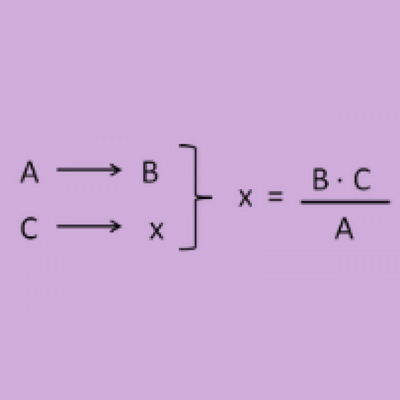
Tengo un dato “A” que implica “B” Entonces, si tengo un dato “C” similar a “A”, debo encontrar lo que implica, algo que llamaremos “X”, la incógnita, ¿no es cierto?
Pero eso es en matemáticas. ¿Cómo funciona esa regla en nuestras intenciones de hacer reír entonces?
La “Regla de tres” aquí significa ofrecerle al receptor una lista, una enumeración, una acumulación de dos elementos lógicos, normales y sorprenderlo con un tercero totalmente diferente, ya que él espera que ese tercero sea de igual índole que los dos primeros.
Este recurso del humor funciona así:
Una primera parte sería la “introducción”. Ahí se plantea el tema, que sirve de base para lo que viene. Una segunda parte podríamos llamarla “validación” y es para ratificar el asunto de la primera parte y asegurar la secuencia. Y una tercera parte que sería la “ruptura”, donde se rompe la secuencia, las expectativas creadas y la sorpresa produce la risa final.
Un ejemplo:
—¿De dónde vienes así?
—Estuve enterrando a mi suegra.
—Pero, ¿por qué estás tan sucio y sudado?
—Porque había mucho sol…, porque la tierra estaba muy compacta… y porque la vieja no quería.
¿Pero por qué en vez de tres elementos no son dos, o cuatro, o cinco? No funciona tanto con dos, porque es poca información para el receptor, no se llega a acomodar a la rutina que se busca. Y puede funcionar con más de tres, pero menos si el tercero tiene la misma función del primero y el segundo, porque el remate ruptural y sorpresivo se dilataría demasiado. Funcionaría mejor si el tercer elemento es rupturista (como en la regla de tres analizada) y el cuarto es aún más rupturista que el tercero, algo bien difícil de conseguir. Y con un quinto, mucho más.
Conclusión: diríamos que aunque funciona el mecanismo si son cuatro, cinco, seis, etc., los elementos enumerados, con tres es más efectiva. Es el momento y tiempo justo para la mayor sorpresa.
La regla de tres también funciona en el campo fonético. Veamos un ejemplo:
Yo hablando, hablando, ablando a cualquiera.

100 Tips to Make People Laugh | Tip 6: The Rule of 3
By Enrique Gallud Jardiel y Pepe Pelayo
Introduction
The authors have modestly attempted… no, that is not true. The authors are not modest at all, but rather two professional humorists who have spent many years making their readers laugh and who now generously share their humor-making experience with anyone willing to read these articles in each issue of the Humor Sapiens Bulletin, or compiled together in a book.
TIP 6. The Rule of Three
We have already explored displacement humor. Well, an even more foolproof variation for achieving the same effect is what is known as the “Rule of Three.”
What exactly is this rule? Simple…
I have a piece of information “A” that implies “B.” Therefore, if I have another piece of information “C” similar to “A,” I should find what it implies—something we will call “X,” the unknown quantity, right?
But that is in mathematics. So how does this rule work when our intention is to make people laugh?
Here, the “Rule of Three” means offering the audience a list, an enumeration, an accumulation of two logical and normal elements, and then surprising them with a third element that is completely different, because they naturally expect the third one to be of the same kind as the first two.
This humorous device works as follows:
The first part is the “introduction.” Here, the subject is presented and serves as the basis for what follows. The second part could be called the “validation,” because it reinforces the idea introduced in the first part and secures the pattern. The third part is the “break,” where the sequence and expectations are disrupted, and the surprise produces the final laugh.
An example:
—Where are you coming from looking like that?
—I was burying my mother-in-law.
—But why are you so dirty and sweaty?
—Because it was very sunny… because the ground was extremely hard… and because the old woman didn’t want to go.
But why three elements instead of two, or four, or five? It does not work as well with two, because that provides too little information for the audience; they do not have enough time to settle into the expected routine. It can work with more than three, but less effectively if the third element serves the same function as the first and second, because the disruptive and surprising punchline would take too long to arrive. It would work better if the third element breaks the pattern (as in the Rule of Three we have analyzed) and the fourth breaks it even more than the third—something quite difficult to achieve. And with a fifth, even more so.
Conclusion: although the mechanism can still function with four, five, six, or more listed elements, it is most effective with three. Three provides the exact right timing for maximum surprise.
(This text has been translated into English by ChatGPT)