Me han cautivado las imágenes de la norteamericana Brooke DiDonato, originaria de Ohio, radicada en New York y graduada de fotoperiodismo en la Universidad del estado de Kent, pues se trata de observar un mundo reinventado, donde cada imagen se convierte en una historia, un momento suspendido, un espacio para la contemplación y la sensación.
Adentrarse en la creación de esta artista es como cruzar a un mundo inquietante, inocente, con fotografías surrealistas, cuidadosamente escenificadas, que distorsionan la vida y perturban la lógica de lo cotidiano, convirtiéndolo en escenas extrañas y absurdas, para alterar la coherencia espacial, corporal y psicológica. En estas “anomalías visuales”, y fallos en la norma, el humor está presente y pone a prueba el cerebro y el pensamiento, para dar rienda suelta a la imaginación.
Mediante este enfoque meticuloso, DiDonato transforma entornos cotidianos en espacios que rompen el silencio, para crear composiciones poéticas plagadas de significados ocultos. Sus imágenes no abandonan la realidad; la refinan, la agudizan y la desestabilizan sutilmente, revelando la facilidad con la que lo ordinario puede transformarse en algo raro.
Los sujetos de sus imágenes parecen muebles y se infiltran como camaleones en los paisajes más comunes que se puedan imaginar: carreteras, arboledas, garajes o pasillos. Son los protagonistas de las instantáneas y están colocados meticulosamente con el fin de hacernos pensar en nuestra percepción de las imágenes.
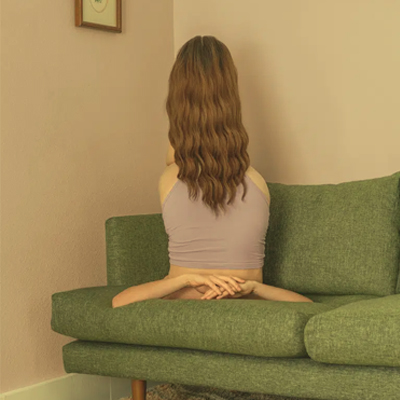
En estos entornos controlados, el cuerpo se vuelve inestable. DiDonato coreografía figuras que se doblan, se comprimen y se fragmentan contra las rígidas líneas arquitectónicas. Puertas, encimeras y ventanas actúan como limitaciones compositivas. Las extremidades se extienden desde lugares inesperados. Los torsos se funden con el mobiliario. Las figuras aparecen encajadas en las esquinas o suspendidas en una incómoda quietud. Estos efectos se basan en la puesta en escena física y la repetición, lo que confiere a las imágenes una cualidad tangible y realista.
Desde vastos desiertos hasta suburbios, DiDonato crea un universo desequilibrado. Los cuerpos se entrelazan, los árboles se doblan hacia atrás y las vallas de hierro se vuelven maleables. En cada imagen, el significado de los objetos familiares se retuerce; las leyes de la física se desquician. Hogares y jardines acogedores se impregnan de peligro, humor e intriga, invitándonos a mirar de nuevo.
Mediante paletas de colores agradables, una decoración seductora al estilo de los años 50 y paisajes apacibles, DiDonato induce al espectador a una falsa sensación de seguridad. Sin embargo, en lugar de un mundo de confianza y tranquilidad, donde todo es como debería ser, nos adentramos en un reino inesperado. Un lugar donde el sueño americano se cuestiona y se deconstruye: un universo claramente inestable.
“Al crecer en un pueblo pequeño, todo era predecible”, comenta Brooke . “Probablemente siempre me interesará la tensión entre la expectativa y la realidad, entre la familiaridad y la incomodidad; algo que parece ordinario a primera vista, pero que resulta ligeramente extraño”.
“Me gusta mostrar objetos y espacios familiares de maneras poco convencionales”, señala. “Espero sorprender al espectador, pero las emociones que se lleva consigo son muy variadas. Nunca quiero controlar la reacción del espectador ante mi obra. Es la condición humana. Hay momentos de humor, incomodidad, tristeza, familiaridad –añade.
Esa gama emocional define la experiencia de sus imágenes. A primera vista, parecen lúdicas y absurdas, pero una sutil inquietud persiste. El tiempo parece suspendido. Las acciones quedan sin resolver. El espectador se encuentra con un momento que se resiste a una conclusión, atrapado entre el reconocimiento y la desorientación. Es la provocación del arte.
En esta charla en inglés de Brooke, los lectores de Humor Sapiens tienen la oportunidad de acercarse más a la obra de esta singular artista:
https://www.youtube.com/watch?v=gQEluOIKHok
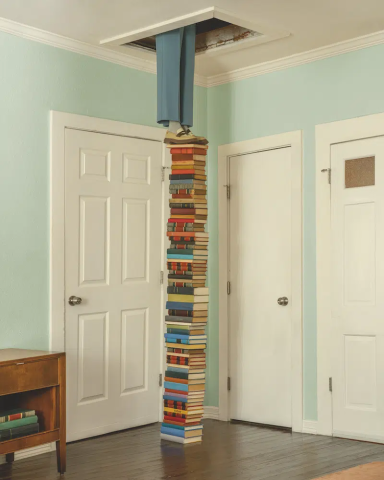
“A Long Story” (2023).
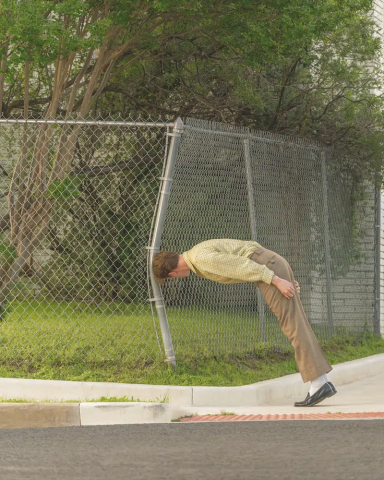
“It Hurt a Little but Everything Does” (2023).
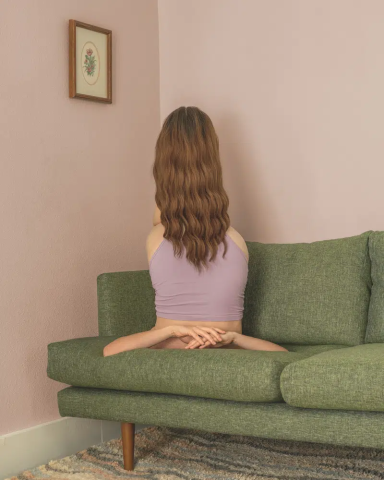
“How Can I Help You” (2022).
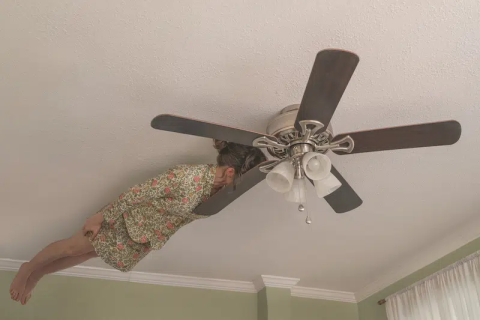
“Subscribe to My Only Fans” (2022).
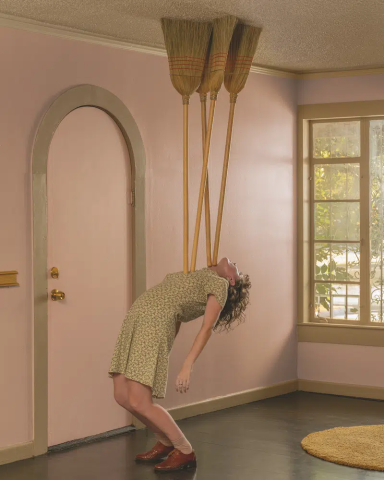
“There Are Not Enough Hours in the Day Let Me Tell You” (2023).
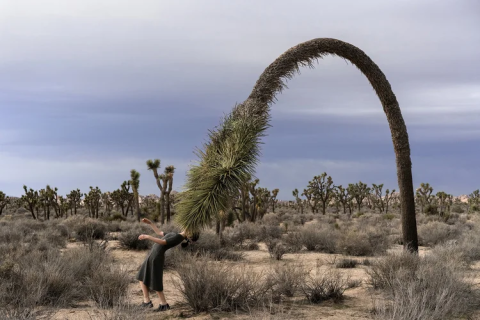
DiDonato.Elsewhere.
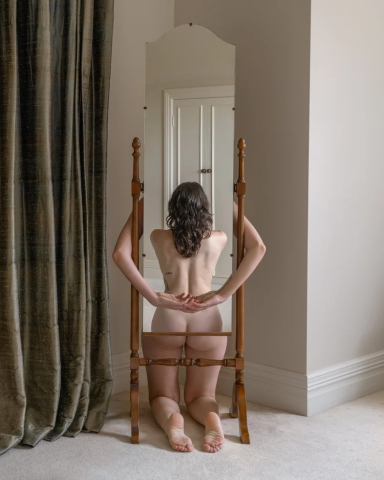
DiDonato.Home.
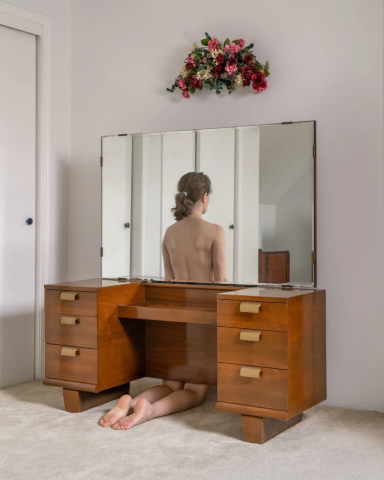
DiDonato.Home.
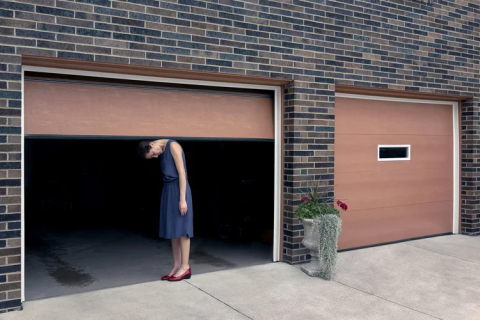
DiDonato.Home.
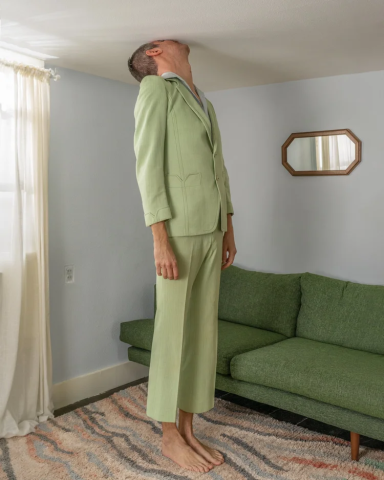
DiDonato.Home.
The Surrealist Photographs of Brooke DiDonato
By Francisco Puñal Suárez
I have been captivated by the images of the American Brooke DiDonato, originally from Ohio, based in New York, and a graduate in photojournalism from Kent State University, because they invite us to observe a reinvented world, where each image becomes a story, a suspended moment, a space for contemplation and sensation.
Delving into this artist's creation is like crossing into an unsettling, innocent world, with carefully staged surrealist photographs that distort life and disrupt the logic of the everyday, turning it into strange and absurd scenes to alter spatial, bodily, and psychological coherence. In these "visual anomalies" and breaches of the norm, humor is present and challenges the brain and thought, unleashing the imagination.
Through this meticulous approach, DiDonato transforms everyday settings into spaces that break the silence, creating poetic compositions filled with hidden meanings. Her images do not abandon reality; they refine it, sharpen it, and subtly destabilize it, revealing how easily the ordinary can become something strange.
The subjects of her images seem like furniture and infiltrate the most commonplace landscapes imaginable: roads, wooded areas, garages, or hallways. They are the protagonists of the snapshots and are placed meticulously to make us reflect on our perception of images.
In these controlled environments, the body becomes unstable. DiDonato choreographs figures that bend, compress, and fragment against rigid architectural lines. Doors, countertops, and windows act as compositional constraints. Limbs extend from unexpected places. Torsos merge with furniture. Figures appear wedged into corners or suspended in uncomfortable stillness. These effects rely on physical staging and repetition, giving the images a tangible, realistic quality.
From vast deserts to suburbs, DiDonato creates an unbalanced universe. Bodies intertwine, trees bend backward, and iron fences become pliable. In each image, the meaning of familiar objects twists; the laws of physics go awry. Cozy homes and gardens become imbued with danger, humor, and intrigue, inviting us to look again.
Through pleasing color palettes, seductive 1950s-style decor, and serene landscapes, DiDonato lulls the viewer into a false sense of security. Yet, instead of a world of confidence and tranquility where everything is as it should be, we enter an unexpected realm. A place where the American dream is questioned and deconstructed: a clearly unstable universe.
"Growing up in a small town, everything was predictable," Brooke comments. "I'll probably always be interested in the tension between expectation and reality, between familiarity and discomfort; something that seems ordinary at first glance but turns out to be slightly strange."
"I like to show familiar objects and spaces in unconventional ways," she notes. "I hope to surprise the viewer, but the emotions they take away are very varied. I never want to control the viewer's reaction to my work. It's the human condition. There are moments of humor, discomfort, sadness, familiarity," she adds.
That emotional range defines the experience of her images. At first glance, they seem playful and absurd, but a subtle unease persists. Time appears suspended. Actions remain unresolved. The viewer encounters a moment that resists conclusion, caught between recognition and disorientation. It is the provocation of art.
In this English-language talk by Brooke, Humor Sapiens readers have the opportunity to get closer to the work of this singular artist:
https://www.youtube.com/watch?v=gQEluOIKHok
(This text has been translated into English by ChatGPT)