Para empezar
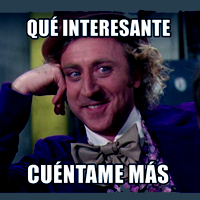
¿Quién no ha compartido y reído o sonreído con un meme en los últimos años? Los memes en sus diferentes presentaciones circulan en el ciberespacio e incluso son reproducidos en diversos medios. Los hay abstractos y otros creados al calor de los acontecimientos públicos. Los hay humorísticos y otros no tanto, no obstante, hay cierta tendencia al humor desde la ironía de sonrisa amarga hasta la risa de la viva incongruencia socio discursiva. Hablamos de los memes en internet.
Origen y definición
El origen de la palabra se atribuye al biólogo Dawkins (1993) como “cosa que se imita”, y el diccionario señala dos acepciones, la primera: “rasgo cultural o de conducta que se transmite por imitación de persona a persona o de generación en generación”; la segunda: “imagen, video o texto, por lo general distorsionado con fines caricaturescos, que se difunde principalmente a través de internet” (RAE, 2024). Una genérica y abstracta, otra concreta y descriptiva de lo que son.
Definición que reconoce el carácter imitativo del meme y del humano, de la cultura y la sociedad, y destaca la distorsión y el humor aparente. Son unidades culturales, de promoción o intercambio de ideas, presentan hechos, noticias y producciones tecno-estéticas, imitados y replicados, modificados y recreados, discuten o consensuan ideas, reúnen comunidades participativas en espacios afines y con sentido de identidad y pertenencia, transportan creencias y valores, emociones y conductas, adoctrinan y liberan (Knobel y Lankshear, 2007; Davidson, 2012; Shiftman, 2014). Parte de un discurso iconográfico y verbal, y entre otras cosas, parte de la opinión pública ya sea genuina, ya se trate de la mediatizada, como la antigua propaganda. Aquí como el humor en otros medios, la intención y el resultado, genuino y manipulado, parece ser lo que más cuenta.
En cuanto a fechas de origen, los años noventa del siglo XX vieron su nacimiento con varios memes todavía a través de lo que imperaba en internet en ese momento como forma comunicativa, el mail. Sin embargo, es a inicios del siglo XXI y con el estallido de las redes socio digitales cuando realmente son productos extendidos y cotidianos.
Enfoques y tipología
Una distinción que hace Shiftman (2014) es entre “virales” y “memes”, pero más allá de las palabras, lo importante es lo que significan, pues los primeros funcionan como propaganda y reproducción sin cambio y circulan entre la población conectada a internet, y los segundos documentan la vida real y son creación de contenido anónimo y popular, con recreación y replicación, y con renovación y cambio, creando comunidades e identidades, incluso. De hecho, unos son producción de expertos, empresas, organismos internacionales y gobiernos con fines específicos, mientras otros constituyen participación colectiva de la gente (Cortázar, 2014). Así que, hay de todo tipo y con intenciones bien disímiles a pesar que hay quien predica son algo así como “paladines de la libertad” (Rowan, 2015), y hay quien desnuda su utilización manipuladora, comercial y política (Rodríguez, 2014).
Dejar claro que las dos creaciones o tipologías existen y cohabitan en la virtualidad, como partícipes de valores e intereses, significados compartidos unos más verticales y otros más horizontales (Knobel y Lankshear, 2007). De hecho, hay quien defiende su relato poliédrico y la pluralidad de lecturas que los memes poseen (Martín, 2019). Por supuesto, son hijos de su tiempo, la cultura en imágenes y la inmediatez. Y, por supuesto, también se inscriben en teorías, técnicas y tipologías conocidas del humor, desde la incongruencia a la liberación, pasando por la superioridad y agresividad, así como el juego lúdico. Como también tienen una amplia y diversa taxonomía, combinando imagen, texto, video (Pérez, 2016). Eso sí, expresan una pluralidad de ideologías donde todo y todos y todas, son risibles, y en todos los sentidos de la palabra, con sus claroscuros morales y éticos, algo muy propio del humor y su libertad (Pelayo, 2019).
Comunicación y funciones
Siguiendo con la anterior tipología, ahondando en la comunicación e intención y respecto a la funcionalidad de los memes, varios son los enfoques, volviendo a Shifman (2014) existe el modelo de propaganda viral que se replica sin modificar; hasta el modelo de formato general que los usuarios adaptan y el público activo participa, como parte de una cultura dinámica colectiva, los que se consideran concretamente “memes”, aunque todos lo son. Los memes según esta autora dan forma a la mentalidad, comportamientos y acciones de grupos sociales, o sea poseen función e influencia.
Se piensa que “las imágenes que circulan en las redes sociales de internet serían parte de este esfuerzo de los Estados o de las corporaciones multinacionales (el poder) para mantener a la gente distraída de los grandes acontecimientos políticos y sociales que en verdad deberían ser los que les importen” (Cortázar, 2014: 198). Por otra parte, hay otras visiones que señalan que “se trata de imágenes ricas en contenido y significados producto de la cultura popular contemporánea, la mayoría de las veces pobres a nivel estético, muchas veces contradictorias con los discursos poco elaborados, preocupadas por comentar la realidad inmediata y hacerla inteligente” (Cortázar, 2014:198). Una respuesta producto de la realidad social actual, entre lo absurdo, caótico, irónico, abrumador y triste. Eso sí, se trata de “fragmentos de cultura que contienen ideas y que van influenciando a la gente en la medida que se propagan…creaciones humanas que encierran significados contextuales, se dirigen a otras personas y pueden ser interpretados por ellos” (Cortázar, 2014:204). Añadir que hay un discurso insistente y extendido que son producto de inteligencia colectiva y participación popular (Jenkins, 2009), si bien esto hoy es oportuno repensarlo, como se ha dejado claro. Y, como otros medios humorísticos son fuente de mediación emocional y de comprensión sociológica de cómo está la sociedad y la humanidad (Berger, 1999).
Poseen un papel socio político macrosocial en cuanto a. la movilización política, la construcción de identidades, normas y valores, contribuyendo a la cohesión social. También configuran comunidades microsociales en su creación de identidades, algo importante para el humano, los colectivos de pertenencia, incluso las tribus (Maffesoli, 2009).
Para finalizar
Los memes tanto como discurso y dispositivo hacen muchas cosas: expresan ideas y emociones, cotidianas y extraordinarias, relatan situaciones y difunden prácticas. Desahogan tensiones mentales y emocionales, acompañan a sobrevivir determinados problemas adversos, crisis sociales, traumas personales y desastres medioambientales. En ocasiones, comparten celebraciones y alegrías. Su función comunicativa es primordial, informan, forman, comparten, discuten, imponen, dialogan, modelan, aconsejan, ordenan de manera manifiesta o latente, consciente o inconscientemente. Por lo que siempre influencian en el sentido y la forma que sea, pues hay contexto e ideología, así como intención detrás de la construcción de sentido y la forma de presentación. Además de divertir, distraer y entretener, hacer sonreír y reír, a veces también reproducir amenazas y miedos, enojo y odio, desorientación e incertidumbre. Para todo se combina lo textual –formato, contenido, función– con lo intertextual –combinación, lenguaje digital, generación colectiva–.
Finalmente, anotar que, al margen de su intención y dirección, en general y los humorísticos de manera muy particular, contribuyen a soportar emociones insatisfactorias, pensamientos pesimistas, comportamientos automáticos, en el sentido que acompañan con el humor, y si la incertidumbre no desaparece, sí su focalización y dureza, airean y alivian, matizan y relativizan. Se puede decir que son parte de cierta resiliencia; puesto que favorecen la distracción y el divertimento, la distancia de problemas y crisis, liberando tensión o reequilibrando física y psíquicamente a las personas y colectivos sociales (Moure et al., 2011; Vanistendael y Lecomte, 2002). En todo caso y curiosamente para todo hay memes y en tiempo real, y nos acompañan más o menos, con más o menos humor, en encuentros y también desencuentros virtuales.
Despedida felina: “Nuestro amigo Pepito se presenta a la casa de la señora que vive en el primer piso, la cual anunció a todo el vecindario que se le escapó su canario ofreciendo una buena gratificación a la persona que lo encontrara, de repente llega Pepito y dice:
— Aquí está su pajarito, señora. Presentándole a un gato que había encontrado en la azotea. — ¿Estás loco niño? , lo que me traes es un gato pulgoso. — Sí, pero el canario está adentro, señora”
Referencias
Berger, P. (1999). La risa redentora. La dimensión cómica de la experiencia humana. Kairós.
Cortázar, F. (2014). Imágenes rumorales, memes y selfies: elementos comunes y significados. Revista de Ciencias Sociales y Humanidades, 35(22), 191-214. https://revistaiztapalapa.izt.uam.mx/index.php/izt/article/view/149/300
Davidson, P. (2012). The language of internet memes. In Mandiberg, M. (Ed.) The social media reader. pp. 120-134 https://www.researchgate.net/publication/263564286_The_Language_of_Internet_Memes
Dawkins, R. (1993). El gen egoísta. Las bases biológicas de nuestra conducta. Salvat.
Fernández Poncela, A.M. (2025). Pandemia de memes. Crónica social humorística. UAM.
Knobel, M. & Lankshear, C. (2007). Online memes, affinities, and cultural production. In Land, P. (Ed.) A new literacies sampler. pp. 199-227. https://www.researchgate.net/publication/283968435_Online_memes_affinities_and_cultural_production
Maffesoli, M. (2009). El tiempo de las tribus. Siglo XXI.
Martín Prada, J. (2019). Folklore digital y política en España. https://drive.google.com/file/d/1gCIbXclCdp68KnxIXBZljp2JaMC70Weg/view
Moure, P.; del Pino, D. y R. Alvarado (2011). De lo psicológico a lo fisiológico en la relación entre emociones y salud. Revista Psicología Científica, 13 (13), 1-9. https://www.psicologiacientifica.com/relacion-emociones-y-salud/
Pelayo, P. (2019). Breve diccionario del humor. Verbum.
Pérez Salazar, G. (2016). El meme en internet. Identidad y usos sociales. Fontamara.
Rodríguez, D. (2014). Memecracia. Los virales que nos gobiernan. Cómo las ideas contagiosas usan internet para manipular a la gente. Gestión 2000.
Rowan, J. (2015). Memes. Inteligencia idiota, política rara y folclore digital. Capitán Swing.
Real Academia Española (RAE) 2024 “Meme” https://dle.rae.es/meme?m=form
Shiftman, L. (2014). Memes in digital culture. MIT University Press.
Vanistendael, S. y J. Lecomte (2002). La felicidad es posible. Gedisa.


https://koe.com.mx/memes-para-ejercitar-la-creatividad/

https://www.xatakandroid.com/aplicaciones-android/nueve-apps-para-crear-memes-movil-android

https://www.shopify.com/es/blog/memes-vender-con-el-lenguaje-de-internet

https://www.tabascohoy.com/conoce-estas-paginas-web-para-hacer-memes/
Sparks of Happiness / Humor and Memes on the Internet
by Ana María Fernández Poncela
To Begin With
Who has not shared and laughed or smiled at a meme in recent years? Memes, in their various forms, circulate through cyberspace and are even reproduced in different media. Some are abstract, others are created in the heat of public events. Some are humorous and others less so; nevertheless, there is a certain tendency toward humor, ranging from the irony of a bitter smile to the laughter of vivid socio-discursive incongruity. We are talking about internet memes.
Origin and Definition
The origin of the word is attributed to the biologist Dawkins (1993) as “a thing that is imitated,” and the dictionary offers two meanings: the first, “a cultural or behavioral trait transmitted by imitation from person to person or from generation to generation”; the second, “an image, video, or text, generally distorted for caricature purposes, that is mainly disseminated through the internet” (RAE, 2024). One is generic and abstract; the other, concrete and descriptive of what they are.
This definition recognizes the imitative nature of both memes and human beings, of culture and society, and highlights distortion and apparent humor. They are cultural units for the promotion or exchange of ideas: they present events, news, and techno-aesthetic productions, imitated and replicated, modified and recreated; they debate or reach consensus on ideas; they bring together participatory communities in like-minded spaces with a sense of identity and belonging; they convey beliefs and values, emotions and behaviors; they indoctrinate and liberate (Knobel & Lankshear, 2007; Davidson, 2012; Shifman, 2014). They are part of an iconographic and verbal discourse, and, among other things, part of public opinion, whether genuine or mediated, like traditional propaganda. Here, as with humor in other media, intention and outcome—genuine or manipulated—seem to matter most.
As for their origin in time, the 1990s saw their birth, with several early memes circulating through what dominated internet communication at the time: email. However, it was at the beginning of the 21st century, with the explosion of social and digital networks, that they truly became widespread and everyday products.
Approaches and Typology
A distinction made by Shifman (2014) is between “viral” content and “memes,” but beyond terminology, what matters is their meaning: the former function as propaganda and circulate without modification among the connected population, while the latter document real life and are anonymous, popular content creations, involving recreation and replication, renewal and change, and the creation of communities and identities. In fact, some are produced by experts, companies, international organizations, and governments for specific purposes, while others constitute collective participation by ordinary people (Cortázar, 2014). Thus, there are all kinds, with very diverse intentions, despite those who proclaim them to be something like “champions of freedom” (Rowan, 2015), and others who expose their manipulative, commercial, and political uses (Rodríguez, 2014).
It should be made clear that both creations or typologies exist and coexist in virtuality, as participants in values and interests, shared meanings—some more vertical, others more horizontal (Knobel & Lankshear, 2007). In fact, some defend their polyhedral narrative and the plurality of interpretations that memes possess (Martín, 2019). Naturally, they are children of their time: image culture and immediacy. And, of course, they also fit within well-known humor theories, techniques, and typologies, from incongruity to release, including superiority and aggressiveness, as well as playful game. They also have a broad and diverse taxonomy, combining image, text, and video (Pérez, 2016). That said, they express a plurality of ideologies in which everything and everyone becomes laughable in every sense of the word, with moral and ethical chiaroscuros, something very characteristic of humor and its freedom (Pelayo, 2019).
Communication and Functions
Continuing with the previous typology and delving into communication, intention, and functionality, several approaches exist. Returning to Shifman (2014), there is the model of viral propaganda that is replicated without modification, and the model of general format that users adapt and in which the active audience participates as part of a dynamic collective culture—those considered strictly “memes,” although all are. According to this author, memes shape the mentality, behaviors, and actions of social groups; that is, they possess function and influence.
It is thought that “the images circulating on social media would be part of this effort by states or multinational corporations (power) to keep people distracted from the major political and social events that should truly concern them” (Cortázar, 2014: 198). On the other hand, other perspectives argue that “these are images rich in content and meaning, products of contemporary popular culture, mostly poor aesthetically, often contradictory in their poorly elaborated discourse, concerned with commenting on immediate reality and making it intelligent” (Cortázar, 2014: 198). A response produced by current social reality, between the absurd, chaotic, ironic, overwhelming, and sad. Yet they are “fragments of culture that contain ideas and influence people as they spread… human creations that hold contextual meanings, are addressed to others, and can be interpreted by them” (Cortázar, 2014: 204). It should be added that there is a persistent and widespread discourse claiming they are products of collective intelligence and popular participation (Jenkins, 2009), although today this deserves rethinking, as has been made clear. And, like other humorous media, they are a source of emotional mediation and sociological understanding of the state of society and humanity (Berger, 1999).
They play a macrosocial socio-political role in political mobilization, identity construction, norms, and values, contributing to social cohesion. They also shape microsocial communities through identity creation, something essential for human beings, groups of belonging, and even tribes (Maffesoli, 2009).
To Conclude
Memes, both as discourse and device, do many things: they express ideas and emotions, everyday and extraordinary; they narrate situations and disseminate practices. They release mental and emotional tensions, help people cope with adverse problems, social crises, personal traumas, and environmental disasters. At times, they share celebrations and joys. Their communicative function is fundamental: they inform, educate, share, discuss, impose, dialogue, model, advise, and command, overtly or latently, consciously or unconsciously. Thus, they always influence in one way or another, since there is context and ideology, as well as intention behind the construction of meaning and form of presentation. In addition to amusing, distracting, and entertaining—making people smile and laugh—they sometimes also reproduce threats and fears, anger and hatred, disorientation and uncertainty. All this combines the textual—format, content, function—with the intertextual—combination, digital language, collective generation.
Finally, it should be noted that, regardless of intention and direction, in general—and humorous ones in particular—they help endure unsatisfactory emotions, pessimistic thoughts, and automatic behaviors, in the sense that they accompany us with humor, and although uncertainty does not disappear, its focus and harshness do. They ventilate and relieve, soften and relativize. It may be said that they form part of a certain resilience, as they promote distraction and amusement, distance from problems and crises, releasing tension or physically and psychologically rebalancing individuals and social groups (Moure et al., 2011; Vanistendael & Lecomte, 2002). In any case, and curiously, there are memes for everything and in real time, accompanying us more or less, with more or less humor, in both encounters and virtual misunderstandings.
Feline Farewell:
“Our friend Pepito shows up at the home of the lady who lives on the first floor, who had announced to the whole neighborhood that her canary had escaped, offering a generous reward to whoever found it. Suddenly Pepito arrives and says:
— Here is your little bird, ma’am.
Handing her a cat he had found on the rooftop.
— Are you crazy, boy? What you’re bringing me is a flea-ridden cat.
— Yes, but the canary is inside, ma’am.”
References
Berger, P. (1999). Redeeming laughter: The comic dimension of human experience. Kairós.
Cortázar, F. (2014). Rumoral images, memes, and selfies: Common elements and meanings. Journal of Social Sciences and Humanities, 35(22), 191–214.
https://revistaiztapalapa.izt.uam.mx/index.php/izt/article/view/149/300
Davidson, P. (2012). The language of internet memes. In M. Mandiberg (Ed.), The social media reader (pp. 120–134).
https://www.researchgate.net/publication/263564286_The_Language_of_Internet_Memes
Dawkins, R. (1993). The selfish gene: The biological basis of our behavior. Salvat.
Fernández Poncela, A. M. (2025). Pandemic of memes: A humorous social chronicle. UAM.
Knobel, M., & Lankshear, C. (2007). Online memes, affinities, and cultural production. In P. Land (Ed.), A new literacies sampler (pp. 199–227).
https://www.researchgate.net/publication/283968435_Online_memes_affinities_and_cultural_production
Maffesoli, M. (2009). The time of tribes. Siglo XXI.
Martín Prada, J. (2019). Digital folklore and politics in Spain.
https://drive.google.com/file/d/1gCIbXclCdp68KnxIXBZljp2JaMC70Weg/view
Moure, P., del Pino, D., & Alvarado, R. (2011). From the psychological to the physiological in the relationship between emotions and health. Scientific Psychology Journal, 13(13), 1–9.
https://www.psicologiacientifica.com/relacion-emociones-y-salud/
Pelayo, P. (2019). A brief dictionary of humor. Verbum.
Pérez Salazar, G. (2016). The internet meme: Identity and social uses. Fontamara.
Rodríguez, D. (2014). Memocracy: The virals that rule us. How contagious ideas use the internet to manipulate people. Gestión 2000.
Rowan, J. (2015). Memes: Idiot intelligence, weird politics, and digital folklore. Capitán Swing.
Real Academia Española (RAE). (2024). “Meme”. https://dle.rae.es/meme?m=form
Shifman, L. (2014). Memes in digital culture. MIT Press.
(This text has been translated into English by ChatGPT)