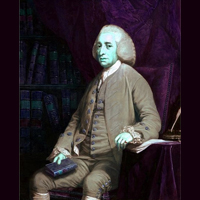
Tobias Smollett (Escocia, 1721–Livorno, 1771), escribió varias novelas en el siglo XVIII, donde mostraba ser médico, traductor e historiador. Su título más conocido es “Las aventuras de Roderick Random”, donde filtra aspectos autobiográficos.
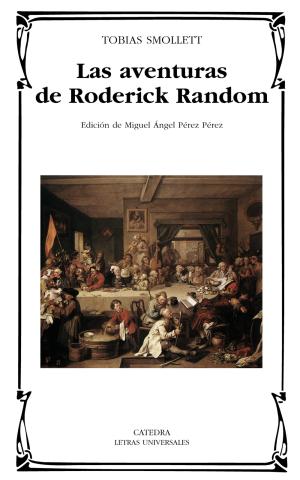
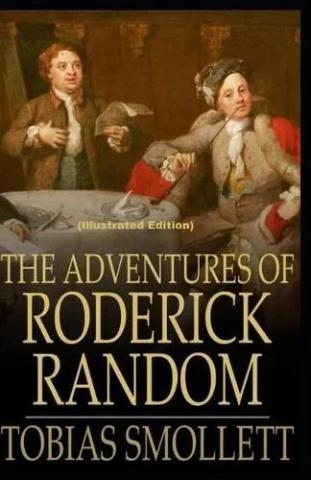
“Las Aventuras de Roderick Random” (1748), le permitió a Smollet salir de penurias económicas, pues escribir sobre sus vivencias como marinero y abogado no le había servido para iniciar con éxito el camino literario. Incluso tradujo el Quijote, por si alguien tenía dudas de la vehemencia con que tomaba la labor literaria y vaya a saber hasta dónde logró repetir el sentido y alcance de los divertimentos cervantinos en una lengua, diría Borges si compartiera el punto de vista del suscrito (me refiero al literario, no al oftálmico), tan poco empática con los conceptos ahí vertidos. A veces exasperante, pero siempre divertido, Random y sus aventuras, por alegría o por tristeza, lo llevan al llanto.
Al humor se asocian, en diversos grados, las carcajadas (muchas con sonidos tan peculiares que en algunos lugares del mundo es atracción pública reunir a las personas con las risas más extrañas, lo cual, por un mecanismo doble, de empatía y de sorpresa, lleva al espectador a la risa: el espectáculo de la risa misma logra que la risa provoque risa; de donde se dice que la alegría se contagia, aunque uno no entienda la causa o el efecto dentro del emitente); también se asocian los golpes que da el riente, ya sea a sí mismo (se golpea las piernas) o a lo que tiene a la mano; se sugiere alejarse de quien se ríe con tales excesos. Estos impulsos corporales llegan al extremo de lograr que quien se ríe caiga al piso o no pueda sostenerse por sí mismo y recurra a sentarse o a colgarse de quien tiene al alcance. Esto lleva al llamado entre campistas a no contar chistes o anécdotas risueñas en montañas o riscos ajenos a la valiente obra de los barandales firmes. Si esa risa es profunda y el emitente no puede externarla, pueden darle dolores de cabeza por la extraña compresión que la presión sanguínea logra tras la elevación de la caja toráxica, de ahí que quien se ríe de forma extrema y en silencio necesite apretarse las sienes o la fontanella, también llamada con desprecio “la mollera”, esto por afinidad fonética con las mollejas de pollo. ¿Quién querría ser referido como “el cabeza de pollo”?, a menos que sea el propietario de una compañía trasnacional dedicada a vender pollo crudo para el consumo humano. El rostro enrojecido por las carcajadas o el involuntario rocío salival para las personas y objetos cercanos es un detalle que sobra citar, salvo cuando el escribiente es el rociado por un familiar proclive a reírse con tales estallidos líquido-bucales, especialmente al escuchar a los risibles políticos defender lo indefendible. La debilidad corporal posterior a la risa, cuando el humorista queda jadeante y con la mente en blanco, se comprende por el arrebato corporal que la risa profunda causa por la falta de oxígeno. Esto último, hay quien lo asocia a los espasmos propios de otras actividades lúdicas de corte conservacionista de la propia especie; con lo que puede decirse de ambas que son “la muerte chiquita”, regionalismo hispano de origen popular, más emparentado con el vulgo, por lo vulgar, y sin relación con el país europeo de Bulgaria, salvo por una imprecisión fonética, propia de quien de todo se ríe y a quien se asocia con estados mentales alterados, al caso, por la lectura de textos desternillantes o propios del sorprendente y siempre buscado fenómeno donde un poco de tinta en un papel permite el milagro de que el chispazo mental que aconteció siglos atrás en un país lejano, jamás pisado por el lector, conecte con otro golpe de sinapsis para permitir que en un instante de belleza dionisíaca dos personas conecten para demostrar que el espacio y el tiempo es intemporal cuando de reír se trata. O, lo que es lo mismo, que el eco de una gracejada bien dicha puede tener eco en la eternidad gracias a que una afortunada persona en algún lugar impensado por el emitente, pudo ser receptor de aquello que distingue a la raza humana de la divina (bueno, y de todas las demás criaturas conocidas), para replicarla, ya fuera con un espasmo que le contracture el cuerpo entero o con una sonrisa imperceptible, pero franca y profunda o, ya dejemos el tema por vida de dios, con un sonido que replique el canto del ave graceja que dio pie a tal fonema aceptado por la real academia de la lengua, donde seguramente hubo aficionados a observar seres emplumados como la grajilla occidental -corvus monedula- o el grajo -corvus frugilegus-, ambos parientes de los cuervos. De lo cual cabe elucubrar que Edgar Allan Poe estuvo a micras de ser un autor bufo o humorístico, pero que el ave de su contemplación tenía una inclinación a lo mórbido y no a lo mordaz. En fin, que dios me perdone por estas disquisiciones, pero si a estas alturas usted no se ha ido, es culpa suya que yo siga dejando que el hilo mental se pierda en el hoyo negro que las expresiones de la risa pueden provocar en quienes vemos el mundo con ojos risueños y no tememos la creación de bembadas a granel o al ridículo.
Quien ha comparecido a tales trances sociales de los carnavales profanos e impíos con sus bufones habladores de la verdad, comprenderá que la risa grotesca también provoca expectoraciones pulmonares, ya sea de tosidos de todo tipo, con la ingente posibilidad de que tras carraspear incontrolablemente se pierda, también, el dominio del propio aparato mingitorio, con la penosa consecuencia de expeler el líquido riñonal involuntariamente, provocando más risas de las esperadas en sí mismo y en los demás. Las infinitas posibilidades de la risa abarcan aspectos mortuorios. En efecto, pasar de la risa al llanto es viable, cosa que los mexicanos hemos asimilado irreversiblemente tras la contemplación de la película “Ustedes los ricos”, la cual al lado de “Nosotros los pobres”, logra una obra magna del director Ismael Rodríguez y el imperecedero Pedro Infante, donde millones de hispanoparlantes hemos visto con deleite o fastidio el cambio del llanto a la risa en vaivenes incomprensibles para mostrar no sólo uno de los picos actorales del México reciente (de la conquista hispana a la conquista mediática) cuando Pepe “el toro”, el propio Pedro Infante, toma en sus brazos el cadáver de su niño, convertido prácticamente en un carbón usado o un chicharrón mal preparado, escoja su descripción, paciente lector, luego de que el fuego que consumió la vivienda también le diera alcance al pobre infante (el hijo, se comprende) quien despide su alma al más allá cinematográfico en los brazo del otro Infante (el padre enloquecido de tristeza, se comprende). Con lo cual dejaremos el tema de las expresiones físicas de la risa rematando con la tesis aquí ya probada de sobra de que Pepe “El toro” está hermanado con la creación de Roderick Random, nos guste o no, por haber roto la barrera física entre la risa y el llanto sin mayor justificación que la de los creadores artísticos de las diversas disciplinas humanas.
Continuemos. La novela cumple con el requisito de la picaresca: el anticaballero que ama a la dama y muestra una realidad sórdida. En “Las aventuras” podemos ver al cronista involuntario, pues mientras transcurren los episodios, casi todos en contra de Roderick, lugares y batallas son descritos puntualmente. Desde la cuna, la mala suerte acompaña a Random: es repudiado por el abuelo terrateniente debido a la unión del padre con una mujer de clase baja. Los padres de Roderick salen de escena, ella por la fácil opción argumental de morir, y eso deja al infortunado niño en manos de un tutor abusivo que indirectamente lo lleva a partir, acompañado de su amigo Strap, el que termina siendo una suerte de Sancho Panza que le aguanta mil majaderías a Random y siempre le trata como superior, a pesar de los irregulares maltratos del propio Roderick, quien a ratos resulta un berrinchudo, cuyas rabietas o sustos lo llevan, de nuevo, al llanto. Quizás sea una reminiscencia del autor por haber hecho la dudosa hombrada de traducir el Quijote, o por qué no, sea muestra de que las parejas codependientes se dan en todas las latitudes, como Adan y Eva o Drácula y Renfild han demostrado en libros y películas.
Las peripecias de Roderick, tanto como elemento de tropa, como cirujano o ayudante de boticario, llegan a ser muy divertidas, pero no por ello irreales. En un navío, donde varios enfermos son atendidos, el nuevo capitán decide cambiarles el tratamiento (lo que acaba matándolos) para desocupar el espacio. Fórmula repetida siglos después por la clase política mexicana en su afán incomprensible de equiparar un sistema médico público en continuo retroceso, con los desarrollos del primer mundo europeo. Roderick debe partir de casa del boticario al ser involucrado en el embarazo de una criada, que en realidad hizo el patrón. Tales peripecias también son propias de los modernos buscadores de compañía femenina, donde lo mismo se emparentan con mujeres ya en probada maternidad con varios infantes propios y preexistentes al nuevo valiente, que asumen actos de fe paterna al hacer propios a hijos con fenotipo contrario al del padre emergente, pero de probada necesidad o confianza en sus propias capacidades para extraer el material genético recesivo en ese niño, al inscribirlo en el registro civil como propio, con todo y haber pruebas obvias y casi irrefutables de que tal producto es de otras concupiscencias. Lo cual me hace llorar, como el personaje en comento, ante mi falta de fe. Irremediablemente, a Roderick todo le sale mal, incluso cuando conoce a la mujer amada. En medio de muchas peripecias, Roderick también participa como soldado en batallas a pie. Tarde o temprano el personaje advierte que todo en la sociedad es sucio, feo y malo, pero también que no puede sustraerse de ese entorno agresivo, llegando a la madura comprensión de que es ahí donde tiene que sobrevivir, así que en algún momento juega con las mismas armas y busca suerte como cazafortunas, tratando de emparejarse con alguna ricachona. Por supuesto, le va mal y más bien son ellas las que lo tratan de cazar a él porque parte del disfraz de Random es ser un adinerado soltero. Para lograr su objetivo, acude con gente de la nobleza, todos abusivos, donde aparece un homosexual que, a cambio de favores sexuales insinuados, y no recibidos, termina por despachar a Roderick para mostrarle que, en la alta burocracia y la realeza, el que no paga el costo del ascenso, de una u otra forma, no puede escalar.
Divertidos por exagerados, pero no por ello menos irreales ni caducos, los comentarios sobre cómo hay que pagar y cuánto para siquiera ser considerados para un trabajo, no dejan de sonarnos cercanos. En uno de varios intentos de vivir a costa de una mujer rica, al estafar a un sastre, Random termina en la cárcel, donde vemos las condiciones terribles de los presos. El autor aprovechó tener parientes abogados, para informarse de diversos trámites legales y policíacos descritos en la novela que, por su corrupción franca, también suenan conocidos. Aunque no por ello Random, cuando puede, se beneficia de situaciones opinables: en algún momento, feliz para él, se dedica a la venta de esclavos. ¿Qué dirían hoy los buscadores de la corrección histórica mediante lo políticamente correcto, mediante la censura de obras literarias? En un final que se parece más a las novelas de misterio, por forzado, que luego haría famosas Wilkie Collins, Random encuentra a su padre y, por vía del pago de deudas múltiples (al final es como los demás: usa el dinero para obtener sus fines), se casa con su enamorada y vuelve al lugar donde nació para hacerse terrateniente muy querido. Lo que le hace llorar, ni modo. Aunque no por ello deja de señalar los fogosos encuentros con la esposa.
Leer a Smollet es divertido por muchos factores. Quienes gusten de las novelas de aventuras, encontrarán a un personaje lleno de peripecias, muchas bufas, que no dejan de mostrarlo como un hombre de su tiempo y que da nota de cómo el autor gustaba de medir a las personas fanfarronas (hay muchos militares que vociferan su hombría, pero que a la hora de la acción evitan la confrontación física propia de los machos alfa de cantina, alguno haciéndose el dormido a medio pleito), o de señalar a las mujeres taimadas (se embarazan y desembarazan según el pretendiente o el provecho para terceros), y, véase cuán mexicano puede ser este autor, a los corruptos (desde marinos hasta nobles, muy pocos se salvan) y muchos otros seres que muestran la risible condición humana en todos los tiempos y lugares.
La percepción general del texto es que los países que recorre Random son muy parecidos porque en todos, la gente es mala, abusiva y conformista. Además, para más diversión, varios personajes citan en latín a los clásicos para hacer más entretenidos sus diálogos, donde el doble sentido y la alusión a lo corporal no decae. Habrá a quien le resulten chocantes las descripciones grotescas de algunos pasajes, pero pueden ser muy amenos, como la pestilencia en los navíos. Más que un crítico de sus circunstancias, el autor las describe, y por la forma de hacerlo divierte, pero no va más allá: incluso el personaje, de no ser por el inesperado padre adinerado que le resuelve todo, terminaría penando. A diferencia de la dramaturgia, donde el cambio interno de los personajes es obligado, el tal Random no logra una evolución moral, pues su triunfo apenas es circunstancial, pero no se debe a sus méritos, excepto el de ser hijo de un padre proclive a pagar las deudas filiales, lo cual, bien visto, tampoco tiene mérito, por ello habría que referir una inexactitud bíblica, pues no siempre los pecados de los padres los pagarán los hijos, pues ya se ve que, en este caso, los pecados monetarios del hijo los ha pagado el padre. Los personajes son planos en tanto resultan estereotipos de la clase representada, pero eso permite al autor un juego mayor, incluso en temas sexuales, pues no duda en señalar cómo hombres y mujeres se valen de ese medio para mejorar económica y socialmente.
Como personaje, Random se mantiene fiel a su concepción de víctima social, aunque luche para mejorar. No deja de considerar el sufrir, con lloriqueos, por supuesto, como medio para resolver el predicamento. Temo que muchos políticos mexicanos se me han adelantado en la lectura e introyección de esta creación literaria sempiterna. Random no critica a los embusteros en las cartas o en el comercio, pero sí los describe con sus defectos para mostrarlos risibles. Sorprende ver cómo en aquella época el cuchicheo y su aceptación eran fuente de opinión y llevaban a los personajes a evitar la maledicencia, pues de ésta derivaban muchos malos tragos.
Una obra de largo aliento que debe ser revisitada, preferentemente con la certeza de que los estragos corporales de la risa pueden modificar nuestra percepción del mundo, aunque sea por la falta de condición física para tolerar la risa explosiva o para leer divagaciones serias y sesudas como la presente.
|
Smollett, the Crybaby
by Ricardo Guzmán Wolffer
Tobias Smollett (Scotland, 1721–Livorno, 1771) wrote several novels in the 18th century in which he proved himself to be a doctor, translator, and historian. His best‑known title is The Adventures of Roderick Random, in which he filters autobiographical aspects.
The Adventures of Roderick Random (1748) allowed Smollett to escape economic hardship, since writing about his experiences as a sailor and lawyer had not been enough to set him successfully on the literary path. He even translated Don Quixote, in case anyone had doubts about the vehemence with which he approached literary work and about how far he managed to reproduce the meaning and scope of Cervantes’s amusements in a language that, Borges would say if he shared the present writer’s point of view (I mean the literary one, not the ophthalmological), is not very empathetic to the concepts expressed there. Exasperating at times but always entertaining, Random and his adventures, through joy or sadness, bring one to tears.
Laughter, in its various degrees, is associated with humor (many laughs have such peculiar sounds that in some parts of the world it is a public attraction to gather people with the strangest laughs, which, through a double mechanism of empathy and surprise, prompts the onlooker to laugh: the spectacle of laughter itself manages to make laughter provoke laughter; hence the saying that joy is contagious, even when one does not understand the cause or effect within the person laughing). Also associated are the blows the laugher deals out, whether to himself (slapping his thighs) or to whatever is at hand; it is advisable to stay away from someone who laughs with such excess. These bodily impulses can go so far that the one laughing falls to the floor or cannot stay upright and has to sit down or grab onto whoever is nearby. This leads to the camper’s rule not to tell jokes or funny stories on mountainsides or cliffs that lack the brave work of firm handrails. If the laughter is deep and the laugher cannot express it, he may get a headache from the strange constriction produced by the blood pressure after the chest expands; hence someone who laughs in an extreme and silent way needs to press his temples or his fontanelle, also contemptuously called “the soft spot,” because of its phonetic affinity with chicken gizzards (in Spanish mollera and molleja). Who would want to be referred to as “chicken‑head,” unless he owns a multinational company dedicated to selling raw chicken for human consumption. The reddened face from laughing fits or the involuntary spittle spray over nearby people and objects hardly needs mentioning—except when the writer is the one being sprayed by a relative prone to such liquid‑oral explosions, especially when hearing laughable politicians defend the indefensible. The bodily weakness that follows laughter, when the humorist is left panting and mentally blank, is understandable given the physical upheaval deep laughter causes through lack of oxygen. Some associate this last effect with the spasms of other playful activities linked to the survival of the species; hence it can be said of both that they are “the little death,” a popular Hispanic expression, more related to the common folk—because of its vulgarity—than to the European country of Bulgaria, except for a phonetic imprecision typical of those who laugh at everything and are associated with altered mental states, in this case brought on by reading side‑splitting texts or by that surprising and ever‑sought phenomenon in which a bit of ink on paper makes possible the miracle that a mental spark produced centuries ago in a distant country never trodden by the reader connects with another synaptic jolt so that, in an instant of Dionysian beauty, two people come together to prove that space and time are timeless when it comes to laughing. Or, which amounts to the same thing, that the echo of a well‑told witticism can reverberate in eternity because some fortunate person in a place undreamt‑of by the original speaker was able to receive that which distinguishes the human race from the divine (well, and from all other known creatures), and respond to it, whether with a spasm that cramps his entire body, or with an imperceptible yet sincere and profound smile, or—even, heaven help us— with a sound that echoes the song of the jackdaw (grajilla in Spanish) that gave rise to the phoneme accepted by the Royal Academy of Language, where there were surely aficionados of feathered beings such as the western jackdaw (Corvus monedula) or the rook (Corvus frugilegus), both relatives of crows. From this one may speculate that Edgar Allan Poe was microns away from being a comic or humorous author, but the bird he contemplated had a bent for the morbid rather than the mordant. At any rate, may God forgive me these musings, but if you have not left by now, it is your own fault that I keep letting this train of thought disappear into the black hole that expressions of laughter can open in those of us who see the world with smiling eyes and do not fear producing foolishness by the ton or making fools of ourselves.
Anyone who has taken part in those social trances of profane, impious carnivals with their jesters who speak the truth will understand that grotesque laughter also triggers pulmonary expectorations, from all sorts of coughing fits to the huge likelihood that, after uncontrollable throat‑clearing, one will also lose control of one’s own urinary apparatus, with the embarrassing result of involuntarily expelling kidney‑filtered liquid, provoking even more laughter than expected—in oneself and in others. The infinite possibilities of laughter extend into mortuary territory. Indeed, going from laughter to tears is quite feasible, something we Mexicans have irreversibly assimilated after watching the film Ustedes los ricos, which, together with Nosotros los pobres, amounts to a magnum opus by director Ismael Rodríguez and the deathless Pedro Infante. Millions of Spanish speakers have watched, with delight or annoyance, the swing from tears to laughter in incomprehensible oscillations that showcase not only one of the peaks of acting in recent Mexican history (from the Spanish conquest to the media conquest) when Pepe “El Toro,” Pedro Infante himself, takes in his arms the corpse of his child, turned practically into used charcoal or a badly fried pork rind—take your pick, dear reader—after the fire that consumed the house also reached the poor infant (the son, to be clear), who breathes his last into the cinematic beyond in the arms of the other Infante (the father, crazed by grief, to be clear). With this we shall leave behind the topic of the physical manifestations of laughter, ending with the thesis more than proven here that Pepe “El Toro” is a kindred spirit to the creation of Roderick Random, whether we like it or not, for having broken the physical barrier between laughter and tears with no other justification than that of the artistic creators of the various human disciplines.
Let us continue. The novel meets the basic requirement of picaresque: an anti‑knight who loves the lady and exposes a sordid reality. In The Adventures we see an involuntary chronicler, for as the episodes unfold—almost all of them against Roderick—places and battles are described in detail. From the cradle, bad luck dogs Random: he is rejected by his landowning grandfather because of his father’s union with a woman of lower class. Roderick’s parents exit the stage, the mother by the easy plot device of dying, leaving the unfortunate child in the hands of an abusive guardian who indirectly pushes him to leave, accompanied by his friend Strap, who ends up being a sort of Sancho Panza putting up with a thousand rude behaviors from Random and always treating him as his superior, despite Roderick’s uneven mistreatment, which at times makes him a brat whose tantrums or frights bring him, again, to tears. Perhaps this is a reminiscence of the author’s having made the dubious manly gesture of translating Don Quixote—or, why not, proof that codependent couples appear in all latitudes, as Adam and Eve or Dracula and Renfield have shown in books and films.
Roderick’s adventures, as a common soldier, surgeon, or apothecary’s assistant, become very amusing, but not for that reason unrealistic. On a ship where several sick men are being treated, the new captain decides to change their treatment (which ends up killing them) to free up space. The formula was repeated centuries later by the Mexican political class in its incomprehensible zeal to equate a constantly deteriorating public health system with the advances of Europe’s first‑world systems. Roderick must leave the apothecary’s house after being implicated in a maid’s pregnancy that was in fact caused by the master. Such episodes are also typical of modern seekers of female companionship, who hook up with women already of proven maternity with several children of their own, pre‑existing the new brave fellow, or who make acts of paternal faith by accepting as their own children whose phenotype is the opposite of that of the emergent father but who, in his proven need or confidence in his own abilities, trusts he will be able to extract the recessive genetic material from that child when registering him as his own at the civil registry, despite obvious and almost irrefutable evidence that the product is from other concupiscences. This makes me weep, like the character in question, at my lack of faith. Inevitably, everything goes wrong for Roderick, even when he meets the woman he loves. In the midst of many episodes, Roderick also serves as a foot soldier in battles. Sooner or later he realizes that everything in society is dirty, ugly, and bad, yet he also understands that he cannot escape that aggressive environment, and he reaches the mature understanding that it is there he must survive. So at some point he plays by the same rules and seeks his fortune as a fortune‑hunter, trying to attach himself to some rich woman. Naturally, it goes badly; rather, it is they who try to ensnare him, because part of Random’s disguise is to pretend to be a wealthy bachelor. To achieve his objective, he turns to people of the nobility, all of them exploiters, among whom appears a homosexual who, in exchange for implied and never granted sexual favors, ends up sending Roderick packing to show him that in the high bureaucracy and royalty, those who do not pay the cost of advancement, in one way or another, cannot climb.
Ridiculous in their exaggeration but no less real or dated for that, the remarks about how one must pay, and how much, just to be considered for a job still sound very familiar. In one of several attempts to live off a rich woman, after cheating a tailor, Random ends up in prison, where we see the terrible conditions of the inmates. The author made the most of having lawyer relatives to research the various legal and police procedures described in the novel—corrupt to an open degree—that likewise sound all too familiar. Not that Random himself fails to benefit from morally debatable situations when he can: at one point, lucky for him, he goes into the slave trade. What would today’s seekers of historical rectification through political correctness and censorship of literary works say to that? In an ending more akin—because of how forced it feels—to the mystery novels Wilkie Collins would later make famous, Random finds his father and, through the payment of multiple debts (in the end he is like everyone else: he uses money to get what he wants), marries his beloved and returns to his birthplace to become a much‑loved landowner. Which makes him cry—so be it. Nor does that keep him from reporting his fiery encounters with his wife.
Reading Smollett is entertaining for many reasons. Those who enjoy adventure novels will find a character full of exploits, many of them burlesque, which nevertheless portray him as a man of his time and give a sense of how the author liked to size up braggarts (there are plenty of soldiers who shout about their manliness but, when the time comes, avoid the physical confrontation proper to bar‑room alpha males, one or another feigning sleep in the midst of a brawl), or to point out sly women (who get pregnant or not depending on the suitor or the advantage for third parties). And—note how Mexican this author can seem—he also portrays the corrupt (from sailors to nobles, very few escape) and many other characters who display the laughable human condition at all times and in all places.
The overall impression of the text is that the countries Random travels through are very similar because in all of them people are mean, abusive, and conformist. Furthermore, to add to the fun, several characters quote the classics in Latin to liven up their dialogue, in which double entendres and allusions to the body never let up. Some readers may find the grotesque descriptions in certain passages off‑putting, but they can be quite amusing, such as the stench aboard ships. More than a critic of his circumstances, the author describes them, and by the way he does so he amuses us, but he goes no further: even the character, if not for the unexpected wealthy father who solves everything, would end up doomed. Unlike in drama, where internal change in the characters is obligatory, Random undergoes no moral evolution; his triumph is merely circumstantial and not due to his merits—except for being the son of a father inclined to pay his child’s debts, which, properly viewed, is not a merit either. Hence a biblical inaccuracy must be noted: the sins of the fathers are not always visited upon the children, for here we see that the son’s financial sins have been paid by the father. The characters are flat insofar as they are stereotypes of the class they represent, but this allows the author to play more freely, even with sexual matters, since he does not hesitate to show how men and women alike make use of that avenue to improve their economic and social standing.
As a character, Random remains faithful to his self‑image as a social victim, even as he struggles to improve his lot. He never stops considering suffering—complete with whimpering, of course—as a means of resolving his predicament. I fear many Mexican politicians have gotten ahead of me in reading and internalizing this timeless literary creation. Random does not criticize swindlers in letters or business, but he does describe them in all their flaws to make them laughable. It is striking to see how, in that era, gossip and the acceptance of it were a source of opinion and led characters to avoid slander, from which many bitter pills derived.
A long‑winded work that deserves to be revisited—preferably with the certainty that the bodily ravages of laughter can alter our perception of the world, if only because we lack the physical stamina to endure explosive laughter or to read serious, dense digressions like the present one.
(This text has been translated into English by ChatGPT)