Montenegro es un país joven y antiguo de los Balcanes. Aunque el país actual logró su independencia en 2006, su historia es larga. Sufre las turbulencias que han caracterizado a la región desde la antigüedad. Si bien fue un principado durante la ocupación otomana, en 1878 el Tratado de Berlín reconoció su independencia, pero solo a partir de 1910 tuvo derecho a un rey, que gobernó hasta 1918, cuando su territorio se integró al Reino de los Serbios, Croatas y Eslovenos, que a partir de 1929 se convirtió en el Reino de Yugoslavia, que se convirtió en una república (socialista) en 1944.
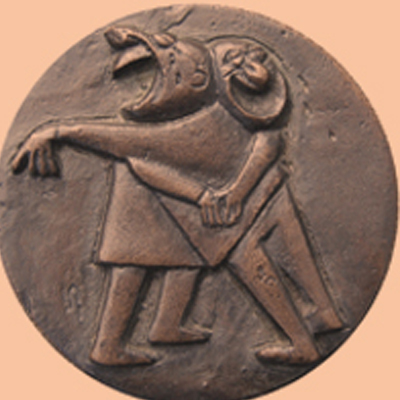
Si bien su historia en el ámbito del humor gráfico comienza a finales del siglo XIX, como en casi toda Europa del Este, el concepto museológico se desarrolló más recientemente, concretamente a partir de la década de 1990, con la inauguración del Museo Yugoslavo del Humor y la Sátira (Jugoslovenski muzej humora i satire) en la ciudad de Pljevlja. Al ser construido en una época en la que aún no era un país independiente, acaba siendo un museo de Yugoslavia, de la federación de varias repúblicas. Esta perspectiva se basa en la idea de que el humor une, no separa, a las personas; alía, no crea guerras, contribuyendo a superar divisiones, prejuicios e intolerancias religiosas, tribales, regionales y políticas.
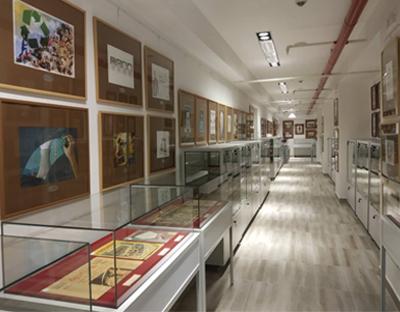
Las colecciones del museo trazan el desarrollo del humor y la sátira a lo largo de más de un siglo. La pieza más antigua del museo es la revista satírica "Domišljan", de 1874, y cada año el museo enriquece su colección de obras satíricas con un gran número de libros. El museo cuenta con más de 4.000 materiales de prensa originales, así como más de 2.500 caricaturas recopiladas en más de dos docenas de ediciones del concurso de caricaturas "Risto Pejatović".
Para conocer más sobre su existencia, entrevistamos a su directora, Jelena Bojović:
O.M.Sousa - ¿Cuándo nació su Museo?
Jelena Bojović - Nuestro Museo se inauguró en 1994. En aquel entonces, se encontraba temporalmente en la Galería “Vitomir Srbljanović”, pero ha permanecido allí hasta la fecha. Incluso 30 años después, no hemos logrado que este Museo sea independiente. Nuestra Colección se creó gracias a la donación de una colección recopilada durante años por el consejo editorial de la revista humorística y satírica “Ošišani jež” (Erizo Esquilado) (Belgrado, Serbia), la revista más importante en este ámbito publicada en la antigua Yugoslavia. En el momento de la inauguración del museo, la colección contaba con varios cientos de piezas, y hoy contamos con varios miles. Recopilamos materiales mediante compras, donaciones, pero sobre todo gracias al festival de humor y sátira que se organiza en nuestra ciudad.
O.M.Sousa - ¿Quién lo creó? ¿Fue una organización, un coleccionista, un artista? ¿Cuáles son las razones para crear un Museo del Humor? ¿Encerrarlo en los muros oficiales para que no te moleste, o aceptar la irreverencia como un arte fundamental de supervivencia para cualquier democracia? ¿Debería el humor museístico verse como una pulla o como medicina homeopática?
Jelena Bojović - El consejo editorial de la revista “Ošišani jež” quería preservar los materiales de esta manera, ya que no encontraban comprensión para este tipo de museo en su ciudad. Las autoridades de entonces aceptaron con entusiasmo la donación. No estoy segura de que hoy sea el caso. El humor en nuestro museo es, sin duda, un remedio homeopático (el humor), pero sobre todo, una espada (la sátira).
O.M.Sousa - ¿Quién financia su museo? ¿Cuentan con apoyo oficial o con mecenas privados? ¿Cómo se ve la supervivencia? ¿Puede un Museo del Humor mantener su irreverencia e independencia de la censura del poder?
Jelena Bojović - Nuestra institución pública está financiada por el Ayuntamiento de Pljevlja. Rara vez recibimos donantes. Supervivir no es difícil, pero para el arte y el progreso se necesita más que eso... Me parece que sí se puede. Quizás no somos lo suficientemente perspicaces, o no les interesa mucho lo que decimos.
O.M.Sousa - ¿Su exposición permanente se mantiene con el material de archivo o no cambia nunca?
Jelena Bojović - Nuestra exposición permanente es la misma, con pequeños cambios debido al festival.
Nuestra colección se divide en cinco colecciones:
1. El desarrollo del humor y la sátira en Yugoslavia,
2. El desarrollo del humor y la sátira en el mundo,
3. Una colección dedicada al festival Días de Humor y Sátira “Vuko Bezarević”,
4. El legado de “Ošišani jež”,
5. La colección de caricaturas: el premio de caricatura “Risto Pejatović”.
Las colecciones abarcan desde mediados del siglo XIX hasta la actualidad. Dentro de estas colecciones, hay libros sobre humor y sátira escritos en serbio-croata, así como libros de varios países...
O.M.Sousa - Además de la colección del museo, ¿ha participado este en otras iniciativas, como exposiciones temporales, retrospectivas de artistas nacionales o extranjeros o concursos de humor? ¿Cuántos artistas temporales al año? ¿Existe algún festival o concurso relacionado con su museo? ¿Qué importancia tiene el festival para el museo?
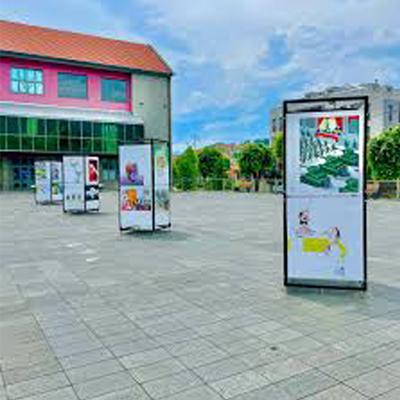
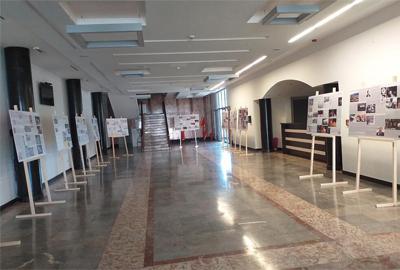
Jelena Bojović - Nuestro Museo se fundó en el marco del festival Días de Humor y Sátira "Vuko Bezarević" y está estrechamente vinculado a él. El festival se celebra anualmente en junio. Nuestra institución organiza un concurso para la mejor caricatura en el marco de este festival. El concurso se celebra desde hace 30 años y se convoca para los países de la ex Yugoslavia. Esperamos que se internacionalice en los próximos años. Además del premio a la caricatura, el festival también otorga dos premios anuales: al mejor relato satírico y a la obra literaria humorística-satírica del año anterior y del año en curso publicada en el área de la antigua República Federativa Socialista de Yugoslavia, para un relato satírico, un poema satírico y un ciclo de 10 aforismos, para autores menores de 30 años. El festival es importante para el Museo, ya que todos los materiales del mismo se conservan en el Museo, enriqueciendo la colección. Organizamos con frecuencia exposiciones retrospectivas y exposiciones de caricaturas de autores. En el marco del Festival, se realizan promociones de los libros de los ganadores.
O.M.Sousa - ¿El museo tiene una temática específica? ¿Cómo ha evolucionado su colección? ¿Cuántas obras tiene y qué períodos abarcan? ¿La colección es solo nacional o internacional?
Jelena Bojović - Nuestra colección se presenta cronológicamente. Se exhiben los ejemplares más antiguos de revistas de la antigua región Yu, así como del mundo. Se exhiben todas las caricaturas del Gran Premio desde 1994 hasta la actualidad. Para los aspectos que menciona, necesitamos un espacio más amplio.
O.M.Sousa - ¿Cómo ve el arte del humor? ¿Percibe diferencias de humor en su colección? ¿Es un repositorio de la evolución de las artes en su país? ¿Es un resumen de la historia del país? ¿Es un espacio para la diversión educativa?
Jelena Bojović: Estas son preguntas esenciales, y me alegra que las hayas planteado. Como curadora, a menudo pienso en el propósito de lo que hacemos. En nuestra sociedad, el humor todavía se considera una forma de arte de segunda categoría, incluso la sátira tiene ese estatus. A todos nos encanta ver caricaturas e interpretarlas, pero en el mundo del arte no se aprecian lo suficiente. Nuestra colección es una auténtica montaña rusa de emociones. Desde el humor ligero y puro, pasando por el sarcasmo crítico y la crítica, hasta la sátira intensa que se transforma en tristeza. Después, retrata la historia del desarrollo del humor y la sátira, y la censura que le ha seguido de cerca. Me encantaría que fuera el depósito de la revolución artística en mi país; nuestra colección sin duda tiene ese potencial, pero actualmente no lo es. Se puede decir que ofrece una descripción completa de la historia de nuestro país, no solo de Montenegro, sino también de la antigua Yugoslavia. Es un excelente espacio para el disfrute educativo.
O.M.Sousa - ¿Cómo debería ser un Museo del Humor? ¿Su política museológica es la misma que la de cualquier otro museo de arte, o, por enmarcarse en un arte más social y político, una expresión filosófica más intervencionista merece una política museológica diferente? ¿Es un depósito de obras, en una concepción de la evolución estética de este arte, o debería ser un museo de carácter sociológico y psicológico, como el Museo de Historia de un país, de un continente, con una visión irreverente e innovadora? ¿Debería ser un espacio para exposiciones o actividades educativas, de introspección política y social? ¿Debería abarcar la interdisciplinariedad o limitarse a un campo específico, como el gráfico?
Jelena Bojović - Un museo del humor se enfrenta a más retos en este sentido que otros. El museo del humor debe transmitir a los visitantes la impresión de una institución cultural pública, con todas las características de los museos de arte, porque no queremos que la palabra "museo" se limite al título, sino que, al mismo tiempo, les proporcione una dosis adecuada de humor. Sobre todo, debemos tener precisamente lo que usted mencionó: un museo histórico de un país a través del prisma del humor y la sátira, a través de la introspección política y social. Nuestro museo es, sin duda, un lugar donde los caricaturistas realizan exposiciones, pero también proyectos de comisariado. No debería limitarse a un solo ámbito.
O.M.Sousa - El problema del caricaturismo es que se desactualiza rápidamente; es decir, necesita respaldo documental para su recalificación en el momento y una mejor comprensión de las obras. ¿Supone esto un problema para su exposición pública?
Jelena Bojović - Exhibimos caricaturas premiadas en nuestro concurso anual, pero también contamos con algunos de los autores más importantes de nuestras regiones. Para algunos, la explicación nunca es necesaria porque los temas son atemporales y comprensibles para cualquier cultura, mientras que otros son efímeros y requieren explicación. Pero creo que estos otros también tienen su propósito, ya que evocan la época en la que fueron creados.
O.M.Sousa - ¿Disponen de personal especializado en el manejo de papel? ¿Hay investigadores trabajando en el Museo?
Jelena Bojović - Contamos con personal especializado en el manejo de papel, pero aún no contamos con investigadores.
O.M.Sousa - Las nuevas tecnologías son excelentes para las nuevas configuraciones expositivas; sin embargo, en el ámbito de la creación individual, ya no hay originales. ¿La desaparición de estos originales en papel, lienzo… perjudica el crecimiento de la colección del museo? ¿Exhiben obras digitales como originales?
Jelena Bojović - En gran medida, la tecnología perjudica a los museos. Tenemos que exponer obras digitales porque los propios autores no utilizan lienzo, papel, lápices, pinceles... Utilizan predominantemente dispositivos inteligentes. Como resultado, hay una diferencia visible en la propia configuración, por no hablar del archivo que conservamos y los originales que se encuentran allí.
O.M.Sousa - ¿Utilizan las nuevas tecnologías como elementos complementarios en las exposiciones?
Jelena Bojović - Hasta cierto punto, sí. Nos adaptamos al autor que expone.
O.M.Sousa - ¿Publican un catálogo (¿en papel o en formato electrónico?) para todas las exposiciones? ¿Publican libros teóricos sobre viñetas/caricaturas? ¿Hacen otro tipo de merchandising?
Jelena Bojović - Es obligatorio tener un catálogo impreso para cada exposición; rara vez publicamos catálogos digitales. Hasta ahora no hemos publicado libros teóricos sobre caricaturas. Solo hemos publicado una monografía con motivo del 30.º aniversario del premio de caricatura que nuestra institución otorga anualmente. Planeamos crear una tienda de recuerdos con aforismos y caricaturas de nuestro Museo.
O.M.Sousa – ¿Participan los artistas en la vida del Museo? ¿Cómo colaboran?
Jelena Bojović – Los artistas consideran nuestro Museo como su hogar. Un aforista dejó todo su legado, más de 1000 libros de humor y sátira, a nuestro Museo. Cada año, los autores que asisten al festival donan sus libros. Los caricaturistas están muy dispuestos a exponer con nosotros. Estamos muy satisfechos con la colaboración con los artistas.
O.M.Sousa – ¿Cómo es el apoyo del público? ¿Cuántos visitantes al año? ¿Tienen un público específico? ¿Solo nacionales o también extranjeros? ¿Qué grupos de edad visitan más el Museo?
Jelena Bojović – Como directora del Museo, no estoy satisfecha con el número de visitantes. El espacio en el que nos encontramos también presenta un desafío. Creo que nuestro Museo tiene un gran potencial turístico, pero por el momento, no veo que las cosas mejoren en ese sentido.
Nuestro público es diverso. Los visitantes individuales son principalmente de mediana edad y mayores, entre 40 y 70 años. Recibimos frecuentemente a grupos organizados de estudiantes, principalmente escolares locales de nuestro país. Nuestra ciudad no es una gran atracción turística, por lo que no recibimos muchos visitantes extranjeros.
O.M.Sousa – ¿Cómo es su relación con el poder? ¿Aprueban los políticos este tipo de museos?
Jelena Bojović – Las autoridades no nos han causado ningún problema de censura. Solo tuvimos una situación en la que no entendieron qué tipo de museo somos y pensaron que deberíamos cerrarlo. Afortunadamente, eso no ocurrió. Actualmente, no nos enfrentamos a ninguna censura por parte de las autoridades.
O.M.Sousa – ¿Por qué hay tan pocos Museos del Humor en el mundo?
Jelena Bojović – Creo que el momento del Museo del Humor aún está por llegar. Me parece que la humanidad apenas ahora está alcanzando el nivel cultural necesario para comprender nuestras exposiciones.
O.M.Sousa – ¿Hay otros Museos de Humor Gráfico en su ciudad? ¿Cuáles? ¿En su país? ¿Cuáles?
Jelena Bojović – No hay museos similares en nuestro país. Montenegro es un país pequeño con una población de 600.000 habitantes. Nuestra ciudad tuvo la suerte de establecer un Festival de Humor y Sátira, que es la razón por la que existimos hoy.
Gracias por la entrevista. Nos alojamos en la zona de los Balcanes, no por otro museo, sino por un espacio artístico que merece nuestra atención. Me refiero a la "Galleria Osten", ubicada en Skopie, es decir, la recién proclamada República de Macedonia del Norte.
Este espacio artístico, dedicado al arte sobre papel, también alberga la Galería Mundial de Cartoon y la Galería Mundial del Dibujo. Según su sitio web, todo comenzó en 1945 con la creación de una revista que, a partir de 1969, incorporó la producción anual de la Galería Mundial de Cartoon. Con los años, su colección ha crecido y, si bien aún no se ha transformado en museo, al menos es una buena muestra del humor regional e internacional.
Dejando atrás la letra M, pasemos a los Países Bajos, que para nosotros son los Países Bajos. Aquí tampoco encontraremos un verdadero Museo del Humor, sino varios con humor. ¿Les parece?
Nuestra primera investigación nos lleva al Museo Holandés del Cómic en Groningen, creado en 2004 con gran éxito, pero clausurado en 2019. Aunque estaba dedicado principalmente al cómic, también contaba con una sección dedicada al humor. Simultáneamente, en la misma ciudad, nació Storyworld (especializado en cómic, animación y videojuegos), un espacio más interactivo y tecnológico. Sin embargo, la colección de originales del antiguo museo se integró en los archivos de la ciudad.
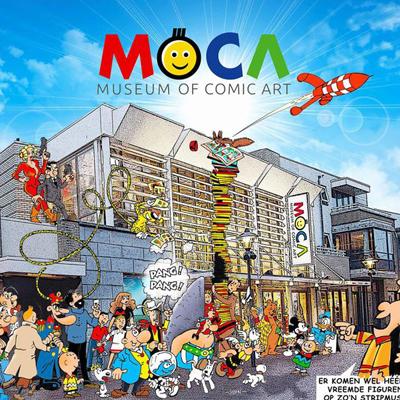
En Noordwijk, se encuentra otro espacio similar: el MoCA (Museo de Arte del Cómic), con la posibilidad de encontrar algunas obras con humor. En su página web se indica: «No hay preferencia por un período ni una forma de expresión en particular, aunque se permite a los distintos comisarios de las exposiciones tener su propio gusto. La prioridad es mostrar las mejores y más personales expresiones del Noveno Arte. El MoCA se esfuerza activamente por establecer una conexión entre los diferentes movimientos del cómic holandés».
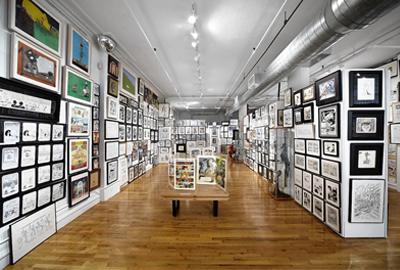
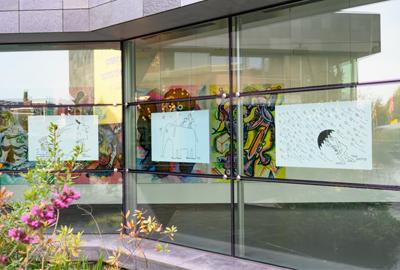
En Eindhoven, encontramos la Casa-Museo del artista holandés Ton Smits (Veghel 1921 - Eindhoven 1981), inaugurada en 1983, pero que no obtuvo la categoría de museo hasta 2009. La colección contiene aproximadamente veinte mil caricaturas y bocetos a lápiz originales, así como varios cientos de pinturas de Ton Smits. Aunque se centra principalmente en la obra de su mecenas, la casa también alberga exposiciones de otros artistas. Gestionada por una fundación, se sustenta gracias a las donaciones de la asociación Amigos de Ton Smits y a las entradas al museo, que solo se pueden adquirir con cita previa (info@tonsmitshuis.nl).
Montenegro
Montenegro
Montenegro
Países Bajos

Países Bajos
Países bajos

Países Bajos

Países Bajos
Países Bajos

Países Bajos
Museums of Humor in the World | Montenegro - North Macedonia - Netherlands
By: Osvaldo Macedo de Sousa
Montenegro is an old/young country in the Balkans. Although the current country only achieved its independence in 2006, its history is long. Suffering from all the turmoil that has characterized the region since antiquity. A principality during the Ottoman occupation, in 1878 the Treaty of Berlin recognized its independence, but only from 1910 did it have the right to a king, who ruled until 1918 when its territory was integrated into the Kingdom of Serbs, Croats and Slovenes, which from 1929 became the Kingdom of Yugoslavia, which became a (socialist) republic in 1944.
While its history in the realm of graphic humor begins in the late 19th century, as in almost all of Eastern Europe, the museological concept was only developed more recently, specifically from the 1990s onwards, with the inauguration of the Yugoslav Museum of Humor and Satire (Jugoslovenski muzej humora i satire) in the city of Pljevlja. Since it was built at a time when it was not yet an independent country, it ends up being a museum of Yugoslavia, of the federation of various republics. Underlying this perspective is the idea that humor unites, not separates, people; ally, do not wage war, contributing to overcoming divisions, prejudices, and religious, tribal, regional, and political intolerances...
The museum's collections trace the development of humor and satire over more than a century. The oldest item in the museum is the satirical magazine "Domišljan" from 1874, and every year the museum enriches its collection of satirical works with a large number of books. The museum has more than 4,000 original press materials, as well as more than 2,500 caricatures collected from more than two dozen editions of the "Risto Pejatović" caricature contest.
To learn more about its existence, we interviewed its director, Jelena Bojović:
O.M.Sousa - When was your Museum born?
Jelena Bojović - Our Museum was opened in 1994. At that time, it was temporarily housed in the “Vitomir Srbljanović” Gallery, but it has remained there to this day. Even 30 years later, we have not managed to make this Museum independent. Our Collection was created through the donation of a collection that was gathered for years by the editorial board of the humor-satirical magazine “Ošišani jež” (Shorn Hedgehog) (Belgrade, Serbia) – the most significant magazine in this field that was published in the area of the former Yugoslavia. At the time of the museum’s opening, the collection counted several hundred items, and today we have several thousand. We collect materials through purchases, donations, but mostly thanks to the humor and satire festival that is organized in our city.
O.M.Sousa - Who created it? Was it an organization, a collector, an artist? What are the reasons for creating a Humor Museum? Close it in official walls so that it doesn't bother you, or accept irreverence as a fundamental art of survival for any democracy? Should museum humor be seen as a barb, or as homeopathic medicine?
Jelena Bojović - The editorial board of the “Ošišani jež” magazine wanted to preserve materials in this way, as they did not find understanding for this type of Museum in their city. The authorities at that time enthusiastically accepted this donation. I’m not sure that would be the case today. Humor in our Museum is certainly a homeopathic remedy (humor), but above all, a blade (satire).
O.M.Sousa - Who finances your Museum? Do you have official support, or do you have private patrons? What does survival look like? Can a Museum of Humor maintain its irreverence and independence from the censorious force of power?
Jelena Bojović - Our Public Institution is financed by the Municipality of Pljevlja. We rarely have donors. Survival is not difficult, but for art and progress, more is needed than that... It seems to me that it can. Perhaps we are not sharp enough, or they are not very interested in what we say.
O.M.Sousa - Does your permanent exhibition run with the archived material, or does it never change?
Jelena Bojović - Our permanent exhibition is the same, with minor changes that come due to the festival.
Our collection is divided into 5 Collections:
1. The development of humor and satire in Yugoslavia,
2. The development of humor and satire in the world,
3. A collection dedicated to the festival Days of Humor and Satire “Vuko Bezarević”,
4. The legacy of “Ošišani jež”,
5. The caricature collection – the award for caricature “Risto Pejatović”.
The collections cover the period from the mid-19th century to the present. Within these collections, there are books in the field of humor and satire written in Serbian-Croatian language, as well as books from various countries...
O.M.Sousa - In addition to the museum collection, has this museum been linked to other initiatives, such as temporary exhibitions, retrospectives of national or foreign artists, humor competitions? How many temps per year? Is there a Festival or competition linked to your Museum? How important is the Festival for the Museum?
Jelena Bojović - Our Museum was established within the festival Days of Humor and Satire “Vuko Bezarević” and is closely related to it. The festival is held annually in June. Our Institution organizes a competition for the best caricature within this festival. The competition has been held for 30 years and is announced for ex-Yugoslavian countries. We expect it will become international in the coming years. In addition to the caricature award, the festival also awards two more prizes – for the best satirical story and for humoristic-satirical literary work from the previous and current year published in the area of the former SFRY as an annual award, for a satirical story, a satirical poem, a cycle of 10 aphorisms – for authors under 30 years old. The festival is important for the Museum as all materials from the Festival are stored in the Museum, enriching the collection. We often organize retrospective exhibitions and author exhibitions of caricature. Within the Festival, book promotions of award winners are held.
O.M.Sousa - Is the Museum themed? How has your collection evolved? How many works do you have, and what periods do they cover? Is the collection only national, or international?
Jelena Bojović - Our collection is presented chronologically. The oldest examples of magazines from the ex-Yu region as well as from the world are exhibited. All Grand prix caricatures from 1994 to the present are displayed. For the aspects you mention, we need a larger space.
O.M.Sousa - How do you view the art of humor? Do you feel differences in mood throughout your collection? Is it a repository of the evolution of the arts in your country? Is it an overview of the country's history? Is it a space for simple educational fun?
Jelena Bojović - These are actually essential questions, and I’m glad you asked them. As a curator, I often think about the purpose of what we do. Humor is still viewed in our society as a second-rate art form, even satire holds that status. Everyone loves to look at caricatures and interpret them, but in the art world, they are not appreciated enough. Our collection is a true roller coaster of emotions. From pure light humor, through critical sarcasm and critique, to heavy satire that transitions into sadness. Then, it portrays the history of the development of humor and satire and the censorship that has followed closely. I would love for it to be the deposit for the revolution of art in my country; our collection certainly has that potential, but it is not currently. It can be said that it provides a comprehensive depiction of our country’s history, not just Montenegro, but the former Yugoslavia as well. It is an excellent space for simple educational enjoyment.
O.M.Sousa - What should a Humor Museum be? Is your museological policy the same as any other art museum, or because it fits within a more social and political art, does a more interventionist philosophical expression deserve a different museology policy? Is it a deposit of works, in a conception of the aesthetic evolution of this art, or should it be a Museum of a sociological and psychological nature, like the History Museum of a country, of a continent with an irreverent and innovative vision? Should it be a place for exhibitions or educational activities, political and social introspection? Should it encompass interdisciplinarity, or be restricted to a specific field, such as graphics?
Jelena Bojović - A humor museum faces more challenges in this regard than other museums. The humor museum must give visitors the impression of a public cultural institution, with all the characteristics of art museums because we do not want the word museum to just stand in the title, but at the same time, they must receive a sufficient dose of humor. Above all, we must have precisely what you mentioned, a historical museum of a country through the prism of humor and satire, through political and social introspection. Our Museum is certainly a place where caricaturists hold exhibitions, but also curator projects. It should not be limited to one area.
O.M.Sousa - The problem with cartoonism is that it is quickly out of date, that is, it needs documentary support for its requalification at the time to better understand the works. Is this a problem for your public exposure?
Jelena Bojović - We exhibit awarded caricatures from our annual competition, but we also have some of the most significant authors from our regions. For some of them, explanation is simply never necessary because the topics are timeless and understandable to any culture, while others truly last a very short time and need to be explained. But I believe that these others also have their purpose, as they echoed a time in which they were created.
O.M.Sousa - Do you have staff specialized in paper handling? Are there researchers working for the Museum?
Jelena Bojović - We have staff for handling paper, but we still do not have researchers.
O.M.Sousa - New technologies are excellent for new exhibition setups, however, in the field of individual creation, there are no longer any originals. Does the disappearance of these originals on paper, canvas… harm the growth of the museum’s collection? Do you exhibit digital works as originals?
Jelena Bojović - To a significant extent, technology harms museums. We have to exhibit digital works because the authors themselves do not use canvas, paper, pencils, brushes... They predominantly use smart devices. As a result, there is a visible difference in the setup itself, not to mention the archive we keep and the originals found there.
O.M.Sousa - Do you use new technologies as complementary elements of the exhibitions?
Jelena Bojović - To a certain extent, yes. We adapt to the author who is exhibiting.
O.M.Sousa – Do you publish a catalog (on paper or e.book?) for all exhibitions? Do you publish theoretical books on cartoons/caricature? Do you do another type of merchandising?
Jelena Bojović - A printed catalog is mandatory for each exhibition; we rarely publish digital ones. We have not published theoretical books on caricature so far. We have only issued a Monograph on the occasion of the 30th anniversary of the caricature award that our institution grants annually. We are planning to create a souvenir shop with souvenirs featuring aphorisms and caricatures from our Museum.
O.M.Sousa – Do artists participate in the life of the Museum? How do they collaborate?
Jelena Bojović - Artists see our Museum as their home. One aphorist left his entire legacy, over 1,000 books in the field of humor and satire, to our Museum. Every year, authors who come to the festival donate their books. Caricaturists are very willing to exhibit with us. We are very satisfied with the cooperation with artists
O.M.Sousa – How is public support? How many visitors per year? Do you have a specific audience? Only nationals or also foreigners? Which age groups visit the Museum the most?
Jelena Bojović - As someone who runs the Museum, I am not satisfied with the number of visitors. The space we are in also presents a challenge. I believe our Museum has great tourist potential, but at the moment, I don’t see things improving in that regard.
Our audience is diverse. Individual visitors are mostly middle-aged and older, between 40 and 70 years old. We frequently host organized groups of students, primarily local schoolchildren from our country. Our city is not a major tourist attraction, so we do not have a large number of foreign visitors.
O.M.Sousa – What is your relationship with power like? Do politicians embrace this type of Museums?
Jelena Bojović - The authorities have not caused us any problems in terms of censorship. We only had one situation where they didn’t understand what kind of Museum we are and thought we should be shut down. Fortunately, that didn’t happen. Currently, we are not facing any censorship from the authorities.
O.M.Sousa – Why are there so few Humor Museums in the world?
Jelena Bojović - I believe that the time for the Museum of Humor is yet to come. It seems to me that humanity is only now reaching the cultural level needed to understand our exhibitions.
O.M.Sousa – Are there other Graphic Humor Museums in your city? Which? In your country? Which?
Jelena Bojović - There are no similar museums in our country. Montenegro is a small country with a population of 600,000. Our city was fortunate to establish a Festival of Humor and Satire, which is the reason we exist today.
Thank you for the interview. We're staying in the Balkans area, not because of another museum, but because of an art space that deserves our attention. I'm referring to the "Galleria Osten," located in Skopje, that is, the newly proclaimed Republic of North Macedonia.
This art space, dedicated to art on paper, also houses the World Cartoon Gallery and the World Drawing Gallery. According to its website, it all began in 1945 with the creation of a periodical which, from 1969 onwards, incorporated the annual production of the World Cartoon Gallery event. Over the years, its collection has grown, and if it hasn't yet been transformed into a museum, it is at least a good showcase of regional and world humor.
Leaving the letter M behind, let's move on to the Netherlands, which for us is the Low Countries. Here, too, we won't find a true Museum of Humor, but several with humor. Shall we?
Our first investigation leads us to The Dutch Comic Museum in Groningen, which was created in 2004 with great success, but closed in 2019. Although it was essentially dedicated to comics, it also had a section dedicated to humor. Simultaneously, in the same city, Storyworld (specializing in comics, animation, and games) was born, a more interactive and technological space. The collection of originals from the former museum was, however, integrated into the city's archives.
In Noordwijk, another similar space can be found - the MoCA - Museum of Comic Art, that is, with the possibility of finding some works with humor. On its website it says: "There is no preference for a particular period or for a particular form of expression, although the various curators of the exhibitions are allowed to have their own taste. The priority is to show the best and most personal expressions of the Ninth Art. The MoCA actively does its best to establish a connection between the different movements of Dutch comics."
In Eindhoven, we find a House-Museum of the Dutch artist Ton Smits (Veghel 1921 - Eindhoven 1981), which opened its doors in 1983 but only achieved museum status in 2009. The collection contains approximately twenty thousand original cartoons and pencil sketches and several hundred paintings by Ton Smits. Although it focuses primarily on the work of its patron, the house also holds exhibitions of the work of other artists. Managed by a Foundation, it survives on donations from the Friends of Ton Smits association and museum admissions, which can only be made by prior appointment (info@tonsmitshuis.nl).