Sin duda, el hito más destacado en el universo del humor durante el mes de noviembre —ocurrido precisamente el primer día del mes— fue el anuncio del ganador del Premio Internacional Humor Sapiens; una distinción que, a mi juicio, constituye el mayor reconocimiento al que puede aspirar hoy en día un investigador o promotor de las artes humorísticas.
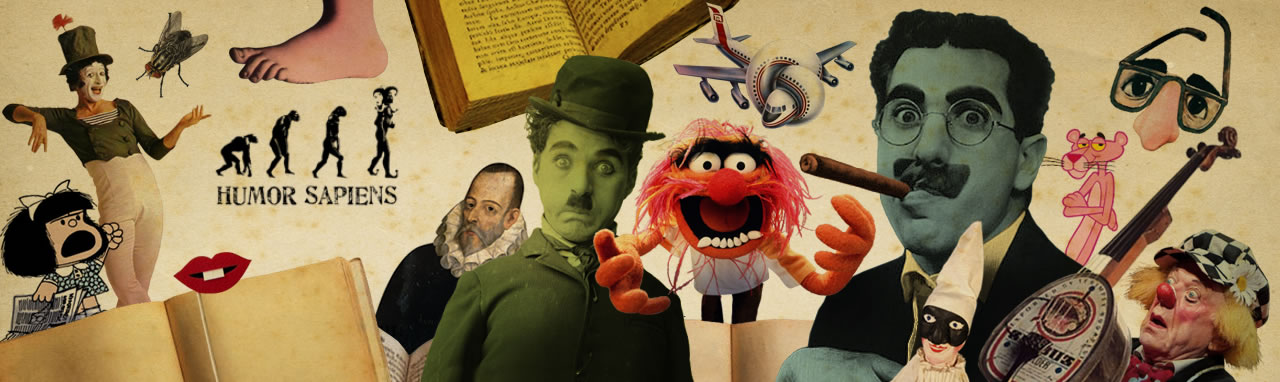
El premio surgió en 2025, impulsado por el sitio web Humor Sapiens (creado y dirigido desde 2013 por el humorista, investigador y productor Pepe Pelayo). Se trata de una plataforma dedicada al estudio, la reflexión y la divulgación del humor, tanto en su vertiente artística como filosófica. En este espacio, además de la excepcional labor de investigación y la reflexión teórico-práctica de Pepe Pelayo, se publican trabajos de investigadores, creadores y productores de todo el mundo, con el propósito de difundir y fomentar la labor de otros especialistas, bajo el lema: «Crear, pensar y vivir con humor».
No conforme con haber creado un espacio global de investigación, Pelayo decidió rendir homenaje anualmente a uno de sus colegas, distinguiéndolo entre sus pares con un galardón especial.
Son pocos quienes reparan en este pequeño universo de investigación y dinamismo. Una de las escasas excepciones es el Festival Internacional del Humor de la Aceituna (International Olive Humor Festival) de Kyrenia, en Chipre —organizado por la Asociación de Caricaturistas Chipriotas—, que otorga el premio «Gold Olive Humour Service Award» (en octubre de este año tuve la sorpresa
de recibir este galardón por mi trayectoria como promotor del humor gráfico; aprovecho la ocasión para agradecer al colectivo chipriota por tal distinción). No obstante, dicho premio está más orientado a reconocer a productores, promotores y artistas que a investigadores.
En el caso del Premio Humor Sapiens, este tiene como... «propósito reconocer y estimular el estudio, la reflexión y la promoción del humor como fenómeno cultural, artístico, social y humano.
El premio busca destacar la labor de quienes, desde la investigación, la docencia, la crítica, la creación o la gestión cultural, contribuyen significativamente a la comprensión, valoración y difusión del humor en sus múltiples dimensiones. Con este premio, Humor Sapiens reafirma su vocación de ser un puente entre la risa y el pensamiento, entre la diversión y la sabiduría, entre el humor y su estudio riguroso.»
Tuve el honor de ser homenajeado en 2025, en su primera edición. Para mí fue una sorpresa, ya que, entre tantas figuras de gran mérito nominadas —el simple hecho de figurar en esa selección ya constituye un premio y un honor—, fui yo el elegido. En el mundo de la investigación, uno termina sintiéndose muy solo, sin saber realmente cómo recibe el público nuestro trabajo, sin
saber si nuestro esfuerzo es válido y si vale la pena continuar por este camino. Cuando recibí este premio, atravesaba uno de mis momentos de mayor desánimo; aquí en Portugal, pocas personas valoran lo que hago o conocen la labor que se realiza en este campo de investigación y divulgación —una labor que a menudo se ve obstaculizada, simplemente porque falta la voluntad de apoyar esta actividad—. Lamentablemente, no podemos prescindir del apoyo externo, por más que nos esforcemos al máximo.
«Conocerse uno mismo es bueno, pero conocer a gente influyente en el gobierno es mucho mejor.» (EGJ)
Me encontraba en un momento en el que los políticos u organizadores clausuraban la Bienal —de la cual yo era director y productor— porque tenía demasiado éxito. En un pueblo de unos doscientos habitantes (que siempre asistían a la inauguración y a la entrega de premios), se celebraba un concurso en el que participaban más de quinientos artistas. Para ellos, esto significaba que eran los artistas quienes más deseaban la realización del evento, ya que, en términos numéricos, superaban con creces a la población local. Como no era posible aumentar la población, y dado que el éxito no presagiaba una disminución en el número de artistas participantes, la Bienal dejó de interesarles; del mismo modo que tampoco les interesa la publicación de libros sobre el humor, ya que estos se agotaban durante los primeros días... Me hicieron creer que mi trabajo era inútil y que, en realidad, a la gente no le interesa el humor ni su estudio.
«Nunca te abochornes de nada de lo que hagas, pues por muy sinvergüenza que seas, siempre habrá otro más sinvergüenza que tú.» (EGJ)
Un premio como este, más que un reconocimiento —que lo es—, supone un impulso de continuidad, proyectándonos hacia un futuro con mayor dedicación. Gracias a Humor Sapiens por darme un «golpe» —en forma de premio— y por seguir exigiéndome que trabaje, que continúe haciendo lo que amo tras 45 años de investigación.
El premio no es más que eso: un premio. Es una elección realizada por un jurado; si hubiera sido otro jurado, tal vez no lo habría recibido. Pero la realidad es que lo he recibido, y eso me ha hecho creer que mi vida ha valido la pena y que, quizás, todavía pueda contribuir a dinamizar y difundir —no mis propias sonrisas, pues no soy un creador, sino las de los demás— las sonrisas de
esos genios que, afortunadamente, trabajan por el bien de la sociedad.
«La maestría no existe. Está científicamente demostrado que cuanto más trabajas en algo, peor lo haces.» (EGJ)
Esto ocurrió en 2025. Ahora, hablemos de 2026. Las bases del premio se publicaron en agosto. Cabe destacar que el candidato a este galardón no es impuesto por el sitio web Humor Sapiens; al contrario, se invita «a toda la comunidad vinculada al estudio, la reflexión, la creación y la promoción del humor a enviar propuestas argumentadas de candidatos que consideren merecedores de este reconocimiento. El comité de Humor Sapiens evaluará todas las propuestas recibidas y también podrá considerar candidaturas sugeridas directamente por la organización».
Sobre esta base, surge inicialmente un grupo de candidatos, del cual se selecciona al investigador destacado; en este caso, el español Enrique Gallud Jardiel. Si en 2025 se privilegió a una personalidad vinculada al humor gráfico —no como creador, sino como investigador y promotor de este arte—, en 2026 el jurado eligió a alguien que, además de ser un creador de humor, está más
ligado a la literatura, la dramaturgia y la pedagogía; es decir, un escritor multifacético que redacta ensayos académicos, greguerías, libros de humor, obras históricas, poemas, textos dramáticos…
Según el texto del anuncio del Premio, «su trayectoria reúne las dimensiones especialmente significativas, en concordancia con los objetivos del Premio Internacional Humor Sapiens. Posee una vida académica dedicada al humor, cuenta con dos doctorados cuyas tesis están vinculadas directamente con él, ha realizado estudios e investigaciones sobre los mecanismos del humor, la escritura humorística y el humor escénico. Le han publicado más de cien libros de humor en distintos géneros. Imparte talleres y seminarios y ha dirigido una compañía teatral especializada en teatro cómico durante décadas…»
Como reacción al premio, Enrique publicó en las redes sociales:«Tengo que decir que es un grandísimo honor, inmerecido, y que agradezco de veras al organizador y al jurado que me hayan tenido en consideración. En el mundo en el que vivimos necesitamos más que nunca el humor y los que modestamente nos dedicamos a ello sabemos que el humor no está todo lo bien considerado
que debiera. Luchemos por llevar alegría al mundo, en lugar de odio y discriminación, porque la risa es lo más sano, lo más bueno, lo que más se parece a la felicidad.»
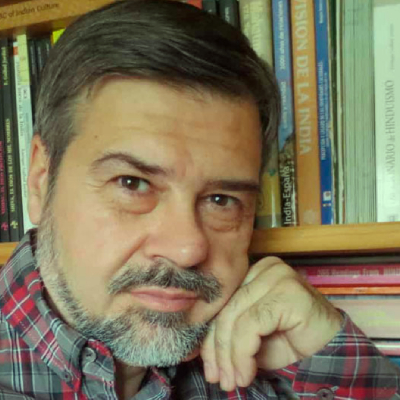
¿Quién es Enrique Gallud Jardiel (Valencia, 1958)? Es un profesor universitario, con una trayectoria docente repartida entre la India y España, que ha dedicado su vida académica y literaria al estudio y a la creación humorística. Sin embargo, su actividad no se limita únicamente a la docencia y a la escritura.
El hecho de ser nieto del humorista Enrique Jardiel Poncela —sobre quien ha publicado estudios y reeditado obras— e hijo de los actores Rafael Gallud y Mariluz Jardiel, facilitó (o tal vez no) su acercamiento a este universo; al mismo tiempo, le planteó muchas dudas existenciales, llevándole a cuestionarse desde muy joven sobre esta vida, esta forma de estar en el mundo, este arte y esta filosofía existencial.
«Jardiel Poncela para mí es un orgullo, un maestro en el sentido de muchas técnicas de escritura. Si me preguntas si Jardiel me ha abierto alguna puerta te diré que ninguna y pienso que ahora que estoy escribiendo, aunque pueda parecer lo contrario, será una rémora porque siempre se establecerá una comparación, siempre se dirá que este señor es el nieto y es un imitador, con lo
que mi futuro literario será o la desaparición o si consigo que alguien me recuerde hablarán del Jardiel bueno y el Jardiel malo.»
Sus libros superan los cuatrocientos, abarcando campos como la filología, la historia, el teatro, la crítica y el humor; además, es un experto en el mundo hindú. En cuanto a los artículos publicados, la cifra es muy superior. El teatro es otro universo en el que ha incursionado —como filólogo, filósofo, profesor, ensayista, historiador, escritor, actor, guionista y director—, centrándose esencialmente en la vertiente de la comicidad dramatúrgica y con una notable presencia del hinduismo.
«Siempre he escrito temas de humor, lo que pasa es que lamentablemente me ha sido más fácil publicar ensayos serios sobre distintos temas (Literatura, Filosofía o incluso Religiones) que escribir libros de humor.»
«Mi primer propósito al escribir es totalmente egoísta: lo hago para disfrutar yo, pues el acto de imaginar, de crear, de inventar me resulta muy divertido. Y, claro, hay un objetivo secundario: sería la culturalización, conseguir que la gente se acerque a la historia, a la literatura, a la filosofía o a cualquier otra disciplina a fuerza de hacerla simpática. El tercer objetivo es la mejora de la sociedad, por ampuloso que esto pueda parecer. «Castigat ridendo mores», afirma el adagio latino: riendo corrijo las costumbres. El humor, como dijo Jardiel Poncela, es un desinfectante y sirve para eliminar las lacras sociales. Es el arma más eficaz de la especie humana.»
Creador/investigador polimorfo camina entre el Oriente (especializado en el mundo Hindu, su linguística e su filosofia) y el occidente (desde la antiguedad a la actualidad), entre la pedagogía, al mundo onírico… Es imposible mostrar aquí todos sus títulos y creatividad, presento una mini lista: Teoría y mecanismos del humor, Historia cómica del arte, Historia cómica de La Educación, Historia cómica de la filosofía, Historia cómica de la Ciencia Ficción, El teatro es un asco y otras comedias cómicas, Lecturas de humor absurdo, Humor en el teatro barroco, Explicaciones filosóficas del humor, Filosofía para reír, Gramática para reír, Historia cómica del sexo, Técnicas de escritura humorística, El arte de criticar el arte,…
Él reafirma: «El humor no es un género literario, sino una perspectiva que funciona de manera transversal a las otras materias. Una vez hallado el punto del humor, pueden escribirse textos cómicos sobre cualquier tema que se conozca medianamente. Además, yo creo que el escritor debe intentar cultivar todos los géneros. Yo lo hago por afición, pues me gustan igualmente la
poesía, el teatro y la narrativa. Por otra parte, mi formación académica me ha proporcionado una buena base. Soy profesor de literatura y cuando has explicado cientos de veces en una clase, por ejemplo, las obras de Lope de Vega, puedes sin problema contarlas con humor.»
Con humor «Tú puedes poner exactamente lo que se te ocurre, que puede tener gracia o no pero no tienes ninguna limitación, mientras que durante muchos años de escribir ensayos, que también he disfrutado haciéndolos, siempre tienes el constreñimiento de la rigurosidad, del dato,del nivel de lengua, la precisión. En el humor, por contra, puedes hacer lo que quieras y sólo eres tú el que te impones unas normas como no utilizar un recurso humorístico porque me parece bajo o inadecuado pero si se me ocurre un tercero lo utilizaré.»
Enrique es un español «indianizado», ya que cursó sus estudios universitarios en aquel país y desarrolló allí gran parte de su vida profesional; esto le ha aportado otra perspectiva de la vida, combinando la sabiduría oriental con el existencialismo hispánico, siempre buscando el lado humorístico.
«Creo que la persona que vive instalada en el humor desarrolla tolerancia hacia los defectos propios y de los semejantes, una visión más amplia, es incapaz de exacerbarse, de matar, de herir, de hacer sufrir por una idea que a él le parece muy, muy seria. En definitiva, no creo que ninguna idea política, religiosa, racial, geográfica… sea tan seria como para que te lleve a matar a seres
humanos. Sin embargo en la Historia hemos visto a muchísima gente matando en nombre de una bandera, de un credo… eso una persona instalada en el humor no lo hace. Eso lo hace una persona esencialmente seria que se toma demasiado en serio la vida y a sí mismo. En ese sentido ver la vida con humor es bueno para el alma, te hace pecar menos.»
Siendo esta filosofía tan beneficiosa para la humanidad, surge la pregunta: ¿por qué es tan difícil ponerla en práctica?
«No sé si tiene la culpa Aristóteles que limita el humor a la burla de los inferiores y a la idea de que si te resbalas con una piel de plátano me río porque eres tonto ya que yo no me habría caído.
Pero es un hecho cierto, la gente va a ver una comedia cómica cuyo único objetivo es hacerte reír, ríe durante dos horas y después sale diciendo: «Qué gansada». No, perdone, gansada no, si el objetivo era hacerle reír es una obra plenamente satisfactoria. El drama prima sobre la comedia, incluso sobre la tragedia, en contra de lo que creían los griegos, que colocaban la tragedia y la
comedia al mismo nivel.»
En este momento, más importante que lo que yo escriba o lo que se diga, es buscar sus escritos, conocer más profundamente su creación y los matices de este mundo; porque este premio, más allá de ser un reconocimiento a la persona, constituye una llamada de atención para que los desprevenidos se acerquen a la obra de este autor, y para que quienes ya la conocen
vuelvan a leerla y extraigan lo mejor de su labor de investigación.
Enrique, enhorabuena por esta distinción; espero que continúes por muchos años más en este camino, en esta labor de excelencia.

Things of the Month (November) – Enrique Gallud Jardiel
by Osvaldo Macedo de Sousa
Undoubtedly, the most notable milestone in the world of humor during the month of November—occurring on the very first day of the month—was the announcement of the winner of the *Humor Sapiens* International Award. In my view, this distinction represents the highest recognition to which any researcher or promoter of the humorous arts can aspire today.
The award was established in 2025, spearheaded by the website *Humor Sapiens* (created and directed since 2013 by the humorist, researcher, and producer Pepe Pelayo). It is a platform dedicated to the study, contemplation, and dissemination of humor, in both its artistic and philosophical dimensions. Beyond the exceptional research and theoretical-practical reflections
contributed by Pepe Pelayo himself, the site features work from researchers, creators, and producers from across the globe—all with the aim of sharing and fostering the efforts of other specialists, under the motto: "Create, think, and live with humor."
Not content with having built a global hub for research, Pelayo decided to pay annual tribute to one of his colleagues, honoring them among their peers with a special award.
Few people take note of this small, dynamic universe of research. One rare exception is the International Olive Humor Festival in Kyrenia, Cyprus—organized by the Association of Cypriot Cartoonists—which presents the "Gold Olive Humour Service Award." (In October of this year, I was pleasantly surprised to receive this honor for my career as a promoter of graphic humor; I would like to take this opportunity to thank the Cypriot collective for such a distinction.) That said, this particular award is geared more toward recognizing producers, promoters, and artists than it is toward researchers.
The Humor Sapiens Award has the... «purpose of recognizing and encouraging the study, reflection, and promotion of humor as a cultural, artistic, social, and human phenomenon. The award seeks to highlight the work of those who—through research, teaching, criticism, creative practice, or cultural management—contribute significantly to the understanding, appreciation, and dissemination of humor in its many dimensions. With this award, Humor Sapiens reaffirms its mission to serve as a bridge between laughter and thought, between amusement and wisdom, and between humor and its rigorous study.»
I had the honor of being recognized in 2025, during the award’s inaugural edition. It came as a surprise to me; given the many highly accomplished individuals who were nominated—where simply being included in such a selection is an honor and a reward in itself—I was the one chosen.
In the world of research, one often ends up feeling quite alone, unsure of how the public perceives one’s work, or whether one’s efforts are truly valid and worth continuing. When I received thisaward, I was going through a period of deep discouragement. Here in Portugal, few people value
what I do or are even aware of the work being carried out in this field of research and outreach—a field that is frequently hindered simply by a lack of willingness to provide support. Unfortunately, no matter how hard we strive, we cannot do without external backing.
«Knowing yourself is good, but knowing influential people in government is much better.» (EGJ)
I found myself at a point where politicians or organizers were shutting down the Biennial—which I directed and produced—precisely because it was too successful. In a village of only about two hundred inhabitants (who would always attend the opening and the awards ceremony), a competition was being held that drew more than five hundred participating artists.
For them, this meant that it was the artists who most desired the event to take place, since, in terms of sheer numbers, they far outweighed the local population. As it was not possible to increase the local population—and given that the event’s success showed no sign of leading to a decline in the number of participating artists—they lost interest in the Biennial; much in the same
way that they have no interest in the publication of books about humor, given that such books would always sell out within the first few days... They led me to believe that my work was pointless and that, in reality, people have no interest in humor or its study.
«Never be ashamed of anything you do, for no matter how shameless you may be, there will always be someone even more shameless than you.» (EGJ)
An award like this—while certainly a form of recognition—serves as an impetus to keep going, propelling us toward a future of even greater dedication. My thanks to Humor Sapiens for giving me a "nudge"—in the form of an award—and for continuing to push me to work, to keep doing what I love after 45 years of research.
An award is just that: an award. It is a choice made by a jury; had it been a different jury, perhaps I would not have received it. But the reality is that I *did* receive it, and that has led me to believe that my life has been worthwhile—and that, perhaps, I can still contribute to enlivening and spreading the smiles of others (for I am not a creator myself, but rather one who highlights the
work of others)—the smiles of those geniuses who, fortunately, work for the good of society.
«Mastery does not exist. It has been scientifically proven that the more you work on something, the worse you do it.» (EGJ)
This took place in 2025. Now, let us talk about 2026. The terms and conditions for the award were published in August. It is worth noting that the candidate for this honor is not imposed by the website Humor Sapiens; on the contrary, «the entire community involved in the study, reflection, creation, and promotion of humor is invited to submit well-reasoned proposals for candidates they
deem deserving of this recognition. The Humor Sapiens committee will evaluate all proposals received and may also consider candidates suggested directly by the organization.» Based on this, an initial group of candidates is formed, from which the distinguished researcher is selected—in this instance, the Spaniard Enrique Gallud Jardiel. While in 2025 the focus was on a figure linked to graphic humor—not as a creator, but as a researcher and promoter of this art form—in 2026 the jury selected someone who, in addition to being a creator of humor, is more closely associated with literature, dramaturgy, and pedagogy; in other words, a multifaceted writer who produces academic essays, *greguerías*, humorous books, historical works, poems, dramatic texts, and more.
According to the text announcing the award, «his career encompasses dimensions that are particularly significant and well-aligned with the objectives of the International Humor Sapiens Award. He has dedicated his academic life to the study of humor, holds two doctorates—both with theses directly focused on the subject—and has conducted extensive research into the mechanisms of humor, humorous writing, and performance-based comedy. He has authored over a hundred books on humor across various genres. He
leads workshops and seminars, and for decades, he directed a theater company specializing in comedic performance...»
In response to the award, Enrique posted on social media: «I must say that this is a tremendous honor—an undeserved one—and I am truly grateful to the organizer and the jury for considering me. In the world we live in, we need humor more than ever; those of us who modestly dedicate ourselves to it know that humor is not as highly regarded as it ought to be. Let us strive to bring joy to the world, rather than hatred and discrimination, because laughter is the healthiest, thebest, and the thing that most closely resembles happiness.»
Who is Enrique Gallud Jardiel (Valencia, 1958)? He is a university professor—with a teaching career spanning both India and Spain—who has devoted his academic and literary life to the study and creation of humor. Yet, his work extends well beyond teaching and writing.
Being the grandson of the humorist Enrique Jardiel Poncela—on whom he has published studies and whose works he has helped bring back into print—and the son of actors Rafael Gallud and Mariluz Jardiel, may (or perhaps may not) have eased his entry into this world. At the same time, it raised many existential questions for him, leading him from a very young age to reflect deeply on this way of life, this particular mode of existing in the world, this art form, and this
existential philosophy.
«For me, Jardiel Poncela is a source of pride—a master in terms of many writing techniques.
If you ask me whether Jardiel has opened any doors for me, I would say none at all. In fact, now that I am writing, it might actually prove to be a hindrance; there will always be comparisons—people will always point out that I am his grandson and label me an imitator. Consequently, my literary future will likely lead to obscurity, or—if I am remembered at all—people will simply speak of 'the good Jardiel' and the bad Jardiel.»
He has authored over four hundred books, covering fields such as philology, history, theater, criticism, and humor; furthermore, he is an expert on the Hindu world. The number of his published articles is even greater. Theater is another realm he has explored—in his capacities as a philologist, philosopher, professor, essayist, historian, writer, actor, screenwriter, and director—focusing
primarily on the comedic aspects of drama, often with a significant Hindu influence.
«I have always written about humorous subjects; it is just that, unfortunately, I have found it+easier to publish serious essays on various topics—such as literature, philosophy, or even religion—than to publish books of humor.»
«My primary motivation for writing is entirely selfish: I do it for my own enjoyment, as the act of imagining, creating, and inventing is great fun for me. Of course, there is also a secondary objective: cultural enrichment—encouraging people to engage with history, literature, philosophy, or other disciplines by making them accessible and appealing. A third objective is the improvement of society, however grand that may sound. As the Latin adage goes, *castigat ridendo mores*:
'through laughter, I correct customs.' Humor, as Jardiel Poncela once said, acts as a disinfectant, helping to eliminate social ills. It is the most effective weapon the human species possesses.»
A versatile creator and researcher, he moves between the East—specializing in the Hindu world, its linguistics, and its philosophy—and the West, spanning from antiquity to the present day; his interests range from pedagogy to the realm of dreams. As it is impossible to list all of his creative works here, I offer a brief selection: *Theory and Mechanisms of Humor*, *A Comical
History of Art*, *A Comical History of Education*, *A Comical History of Philosophy*, *A Comical History of Science Fiction*, *Theater Is Disgusting and Other Comical Plays*, *Readings in Absurdist Humor*, *Humor in Baroque Theater*, *Philosophical Explanations of Humor*, *Philosophy for Laughter*, *Grammar for Laughter*, *A Comical History of Sex*, *Techniques for Humorous Writing*, *The Art of Criticizing Art*, and more.
He reaffirms: «Humor is not a literary genre, but rather a perspective that cuts across all other subjects. Once you’ve found the right humorous angle, you can write comic texts about any topic you have even a moderate grasp of. Furthermore, I believe a writer should try to cultivate every genre. I do so out of personal interest; I enjoy poetry, theater, and narrative fiction equally.
Moreover, my academic background has provided me with a solid foundation. I am a literature professor, and when you have explained—for instance, the works of Lope de Vega—to a class hundreds of times, you can easily recount them with a humorous touch.»
Regarding humor: «You can include whatever comes to mind—it may or may not be funny, but there are no limitations. In contrast, when writing essays—a task I’ve also enjoyed—you are always constrained by the need for rigor, factual accuracy, a specific register of language, and precision. With humor, however, you are free to do as you please; the only rules are the ones you set for yourself—for example, choosing not to use a particular comedic device because it feels crude or inappropriate—though if another idea occurs to me, I’ll use it.»
Enrique is a Spaniard who has been "Indianized"—having completed his university studies in India and spent a large part of his professional life there. This has given him a unique perspective on life, blending Eastern wisdom with Hispanic existentialism—all while consistently seeking out the humorous side of things.
«I believe that someone who lives through the lens of humor develops tolerance—both toward their own flaws and those of others—and gains a broader outlook. Such a person is incapable of becoming fanatical, of killing, of causing harm, or of inflicting suffering for the sake of an idea—even one they might otherwise consider very, very serious. Ultimately, I do not believe that any political, religious, racial, or geographical idea is serious enough to justify killing other human beings." Throughout history, however, we have seen so many people killing in the name of a flag or a creed—something a person who embraces humor would never do. That is the behavior of someone who is fundamentally serious—someone who takes life, and themselves, far too seriously.
In that sense, viewing life with a sense of humor is good for the soul; it leads you to sin less.»
Given that this philosophy is so beneficial to humanity, the question arises: why is it so difficult to put into practice?
«I don’t know if Aristotle is to blame—he limits humor to the mockery of those considered inferior, based on the idea that if you slip on a banana peel, I laugh because you’re foolish—after all, *I* wouldn’t have fallen. Yet, it’s a fact: people go to see a comedy—a work intended solely to make them laugh—they spend two hours laughing, and then, upon leaving, they remark, ‘What
nonsense.’ Well, excuse me—it’s not ‘nonsense’; if the goal was to make you laugh, then the work was entirely successful. Drama takes precedence over comedy—and even over tragedy—contrary to what the Greeks believed, as they placed tragedy and comedy on the same level.»
At this moment, more important than what I might write—or what might be said—is to seek out his writings, to gain a deeper understanding of his creative output and the temperaments of this world. For this award, beyond being a recognition of the individual, serves as a wake-up call—a prompt for the unacquainted to discover this author’s work, and a reminder for those already familiar with it to revisit his writings and glean the very best from his research.
Enrique, congratulations on this honor; may you continue along this path, in this pursuit of excellence, for many years to come.