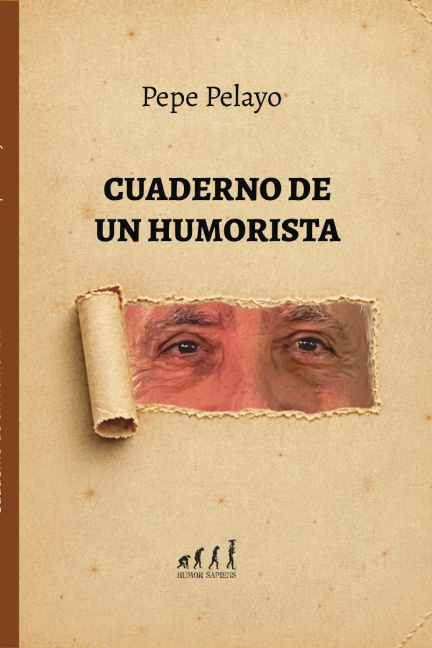
Cuaderno de un humorista
Llevo más de cincuenta años haciendo humor. En ese tiempo he aprendido algunas cosas, me he equivocado en muchas otras y sigo haciéndome preguntas. Este no es un curso de humor ni unas memorias. Es, simplemente, el cuaderno donde anoto recuerdos, dudas, descubrimientos y pequeñas historias que, de algún modo, explican cómo el humor terminó enseñándome mucho sobre los demás... y también sobre mí mismo.
Persona y personaje
Hay una pregunta que me han hecho cientos de veces.
—¿Por qué no te cuentas un chiste?
No importa dónde. Puede ser en una feria del libro, en un aeropuerto, en la calle, en una reunión familiar o mientras estoy haciendo una fila para una gestión en el banco.
La frase cambia un poco.
—A ver, haznos reír.
—Di algo gracioso.
—No me digas que hoy no andas inspirado.
Siempre me ha llamado la atención que casi nadie se lo pediría a un cardiólogo. Nadie le entrega el brazo en plena calle y le dice:
—Ya que usted es médico, tómeme la presión.
Ni a un arquitecto le piden que dibuje una casa en una servilleta, ni siquiera a un miembro del Ballet Nacional se le dice:
—¡Échate un pasillito ahí, mi amigo!
Con los humoristas ocurre algo distinto.
Existe la idea de que vivimos permanentemente conectados a una especie de usina de chistes, lista para entrar en funcionamiento apenas alguien aprieta un botón.
Durante mucho tiempo me sentí incómodo cuando eso ocurría.
No sabía cómo negarme sin parecer antipático. Si sonreía y cambiaba de tema, algunos insistían. Si explicaba que no era el momento, otros parecían decepcionados. Como si acabaran de descubrir que los payasos también se resfrían.
Con los años comprendí que, en realidad, esas personas no estaban siendo impertinentes. Simplemente confundían al oficio con la persona. Ellos conocían al humorista.
Yo, en cambio, seguía siendo un ser humano que podía estar preocupado, cansado, distraído o pensando en cualquier otra cosa.
Recuerdo una tarde en que iba apurado a comprar un medicamento para uno de mis hijos.
Un señor me reconoció. Se acercó muy amable, me saludó con entusiasmo y enseguida lanzó la petición de rigor.
—Cuénteme un chiste.
Cuando le expliqué que iba con prisa porque mi hijo estaba enfermo, noté una expresión extraña en su cara.
Creo que sintió que yo le estaba negando algo que, según él, formaba parte de mi obligación.
Durante unos segundos pensé que quizá saldría de allí convencido de que yo era un humorista amargado.
Y comprendí que tampoco podía culparlo.
Él solo esperaba encontrar al personaje que había visto sobre un escenario o en la televisión.
No tenía por qué imaginar que, fuera de allí, yo también debía pagar cuentas, hacer trámites, tener un ingesta, preocuparme por mis hijos o levantarme de mal humor algunos días.
Curiosamente, esa expectativa también me enseñó algo sobre el humor.
Mientras más consigue uno asociarse con la risa, más difícil resulta convencer a los demás de que la risa no ocupa toda la vida.
El humor es mi oficio. Es también una de mis grandes pasiones. Pero no es mi estado de ánimo permanente.
Ningún violinista pasa el día entero tocando el violín, ni un albañil preparando mezcla. Ningún actor interpreta a su personaje las veinticuatro horas.
Y, aunque a veces el público parezca olvidarlo, los humoristas tampoco vivimos contando chistes desde que nos despertamos hasta que nos acostamos.
Con los años he terminado agradeciendo esas situaciones.
No porque sean cómodas. Sino porque me recuerdan algo que conviene no olvidar.
El mayor elogio que puede recibir un humorista es que la gente espere reír cuando se lo encuentra.
El problema empieza cuando esperan que uno deje de ser persona para convertirse, todo el tiempo, en el personaje que ellos imaginan.
Notebook of a Humorist No. 4 | Person and character
By Pepe Pelayo
Notebook of a Humorist
I have been making people laugh for over fifty years. In that time, I’ve learned a few things, I’ve been wrong about many others, and I keep asking myself questions. This is neither a comedy course nor a memoir. It is, quite simply, the notebook where I write down memories, doubts, discoveries, and little stories that somehow explain how humor ended up teaching me so much about others... and also about myself.
Person and character
There is a question I have been asked hundreds of times:
—Why don´t you tell us a joker?
It doesn't matter where. It could be at a book fair, at an airport, on the street, at a family gathering, or while standing in line to run an errand at the bank.
The phrasing changes slightly:
—Come on, make us laugh." "Say something funny." "Don't tell me you're not feeling inspired today.
It has always struck me that almost no one would ask this of a cardiologist. No one hands them their arm in the middle of the street and says:
—Since you're a doctor, take my blood pressure.
Nor do they ask an architect to sketch a house on a napkin, and no one would say to a member of the National Ballet:
Do a quick little dance step for us, buddy!
With humorists, something different happens. There is this idea that we live permanently hooked up to a sort of joke generator, ready to start running the second someone presses a button.
For a long time, I felt uncomfortable when that happened. I didn't know how to refuse without seeming unfriendly. If I smiled and changed the subject, some would persist. If I explained that it wasn't the right time, others seemed disappointed—as if they had just discovered that clowns get colds, too.
Over the years, I realized that those people weren't actually being rude. They were simply confusing the profession with the person. They knew the humorist. I, on the other hand, was still a human being who could be worried, tired, distracted, or thinking about something else entirely.
I remember one afternoon when I was in a rush to buy medicine for one of my children. A man recognized me. He approached very politely, greeted me warmly, and immediately threw out the usual request:
—Tell me a joke.
When I explained that I was in a hurry because my child was sick, I noticed a strange expression on his face. I think he felt I was denying him something that, in his mind, was part of my duty. For a few seconds, I thought he might walk away convinced that I was just a bitter comedian.
And I realized I couldn't blame him either. He was only expecting to find the character he had seen on stage or on television. He had no reason to imagine that, offstage, I also had to pay bills, run errands, deal with an upset stomach, worry about my children, or wake up in a bad mood on some days.
Curiously, that expectation also taught me something about humor. The more you manage to associate yourself with laughter, the harder it is to convince others that laughter doesn't occupy your entire life.
Humor is my profession. It is also one of my great passions. But it is not my permanent state of mind. No violinist spends the entire day playing the violin, nor does a bricklayer spend it mixing mortar. No actor plays their character twenty-four hours a day. And, though the audience sometimes seems to forget it, we humorists don't live our lives telling jokes from the moment we wake up until we go to bed, either.
Over the years, I have come to appreciate these situations. Not because they are comfortable, but because they remind me of something worth remembering:
The greatest compliment a humorist can receive is that people expect to laugh when they meet them. The trouble starts when they expect you to stop being a person and become, at all times, the character they imagine.
(This text has been translated into English by AI)