El chiste y su resiliencia en tiempos de otros tipos de humor
Félix Caballero
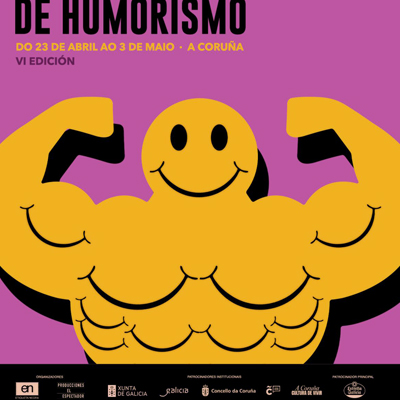
El chiste, el chiste de toda la vida, eso que el Diccionario de la lengua española (DEL) define como "dicho u ocurrencia agudos y graciosos”, fue el gran protagonista del VI Encuentro Mundial de Humorismo (EMHU), celebrado en la ciudad española de La Coruña, en Galicia, del 23 de abril al 3 de mayo.
Durante casi dos semanas, la ciudad gallega se volvió a llenar de espectáculos, talleres, charlas y exposiciones marcadas por diferentes formas de humor nacional e internacional, pero, como digo, en esta ocasión el mayor protagonismo recayó en el chiste, “ese relato brevísimo que sobrevive durante décadas, e incluso siglos, cruzando tabernas y sobremesas, perfeccionándose, limándose y sintetizándose hasta llegar a nosotros convertido en un diamante pulido”, según dijeron desde la propia organización del Encuentro.
El chiste fue objeto de un divertido homenaje en el espectáculo Chisteria Colectiva, en el que participaron algunos de los más grandes cuentachistes españoles de hoy, como Miguel Miguel, J.J. Vaquero, Álex Clavero, Jazmín Abuín, Arantxa Treus, Xosé A. Touriñán, Luís Piedrahita y muchos más.
Luís Piedrahita, el humor de las cosas pequeñas
Piedrahita es precisamente el fundador y director del EMHU. Se trata de uno de los humoristas más populares y relevantes de la España actual, que concibe el humor como “un arma de construcción masiva capaz de mejorar el mundo y acercar a las personas”. Un artista polifacético –monologuista, guionista, escritor, presentador de televisión, director de cine, mago…– que se ríe de su propia multidisciplinariedad: “Sabio en muchas artes, necio en todas partes”, dice de sí mismo. Y cuya especialidad humorística está en las cosas pequeñas y cotidianas que esconden grandes temas y preocupaciones sociales, como denotan los títulos de algunos de sus espectáculos y libros: “Esas pequeñas cosas”, “Diario de una pulga”, “¿Cada cuánto hay que echar a lavar un pijama”, “¿Por qué los mayores construyen los columpios siempre encima de un charco?” o “¿Un cacahuete flotando en una piscina... sigue siendo un fruto seco?”.
Me alegro mucho de que el chiste haya sido objeto de este homenaje en el EMHU, porque me parecía –y me parece– que se trata de un género acosado y desplazado hoy por otros tipos humor que, quizás, son considerados más nobles, inteligentes o ingeniosos por
algunos, como el monólogo, el sketch, la parodia o incluso el meme, ese neologismo incorporado recientemente por el DEL con el sentido de “imagen, vídeo o texto, por lo general distorsionado con fines caricaturescos, que se difunde principalmente a través de internet”.
En mi infancia, hace cincuenta años, el chiste era aún el rey de la comicidad: además de triunfar en los teatros, las salas de fiesta y la televisión, era el plato fuerte de cualquier fiesta popular. Los libros de chistes se vendían como rosquillas, las revistas que se preciaban tenían una sección dedicada a ellos, en los viajes escolares en autobús no dejábamos de contarlos –además de cantar– y en el colegio, el día del cumpleaños del profesor, en vez de dar clase hacíamos otro tanto. Y, por supuesto, en cualquier sobremesa que se alargase no faltaban nunca.
De hecho, hasta hace poco, “humorista” era igual a contador de chistes. Y las personas comunes, esas que llamamos “de la calle”, se dividían entre los que sabían muchos chistes y los que no. Y, sobre todo, entre los que sabían contar chistes y los que no sabían. Huelga decir que los primeros –los que sabían muchos chistes y además sabían contarlos– eran los más populares. Yo, por cierto, nunca he sabido muchos chistes ni tampoco contarlos bien. Y aun así hay quien dice que soy gracioso. Y es que, si no he sido bendecido con el don de contar chistes, sí lo he sido con el de la improvisación y la ocurrencia repentina más o menos ingeniosa.
Freud y su interés por el chiste
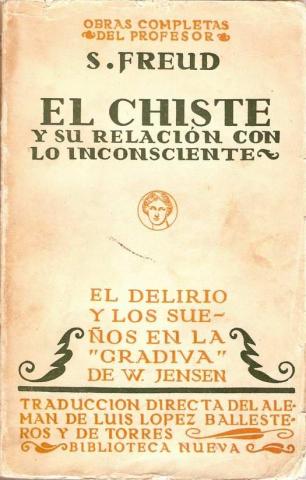
El chiste ha sido siempre tan importante que quien quizás fue el pensador más influyente en Occidente en el siglo XX –y todavía hoy–, Sigmund Freud, le dedicó un libro entero: El chiste y su relación con lo inconsciente. En él explica que los chistes funcionan como mecanismos de defensa al liberar energía psíquica y evadir restricciones sociales. A través de técnicas como el desplazamiento y la condensación, el humor facilita la expresión de deseos ocultos.
Otra estudiosa más reciente, la lingüista y filósofa española Ana María Vigara Tauste –tristemente desaparecida en 2012 antes de cumplir los 60 años– defiende que el chiste es “un subgénero humorístico y pseudoliterario que se mueve habitualmente en el terreno de la ficción y se define por su función lúdica, su intencionalidad cómica, su brevedad, su efecto- sorpresa y su cierre previsto”. El conjunto de estas características –dice la autora– hace de él algo diferente de otros subgéneros humorísticos o cómicos, como “el dicho espontáneo y gracioso”, “la frase o historieta improvisada”, “el dicho agudo y gracioso”, “el suceso gracioso y festivo” o “la burla o chanza”, y explica su éxito social y su constante presencia en nuestras conversaciones y lecturas. Tauste, quien para su libro El chiste y la comunicación lúdica: lenguaje y praxis grabó durante un año más de 200 en distintos ambientes sociales, recalca que el chiste no es un suceso, sino un texto (oral o gráfico) ni surge improvisada ni espontáneamente, puesto que “existe como pretexto antes de su actualización y presenta una peculiar tendencia a la fijación”. No se hace, ni siquiera se dice; se cuenta, se reproduce para otros.
Decadencia e intentos de rehabilitación
Si, como decía más arriba, todavía en los años 70 del siglo pasado el chiste era el rey de la comicidad en España –la materia prima de los números cómicos en las revistas, ese género teatral tan español–, en los 80 entró en una franca decadencia de la que se le intentó salvar en los 90 con algunos programas de televisión como “No te rías, que es peor” (TVE, 1990-95), un concurso en el que una sucesión de actuaciones de cómicos profesionales intentaba hacer reír a dos concursantes, que pasaban a la siguiente fase si se mantenían serios. Pero el remedio fue peor que la enfermedad. Los cuentachistes que participaban eran ya considerados humoristas de segunda categoría por las élites y propio director general de RTVE por aquel entonces manifestó que el espacio era “claramente fronterizo con el mal gusto”, lo que terminó precipitando su retirada definitiva.
Más recientemente, entre 2010 y 2013, el canal privado de televisión Antena 3 emitió “El club del chiste”, otro programa con el mismo propósito, pero con una dinámica diferente y unos humoristas con mejor cartel. Eran cinco cuentachistes que salían de uno en uno varias veces durante el espacio y contaban uno o dos chistes seguidos.
Pero la sensación seguían siendo que el tiempo del chiste había pasado. Que ya era un nuevo tiempo en el que le humor o la comedia debía ser protagonizado por el monólogo y otros formatos más modernos. Por eso digo que me alegro –y me sorprendo también– de que el chiste haya sido el gran protagonista de la sexta edición del Encuentro Mundial del Humorismo de La Coruña, uno de los eventos que en los últimos tiempos marca las líneas por las que debe transcurrir el humor español de nuestros días, organizado –como ya se ha dicho– por Luís Piedrahita, guionista y monologuista de prestigio, al que nadie llamaría
“cuentachistes”, y menos peyorativamente.
El chiste es un género intemporal y siempre habrá hueco para él, máxime cuando es la materia prima de otros muchos otros géneros humorísticos, monólogos, sketches o como se llamen. Lo que tiene que ser, como todo, es bueno. Y que esté bien contado. Como ayer. Como siempre.
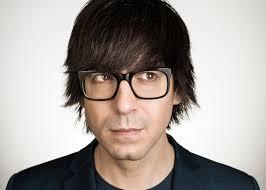
Luis Piedrahita
Oh, humor, oh, humor | El joke and its resilience in times of other kinds of humor
by Félix Caballero
The joke, the joke as it has always been — that which the Diccionario de la lengua española (DLE) defines as “dicho u ocurrencia agudos y graciosos” — was the main protagonist of the VI World Meeting of Humorism (EMHU), held in the Spanish city of A Coruña, in Galicia, from April 23 to May 3.
For almost two weeks, the Galician city once again filled with shows, workshops, talks and exhibitions marked by different forms of national and international humor, but, as I say, on this occasion the greatest prominence fell to the joke, “that very brief tale that survives for decades, even centuries, crossing taverns and after-dinner conversations, being perfected, honed and condensed until it reaches us transformed into a polished diamond,” according to the organization of the Meeting itself.
The joke was the subject of a playful tribute in the show Chisteria Colectiva, which featured some of today’s greatest Spanish joke-tellers, such as Miguel Miguel, J.J. Vaquero, Álex Clavero, Jazmín Abuín, Arantxa Treus, Xosé A. Touriñán, Luís Piedrahita and many more.
Luís Piedrahita, the humor of small things
Piedrahita is precisely the founder and director of EMHU. He is one of the most popular and relevant humorists in today’s Spain, who conceives humor as “a weapon of mass construction capable of improving the world and bringing people closer together.” A multifaceted artist — stand-up comedian, screenwriter, writer, TV host, film director, magician… — who laughs at his own multidisciplinarity: “Wise in many arts, foolish everywhere,” he says of himself. His comedic specialty lies in small, everyday things that hide large themes and social concerns, as shown by the titles of some of his shows and books: “Those Small Things,” “Diary of a Flea,” “How Often Should You Wash a Pajama?,” “Why Do Adults Always Build Swings Over a Puddle?,” or “Does a Peanut Floating in a Pool... Still Count as a Nut?”
I’m very glad that the joke was the subject of this tribute at EMHU, because it seemed to me — and still does — that it is a genre besieged and displaced today by other types of humor that are perhaps considered nobler, more intelligent or more ingenious by some, such as the monologue, the sketch, the parody or even the meme, that neologism recently incorporated by the DLE with the meaning of “image, video or text, generally distorted for caricatured purposes, which spreads mainly via the internet.”
In my childhood, fifty years ago, the joke was still the king of comedy: besides being a hit in theaters, nightclubs and on television, it was the main course at any popular festival. Joke books sold like hotcakes, magazines that prided themselves on having a section dedicated to them, on school bus trips we did nothing but tell them — in addition to singing — and at school, on the teacher’s birthday, instead of teaching class we did the same. And, of course, in any extended after-meal conversation they were never missing.
In fact, until recently, “humorist” meant the same as joke-teller. And ordinary people, those we call “from the street,” were divided between those who knew many jokes and those who did not. And, above all, between those who knew how to tell jokes and those who did not. Needless to say, the former — those who knew many jokes and also knew how to tell them — were the most popular. I, by the way, have never known many jokes nor told them well. And yet some say that I am funny. And that is because if I was not blessed with the gift of telling jokes, I was with that of improvisation and sudden, more or less ingenious, quips.
Freud and his interest in the joke
The joke has always been so important that perhaps the most influential thinker in the West in the 20th century — and still today — Sigmund Freud, devoted an entire book to it: Jokes and Their Relation to the Unconscious. In it he explains that jokes function as defense mechanisms by releasing psychic energy and evading social restraints. Through techniques such as displacement and condensation, humor facilitates the expression of hidden desires.
A more recent scholar, the Spanish linguist and philosopher Ana María Vigara Tauste — sadly deceased in 2012 before turning 60 — argues that the joke is “a humorous and pseudo-literary subgenre that usually moves in the realm of fiction and is defined by its playful function, its comic intent, its brevity, its surprise effect and its planned closure.” The set of these characteristics — the author says — makes it something different from other humorous or comic subgenres, such as “the spontaneous and witty saying,” “the improvised phrase or anecdote,” “the sharp and witty saying,” “the amusing and festive event” or “the mockery or jest,” and explains its social success and its constant presence in our conversations and readings. Tauste, who for her book Jokes and Playful Communication: Language and Praxis recorded more than 200 of them over the course of a year in different social environments, emphasizes that the joke is not an event, but a text (oral or graphic) and does not arise improvised or spontaneously, since “it exists as a pretext before its actualization and shows a peculiar tendency to fixation.” It is not made, nor even said; it is told, reproduced for others.
Decline and attempts at rehabilitation
If, as I said above, still in the 1970s the joke was the king of comedy in Spain — the raw material of the comic numbers in revues, that very Spanish theatrical genre — in the 1980s it entered a frank decline from which an attempt was made to save it in the 1990s with some television programs such as “Don’t Laugh, It’s Worse” (TVE, 1990–95), a contest in which a succession of performances by professional comics tried to make two contestants laugh, who moved on to the next round if they remained serious. But the cure was worse than the disease. The joke-tellers who participated were already considered second-rate humorists by the elites and the then Director General of RTVE stated that the show was “clearly bordering on bad taste,” which ended up precipitating its final withdrawal.
More recently, between 2010 and 2013, the private channel Antena 3 aired “The Joke Club,” another program with the same purpose, but with a different dynamic and humorists with a better reputation. There were five joke-tellers who went out one by one several times during the show and told one or two jokes in a row.
But the feeling continued to be that the joke’s time had passed. That it was now a new era in which humor or comedy should be led by the monologue and other more modern formats. That is why I say I am glad — and also surprised — that the joke has been the great protagonist of the sixth edition of the World Meeting of Humorism in A Coruña, one of the events that in recent times marks the lines along which contemporary Spanish humor should run, organized — as has already been said — by Luís Piedrahita, a respected screenwriter and monologist whom no one would call a “joke-teller,” and even less pejoratively.
The joke is a timeless genre and there will always be room for it, especially since it is the raw material of many other humorous genres, monologues, sketches or whatever they are called. What it must be, as with everything, is good. And well told. Like yesterday. Like always.
(This text has been translated into English by Chat GPT)