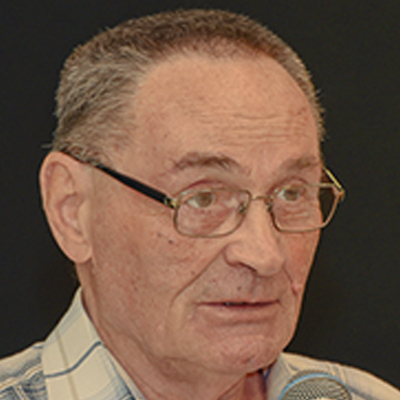
Esta vez, para nuestra sección “Vis a Vis”, tengo a una persona muy destacada del mundo de la literatura y el humor. Es mi amigo Ivan Grahovec, de Croacia, poeta, escritor, aforista, así como fundador y redactor jefe de la revista Apolon.
Ha publicado 10 libros, entre ellos “Haiku multicolor”, que recibió un reconocimiento especial. Sus obras han sido seleccionadas para 90 antologías. Además, desde hace 30 años cultiva otra de sus grandes pasiones: la fotografía. También es miembro de la Asociación Literaria de Varaždin y de la Asociación Croata de Aforistas y Humoristas.
Por todas estas razones, es un honor para mí presentarlo ante los lectores de Humor Sapiens.
PP: Iván, ¿cómo te convertiste en creador y promotor de humor?
IVAN: Hace ocho años, en cuanto empecé a escribir poesía en mi idioma local, el kajkaviano. Eso simplemente estaba en mí; sin pensarlo demasiado, mis poemas ya entonces estaban impregnados de humor local, eso que nace de la vida real y de las costumbres específicas que de por sí llevan cierta dosis de comicidad. Empecé a dedicarme al humor de manera más intensa en 2022, cuando se publicaron mis primeros trabajos humorísticos en el periódico local “Pikač”.
PP: Pues en tan poco tiempo has logrado importantes logros, te felicito. Pero dime, ¿qué forma de crear te gusta más: poesía, aforismos o caricatura?
IVAN: Me resulta difícil decirlo, quizá les parezca un poco raro, pero depende de mi estado de ánimo; o, para ser más preciso, en un momento me apetece la poesía, en otro el humor (aforismos) o las caricaturas, que me fascinan, sobre todo las de maestros consagrados del género, algo que yo también quisiera llegar a ser, aunque, la verdad, en la caricatura soy todavía un principiante.
PP: Para los seguidores de Humor Sapiens que quizá no lo sepan, ¿puedes hablarnos del dialecto kajkaviano y de tus “kajkavismos”?
IVAN: El nombre proviene del pronombre interrogativo “kaj”. Tiene una rica historia y una tradición literaria propia, especialmente desarrollada en los siglos XVI y XVII. Fonológica y gramaticalmente se distingue del croata estándar, pero sigue siendo fácilmente reconocible y comprensible para la mayoría de los hablantes. Hoy es una lengua viva, de uso cotidiano, con un fuerte carácter regional. De ahí surgió también el nombre para los aforismos en kajkaviano, los “kajkavismos”.
PP: Pues no lo sabía. Interesantísimo. Ahora, ¿puedes contarnos alguna anécdota graciosa, ingeniosa o curiosa que te haya sucedido en tu trabajo con el humor?
IVAN: No sé si es anécdota o no, si resulta divertida o triste, no he llegado a aclararlo. Pero sí he notado algo interesante: no todo el mundo entiende de la misma manera las distintas formas de humor, es decir, no siempre reciben mi humor con comprensión.
PP: No es raro, amigo. Pasa más frecuente de lo que uno cree. Pero sabemos que no significa mucho. Casi siempre el problema los tiene esos pocos. Yo apuesto a que es más comprensión lectora o pocos deseos de esforzarsee para entender y disfrutar. Muchos se acomodan en el facilismo y esperan siempre todo masticado en la boca. ¡Lo que se pierden! Pasemos a tu otro trabajo, como director y editor de la revista Apolon. ¿Cuándo se fundó la revista? ¿Cuál fue el objetivo de su creación?
IVAN: La revista se fundó el 1 de enero de 2023, por iniciativa mía, con el objetivo de acercar a personas de todo el mundo mediante el humor, la sátira, los aforismos y otros relatos breves, chistes, caricaturas…
PP: Buenísimo. Gran idea. ¿Y cómo se ha desarrollado la revista en el plano artístico y humorístico desde sus inicios hasta hoy?
IVAN: La revista se publica en la web trimestralmente y ha ido creciendo junto con mis expectativas. Solo puedo decir con modestia que he logrado, de diversas maneras y animando mucho, reunir a un número impresionante de artistas, humoristas, aforistas y otros autores, así como caricaturistas. A lo largo de estos 13 números publicados, por Apolon han desfilado unos sesenta autores que escriben humoradas, aforismos, epigramas, etc., y un número envidiable de caricaturistas más o menos conocidos a nivel mundial, procedentes de: Croacia, India, Irán, Bulgaria, Rumanía, Serbia, Bosnia y Herzegovina, Montenegro, Ucrania, Rusia, Chequia, Francia, Brasil, Cuba… En resumen, crece el interés de los autores y, espero, también de los lectores de la revista “Apolon”.
PP: Entonces, Apolon es una revista internacional. Te felicito de nuevo por conseguir ese nivel en tan poco tiempo.
IVAN: Gracias. Sin duda es una revista internacional. Eso se ve claramente en el propio contenido y en el número de artistas (autores).
PP: Perfecto. Cuéntanos ahora quiénes son los miembros del equipo de colaboradores y puedes contarnos algo sobre ellos y su aporte a la revista.
IVAN: Desde el primer día me ha ayudado Dražen Jergović con sus conocimientos y experiencia, porque él llevaba ya bastante tiempo como redactor jefe de la revista Uh!Aha! Por sugerencia suya me sumé también yo a esa asociación y empecé a escribir para dicha revista. Dražen sigue enviando de forma constante sus trabajos (escritos), que “Apolon” publica. El año pasado (2025) se nos unió también Emil Strniša, humorista y caricaturista, de modo que actualmente formamos la redacción los tres.
PP: Humor Sapiens conoce a esos excelentes colegas. Tremendo equipo tienes. ¿Existe en Croacia una tradición de humor de calidad en todas las formas artísticas?
IVAN: Sí. Croacia tiene en realidad una tradición de humor sorprendentemente fuerte y diversa, y eso en casi todas las formas artísticas. Entre nosotros, el humor no aparece solo como entretenimiento, sino también como modo de crítica social, autoironía e identidad cultural.
PP: Eso es muy sano. Me alegra saberlo. Amigo, ¿tienes algún plan o proyecto para ampliar o mejorar el trabajo de la revista? ¿Cómo la ves en un futuro cercano?
IVAN: No tengo algún plan especial, pero de número en número la voy perfeccionando para que sea lo más atractiva posible para los lectores (y para los autores).
PP: Así debe ser. Te deseo muchos éxitos en esa linda obra. Como sabes, ya comencé a colaborar yo también. Y para ir terminando, ¿se te ocurre alguna pregunta que no te haya hecho y que te hubiera gustado que te hiciera? Si es así, ¿puedes plantearla ahora y responderla?
IVAN: Aquí va la respuesta: empecé a dedicarme a la escritura, es decir, al trabajo artístico, en la vejez (a los 71 años). En esos ocho años (desde 2018) he escrito tres poemarios en lengua kajkaviana, cuatro en estándar, un libro de haikus y tres colecciones de aforismos (dos impresas y una en formato electrónico). También he preparado y publicado en la web más de una veintena de antologías internacionales de poesía, entre ellas una colección de humoradas.
PP: Lo dijiste mejor que yo en la presentación. Y ahora con esto cierro: me gustaría que les dirigieras unas palabras a los lectores de Humor Sapiens.
IVAN: Para terminar, quiero decirles a los queridos lectores de Humor Sapiens: no se olviden de reírse, ante todo de ustedes mismos y luego del mundo que los rodea. El humor es ese fino condimento que hace la vida más digerible y acerca a las personas. Lean, escriban y apóyense mutuamente, porque la sonrisa no conoce fronteras ni idiomas: es el “kaj” universal que nos une a todos. ¡Nos vemos en las páginas de Apolon!
Gracias a todos los que se tomaron el tiempo de leer estas líneas. Espero haber logrado transmitirles al menos una pequeña parte de la alegría y el entusiasmo que nos impulsan en la creación de la revista “Apolon”. El mundo es a veces un lugar serio y gris, pero mientras tengamos fuerzas para la broma y ganas de escribir, seguirá siendo un lugar digno de explorarse. Sigan sonriendo, sigan siendo ustedes mismos y nos vemos en algún próximo número.
Querido Pepe, muchas gracias de corazón por esta conversación tan agradable y relajada. Ha sido un enorme honor y un placer participar en tu sección en Humor Sapiens y compartir mi historia sobre los “kajkavismos”, Apolon y el amor por el humor con tus lectores. Espero con ilusión nuestra futura colaboración y la continuación de la difusión del buen ánimo.
PP: Solo quiero expresar mi más profunda gratitud, querido Iván, por la atención y el tiempo que has dedicado a esta entrevista. Te deseo todo lo mejor, es decir, buena salud y abundantes éxitos en tu hermosa carrera. Y, por supuesto, seguiremos colaborando en todo lo posible. Un cordial saludo.


Interview with Ivan Grahovec
By Pepe Pelayo
This time, for our “Vis à Vis” section, I have a very prominent figure from the world of literature and humor. He is my friend Ivan Grahovec from Croatia, poet, writer, aphorist, as well as founder and editor‑in‑chief of the magazine Apolon.
He has published 10 books, among them “Multicolored Haiku”, which received special recognition. His works have been selected for 90 anthologies. In addition, for 30 years he has cultivated another of his great passions: photography. He is also a member of the Varaždin Literary Association and of the Croatian Association of Aphorists and Humorists.
For all these reasons, it is an honor for me to introduce him to the readers of Humor Sapiens.
PP: Ivan, how did you become a creator and promoter of humor?
IVAN: Eight years ago, as soon as I started writing poetry in my local language, Kajkavian. It was simply inside me; without thinking too much, my poems were already infused with local humor, the kind that springs from real life and from specific customs which in themselves carry a certain dose of comedy. I began to devote myself to humor more intensely in 2022, when my first humorous pieces were published in the local paper “Pikač”.
PP: In such a short time you have achieved important things, congratulations. But tell me, which creative form do you like best: poetry, aphorisms or cartoons?
IVAN: It is hard for me to say; it may sound a bit strange to you, but it depends on my mood. Or, to be more precise, at one moment I feel like poetry, at another like humor (aphorisms), or cartoons, which fascinate me, especially those by established masters of the art – something I would also like to become one day, although, to be honest, I am still a beginner in cartooning.
PP: For those Humor Sapiens followers who may not know, can you tell us about the Kajkavian dialect and your “Kajkavisms”?
IVAN: The name comes from the interrogative pronoun “kaj”. It has a rich history and its own literary tradition, especially developed in the 16th and 17th centuries. Phonologically and grammatically it differs from standard Croatian, but it is still easily recognizable and understandable to most speakers. Today it is a living, everyday spoken language with a strong regional character. From there also came the name for aphorisms in Kajkavian, “Kajkavisms”.
PP: I didn’t know that. Very interesting. Now, can you tell us any funny, clever or curious anecdote that has happened to you in your work with humor?
IVAN: I don’t know whether it is an anecdote or not, whether it is funny or sad, I haven’t figured it out. But I have noticed something interesting: not everyone understands the different forms of humor in the same way, that is, they do not always receive my humor with understanding.
PP: That’s not unusual, my friend. It happens more often than one thinks. But we know it doesn’t mean much. Almost always the problem lies with those few people. I’d bet it is more about reading comprehension or a lack of willingness to make an effort to understand and enjoy. Many people settle into laziness and always expect everything to be spoon‑fed to them. They have no idea what they’re missing! Let’s move on to your other work, as director and editor of the magazine Apolon. When was the magazine founded? What was the goal behind creating it?
IVAN: The magazine was founded on January 1, 2023, on my initiative, with the aim of bringing people from all over the world closer together through humor, satire, aphorisms and other short stories, jokes, cartoons…
PP: Excellent. Great idea. And how has the magazine developed artistically and humor‑wise from its beginnings up to today?
IVAN: The magazine is published on the web every three months and has grown along with my expectations. I can only say modestly that I have managed, in various ways and with a lot of encouragement, to bring together an impressive number of artists, humorists, aphorists and other authors, as well as cartoonists. Over these 13 issues published so far, around sixty authors have paraded through Apolon, writing humor pieces, aphorisms, epigrams, etc., and an enviable number of more or less well‑known cartoonists worldwide, from: Croatia, India, Iran, Bulgaria, Romania, Serbia, Bosnia and Herzegovina, Montenegro, Ukraine, Russia, the Czech Republic, France, Brazil, Cuba… In short, the interest of authors is growing and, I hope, that of the readers of “Apolon” as well.
PP: So Apolon is an international magazine. Once again, congratulations on reaching that level in such a short time.
IVAN: Thank you. It is undoubtedly an international magazine. You can clearly see that from its very content and from the number of artists (authors).
PP: Perfect. Now tell us who the members of the team of collaborators are, and could you tell us something about them and their contribution to the magazine?
IVAN: From day one I have been helped by Dražen Jergović, with his knowledge and experience, because he had already been editor‑in‑chief of the magazine Uh!Aha! for quite some time. At his suggestion I also joined that association and started writing for that magazine. Dražen continues to send his written pieces regularly, which Apolon publishes. Last year (2025) Emil Strniša, humorist and cartoonist, also joined us, so at the moment the editorial team is made up of the three of us.
PP: Humor Sapiens knows those excellent colleagues. You have a terrific team. Is there in Croatia a tradition of quality humor in all artistic forms?
IVAN: Yes. Croatia actually has a surprisingly strong and diverse tradition of humor, and that in almost all artistic forms. Here, humor appears not only as entertainment, but also as a means of social criticism, self‑irony and cultural identity.
PP: That is very healthy. I’m glad to hear it. My friend, do you have any plan or project to expand or improve the work of the magazine? How do you see it in the near future?
IVAN: I don’t have any special plan, but from issue to issue I try to refine it so that it will be as appealing as possible to readers (and to authors).
PP: That’s how it should be. I wish you great success with that beautiful endeavor. As you know, I’ve already started collaborating as well. And to wrap up, does any question occur to you that I haven’t asked and that you would have liked me to ask? If so, could you ask it now and answer it?
IVAN: Here is the answer: I began to devote myself to writing, that is, to artistic work, in old age (at 71). In these eight years (since 2018) I have written three poetry collections in Kajkavian, four in the standard language, one book of haiku and three collections of aphorisms (two in print and one in electronic form). I have also compiled and published on the web more than twenty international poetry anthologies, among them one collection of humorous pieces.
PP: You said it better than I did in the introduction. And now, with this I close: I would like you to address a few words to the readers of Humor Sapiens.
IVAN: To finish, I would like to tell the dear readers of Humor Sapiens: don’t forget to laugh, first of all at yourselves and then at the world around you. Humor is that fine seasoning that makes life more digestible and brings people closer together. Read, write and support each other, because a smile knows neither borders nor languages; it is the universal “kaj” that unites us all. See you in the pages of Apolon!
Thank you to everyone who took the time to read these lines. I hope I have managed to convey at least a small part of the joy and enthusiasm that drive us in creating the magazine Apolon. The world is sometimes a serious and gray place, but as long as we have the strength for jokes and the desire to write, it will remain a place worth exploring. Keep smiling, keep being yourselves, and we’ll see each other in some future issue.
Dear Pepe, many heartfelt thanks for this pleasant and relaxed conversation. It has been a great honor and a pleasure to take part in your section in Humor Sapiens and to share my story about “Kajkavisms”, Apolon and my love for humor with your readers. I look forward eagerly to our future collaboration and to continuing to spread good cheer.
PP: I just want to express my deepest gratitude, dear Ivan, for the attention and the time you have devoted to this interview. I wish you all the very best, meaning good health and plenty of success in your wonderful career. And of course, we will continue collaborating in every possible way. Warm regards.
(Some texts have been translated into English by ChatGPT)