
El invitado de hoy, Raúl Zuleta, es alguien muy destacado en el humor gráfico colombiano y a nivel internacional. Fue noticia este año por haber ganado uno de los premios de Knokke-Heist Cartoon Festival, en Bélgica.
Es artista plástico, caricaturista, profesor de arte, ilustrador, historiador de arte y terapeuta holístico.
Como caricaturista ha ganado cerca de 50 premios internacionales en diferentes países alrededor del mundo, entre los que se destaca el premio en el World Press Cartoon 2013 que es el concurso más importante del mundo y en cuyo año fue considerado entre los mejores nueve caricaturistas del mundo.
¿Por qué está con nosotros en este “Vis a vis”? Ya dije una de las razones, obtuvo hace poco ese importante premio en Bélgica. Pero también porque me encanta su obra. Es de esos caricaturistas que le da mucha relevancia al equilibrio forma-contenido. Mientras expresa ideas profundas, no lo hace con una línea, una estética, de nivel inferior, sino que se preocupa mucho de ambas cosas y eso se agradece. Y además, otra razón es porque le encanta teorizar, reflexionar y analizar todo lo relacionado con su profesión. Hemos intercambiado otras veces. Por ello, presiento que este será un gran “Vis a vis”.
Comencemos entonces.
PP: Bueno, Raúl, para los seguidores de Humor Sapiens, ¿podrías presentarte tú mismo? Quizás mi presentación fue muy breve. ¿Puedes presentarte mejor?
ZULETA: RAÚL ZULETA, Colombia 1983. Artista, Caricaturista, Historiador de arte y Profesor universitario.
Soy un artista y caricaturista con una trayectoria de 20 años, poseo estudios de Maestría en Historia del Arte (Universidad de Antioquia 2011) y Pregrado en Artes Plásticas (Universidad Nacional de Colombia 2006), Diplomado en crítica de arte (Universidad de Antioquia 2013). Actualmente soy profesor de arte, facultad de artes, Universidad de Antioquia, cerca de 18 años.
Como caricaturista internacional, soy uno de los caricaturistas más destacados de Latinoamérica. He ganado cerca de 70 premios internacionales en muchos países, más recientemente el Segundo Lugar – 65 th Cartoon Festival Knokke – Heist, Bélgica. Se destaca, además, el World Press Cartoon Portugal 2013. Invitado a la exposición Caricaturistas latinoamericanos en Theeran Irán museo de arte contemporáneo en 2023. Exposiciones individuales de mi caricatura en Museo de la caricatura Mexico 2014, Museo Instituto de Cultura Antioquia Colombia 2023, Museo Piracicaba Brasil 2017, Museo centro cultural Roberto Fontanarrosa Argentina 2015. Jurado internacional. He sido seleccionado en numerosos concursos de caricatura e incluido en numerosos catálogos. Se destaca la publicación 100 mejores caricaturistas del mundo Irán 2023. Invitado feria internacional del libro Guadalajara Mexico 2017, 2019. Conferencias, talleres y publicaciones artículos académicos sobre caricatura.
Como caricaturista nacional en Colombia, publico actualmente en el periódico El Espectador (es el principal periódico de Colombia). He sido Ganador Premio excelencia periodística Sociedad interamericana de Prensa SIP 2025 Estados Unidos (como el mejor caricaturista de America en 2025). Ganador Premio Nacional de Periodismo Simón Bolivar 2024 (como el mejor caricaturista de Colombia en 2024). Premio Nacional de periodismo Circulo periodistas Bogotá Colombia 2022. Participante de numerosos eventos de caricatura en Colombia, publicación en catálogos, libros, y revistas. Homenajes. Ganador de becas de creación. Jurado, etc.
Como artista, uso el humor de la caricatura combinado con la pintura para generar versiones irónicas de la historia del arte. Actualmente, estoy representado por LA-galeria Bogotá, Galería el coleccionista, Carlos Orozco Galería, en Colombia. He realizado numerosas exposiciones individuales nacionales e internacionales, se destaca “Atlas Irónico en 2025”. Numerosas exposiciones colectivas de arte en galerías y museos nacionales e internacionales. Participado en importantes ferias internacionales de arte como Artbo Colombia 2025. Mi obra está en colecciones privadas nacionales e internacionales. He realizado investigaciones de historia del arte y publicación de artículos académicos. He sido curador, profesor y asesor de arte contemporáneo.
Instagram: @zuleta_artist @zuleta_cartoonist
PP: Me aplastaste con esa presentación. Es decir, me dejaste en ridículo por lo escueta que la hice, ja, ja. Es impresionante tu curriculum profesional. Te felicito. Ahora, sería interesante saber también cómo te gustaría ser conocido y recordado en el futuro.
ZULETA: Mi perfil realmente es de artista-caricaturista, ambos como una unidad, no por separado. Por ende, me gustaría ser reconocido y recordado por mi importante producción visual. Por ejemplo, en el contexto de los concursos de humor gráfico a nivel internacional a partir de premios y exposiciones individuales en muchos países. En el caso colombiano, que mis caricaturas de opinión sean un referente visual de la historia de mi país desde la caricatura de opinión. Y por supuesto, desde el campo del arte, donde mis obras logren un reconocimiento y circulación en el sistema del arte, que logre con mis piezas dar una mirada particular, critica e irónica sobre la propia historia del arte y de la institucionalidad misma en que se mueve el arte contemporáneo. En este sentido, que ambas producciones se reconozcan en un gran nivel de mi trabajo, que marcó la diferencia, y logré darle el valor de arte nuevamente a la caricatura, al igual de darle ese toque de humor e ironía a la producción de arte.
PP: Estoy seguro que así será. Te lo mereces. Pero para ir conocéndote mejor, ¿en qué momento decidiste dedicarte al humor?
ZULETA: Mi formación en artes comenzó desde muy niño. Paralelo en esa formación artística, tuve de profesor a Fernando Pica, director de CartoonRendon, cuyo evento de caricatura fue donde comencé a explorar el humor gráfico. A medida que mi formación como artista se desarrollaba en el ámbito académico de la universidad, el hobbie inicial de la caricatura continuó y se extendió a participar en concursos internacionales, donde rápidamente comenzaron a llegar algunos premios. Pero fue con el premio World Press Cartoon en Portugal en 2013, que esa noción de hobbie, desapareció y asumí la caricatura como una profesión de nivel, extendiéndome a ganar más premios, a realizar exposiciones individuales de mi caricatura en algunos países, y posteriormente, llegar a publicar caricatura de opinión, en el periódico El Espectador, en Colombia. Y finalmente, unir esa capacidad irónica del humor grafico con mis intereses conceptuales y formales en el campo del arte contemporáneo.
PP: Perfecto. No sé si sabes que también entrevisté para Humor Sapiens a tu profesor Fernando Pica, gran persona y artista. Dale mis saludos. Pues ¿qué te puedo decir? Me alegro mucho que hayas decidido pasar del hobbie a profesión, porque ganamos todos. Y para seguir en la misma línea, ¿empezaste a dibujar sin un estilo definido? Quizás tengas claro cuál es tu estilo actualmente. Si es así, ¿cuál sería? ¿Te influyeron dibujantes nacionales o extranjeros durante tu infancia y adolescencia?
ZULETA: Al comienzo, por supuesto hubo una gran influencia de muchos caricaturistas, a veces desde los aspectos formales y otras desde el tipo de humor. Resalto caricaturistas como Ares, Boligan, Kosobukin, entre otros. Lo relevante es que desde el comienzo mi intención era los concursos internacionales, de ahí, que aprendí hacer caricaturas sin necesidad de texto, con humor mas conceptual y universal. Y estas condiciones incluso marcan mi caricatura actual de opinión en el periódico, donde el texto es el ultimo recurso, y la parte grafica de un alto nivel artístico. Por otra parte, dado mi formación en arte contemporáneo, la caricatura la concibo más desde una exploración constante, investigación de referentes visuales de la historia del arte, esto hace que mi intención no sea de buscar un estilo en particular. Si bien, es inevitable que mi trabajo tenga un aire particular que le da cierta identidad a mi caricatura. Para finalizar, y volviendo al principio de mis inicios en la caricatura, me genera un gran orgullo personal, que caricaturistas como Ares y Boligan que me influenciaron al comienzo, hoy en muchos concursos yo comparta premios e invitaciones al lado de ellos.
PP: No sé si sabes que ambos son grandes amigos míos desde los años 80 en Cuba. Y entiendo cuando dices que te enorgulleces que sean tus pares ahora. Son excelentes caricaturistas, como lo eres tú. Amigo mío, dijiste que a causa de los concursos comenzaste a crear caricaturas sin textos. ¿ya es de tu preferencia hacerlo así? ¿Puedes decirme por qué?
ZULETA: Retomando la pregunta anterior, mi inicio en el humor gráfico fue puntualmente hacia los concursos internacionales, de ahí que desarrolle la capacidad de no usar texto, y pensar cómo resolver la idea en una sola imagen. Y esa estrategia es en la que realmente en logrado un gran nivel conceptual y formal en mi caricatura. Ya con la experiencia desde hace 4 años de publicar caricatura de opinión política y social, en el periódico El Espectador, me abrí a esa posibilidad del texto, pero para mí el texto es el último recurso que uso, no es la intención inicial, de ahí que son pocas las caricaturas que incluyo texto. Incluso esa dinámica del texto también se ha extendido en algunas caricaturas sobre arte, pero solo en obras puntuales.
PP: Entiendo. Te confieso que soy fanático a las caricaturas sin texto, o cuando el etexto y el dibujo están totalmente enlazados, cosa que no sucede con frecuencia, ya. que algunos colegas solo ilustran el chiste. Bueno, sigamos contigo. Me imagino que te hayas dado cuenta de la evolución de tu obra desde tus inicios hasta ahora. Entonces, ¿cómo crees que ha sido ese cambio en el tiempo? (Me refiero a forma y contenido, por supuesto. No si lo haces mejor ahora, porque eso es obvio).
ZULETA: Por supuesto que la evolución ha sido notable en muchos aspectos, pero si siento que esa esencia particular siempre ha estado. Esa evolución y cambio se ha dado en muchos aspectos. En lo formal la capacidad del dibujo es notoria, pasando una grafica mas compleja y consciente, tanto en la composición, el color, el estilo, etc. Ya no tienen ese carácter ingenuo de caricaturas anteriores, sino que actualmente, solo desde el componente visual se ven potentes a primera vista. Esta evolución formal, también implicó la incorporación de las posibilidades digitales, en la actualidad muchas de las caricaturas para prensa, las desarrollo totalmente digital, al igual que algunas para concursos. Pero esto ha sido interesante, porque me ha permitido explorar muchas opciones visuales. Ya desde el campo del arte, me interesa volver a la producción análoga de la caricatura, incluso llevándola a formatos más allá de los convencionales y soportes como el lienzo con pintura. En lo conceptual, sin bien desde el comienzo no me interesaba el chiste simple, creo que esa intención conceptual y reflexiva antes que la del humor, se acentuó con la dinámica cultural de las redes sociales y la difusión de los memes. Creo que para mí eso fue un punto de irrupción importante para la caricatura, y era que su intención ya no era de un chiste inmediato para hacer reír, sino mas bien de una intención conceptual para hacer pensar, y el humor era una forma de confrontar esa realidad. En conclusión, es notable la evolución de mi trabajo, donde se ve un mayor nivel conceptual en las ideas como en la potencia visual de mis caricaturas.
PP: Perfecto. Aunque pienso que también el humor simple, el que solo hace reír o pensar en ciertos temas, también es necesario en la vida y también necesita un alto nivel de elaboración visual para que funcione mejor y uno como consumidor disfrute más. No porque la idea no sea la más porfunda del mundo merece baja calidad en la forma. Pero bueno, es para otro momento ese debate (si lo hay). Ahora, para relajarnos un poco, ¿puedes contarnos alguna anécdota ingeniosa, curiosa, y/o graciosa que te haya ocurrido en esta carrera en el humor? (O que hayas sido testigo).
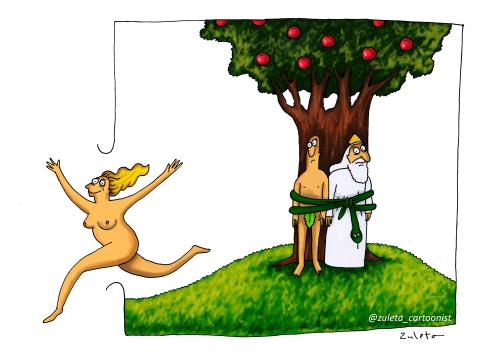
ZULETA: Afortunadamente no he tenido una experiencia negativa. Las experiencias han sido más que la gente se molesta por algunas de mis caricaturas, pero eso no pasa de ahí de expresar su opinión. En el evento de caricatura en Brasil, en Piracicaba, realizaron una exposición mía, con la reproducción de algunas caricaturas en gran formato. Una de ellas, sobre Adan y Eva, genero gran malestar en la comunidad evangélica en Brasil, y por redes sociales se regó opiniones a favor y en contra. Otra muy positiva fue al llegar al museo de arte contemporáneo en Teherán, estaba una impresión digital grande mi caricatura al lado de la de Ares, en la fachada de ingreso al Museo.
PP: Bueno, siempre habrá fanáticos, sean religiosos, políticos, etc., que tratarán de imponerse. Pero el agua toma su nivel siempre. Y me imagino lo que sentiste al ver tu carricatura y la de Ares en esa fachada. Para enmarcar esa foto, ¿no es cierto? Bueno, voy a cambiar un poco ahora el enfoque de este “Vis a vis”, porque sé que te gusta teorizar. ¿Qué tan necesario es que los creadores de humor -como los caricaturistas, por ejemplo-, se interesen por la teoría del humor, por la teoría de su manifestación artística?
ZULETA: Cualquier disciplina que uno ejerza, en especial las del campo del arte, es importante tener una consciencia conceptual e histórica de su oficio. Esto es muy común dentro del campo del arte contemporáneo, donde uno como artista no solo está en una producción visual constante, sino en una diálogo, lectura, reflexión sobre teorías, historia del arte y dinámicas actuales del sistema del arte. En el caso de la caricatura, esas reflexiones son más escasas y son dadas más por personas académicas y teóricas que tienen algún interés o gusto por las expresiones graficas cómo la caricatura, el comic, el humor gráfico, etc. Uno podría reflexionar de la caricatura desde un contexto histórico con su cercanía al campo del arte. Luego desde la masificación de la imagen en los medios de comunicación. Y en ese punto intermedio, las reflexiones de los Estudios Visuales, es mas relevante, ya que estamos en la era de la imagen, y a veces una caricatura, que en cierta medida tiene una connotación de arte menor, a veces desde las redes logra una viralización y conexión con el público, más que algunas imágenes de arte, denominadas alta cultura. Entonces creo que, desde los Estudios Visuales, se puede revisar todos esos fenómenos de la imagen, en especial los cercanos a la caricatura, de las dinámicas sociales y culturales del mundo contemporáneo.
PP: Es cierto. Y creo que el no interesarse por lo teórico, incide en que algunos afirmen que e humor gráfico es un arte menor. Es un buen tema también para debatir. Yo considero que el humor gráfico es un Arte Mayor, como cualquier manifestación real de Arte. Pero debemos. Ponernos de acuerdo en la base primero y es mi pregunta para ti: ¿Qué es el humor gráfico?
ZULETA: Si bien uno comprende el contexto histórico de la caricatura con esa noción principal de hacer reír, y de ahí esa connotación de humor gráfico, realmente la palabra humor no me gusta mucho. Por el contrario, me gusta más la palabra “Ironía”, porque tiene la connotación de humor, pero con intención reflexiva o crítica. Entonces me gustaría pensar más que podría denominarse ironía gráfica o pensamiento gráfico. Creo que eso amplía la capacidad que tiene la caricatura hoy en día de generar imágenes que cuestionan, que generan reflexión, y que el humor, es solo ese picante, ese toque especial que le da a esta producción visual una identidad propia diferente a otras manifestaciones visuales. Pero algo importante a resaltar, es que ante esta era de la imagen, donde hay una producción visual a nivel global y de distintas fuentes, la caricatura o humor gráfico, tiene un potencial enorme, y es la capacidad de con una gráfica sencilla conectar con personas de cualquier parte del mundo. Esa capacidad de comunicación es algo muy importante, y que la caricatura no debe perder, es más, esa noción irónica es la que permite que mi trabajo de arte tenga esa connotación universal.
PP: Creo que tenemos un problemilla semántico. Para mí, la ironía, la sátira, el chiste, la parodia, la caricatura (que es una parodia extrema), la broma y hasta el sarcasmo, son formas que pertenecen a un gran conjunto que es el humor. Porque son formas del humor. Por lo tanto, para mí, cualquiera de esas formas hacen pensar si esa es la intención del creador. O solo reír, si eso es lo que le interesa al autor. El humor solo es malo o bueno, efectivo o no, pero puede presentarse en cualquiera de esas formas, según el resultados de mis estudios. Pero eso no quiere decir que tenga la verdad. Nadie la tiene. Una vez más tenemos que por tiempo posponer el debate. Ya da para vernos y estar un día entero compartiendo, ¿no es cierto? Y a propósito de este tema, veamos mejor el tipo de humor que prefieres. Te doy varias opciones:
a) El que simplemente te hace reír.
b) El que te hace reír y reflexionar.
c) El que te hace pensar, aunque sea puramente crítico o satírico.
d) El humor burlón, irrespetuoso u ofensivo.
¿Y por qué no elegiste los demás? (Si es que omitiste alguno).
ZULETA: Me interesaría mas la respuesta b y c. Aunque en la b, invertiría el orden, ya que mi principal intención es hacer reflexionar, y entendiendo que reflexionar no implica siempre grandes temas globales y políticos, a veces temas mas humanos, personales y cotidianos, también son un punto de reflexión valioso. Entonces, mi intención de humor es propiciar una reflexión, una pregunta, un pensamiento que a veces va hilado con un sentido irónico que algunas ocasiones hace reír. Y seguidamente, desde la respuesta c, hay caricaturas mías que su intención es netamente crítica, dura y cuestionadora, donde la imagen logra sintetizar una situación o temática difícil, y el humor o la risa no tienen espacio en esa intención de caricatura. Devolviéndome a la respuesta b, esa es una particularidad también de mi producción como artista, haciendo apropiacionismo de la historia del arte. Y es, frente al carácter serio y hegemónico que tiene el sistema del arte, mis pinturas, tienen una intencionalidad reflexiva frente al arte mismo, pero al final hay una dosis de humor que irrumpe ese silencio devocional con que se mira el arte en un museo.
PP: El arte es libre, como debe ser el artista y cada cual crea el humor que mejor estime conveniente y está bien que así sea. No podemos enjuiciar a alguien que haga lo que haces tú o lo que haga otro. Dicho eso, te confesaré lo que pienso. Para mí, lo cómico es algo personal. Es un proceso que experimenta un ser humano y que se produce por una incongruencia que llega a través de nuestros sentidos o por nuestra imaginación. El final de ese proceso es risa o sonrisa, con el correspondiente placer sui generis. Pero si esa persona desea que otro (u otros) experimente ese proceso cómico, le envía un mensaje y si con la inconguencia que recibe en ese mensaje esa otra persona, también vive el proceso cómico individual y al final ríe o sonríe, “habemus humor”. Porque el humor es social. Definición mía: el humor es la expresión de lo cómico. Así algo cómico, no es humorístico. Pero algo humorístico tiene por obligación llevar lo cómico en su interior. No importa si el % de la comicidad es mínimo o 100%. Si es 100% ese humor es solo para reír o sonreír. Si es mínimo, significa que en ese mensaje enviado, además del bajo % de comicidad, conlleva otras ideas que nos harán pensar y sentir. Pero, si no hay comicidad, no hay humor. Y es válido todo. Si haces caricaturas que no conllevan comicidad, y esa es tu intención, perfecto. Pero ahí entraría otro debate. Si usas la manifestación artística llamada caricatura, ya de por sí eso lleva la intención de hacer sonreír, aunque sea mínimamente. ¿Una sonrisa interior, por ejemplo? Está comprobado por muchos estudios que los mensajes, por muy “serios” que sean, sin van con humor, llegan más al consumidor, penetran más y son más efectivos. En fin, decidimos tú y yo abrazar esa profesión tan subjetiva. Donde no hay nada absoluto y siempre está evolucionando a medida que más se investigue y se descubra. Dejando el terma, querido Raúl, también me quedé pensando en lo que me dijiste sobre lo que te pasó con los religiosos intransigentes y deseo retomar una arista muy de moda sobre ese mismo asunto, ¿cuáles son los límites del humor? (Si lo hay, claro).
ZULETA: Para mí toda actividad humana tiene una connotación ética, y es determinar uno mismo, hasta donde llego con mi humor. Uno puede ser crítico de un político o un personaje público, y la caricatura debe responder a esa condición de su actividad pública, ya el sobrepasar ese espacio y abordar desde la burla aspectos personales o físicos para denigrar la noción humana de esa persona, para mí eso no es correcto. Y la caricatura, no tiene clara esa noción, y muchos caricaturistas se excusan desde la propiedad misma de ser caricaturistas que pueden sobrepasar ese espacio. Si tiene que desnudar al personaje para denigrarlo, si tiene que usar una connotación sexual para humillarlo, si usa su físico no para darle identidad al personaje sino para burlarse, entonces en definitiva es un caricaturista pésimo, que no tiene ideas inteligentes y toca adoptar lo mas despreciable del ser humano que es atacar la dignidad humana del otro, solo con el argumento moral que uno es mejor que el otro. Entonces para mí si existe un límite, y ese límite no me interesa sobrepasarlo en mi caricatura, aunque mi intención de caricatura sea atacar un personaje político. Incluso, hoy en día, el caricaturista está más animado a adoptar la burla como humor más para ganar likes en redes sociales, que para hacer una verdadera crítica inteligente sobre un personaje público.
PP: De total acuerdo contigo. Pero de verdad que no puedo estar más de acuerdo contigo. Sigo algo más en esa misma líena entonces, ¿has sido censurado alguna vez? ¿Te autocensuras mucho, poco o nunca?
ZULETA: No he sido censurado, por ejemplo, en el caso del periódico para el cual trabajo, El Espectador, gozo con la libertad absoluta de expresar mi libertad de opinión en las caricaturas. Y lo de autocensurarme, creo que va en línea con la respuesta de la pregunta anterior, y es que mi intención de la caricatura es hacer críticas fuertes y directas, pero con una inteligencia que no tenga necesidad de recurrir a estrategias bajas, de tener que burlarme para que la caricatura tenga de qué hablar. En el caso colombiano, me ha pasado que personas no están de acuerdo con mi crítica política, pero aun así reconocen que es muy buena la caricatura que hice, en cuanto la idea gráfica con que desarrollé la idea.
PP: Es cierto. Pero no me pudes negar que existe en este mundo límites exteriores al creador, como las reglas que pone una dictadura política en un país, o los dueños de un medio de comunicación o la dictadura de las minorías con poder, etc. Y quizás eso se relaciona con la autocensura, porque muchos de nuestros colegas víctimas de todo eso, quieren publicar, incluso para sobrevivir y se ven en la necesidad de vencer (engañar) a esas dictaduras. Y es muy cierto lo que dices, hay límites internos que dependen de la moral, la ética, los principios, la decencia y dignididad de los creadores. En fin, te propingo dejar algo la teoría y volkver a enfocarnos en tu trabajo. Por ejemplo, ganaste recién un importante concurso internacional, por ello te pregunto: ¿de entre los numerosos premios internacionales que has recibido, cuál te ha impresionado o conmovido más?
ZULETA: Cada premio tiene algo de especial, sin embargo, no se desconoce que hay concursos con mayor prestigio que otros, y que se vuelven en referentes de la trayectoria de los caricaturistas. Como en algún apartado de la entrevista nombré el World Press cartoon en 2013, que fue un concurso que marcó un antes y un después, porque era de pasar de ser un caricaturista por hobbie a ser un caricaturista profesional. Luego hubo otros premios en varios países, que me permitieron viajar a recibirlo. También premios en periodismo, como el Interamericano de la SIP o premios nacionales de periodismo en Colombia, ellos tienen un valor muy importante en mi carrera. Pero por supuesto, este último tiene una gran relevancia en mi trayectoria. Por una parte, es de destacar que el Cartoon Festival Knokke – Heist en Bélgica, es uno de los concursos más antiguos del mundo, siendo este año la edición 65. Y, por ende, esa trayectoria hace que con el tiempo sea uno de esos concursos insignias y punto de referencia a nivel mundial. Y por supuesto, a esto se le suma, lo importante que es un concurso cuando tiene la capacidad de invitar a los caricaturistas ganadores, y en esta ocasión, el viajar a Bélgica, hizo que este premio fuera sumamente relevante y además teniendo en cuenta el contexto actual de mi carrera.
PP: Pues te felicito de corazón por tan importantes premios, amigo mío. Ahora, sobre el mismo tema, ¿te interesaría comentar sobre sobre los concursos internacionales en general? Por ejemplo:
-Si deberían haber más o menos evento de ese tipo.
-Si los concursos benefician realmente a los dibujantes
-Si hay problemas con jurados u organizadores injustos
-Si con frecuencia existen problemas con la concesión de premios a obras plagiadas, etc.
ZULETA: Alrededor de los concursos de caricaturas es muy amplio lo que uno podría decir, y donde tocas de entrada varios puntos muy evidentes. Pero, aun así, con todos esos aspectos que uno podría señalar, de entrada, si resalto la importante y relevancia que tienen, porque es el único espacio que tiene el humor gráfico para circular y ser reconocido a nivel mundial. Resalto que muchos concursos le dan relevancia montando una gran exposición de las obras seleccionadas, al igual que una exposición en un museo, pero en cambio otros concursos son exposiciones muy improvisadas en espacios que ni siquiera son para exhibiciones. Es notable como muchos concursos tienen los mismos jurados e invitados año tras año, entonces son concursos o eventos de caricatura muy endogámicos sin ofrecer nada diferente. Muchos premios tardan demasiado en ser pagados. Después de pandemia los costos de correo físico se incrementaron mucho, y esto dificulta tanto al caricaturista en enviar originales como de los concursos enviar catálogos impresos, estos costos dañaron mucho la dinámica de los concursos. Por supuesto, seguir condenando que se premien caricaturas con AI o plagiadas. Y finalmente, se debería promover más exposiciones de caricaturas en espacios de museos o galerías, pero con un montaje de alto nivel, como la exposición de caricatura latinoamericana en el Museo de Arte Contemporáneo de Teherán, en 2023. Al igual que las exposiciones del Wolrd Press Cartoon o las exposiciones de caricatura en el Instituto Quevedo de las Artes.
PP: Pensamos idénticamente sobre este asunto. Y pensando también en todo lo que sucede en este mundo especial en el que nos movemos, te pregunto: ¿cómo ves el presente y el futuro del humor gráfico?
ZULETA: Es innegable que los espacios en los periódicos, sea de forma impresa o digital, cada vez son menos, en el sentido, que los caricaturistas sean pagados por sus publicaciones. Esto hace que la caricatura deje de ser una profesión y vuelva a ser un hobbie, en a medida que pierde su condición de trabajo remunerado. En el sentido, que los caricaturistas ya no se podrían dedicar de lleno a esta actividad creativa. Pero paradójicamente, por otro lado, gracias a las redes sociales la caricatura se ha masificado, y en un instante que uno publica su caricatura en una red social, esta es compartida en otra persona en un país del mundo, y así sucesivamente. Esa posibilidad ahora tiene un gran valor, y más aún, cuando por medio de esas publicaciones uno puede leer los comentarios, conociendo ese impacto que genera la imagen que uno creó. Eso es una muestra clara cómo un dibujo genera connotación positiva o negativa en una comunidad. En mi caso, y por mí mismo interés como artista, no concibo la caricatura exclusivamente en el ámbito de los periódicos. Por ello, me interesa la relación entre la caricatura y el sistema del arte, encontrando allí nuevas maneras de circulación entre exposiciones y coleccionistas. Por supuesto, elevando la caricatura al nivel del arte, tanto volviendo hacer obras originales como llevando la caricatura a dinámicas formales y conceptuales propias del arte contemporáneo.
PP: Me gusta lo que dices. Si tuviéramos que retroceder lo avanzado y nos quedáramos haciendo caricaturas, como antes y ahora se hace con la pintura o el grabado, por mencionar dos manifestaciones de artes visuales, no es tan grave. Por lo menos sabemos que no desaparecerá. Aunque prefiero que además de esa vía, se logre que se remuneren las publicaciones en Internet. Eso sería ideal, ¿no es cierto? Bueno, para ir cerrando, amigo mío: ¿hay alguna pregunta que no te haya hecho y que te gustaría que te hiciera? Si es así, ¿podrías responderla ahora?
ZULETA: La pregunta podría ser encaminada hacia mi producción como artista, donde he nombrado que está muy relacionada con mi trayectoria como caricaturista. ¿Cómo es tu obra de arte contemporáneo? Mi trabajo como artista esta desarrollado principalmente desde el lenguaje de la pintura, y basándome en la estrategia del apropiacionismo, lo que hago es usar imágenes emblemáticas de la historia del arte, tanto del contexto colombiano como internacional. En esa estrategia de resignificación amplío esa lectura de estas obras de arte, ya sea al generar diálogos entre diferentes periodos del arte, o qué sucede cuando una obra se cruza con otra imagen del contexto popular, etc. En mi trabajo, por una parte, hay un propósito de socavar aspectos del sistema del arte, como el mercador del arte, el concepto de fama, el status, las movidas del sistema, el discurso hegemónico, los museos y galerías, el contraste entre el arte eurocéntrico y las manifestaciones populares latinoamericanas, los conceptos de alta y baja cultura, entro otros. Pero al tiempo, esta estrategia conceptual, está cruzada con ese carácter de ironía, sarcasmo y humor que da la caricatura, haciendo que esa connotación seria y elitista del arte, se vea interrumpida por una lectura ambigua e irónica que socaba la sacralidad del propio sistema del arte. Además, en este contexto mis pinturas irónicas a veces son realizadas en una estética figurativa muy realista y en otras, vuelvo a esa estética muy de caricatura. Incluso también amplío esa noción de caricatura a formatos en papel más grandes del convencional, saltando incluso a pinturas sobre lienzo en mediano y gran formato, y también actualmente, explorando la posibilidad objetual, y finalmente, murales de caricaturas en gran formato e instalaciones como pintura expandida.
PP: Buenísimo. Me encantó la pregunta y más la respuesta. Y solo para justificar el por qué no se me ocurrió hacértela: porque esta es una publicación con un único perfil: el humor y todo lo que te debo preguntar es sobre eso. Sin embargo, hiciste muy bien en ampliar esa información sobre esa parte de tu carrera. Te lo agradezco, así nuestros lectores pueden concerte más y mejor. Raúl, ahora sí una última pregunta, o más bien un último pedido: ¿te gustaría dirigirles unas palabras a esos mismo lectores de Humor Sapiens que acaban de conocerte más?
ZULETA: Inicialmente, muy agradecido por volver a tener este espacio de entrevista y reflexión en torno a mi trabajo y trayectoria como caricaturista. Resaltando además, el espacio de Humor Sapiens de publicar textos que reflexionan sobre el papel del humor gráfico latinoamericano. Asimismo, que esta entrevista permita a personas que no conocen mi trabajo, acercarse no solo a mis caricaturas, arte, sino también a mi pensamiento conceptual. Y porque no, a partir de este acercamiento a mi trabajo, se dé el interés de poder realizar exposiciones individuales de mi caricatura e invitaciones en algunos países. Y finalmente, hacer la invitación de conocer directamente mi trabajo en Instagram: @zuleta_cartoonist y @zuleta_artist.
PP: Excelente. Pues yo te agradezco infinitamente que hayas aceptado hacer este “Vis a vis”, porque sé lo ocupado que estás, así que tu tiempo y atención valen oro puro.
Te deseo mucha salud y abundantes éxitos, amigo mío.
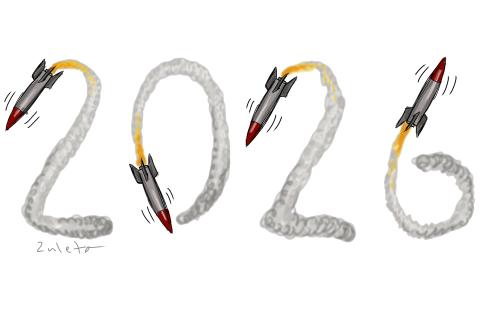
Lo que va del año
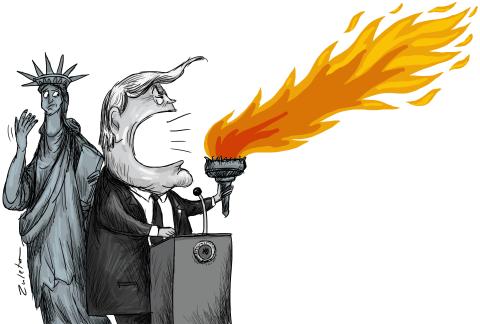
Discurso de posesión
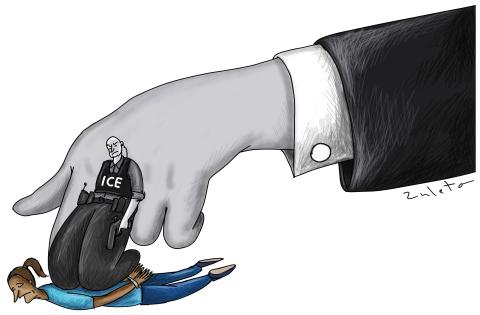
Abuso de ICE
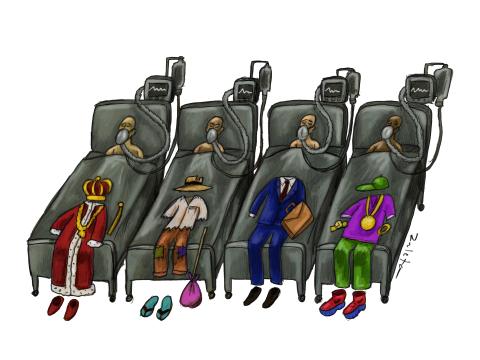
Rich and poor (Iguality with COVID)
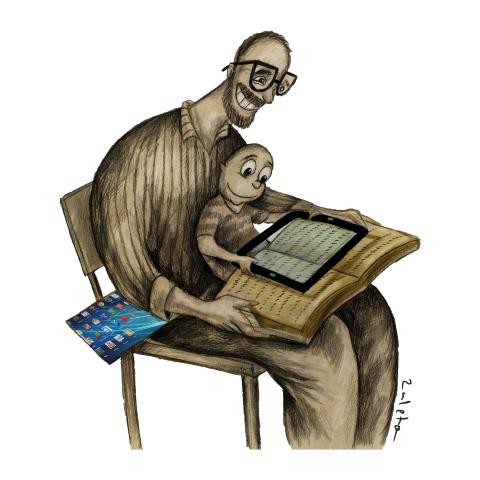
Digital
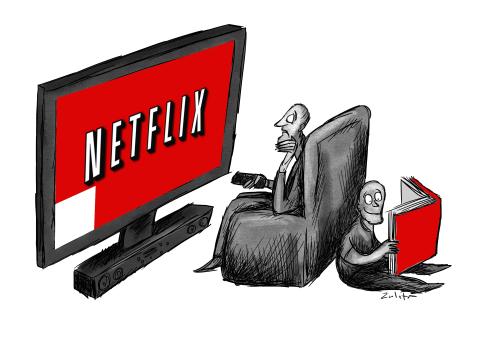
Book # 1
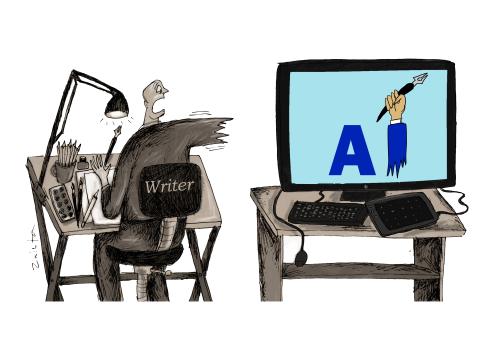
Book #5
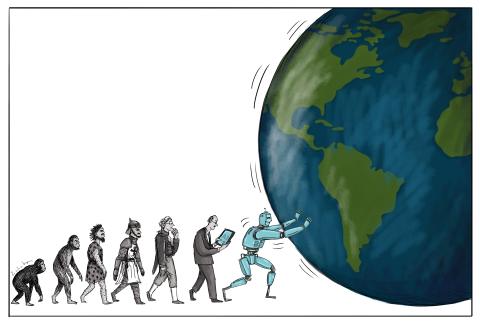
Evolution
Interview with Raúl Zuleta
by Pepe Pelayo
Today's guest, Raúl Zuleta, is a standout figure in Colombian graphic humor and on the international stage. He made headlines this year for winning one of the awards at the Knokke-Heist Cartoon Festival in Belgium.
He is a visual artist, caricaturist, art professor, illustrator, art historian, and holistic therapist.
As a caricaturist, he has won nearly 50 international awards in various countries around the world, including the standout World Press Cartoon 2013—the world's most important competition—in which he was ranked among the top nine caricaturists globally.
Why is he with us on this "Vis a vis"? I already mentioned one reason: he recently won that major award in Belgium. But also because I love his work. He's one of those caricaturists who gives great importance to the balance of form and content. While expressing profound ideas, he doesn't do so with a lesser line or aesthetic, but cares deeply about both—and that is appreciated. And another reason is that he loves to theorize, reflect, and analyze everything related to his profession. We've exchanged ideas before. That's why I sense this will be a great "Vis a vis."
Let's get started.
PP: Well, Raúl, for the Humor Sapiens followers, could you introduce yourself? Maybe my introduction was too brief. Can you do it better?
ZULETA: RAÚL ZULETA, Colombia 1983. Artist, Caricaturist, Art Historian, and University Professor.
I am an artist and caricaturist with a 20-year career, holding a Master's in Art History (University of Antioquia, 2011) and a Bachelor's in Visual Arts (National University of Colombia, 2006), plus a Diploma in Art Criticism (University of Antioquia, 2013). I am currently an art professor in the Faculty of Arts at the University of Antioquia, with nearly 18 years of experience.
As an international caricaturist, I am one of Latin America's most prominent. I have won nearly 70 international awards in many countries, most recently Second Place at the 65th Cartoon Festival Knokke-Heist, Belgium. Standouts include World Press Cartoon Portugal 2013. Invited to the "Latin American Caricaturists" exhibition at the Teheran Iran Museum of Contemporary Art in 2023. Solo caricature exhibitions at the Museum of Caricature Mexico 2014, Museum Instituto de Cultura Antioquia Colombia 2023, Museum Piracicaba Brazil 2017, Museum Centro Cultural Roberto Fontanarrosa Argentina 2015. International juror. Selected in numerous caricature contests and included in many catalogs. Highlight: publication in "100 Best Caricaturists in the World" Iran 2023. Invited to the Guadalajara International Book Fair Mexico 2017, 2019. Lectures, workshops, and academic articles on caricature.
As a national caricaturist in Colombia, I currently publish in the newspaper El Espectador (Colombia's leading newspaper). Winner of the Inter-American Press Association (SIP) Excellence in Journalism Award 2025 United States (as the best caricaturist in the Americas in 2025). Winner of the National Simón Bolívar Journalism Award 2024 (as Colombia's best caricaturist in 2024). National Journalism Award from the Bogotá Circle of Journalists Colombia 2022. Participant in numerous caricature events in Colombia, publications in catalogs, books, and magazines. Tributes. Winner of creation grants. Juror, etc.
As an artist, I use caricature humor combined with painting to generate ironic versions of art history. I am currently represented by LA-galeria Bogotá, Galería el Coleccionista, and Carlos Orozco Galería in Colombia. I have held numerous national and international solo exhibitions, including "Atlas Irónico" in 2025. Numerous collective art exhibitions in galleries and museums nationally and internationally. Participated in major international art fairs like Artbo Colombia 2025. My work is in national and international private collections. I have conducted art history research and published academic articles. I have been a curator, professor, and advisor in contemporary art.
Instagram: @zuleta_artist @zuleta_cartoonist
PP: You crushed me with that introduction. I mean, you made mine look ridiculous by comparison, ha ha. Your professional resume is impressive. Congratulations. Now, it would be interesting to know how you'd like to be known and remembered in the future.
ZULETA: My profile is truly that of an artist-caricaturist, both as a unit, not separately. Therefore, I'd like to be recognized and remembered for my important visual production. For example, in the context of international graphic humor contests through awards and solo exhibitions in many countries. In the Colombian case, that my opinion caricatures become a visual reference for my country's history through opinion caricature. And of course, from the art field, where my works achieve recognition and circulation in the art system, offering a particular, critical, and ironic view of art history itself and the very institutional framework in which contemporary art operates. In this sense, that both productions are recognized at a high level in my work, which made a difference, and managed to restore the value of art to caricature, just as it added that touch of humor and irony to art production.
PP: I'm sure it will be. You deserve it. But to get to know you better, at what point did you decide to dedicate yourself to humor?
ZULETA: My art training began very young. Parallel to that artistic formation, I had Fernando Pica as a teacher, director of CartoonRendon, the caricature event where I began exploring graphic humor. As my training as an artist developed in the academic university setting, the initial hobby of caricature continued and extended to participating in international contests, where awards quickly started coming in. But it was with the World Press Cartoon award in Portugal in 2013 that the notion of hobby disappeared, and I assumed caricature as a professional pursuit, expanding to win more awards, hold solo caricature exhibitions in some countries, and later publish opinion caricature in the newspaper El Espectador in Colombia. And finally, unite that ironic capacity of graphic humor with my conceptual and formal interests in the field of contemporary art.
PP: Perfect. I don't know if you know that I also interviewed your teacher Fernando Pica for Humor Sapiens—great person and artist. Give him my regards. Well, what can I say? I'm thrilled you decided to turn the hobby into a profession—we all win. And to stay on the same track, did you start drawing without a defined style? Maybe you have a clear style now. If so, what is it? Did national or foreign cartoonists influence you during your childhood and adolescence?
ZULETA: At the beginning, there was certainly great influence from many caricaturists, sometimes in formal aspects and others in the type of humor. I highlight caricaturists like Ares, Boligán, Kosobukin, among others. The key is that from the start, my aim was international contests, so I learned to make caricatures without text, with more conceptual and universal humor. And those conditions even mark my current opinion caricature in the newspaper, where text is the last resort, and the graphic element is at a high artistic level. On the other hand, given my contemporary art training, I conceive caricature as constant exploration, researching visual references from art history—this means I don't seek a particular style. While it's inevitable that my work has a distinctive air giving it identity. To wrap up, and returning to my caricature beginnings, it fills me with great personal pride that caricaturists like Ares and Boligán, who influenced me early on, now share awards and invitations with me in many contests.
PP: You might not know that both have been great friends of mine since the 80s in Cuba. And I understand your pride in being their peer now. They are excellent caricaturists, as you are. My friend, you said that because of contests, you started creating caricatures without text. Is that your preference now? Can you tell me why?
ZULETA: Revisiting the previous question, my start in graphic humor was specifically aimed at international contests, so I developed the ability to avoid text and think how to resolve the idea in a single image. And that strategy is where I've truly achieved a high conceptual and formal level in my caricature. Now, with 4 years of experience publishing political and social opinion caricature in El Espectador, I've opened to the possibility of text, but for me, text is the last resort, not the initial intent—hence, few caricatures include it. Even that text dynamic has extended to some art caricatures, but only in specific works.
PP: I get it. I confess I'm a fan of textless caricatures, or when text and drawing are totally intertwined—which doesn't happen often, as some colleagues just illustrate the joke. Well, let's continue with you. I imagine you've noticed the evolution of your work from your beginnings to now. So, how do you think that change has unfolded over time? (I'm referring to form and content, of course. Not whether you do it better now—that's obvious.)
ZULETA: Of course, the evolution has been notable in many aspects, but I feel that particular essence has always been there. That evolution and change has occurred in many ways. Formally, the drawing ability is evident, moving to more complex and conscious graphics in composition, color, style, etc. They no longer have the naive character of earlier caricatures; now, just from the visual component, they look powerful at first glance. This formal evolution also involved incorporating digital possibilities—in fact, many current press caricatures and some for contests are fully digital. But that's been interesting, as it has allowed me to explore many visual options. From the art field, I'm interested in returning to analog caricature production, even taking it to unconventional formats and supports like canvas with paint. Conceptually, while from the start I wasn't interested in simple jokes, I think that conceptual and reflective intent—over humor—intensified with the cultural dynamics of social media and meme diffusion. I believe that was a key turning point for caricature: its intent was no longer an immediate joke to make people laugh, but rather a conceptual one to make them think, with humor as a way to confront reality. In conclusion, the evolution of my work is evident, with a higher conceptual level in ideas and visual potency in my caricatures.
PP: Perfect. Though I think simple humor—the kind that just makes you laugh or think about certain topics—is also necessary in life, and it too requires a high level of visual elaboration to work better and for us consumers to enjoy it more. Not because the idea isn't the deepest in the world does it deserve low quality in form. But that's a debate for another time (if there is one). Now, to relax a bit, can you tell us an ingenious, curious, and/or funny anecdote that happened to you in this humor career? (Or one you witnessed.)
ZULETA: Fortunately, I haven't had a negative experience. The reactions are more that people get upset by some of my caricatures, but it doesn't go beyond expressing their opinion. At the caricature event in Brazil in Piracicaba, they held a solo exhibition of mine with large-format reproductions of some caricatures. One of them, about Adam and Eve, caused great discomfort in Brazil's evangelical community, and social media spread opinions for and against. A very positive one was arriving at the Museum of Contemporary Art in Tehran, where a large digital print of my caricature was next to Ares's on the museum's entrance facade.
PP: Well, there will always be fanatics—religious, political, etc.—trying to impose themselves. But water finds its level. And I can imagine how you felt seeing your caricature and Ares's on that facade. A photo to frame, right? Well, I'm going to shift the focus of this "Vis a vis" a bit now, because I know you like to theorize. How necessary is it for humor creators—like caricaturists, for example—to be interested in humor theory, in the theory of their artistic manifestation?
ZULETA: In any discipline one practices, especially in the art field, it's important to have conceptual and historical awareness of one's craft. This is very common in contemporary art, where as an artist you're not just in constant visual production, but in dialogue, reading, and reflection on theories, art history, and current dynamics of the art system. In caricature, such reflections are scarcer and mostly come from academics and theorists with some interest or taste for graphic expressions like caricature, comics, graphic humor, etc. One could reflect on caricature from a historical context close to the art field. Then from the massification of images in media. And at that midpoint, Visual Studies reflections are more relevant, since we're in the image era, and sometimes a caricature—which has a connotation of minor art—achieves viralization and public connection via social media more than some high-culture art images. So I believe from Visual Studies, we can review all those image phenomena, especially those close to caricature, in the social and cultural dynamics of the contemporary world.
PP: That's true. And I think that the lack of interest in theory contributes to some people claiming that graphic humor is a minor art form. That's also a great topic for debate. I consider graphic humor to be a Major Art, like any genuine expression of Art. But we must first agree on the foundation, and here is my question for you: What is graphic humor?
ZULETA: While one understands the historical context of caricature with its primary notion of making people laugh — and hence the connotation of graphic humor — I don't actually like the word "humor" very much. On the contrary, I prefer the word "Irony," because it carries the connotation of humor but with a reflective or critical intent. So I would prefer to think of it as graphic irony or graphic thinking. I believe that broadens the capacity that caricature has today to generate images that question, that provoke reflection, and that humor is simply the spice, that special touch that gives this visual production its own identity, distinct from other visual expressions. But something important to highlight is that in this age of the image, where there is visual production on a global scale from countless sources, caricature or graphic humor has an enormous potential — the ability to connect, with a simple drawing, with people from anywhere in the world. That capacity for communication is very important, and caricature must not lose it. In fact, that ironic quality is precisely what allows my artistic work to carry that universal connotation.
PP: I think we have a small semantic disagreement. For me, irony, satire, jokes, parody, caricature (which is extreme parody), banter, and even sarcasm are all forms belonging to a broad category called humor. Because they are forms of humor. Therefore, for me, any of those forms can provoke thought if that is the creator's intention — or simply laughter, if that is what the author is going for. Humor is only good or bad, effective or not, but it can appear in any of those forms, according to the results of my studies. But that doesn't mean I hold the truth. No one does. Once again, we have to postpone the debate due to time constraints. This already calls for a full day together, doesn't it? And speaking of this topic, let's focus on the type of humor you prefer. I'll give you several options:
a) The kind that simply makes you laugh. b) The kind that makes you laugh and reflect. c) The kind that makes you think, even if it is purely critical or satirical. d) Mocking, disrespectful, or offensive humor.
And why didn't you choose the others? (If you left any out).
ZULETA: I would be most drawn to answers b and c. Although with b, I would reverse the order, since my primary intention is to provoke reflection — and understanding that reflection doesn't always involve grand global or political themes; sometimes more human, personal, and everyday topics are also a valuable point of reflection. So my intent with humor is to encourage reflection, a question, a thought that is sometimes threaded with an ironic quality that occasionally draws a laugh. And then, from the perspective of answer c, I have caricatures whose sole intention is purely critical, hard-hitting, and questioning — where the image manages to synthesize a difficult situation or theme, and humor or laughter have no place in that caricature's intent. Going back to answer b, that is also a distinctive feature of my output as an artist, through my use of appropriationism from art history. And that is: faced with the serious and hegemonic character of the art system, my paintings carry a reflective intent toward art itself — but in the end, there is a dose of humor that disrupts that devotional silence with which art is viewed in a museum.
PP: Art is free, as the artist must be, and everyone creates the kind of humor they see fit, and that's how it should be. We cannot judge someone for doing what you do, or what anyone else does. Having said that, I'll share what I think. For me, the comic is something personal. It is a process experienced by a human being, triggered by an incongruity that reaches us through our senses or through our imagination. The end of that process is laughter or a smile, with the corresponding sui generis pleasure. But if that person wishes another (or others) to experience that comic process, they send a message — and if the incongruity received in that message also leads that other person to go through the individual comic process and ultimately laugh or smile, then habemus humor. Because humor is social. My own definition: humor is the expression of the comic. Thus, something comic is not necessarily humorous. But something humorous is obligated to carry the comic within it. It doesn't matter whether the percentage of comicality is minimal or 100%. If it's 100%, that humor exists solely to make you laugh or smile. If it's minimal, it means that message, beyond its low percentage of comicality, also carries other ideas that will make us think and feel. But if there is no comicality, there is no humor. And all of it is valid. If you make caricatures that carry no comicality, and that is your intention, perfect. But that would open another debate. If you use the artistic form called caricature, that in itself already carries the intent to make someone smile, even if minimally. An inner smile, for example? Many studies have shown that messages, however "serious" they may be, reach consumers more effectively, penetrate more deeply, and are more impactful when delivered with humor. In the end, you and I chose to embrace this highly subjective profession — where nothing is absolute and it is always evolving as more research and discovery takes place. Leaving that topic aside, dear Raúl, I also kept thinking about what you told me regarding what happened to you with those intolerant religious groups, and I'd like to return to a very topical angle related to that same matter: what are the limits of humor? (If any exist, of course).
ZULETA: For me, every human activity carries an ethical dimension, and that means deciding for oneself how far to take one's humor. One can be critical of a politician or a public figure, and caricature should respond to the conditions of their public role. But going beyond that space and using mockery to attack personal or physical aspects in order to degrade that person's humanity — to me, that is not acceptable. And caricature does not always have a clear grasp of that distinction; many caricaturists excuse themselves by invoking the very nature of being caricaturists, claiming a license to overstep those boundaries. If someone has to undress a figure to degrade them, if they have to use sexual connotations to humiliate them, if they exploit their physical appearance not to give the character identity but to mock them — then that person is simply a terrible caricaturist who lacks intelligent ideas and resorts to the most contemptible aspect of human nature: attacking another person's human dignity, solely on the moral argument that one is better than the other. So yes, for me a limit does exist, and I have no interest in crossing it in my caricature, even when my intention is to go after a political figure. In fact, today's caricaturist is increasingly inclined to adopt mockery as humor more to gain likes on social media than to deliver genuinely intelligent criticism of a public figure.
PP: I completely agree with you. I truly couldn't agree more. Let me follow up along the same line then — have you ever been censored? Do you self-censor often, rarely, or never?
ZULETA: I have not been censored. For example, at the newspaper I work for, El Espectador, I enjoy absolute freedom to express my opinion through my caricatures. As for self-censorship, I think it ties in with my answer to the previous question — my intent with caricature is to make strong, direct critiques, but with an intelligence that has no need to resort to low tactics, to mockery for its own sake, just to give the caricature something to say. In the Colombian context, it has happened that people disagree with my political critique, yet even so they acknowledge that the caricature itself is very good — in terms of the graphic idea I used to develop the concept.
PP: That's true. But you can't deny that there are, in this world, limits external to the creator — such as the rules imposed by a political dictatorship in a country, or the owners of a media outlet, or the dictatorship of powerful minorities, and so on. And perhaps that connects to self-censorship, because many of our colleagues who are victims of all of that want to publish — even to survive — and find themselves needing to overcome (or outwit) those dictatorships. And what you say is very true: there are internal limits that depend on the morality, ethics, principles, decency, and dignity of the creators. In any case, I suggest we leave theory aside for a moment and refocus on your work. For instance, you recently won an important international competition, so I'll ask you: among the many international awards you have received, which has impressed or moved you the most?
ZULETA: Each award has something special about it; however, it's undeniable that some competitions carry more prestige than others and become reference points in a caricaturist's career. As I mentioned in an earlier part of the interview, the World Press Cartoon in 2013 was a competition that marked a before and after — it represented the transition from being a hobbyist caricaturist to becoming a professional one. There were later awards in several countries that allowed me to travel to receive them. There were also journalism awards, such as the Inter-American Award from the SIP or national journalism prizes in Colombia — those hold great importance in my career. But of course, this most recent one carries great relevance in my trajectory. For one thing, it's worth noting that the Cartoon Festival Knokke-Heist in Belgium is one of the oldest competitions in the world — this year marks its 65th edition. That legacy has made it, over time, one of those landmark competitions and global points of reference. And of course, all of that is compounded by how meaningful a competition becomes when it has the capacity to invite the winning caricaturists — and in this case, traveling to Belgium made the award extremely significant, especially considering the current stage of my career.
PP: I congratulate you wholeheartedly on such important awards, my friend. Now, on the same topic — would you like to share your thoughts on international competitions in general? For example:
- Whether there should be more or fewer events of that type.
- Whether competitions truly benefit cartoonists.
- Whether there are problems with unfair juries or organizers.
- Whether issues with awards being given to plagiarized works are common, etc.
ZULETA: There is a great deal one could say about caricature competitions, and you immediately touch on several very obvious points. But even so, with all those aspects one might highlight, I want to first emphasize their importance and relevance — because they are the only space that graphic humor has to circulate and be recognized worldwide. I should note that many competitions add value by mounting major exhibitions of selected works, much like a museum exhibition — while other competitions result in very improvised displays in spaces not even suited for exhibitions. It is notable how many competitions feature the same judges and guests year after year, making them very insular events that offer nothing new. Many prizes take far too long to be paid out. After the pandemic, the costs of physical mail increased significantly, making it difficult both for caricaturists to send originals and for competitions to send printed catalogs — these costs severely disrupted the dynamics of competitions. There is also, of course, the ongoing condemnation of awarding prizes to AI-generated or plagiarized caricatures. And finally, there should be greater promotion of caricature exhibitions in museum and gallery spaces, but with a high-quality presentation — such as the Latin American caricature exhibition at the Museum of Contemporary Art in Tehran in 2023, or the World Press Cartoon exhibitions and the caricature exhibitions at the Instituto Quevedo de las Artes.
PP: We think identically on this matter. And thinking about everything that happens in this special world we move in, I ask you: how do you see the present and future of graphic humor?
ZULETA: It is undeniable that the spaces in newspapers — whether print or digital — are shrinking, in the sense that caricaturists are being paid less and less for their publications. This means caricature risks ceasing to be a profession and reverting to a hobby, to the extent that it loses its status as paid work — meaning caricaturists would no longer be able to dedicate themselves fully to this creative activity. But paradoxically, on the other hand, thanks to social media, caricature has become more widespread, and the moment you post a caricature on a social network, it is shared by someone in another country somewhere in the world, and so on. That possibility now holds great value — and even more so when, through those publications, one can read the comments and witness the impact generated by the image one created. That is a clear demonstration of how a drawing generates a positive or negative response within a community. In my own case, and driven by my own interests as an artist, I do not conceive of caricature exclusively within the realm of newspapers. That is why I am interested in the relationship between caricature and the art system, finding new modes of circulation through exhibitions and collectors — elevating caricature to the level of art, both by returning to original works and by bringing caricature into the formal and conceptual dynamics of contemporary art.
PP: I like what you're saying. If we had to go back and simply keep making caricatures — the way painting or printmaking are made today, to name two visual art forms — that wouldn't be so dire. At least we know it won't disappear. Although I would still prefer that, in addition to that path, a way is found to monetize publications on the internet. That would be ideal, wouldn't it? Well, to start wrapping up, my friend: is there a question I haven't asked you that you'd like me to ask? If so, could you answer it now?
ZULETA: The question could be directed toward my work as an artist, which I've mentioned is closely connected to my career as a caricaturist. What does your contemporary art work look like? My work as an artist is developed primarily through the language of painting, and drawing on the strategy of appropriationism, what I do is take iconic images from art history — both from the Colombian and international contexts. Through that strategy of re-signification, I expand the reading of these works of art, whether by creating dialogues between different periods of art history, or by exploring what happens when a work intersects with an image from popular culture, and so on. In my work, there is on one hand a purpose of undermining aspects of the art system — such as the art market, the concept of fame, status, the machinations of the system, hegemonic discourse, museums and galleries, the contrast between Eurocentric art and Latin American popular expressions, the concepts of high and low culture, among others. But at the same time, this conceptual strategy is crossed with the ironic, sarcastic, and humorous character that caricature brings — causing the serious and elitist connotation of art to be interrupted by an ambiguous and ironic reading that undermines the sacredness of the art system itself. Within this context, my ironic paintings are sometimes executed in a very realistic figurative style, and at other times I return to a more caricature-like aesthetic. I also expand the notion of caricature to larger-than-conventional paper formats, extending even to medium and large-scale canvases, and currently exploring the possibility of three-dimensional objects — as well as large-format caricature murals and installations as expanded painting.
PP: Wonderful. I loved the question and even more the answer. And just to explain why it didn't occur to me to ask it: because this is a publication with a single focus — humor — and everything I must ask you revolves around that. Nevertheless, you did very well to expand on that aspect of your career. I'm grateful for it, so that our readers can get to know you more fully. Raúl, now truly one last question — or rather, one last request: would you like to say a few words to those very readers of Humor Sapiens who have just gotten to know you better?
ZULETA: First of all, I am very grateful to have this space again for an interview and reflection on my work and trajectory as a caricaturist. I also want to highlight Humor Sapiens as a platform that publishes texts reflecting on the role of Latin American graphic humor. Likewise, I hope this interview allows people who are unfamiliar with my work to approach not only my caricatures and art, but also my conceptual thinking. And why not — I hope that through this introduction to my work, there arises interest in organizing solo exhibitions of my caricature and invitations from various countries. And finally, I'd like to extend an invitation to discover my work directly on Instagram: @zuleta_cartoonist and @zuleta_artist.
PP: Excellent. I thank you infinitely for having agreed to this "Vis-à-Vis," because I know how busy you are — so your time and attention are worth their weight in gold. I wish you great health and abundant success, my dear friend.
(Some texts have been translated into English by ChatGPT)