
Liu Qiang es un talentosísimo caricaturista chino. Hasta el 2025 ha obtenido alrededor de cien premios y distinciones en concursos internacionales de humor gráfico. Lo que lo convierte en uno de los caricaturista chinos más premiados del mundo. Es un honor y un placer tenerlo con nosotros en este Vis a vis con la vis cómica.
Para los lectores de Humor Sapiens que no saben, en el idioma chino se coloca primero el apellido y después el nombre. Por ejemplo, en este caso nuestro invitado se llama Qiang y se apellida Liu. Como no lo conozco personalmente y solo soy admirador de su obra, me dirigiré a él como LQ.
PP: Bueno, para los seguidores de Humor Sapiens, ¿podrías presentarte tú mismo? Quizás mi presentación fue incompleta o contenía solo datos. ¿Puedes presentarte más humanamente para conocerte mejor? Además, sería interesante saber cómo te ves a ti mismo y cómo te gustaría ser conocido y recordado.
LQ: Comencé a aprender a dibujar y crear por mi cuenta a los 24 años. Me gusta incorporar mis observaciones del mundo en el humor visual. Espero que la gente no me recuerde por ningún título, sino porque mis obras pueden conmover a más personas, brindarles alegría e inspirarles a reflexionar.
PP: Te entiendo. Y creo que te van a recordar así. Pero dime, ¿en qué momento decidiste dedicarte al humor?
LQ: Al principio, dibujaba lo que me apetecía con total libertad. Más tarde, los cortometrajes de animación que realicé para mi trabajo tuvieron una acogida muy positiva, así que poco a poco me centré en el cómic. En aquel entonces, la mayoría de mis creaciones eran cómics con texto. No fue hasta que mi esposa me regaló tres antologías internacionales de historietas que me interesé profundamente por este tipo de cómics sin palabras que invitan a la reflexión. Desde entonces, me he dedicado a crear historietas sin palabras y participé oficialmente en concursos internacionales en 2014.
PP: Sobre ese punto te quiero preguntar, pero antes, confiésame algo: ¿te gusta que le hagan entrevistas?
LQ: No me gustan ni me disgustan las entrevistas. Las considero una conversación profunda. Me ayudan a organizar mis ideas creativas, permiten que más personas comprendan las historias detrás del humor gráfico y pueden servir de inspiración a nuevos dibujantes.
PP: Bueno, con todas esas ventajas que le encuentras a las entrevistas, doy por sentado que te gustan. Y estoy de acuerdo. Para promocionar nuestro trabajo son muy importantes. Y retomando lo que me contabas antes... Dices que ahora prefieres dibujar caricaturas humorísticas sin texto, más que con texto. ¿Puedes decirme por qué?
LQ: Prefiero las viñetas humorísticas sin palabras porque el lenguaje está limitado por la cultura y la región. Las viñetas sin palabras son universales; permiten que lectores de todo el mundo se identifiquen con la misma imagen.
PP: Tienes toda la razón. Yo tengo la misma postura. Pero conozco colegas que defienden la caricatura con palabras y argumentan que llegan mejor al público y que la fuerza de la palabra y la imagen juntas la obra es más poderosa. Pienso que el ideal es que cada uno haga su obra como mejor le nazca y es tan valida una alternativa como la otra. Excepto que pierden algo al participar en concursos, por ejemplo, donde se necesita un mensaje universal que entiendan todos en este planeta. Lo que sí no me gusta es cuando se hace una caricatura con texto y no está bien enlazada con la imagen. Por ejemplo, que si uno elimina la imagen y la cambia por otra y el chiste del textos se mantiene, se entiende igual. Eso significa que la gracia estaba en las palabras y la imagen está por gusto, como mera ilustración, sin aporte. Para mí se aleja del humor gráfico. Pero dejo de teorizar y continúo con la entrevista. ¿Qué es el humor gráfico para ti? (Volví a caer en la teoría, disculpa).
LQ: En mi opinión, el humor gráfico es una forma de expresión que transmite risa e incluso provoca reflexión a través de imágenes visuales.
PP: Buenísima definición. Sólida. La mía es parecida. No la cito ahora para no alargar este Vis a vis. Así que continúo mejor tratando de conocerte más. Por ejemplo, cuéntame, ¿empezaste a dibujar sin un estilo definido? Quizás tengas claro cuál es tu estilo actualmente. Si es así, ¿cuál sería? ¿Te influyeron dibujantes nacionales o extranjeros durante tu infancia y adolescencia?
LQ: Cuando empecé a dibujar, no tenía claro mi estilo personal. De hecho, siento que todavía no lo tengo. Pero algunos amigos dicen que sí lo tengo, solo que yo no lo reconozco (ríe). Admiro a muchos dibujantes: Xia Dachuan, Hou Xiaoqiang, Kosobukin, Pawel Kuczynski, Gatto, Ares, Angel Boligan, Mohse Najafi, Ignat y otros. De ellos aprendí a ser sincero en la creación artística.
PP: Lo tienes, amigo mío. Y es muy bueno. Quizás tu modestia hace que no lo veas. Te diré también que me encantan esos colegas que mencionas. Los conozco. Incluso soy amigo personal de Ares y Boligán. Ya los he entrevistado aquí. Bueno, me imagino que sí te hayas dado cuenta de la evolución de tu obra desde tus inicios hasta ahora. Entonces, ¿cómo crees que ha sido ese cambio en el tiempo? (En cuanto a forma y contenido, por supuesto. No si lo haces mejor ahora, porque eso es obvio).
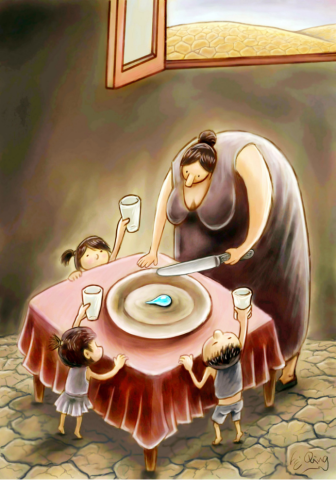
LQ: Al principio, creaba de forma muy informal. Sin embargo, tras participar en concursos internacionales, establecí estándares estrictos para mis obras: deben transmitir un valor perdurable que trascienda el tiempo. Estilísticamente, no me ciño a una forma fija; intento utilizar el estilo más apropiado para expresar con precisión mis ideas. A veces, una sola pieza me lleva meses, o incluso más de un año, para refinarla y pulirla. Temáticamente, comencé centrándome principalmente en cuestiones medioambientales y gradualmente amplié mi enfoque a una sutil sátira sobre fenómenos sociales y la naturaleza humana.
PP: Fantástico. Eso se llama madurez y lo demuestras. Pues vayamos hacia el tipo de humor que prefieres. Te doy varias opciones:
a) El que simplemente te hace reír.
b) El que te hace reír y reflexionar.
c) El que te hace pensar, aunque sea puramente crítico o satírico.
d) El humor burlón, irrespetuoso u ofensivo.
¿Y por qué no elegiste los demás? (Si es que omitiste alguno).
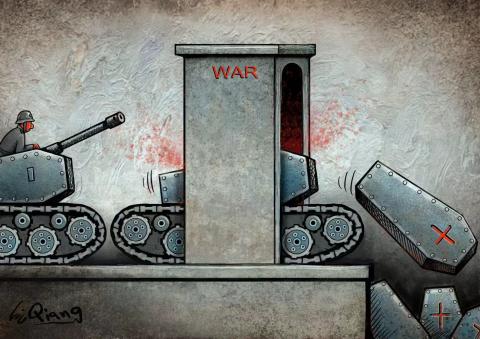
LQ: Elijo “b” y “c”. Razón para no elegir “a”: Si bien el humor puramente cómico puede brindar una alegría pasajera, las obras que invitan a la reflexión dejan una impresión más profunda. Razón para no elegir “d”: La burla, la grosería y la ofensa solo fomentan el conflicto. La verdadera sátira busca corregir y despertar, no generar odio ni división. A menudo, las personas ven la paja en el ojo ajeno, pero ignoran la viga en el suyo propio. Todos deberían practicar la autorreflexión.
PP: Bueno, a nadie le interesa mi opinión, porque lo importante aquí son tus criterios, para eso es tu entrevista. Pero como esta sección Vis a vis es una conversación informal, me atrevo a dar mi posición: estoy de acuerdo contigo en el elegir “b” y “c”, solo que agregaría la “a”, porque para mí es importante que la gente ría o sonría si sirve para mejorar su estado de ánimo, aunque sea de manera pasajera. Con el estado de ánimo positivo se puede consumir mejor el humor. Incluso es condición sine qua non para crearlo. Por supuesto, en estos temas nadie tiene razón y todos las tenemos. Y se me ocurre preguntarte ahora sobre un tema de moda: para ti, ¿cuáles son los límites del humor? (Si lo hay, claro).
LQ: Creo que los límites del humor son el respeto y la empatía. Podemos satirizar fenómenos sociales y bromear sobre las debilidades humanas, pero no debemos usar el humor como excusa para ataques personales o para difundir prejuicios. El humor debe mantenerse dentro de los límites morales y éticos.
PP: Estoy 100% de acuerdo contigo. Y sobre esto mismo: ¿has sido censurado alguna vez? ¿Te autocensuras mucho, poco o nunca?
LQ: Nunca me he enfrentado a la censura. Pero a menudo me pregunto: ¿Pueden mis obras aportar algo positivo al mundo? ¿Es apropiada mi forma de expresarme? Cuando satirizo cierto comportamiento, ¿estoy haciendo lo correcto?
PP: Preguntas válidas, amigo mío. Pero sucede que existen seres humanos en el mundo "exterior”, que por poder o ignorancia pueden decidir sobre nuestras obras (y a veces sobre nosotros). Pero como tú te desarrollas, por ejemplo, en los concursos internacionales, es difícil que tropieces con muchos de esos “límites exteriores”. Y a propósito de concursos, de entre los numerosos premios internacionales que has recibido, ¿cuál te ha impresionado o conmovido más?
LQ: Cada premio que he recibido es fruto del reconocimiento y el apoyo de muchos jueces, ¡por lo que estoy profundamente agradecido! Muchos momentos me han conmovido e impresionado profundamente. El más inolvidable fue ganar la Copa de Oro del "World Humor Award" en Italia en 2020. El comité organizador se comunicó conmigo en repetidas ocasiones para informarme sobre mi asistencia a la ceremonia en Italia, me consiguió un traductor y reservó mi vuelo. Estaba muy emocionado ante la idea de compartir con artistas excepcionales. Desafortunadamente, la pandemia empeoró y el vuelo se canceló. A pesar de la decepción, la Copa de Oro me llenó de orgullo. Muchos colegas caricaturistas me felicitaron, importantes medios de comunicación nacionales cubrieron mi premio en profundidad, y el trofeo y los galardones que recibí fueron exquisitos. Estoy profundamente agradecido por todo.
PP: Me alegra mucho todo lo que me cuentas. Te felicito sinceramente. Y para cerrar el tema de loc concursos, ¿te interesa hacer algún comentario sobre los concursos internacionales? Por ejemplo, si deberían haber más o menos evento de ese tipo, si los concursos benefician a los dibujantes, si hay problemas con jurados u organizadores injustos, si existen problemas con la concesión de premios a obras plagiadas, etc.
LQ: Los concursos internacionales ofrecen una excelente plataforma para que los dibujantes intercambien ideas. Sin embargo, la cantidad no es lo más importante; la calidad es lo que cuenta. Los jueces en los concursos internacionales de caricaturas suelen ser muy justos. La carga de trabajo de un concurso internacional importante es enorme, y no podemos esperar que los jueces revisen y recuerden todas las obras del mundo; nadie puede. Por lo tanto, las similitudes ocasionales entre las obras premiadas son inevitables. Los creadores entienden que las caricaturas a menudo expresan una sola idea específica. Especialmente en los concursos temáticos, las similitudes involuntarias son muy comunes. Por supuesto, no se puede descartar por completo el plagio malintencionado. Afortunadamente, los concursos internacionales cuentan con jueces excepcionales con amplia experiencia. Pueden juzgar la originalidad examinando el conjunto de la obra de un artista y distinguir claramente entre plagio y similitud casual. Para abordar las similitudes ocasionales entre las obras premiadas, sugiero agregar un mecanismo de retroalimentación y revisión: después de que se seleccionen los finalistas, la lista debería anunciarse públicamente para recopilar comentarios de todas las partes. El plagio sospechoso debería investigarse y verificarse antes de que se publiquen los resultados finales. Esto protege tanto la imparcialidad de la competencia como la reputación de los creadores que presentaban similitudes fortuitas.
PP: Coincidimos plenamente. Esa idea que sugieres funciona muy bien. En 2024, en el Concurso Internacional Humor Sapiens, lo hice. Publiqué los finalistas casi un mes antes y colegas vieron tres obras con posibles plagios y las investigamos. No comprobamos ninguna, pero sí dos que habían sido ya premiadas en anteriores concursos y eso estaba prohibido en nuestras bases. Así que cuando premiamos, ya estaba todo revisado y no hubo problemas. Eso deberían hacer todos los concursos, como dices y te respaldo. Amigo, y pensando en todo lo que sucede en este mundo especial en el que nos movemos, te pregunto: ¿cómo ves el presente y el futuro del humor gráfico?
LQ: El mundo actual está experimentando una transformación sin precedentes. Esto trae consigo tanto oportunidades como desafíos para el humor gráfico. Sin duda, han surgido muchas obras destacadas de humor gráfico en esta época. Por otro lado, también existe contenido dañino en todo el mundo que promueve el odio, la provocación y la desinformación. El propósito de la sátira debe ser corregir y alertar, no incitar al odio ni a la confrontación. Espero que el humor gráfico en el futuro se construya sobre la base del respeto, el cuidado, la compasión y la autorreflexión. Sin duda, el humor gráfico nunca desaparecerá, pero las obras imperecederas siempre nacen del amor.
PP: Comparto tu linda opinión. Pero disfrutemos ahora con más ligereza (sin mis preguntas tan densas). ¿Puedes contarnos alguna anécdota ingeniosa, curiosa, y/o graciosa que te haya ocurrido en esta carrera en el humor? (O que hayas sido testigo).
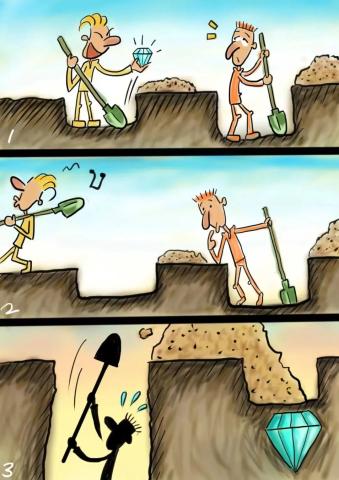
LQ: Tengo una viñeta de tres paneles que presenté al concurso internacional de caricaturas "Celos" en Brasil en 2014. Fue seleccionada para el álbum, pero no ganó ningún premio. Pensé que no había tenido éxito y la guardé, sin publicarla jamás. Un día de 2019, vi varias viñetas filosóficas de artistas extranjeros en la página principal de un sitio web. Me pareció increíble que mi trabajo apareciera allí. Deseaba que mi propio arte pudiera aparecer en una página principal como esa. Unos días después, me sorprendió encontrar esa viñeta tan olvidada en la página principal. Más tarde, la vi difundida por muchos sitios web, tanto en China como en el extranjero. Lo sorprendente es que nunca la había publicado. Supongo que esta obra, creada en China, fue enviada a Brasil para el concurso, se difundió por todo el mundo desde Brasil y finalmente regresó a China. Me pareció increíble. En ese momento, sentí de verdad el encanto del humor visual: realmente trasciende el idioma, la cultura y las fronteras.
PP: Encantadora anécdota. Y es cierto, esas cosas pasan en esta maravillosa profesión. Bueno, amigo mío, para ir cerrando: ¿hay alguna pregunta que no te haya hecho y que te gustaría que te hiciera? Si es así, ¿podrías responderla ahora?
LQ: Todas las preguntas que planteaste son muy precisas y no hay omisiones.
PP: Gracias, amigo. ¿Y qué consejos me darías a mí como humorista?
LQ: Como creador de humor, siempre estoy explorando. Lo que más me esfuerzo por transmitir es que la creación siempre nace del amor y se guía por la conciencia. Espero que esto también te sea útil.
PP: Claro que sí. A mí y a todos los que nos dedicamos a esto. Y por ultimo, ¿te gustaría dirigirles unas palabras a nuestros lectores de Humor Sapiens?
LQ: Estimados lectores de Humor Sapiens, gracias por dedicar un momento a disfrutar del humor visual. Espero que mis obras les brinden un poco de alegría y les inspiren reflexiones. Que encuentren más alegría en su día a día, sientan más amor y lo compartan con los demás.
PP: Muchas gracias, querido colega. Fue un honor y un placer tenerte con nosotros en este Vis a vis con la vis cómica. He disfrutado mucho la entrevista.
LQ: Estimado Pepe Pelayo, gracias por tus maravillosas preguntas. Fue un placer intercambiar contigo. Me ayudó a reorganizar muchas de mis ideas creativas. Humor Sapiens ofrece una excelente plataforma para que los dibujantes internacionales intercambien ideas. Le deseo a Humor Sapiens un éxito continuo para que más personas puedan disfrutar del encanto del humor. ¡Hasta la próxima!
PP: Ojalá sea pronto. Un abrazo.
Y hasta la próxima edición de Vis a vis con la vis cómica, queridos humornautas!!
by Pepe Pelayo
Liu Qiang is an incredibly talented Chinese cartoonist. By 2025, he had won around one hundred awards and distinctions in international cartooning competitions, making him one of the most awarded Chinese cartoonists in the world. It's an honor and a pleasure to have him with us for this interview with the world of comics.
For Humor Sapiens readers who may not know, in Chinese, the family name comes before the given name. For example, in this case, our guest's name is Qiang and his family name is Liu. Since I don't know him personally and am only an admirer of his work, I will refer to him as LQ.
PP: Well, for the followers of Humor Sapiens, could you introduce yourself? Perhaps my introduction was incomplete or contained only facts. Can you introduce yourself in a more personal way so we can get to know you better? Also, it would be interesting to know how you see yourself and how you would like to be known and remembered.
LQ: I started teaching myself to draw and create at the age of 24. I like to incorporate my observations of the world into visual humor. I hope people will not remember me for any title, but because my works can touch more people, bring them joy, and also inspire some reflection.
PP: I understand you. And I believe that is exactly how you will be remembered. But tell me, at what point did you decide to dedicate yourself to humor?
LQ: At first, I drew whatever I liked, quite freely. Later, the animated short films I made for my workplace received a very positive response, so I gradually focused on comics. At that time, most of my creations were text-based comics. It was not until my wife bought me three international cartoon anthologies that I became deeply interested in this kind of thought-provoking wordless comics. Since then, I have focused on creating wordless cartoons and officially entered international competitions in 2014.
PP: I want to ask you about that, but first, tell me honestly — do you enjoy being interviewed?
LQ: I neither favor nor reject interviews. I see an interview as an in-depth conversation. It helps me organize my creative thoughts, allows more people to understand the stories behind graphic humor, and may offer some inspiration to new cartoonists.
PP: Well, with all those advantages you find in interviews, I take it that you do enjoy them. And I agree. They are very important for promoting our work. And picking up on what you were telling me before... You say you now prefer drawing wordless humorous cartoons over ones with text. Can you tell me why?
LQ: I prefer wordless humorous cartoons because language is limited by culture and region. Wordless cartoons are universal; they allow readers from all over the world to resonate with the same image.
PP: You are absolutely right. I hold the same position. But I know colleagues who defend text-based cartoons and argue that they reach audiences more effectively, and that the combined power of word and image is stronger. I think the ideal is for each person to create their work in whatever way suits them best, and both approaches are equally valid. Except that text-based cartoons lose something in competitions, for example, where a universal message understood by everyone on this planet is required. What I do not like is when a cartoon includes text and the two elements are not well connected — for instance, if you remove the image and replace it with another, the joke in the text still holds and is just as clear. That means the humor was in the words and the image is there for no reason, as mere illustration, without contributing anything. To me, that moves away from graphic humor. But let me stop theorizing and get back to the interview. What is graphic humor to you? (I fell back into theory again — forgive me.)
LQ: In my opinion, graphic humor is a form of expression that conveys laughter and even provokes thought through visual imagery.
PP: Excellent definition. Solid. Mine is similar. I will not quote it now so as not to drag out this face-to-face. So let me continue trying to get to know you better. For example, tell me — did you start drawing without a defined style? Perhaps you have a clear sense of your current style. If so, what would it be? Were you influenced by national or foreign cartoonists during your childhood and adolescence?
LQ: When I first started drawing, I had no sense of establishing a personal style.In fact, I also feel like I have no style now. But some friends say that I actually have a style, I just don't know it myself (laughs). I admire many cartoonists: Xia Dachuan, Hou Xiaoqiang, Kosobukin, Pawel Kuczynski, Gatto, Ares, Angel Boligan,Mohse najafi, Ignat, and others. From them, I learned to be sincere in artistic creation.
PP: You do have one, my friend. And it is very good. Perhaps your modesty prevents you from seeing it. I will also say that I love those colleagues you mention. I know them. I am even personal friends with Ares and Boligán. I have already interviewed them here. Well, I imagine you have noticed the evolution of your work from your beginnings to now. How do you think that change has unfolded over time? (In terms of form and content, of course — not whether you do it better now, because that is obvious.)
LQ: In the early days, I created very casually. However, after participating in international competitions, I set strict standards for my works: they must convey enduring value that transcends time. Stylistically, I do not stick to one fixed form; I try to use the most appropriate style to accurately express my ideas. Sometimes a single piece takes me months or even more than a year to refine and polish. Thematically, I began by focusing mostly on environmental issues and gradually expanded to gentle satire on social phenomena and human nature.
PP: Fantastic. That is called maturity, and you demonstrate it. So let us move on to the type of humor you prefer. I will give you several options: a) The kind that simply makes you laugh. b) The kind that makes you laugh and reflect. c) The kind that makes you think, even if it is purely critical or satirical. d) Mocking, disrespectful, or offensive humor. And why did you not choose the others? (If you left any out, that is.)
LQ: I choose “b” and “c”.Reason for not choosing “a”: While purely comedic humor can bring fleeting joy, thought-provoking works leave a deeper impression. Reason for not choosing “d”: Mockery, rudeness, and offense only stir up conflict. True satire is meant to correct and awaken, not to breed hatred and division. People often see the speck in others’ eyes but ignore the beam in their own. Everyone should practice self-reflection.
PP: Well, nobody is interested in my opinion here, because what matters are your thoughts — this is your interview, after all. But since this Vis a vis section is an informal conversation, I will venture to share my position: I agree with you on choosing "b" and "c," except that I would also add "a," because I think it is important for people to laugh or smile if it helps improve their mood, even if only fleetingly. A positive mood makes it easier to appreciate humor. It is even a sine qua non condition for creating it. Of course, on these matters nobody is entirely right and we all are. And it occurs to me to ask you now about a topic that is much discussed: for you, what are the limits of humor? (If there are any, of course.)
LQ: I believe the boundaries of humor are respect and empathy. We may satirize social phenomena and joke about human weaknesses, but we should not use humor as an excuse for personal attacks or spreading prejudice. Humor must stay within moral and ethical boundaries.
PP: I agree with you 100%. And on that same note — have you ever been censored? Do you self-censor a lot, a little, or never?
LQ: I have never faced censorship. But I often ask myself: Can my works bring positive value to the world? Is my expression appropriate? When I satirize a certain behavior, am I doing well enough myself?
PP: Valid questions, my friend. But the reality is that there are human beings "outside of us" who, through power or ignorance, can make decisions about our work (and sometimes about us). But since you operate primarily in international competitions, it is unlikely that you will run into many of those "external limits." And speaking of competitions — among the many international awards you have received, which one has impressed or moved you the most?
LQ: Every award I have received comes from the recognition and encouragement of many judges, for which I am truly grateful!Many moments have moved and impressed me deeply. The most unforgettable was winning the Golden Cup of the “World Humor Award” in Italy in 2020. The organizing committee communicated with me many times about my attendance at the ceremony in Italy, arranged a translator and booked my flight. I was extremely excited at the thought of communicating with outstanding artists. Unfortunately, the pandemic worsened and the flight was canceled.Despite the regret, the Golden Cup brought me great honor. Many fellow cartoonists congratulated me, well-known domestic media reported my award in depth, and the trophy and prizes I received were exquisite. I am deeply thankful for everything.
PP: I am very glad to hear all of that. And I sincerely congratulate you. And to close the topic of competitions — would you like to make any comments about international competitions? For example, whether there should be more or fewer events of that kind, whether competitions benefit cartoonists, whether there are problems with unfair juries or organizers, whether there are issues with awards being given to plagiarized works, and so on.
LQ: International competitions provide an excellent platform for cartoonists to exchange ideas. However, quantity is not important; quality matters most. Judges in international cartoon contests are generally very fair. The judging workload for a major international competition is huge, and we cannot expect judges to review and remember every work from around the world — no one can. Therefore, occasional similarities among award-winning works are unavoidable.Creators understand that cartoons often express a single focused idea. Especially in themed competitions, unintentional similarities are very common. Of course, malicious plagiarism cannot be entirely ruled out. Fortunately, international competitions have outstanding judges who have extensive experience. They can judge originality by examining an artist’s overall body of work and clearly distinguish between plagiarism and coincidental similarity.To address occasional similar award-winning works, I suggest adding a feedback and review mechanism: after the finalists are selected, the list should be publicly announced to collect feedback from all sides. Suspected plagiarism should be investigated and verified before the final results are released. This protects both the fairness of the competition and the reputation of creators who had coincidental similarities.
PP: We are in full agreement. The idea you suggest works very well. In 2024, at the Humor Sapiens International Competition, I did exactly that. I published the finalists almost a month in advance and colleagues spotted three works with possible cases of plagiarism, which we investigated. We did not confirm any of them, but we did find two that had already been awarded prizes in previous competitions, which was prohibited under our rules. So by the time we announced the winners, everything had been reviewed and there were no issues. That is what all competitions should do, as you say, and I fully support it. My friend, thinking about everything that happens in this special world we move in, I want to ask you: how do you see the present and future of graphic humor?
LQ: The world today is undergoing an unprecedented transformation. This brings both opportunities and challenges to graphic humor. Undoubtedly, many outstanding works of graphic humor have emerged in this era. On the other hand, there is also harmful content around the world that promotes hatred, provocation, and misguidance. The purpose of satire should be to correct and alert, not to incite hatred and confrontation.I hope that graphic humor around the world in the future will be built on respect, care, compassion, and self-reflection. Undoubtedly, graphic humor will never disappear, but timeless works always come from love.
PP: I share your beautiful outlook. But let us now enjoy ourselves a little more lightly (without my overly dense questions). Could you share a clever, curious, or funny anecdote that has happened to you in this career in humor? (Or that you witnessed.)
LQ: I have a three-panel cartoon that I submitted to the international “Jealousy” cartoon contest in Brazil in 2014. It was selected for the album but did not win an award. I thought it was unsuccessful and put it away, never publishing it.One day in 2019, I saw several philosophical cartoons by foreign artists on a website’s homepage. I thought it was amazing to have work featured there. I wished my own art could appear on a homepage like that. A few days later, I was shocked to find that very forgotten cartoon on the homepage.Later, I saw it spread across many websites both in China and abroad. The surprising thing is that I had never published it. I assume that this work, created in China, was sent to Brazil for the competition, spread worldwide from Brazil, and finally returned to China.I found it incredible. At that moment, I truly felt the charm of visual humor: it truly transcends language, culture, and borders.
PP: A delightful anecdote. And it is true — these things happen in this wonderful profession. Well, my friend, as we begin to wrap up: is there a question I have not asked that you would like me to ask? If so, could you answer it now?
LQ: Every question you raised is very accurate and there are no omissions.
PP: Thank you, my friend. And what advice would you give me as a humorist?
LQ: As a humor creator, I am always in the midst of exploration. What I strive to convey most is that creation is always rooted in love, guided by conscience. I hope this is also helpful to you.
PP: It certainly is. To me and to everyone who dedicates themselves to this. And finally, would you like to say a few words to our readers at Humor Sapiens?
LQ: Dear readers of Humor Sapiens, thank you for pausing for visual humor. I hope my works can bring you a little joy and also inspire some thoughts. May you find more fun in daily life, feel more love, and pass on more love.
PP: Thank you very much. It was an honor and a pleasure to have you with us in this Vis a vis with the vis cómica. I thoroughly enjoyed the interview.
LQ: Dear Pepe Pelayo, thank you for your wonderful questions today. It was a pleasure communicating with you, and it helped me reorganize many of my creative ideas. Humor Sapiens provides an excellent platform for international cartoonists to exchange ideas,and I wish Human Humor continued success, so that more people can experience the charm of humor. Until we meet again!
PP: Hopefully soon. A warm embrace. And until the next edition of Vis a vis with the vis comica, dear humor-nauts!!