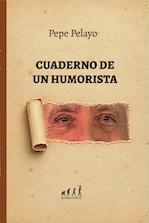
Prólogo del libro "Cuadernos de un humorista" por Manolo de la Portilla

Pepe Pelayo
Creador y estudioso de la teoría y la aplicación del humor.
Prólogo del libro "Cuadernos de un humorista" de Pepe Pelayo

Article in English


El hombre no es otra cosa que lo que él hace de sí mismo.

Jean Paul Sartre.


Matanzas, Cuba, década de los setenta.

Dos muchachones llenos de vida, y con ganas de vivirla; subían a zancadas una calle loma arriba. No se hablaban. No porque no quisieran, sino porque necesitaban el aire para llegar a tiempo a la sala de cine Lincoln.

Allí los esperaba una comedia italiana, y con ella, una mezcla única de placer, de sentir que estaban asistiendo a una experiencia de humor que tendría efectos colaterales inmediatos.

Iban con la convicción de que aquellos actores y directores, maestros del humor, les mostrarían una forma diferente de ver la vida.

Todo a través de la magia del humor. Estaban buscando su propia redefinición.

Mark Twain, escribió, a modo de broma:

Hay solo dos días importantes en la vida: el día que naciste y el día en que te enteraste para qué diablos habías nacido.

Ellos sabían que no era broma, sino una ineludible realidad.

Y allí, se entregaban en cuerpo y alma, a disfrutar cada segundo de cada gesto, de cada palabra, de cada situación, creada por Nino Manfredi en Por gracia recibida o Ugo Tognazzi en La grande bouffe. Sabían que detrás de aquella comedia, aparentemente simple, había un mensaje tan fuerte, que podía diluir la angustia existencial, de la que hablaron Søren Kierkegaard, Jean Paul Sartre y Albert Camus.

Estaban llenos de sueños y de propósitos para realizarse en el humor.

Uno de ellos dos lo logró, al paso del tiempo.

De esta forma comenzó Pepe Pelayo a entender, aún más, el enorme espacio que podía tener el humor en su vida y en la del resto de los seres que lo rodeaban.

Lo sé. Porque ese otro era yo, que bendecido por ese aprendizaje, he tratado de aplicarlo a mi vida personal y al menos, terminé usándolo en mi trabajo de “curador”.

Este libro que Pepe, me ha concedido el privilegio de prologar, es profundamente humano.

Cuaderno de un humorista, es el relato de su historia como ser humano y como creador.

Y enfatizo la diferencia; porque no es lo mismo cargar con nuestro propio mundo interior, que entregar el resultado de ese mundo interior a los demás.

Que el “no quedar bien” contigo mismo es una posibilidad, pero defraudar a los que confiaron en ti, no es una opción.

Jorge Luis Borges, pensaba que “uno puede dar lo que no tiene”. Estoy de acuerdo. Y pienso también que es cuando el hombre se convierte en un verdadero “superhéroe”.

Pelayo lo define en su Cuaderno de un humorista con esta frase: “A estas alturas sospecho que empezar de cero, no consiste en olvidar el camino recorrido. Consiste en tener el valor de seguir caminando, cuando ese camino desaparece”.

Cuando comencé a leer los primeros capítulos, pensé “Aquí viene Pelayo con su Picaresca, su propio Buscón o su Lazarillo de Tormes".

Me preparé para disfrutar sus aventuras y desventuras, pero cuando fueron llegando otros capítulos, entendí su propósito: romperse la piel, con todo el peligro que esto conlleva y mostrar el Pepe Pelayo que ha vivido en secreto detrás del creador. Son las batallas mentales de su monólogo interior expuesto al público, en forma de reflexiones, a lo largo de su camino.

Pepe Pelayo siempre vivió en dos mundos.

El matancerito de la loma de Santa Teresa, el de contar chistes en un banco del parque, ir el domingo al juego de pelota y tomarse una cerveza en la trocha de la esquina.

Y el otro, el que le interesaba visitar un museo, asistir a una charla sobre cine o música, participar en un conversatorio sobre historia del arte o sumergirse por horas en la biblioteca leyendo las novelas de Jardiel Poncela o revisando las antiguas revistas Bohemias para disfrutar las tiras cómicas de El hombre siniestro del caricaturista Antonio Prohías.

Para aquellos que no creen que esto es posible, les extiendo mis condolencias.

Y cuando uno de los dos mundos fue ganando más interés para sus propósitos, ese mundo también se convirtió en dos.

Cuaderno de un humorista no es una autobiografía.

Es el viaje a través de la vida entre dos mundos: el mundo sencillo y el complicado. Uno interior lleno de inquietudes, sueños, fantasías, ganas de ser, de crear, de establecer un reino de su humor, pero también lleno de indecisiones, miedos y dudas.

Y el otro mundo del creador, que conlleva el sentido de la entrega, de la reflexión más allá de los caprichos, de la aceptación de realidades, de la responsabilidad por los otros, del fracaso y el triunfo.

El libro me “enganchó” cuando comencé a leerlo por varias razones.

Primero, no es un libro para hacer humor, como nos tiene acostumbrados.

Es un cuaderno lleno de válidas reflexiones, nada superficiales, que nos hace pensar en nuestra propia vida.

Tal es para mí, “Más ríe el diablo por viejo, que por diablo”. Este capítulo es el encuentro con nuestra propia mortalidad, esa en la que no queremos ni pensar.

Segundo, porque es un anecdotario escrito, con serenidad y honestidad absoluta.

Tercero, por su formato, donde el relato no sigue una línea de tiempo rígida, sino que, como esos filmes donde la narrativa se distribuye, no como historia, sino como eventos relacionados. No importa si los hechos fueron antes o después.

Cuarto, porque el relato, esta intrínsecamente ligado a

La Seña del Humor, lo cual es muy lógico.

En mi opinión, el humor cubano siempre estará en deuda con La Seña y los “señeros”.

Ellos le enseñaron a los cubanos que se podían reír, con un humor, que rompía los límites del “provincianismo” e incluso que se podía hacer humor con “Las vacas sagradas de la Historia del Arte”, como cuando crearon un número parodiando la famosa pieza de Beethoven: Für Elise.

Las reflexiones de Pelayo pasan por el ego, el compromiso, la amistad, la lealtad, los sueños, la realidad, la soledad, el egoísmo justificado y el pedante.

Pero hay algo en todo el relato, que me conmovió: el humanismo pragmático.

Las respuestas humanistas, como resolución final ante los conflictos.

El conflicto es humano. La respuesta es humanista, sin dejar de ser pragmática.

El mensaje más inspirador de todo el libro.

Ante un dilema y desde una posición que le otorgaba, pulgar arriba o pulgar abajo, como el César, Pelayo opta por una respuesta, que lo salva del canibalismo: “Procuro mirar antes a la persona que al humorista”.

Hace mucho tiempo aprendí, que ante las crisis, hay que ser indecentemente racional.

Ahora quiero hablar del ser humano, más que del libro.

La vida nos reunió temprano.

Pelayo me arrastraba en su disciplina de “hacer cosas”. Y así como, quien saca un conejo de un sombrero, creamos un Cine-Club por los setenta.

El único sitio que nos acogió fue la biblioteca Ramón Guiteras, justo frente al Parque de la Libertad, testigo de la vida, de aquella joven generación de matanceros.

Allí exhibimos películas, que no eran taquilleras y por ende, no expuestas en salas regulares.

Iba un pequeño grupo, invitábamos a algunos expertos, al final tratábamos de hacer el ejercicio del “cine club”, en una humilde versión matancera.

Nos fascinaba el cine y eran pininos, intentos de reinventar la vida provinciana, porque entonces no podíamos, como canta Serrat en Pueblo Blanco:

…unirnos a un vuelo de palomas

y atravesando lomas,

dejar mi pueblo atrás".

Andábamos siempre buscando algo qué hacer, qué crear en los temas que nos interesaba. Pero a la misma vez vivíamos la vida pueblerina.

Como cualquier hijo de vecino, Pelayo trabajaba, atendía a su familia, compartía con los amigos. Pero el espíritu de El Buscón no lo abandonaba ni un segundo. No un buscón de tretas y trampas, sino exploración, descubrimiento y dedicacion.

A Pepe y a muchos nos quedaba corta esa vida. Pero no todos estaban dispuestos a pagar el precio de “ese vuelo de palomas”, y arriesgarlo todo, enfrentándose a un medio social, donde lo que no estaba prohibido, era obligado.

Pepe Pelayo, se “metió” en su pelea dentro y fuera de Cuba y ahora, en Cuaderno de un humorista nos cuenta la historia, la que vimos y la que no vimos, la de adentro y la de afuera, la del corazón y la del cerebro.

Amigo de muchos, hermano de la vida para otros, Pelayo, sigue siendo el mismo jodedor criollo de su juventud. Pero el matancerito de la loma de Santa Teresa, el amigo incondicional, el del chiste y la conversación inteligente, el tipo simple y sin complicaciones, ha hecho una encomiable y satisfactoria carrera en el universo del humor.

Pelayo tiene hoy día, reconocimiento internacional y es un referente para los practicantes, escritores, estudiosos y curiosos del humor. Pero creo que su tarea más heroica ha sido su capacidad de transitar, de una manera u otra, por las diversas categorías del humor, teorizando en su aspecto intelectual y creando en su aspecto artístico.

Como cualquier otro ser humano que se ha retado así mismo y ha construido su realidad, de acuerdo a sus sueños y su visión sobre las cosas, Pelayo aprendió en el camino. Ahora nos presenta un libro sobre la jornada de “toda una vida”.

Cuaderno de un humorista es un manual, o dicho de mejor manera, una guía para reflexiones, no solo para directores de grupos de teatro o de otra actividad humana cualquiera, sino para todos aquellos, que quieran crear su propia realidad.

Como los versos de Antonio Machado:

Caminante, no hay camino.

Se hace camino al andar.

Pepe Pelayo, anduvo su camino y ahora, simplemente lo escribe. Nos regala esta secuencia de relatos, de preguntas y respuestas. Una especie de “Autocuestionamiento Socrático”,

Terapia Cognitiva, para encontrar razones, más que verdades.

Deteniéndose un momento en su fecunda creación, no tengo dudas que parado en su balcón del apartamento de Santiago de Chile —quizás con otros miedos y otros sueños—, brinde en el aire con una copa de vino, mirando en la distancia hacia un banco del Parque de la Libertad de Matanzas, donde un día, sentado en uno de ellos, en esos momentos entre el ocio y el pensamiento creativo, después de haber disfrutado de una comedia italiana, de una tira cómica de El hombre siniestro o de los libros de Jardiel Poncela, empezó todo.

Manolo de la Portilla

Cambridge, Otoño 2026


Foreword to the book "Notebooks of a Humorist" by Manolo de la Portilla


Man is nothing other than what he makes of himself.

Jean-Paul Sartre

Matanzas, Cuba, the 1970s

Two young men, full of life and eager to live it to the fullest, were striding up a steep street. They weren’t talking. Not because they didn’t want to, but because they needed all the air they could get to reach the Lincoln movie theater on time.

An Italian comedy awaited them there, along with a unique blend of pleasure and the feeling that they were about to experience something humorous that would have immediate, lasting effects.

They were convinced that those actors and directors, masters of humor, would show them a different way of looking at life.

All through the magic of humor. They were searching for their own redefinition.

Mark Twain once wrote, jokingly:

“There are only two important days in a person’s life: the day you were born and the day you found out what the hell you were born for.”

They knew it wasn’t a joke, but an inescapable reality.

And there they were, body and soul immersed in every second, every gesture, every word, every situation created by Nino Manfredi in Per grazia ricevuta or Ugo Tognazzi in La grande bouffe. They knew that behind those apparently simple comedies lay a message so powerful that it could dissolve the existential anguish discussed by Søren Kierkegaard, Jean-Paul Sartre, and Albert Camus.

They were full of dreams and aspirations to fulfill themselves through humor.

In time, one of those two men succeeded.

This was how Pepe Pelayo began to understand, even more deeply, the enormous place humor could occupy in his life and in the lives of those around him.

I know, because I was the other one. Blessed by that learning experience, I have tried to apply it to my personal life and, at the very least, ended up putting it to use in my work as a “curator.”

This book, which Pepe has granted me the privilege of introducing, is profoundly human.

Cuaderno de un humorista is the story of his journey as a human being and as a creator.

I emphasize the distinction because carrying our own inner world is not the same as sharing the results of that inner world with others.

Failing to live up to your own expectations is a possibility, but letting down those who have placed their trust in you is not an option.

Jorge Luis Borges believed that “one can give what one does not have.” I agree. And I also believe that this is when a person becomes a true “superhero.”

Pelayo puts it this way in Cuaderno de un humorista: “At this point, I suspect that starting from scratch does not mean forgetting the road you have traveled. It means having the courage to keep walking when that road disappears.”

When I began reading the first chapters, I thought, “Here comes Pelayo with his picaresque adventures, his own El Buscón or Lazarillo de Tormes.”

I prepared myself to enjoy his adventures and misadventures, but as I reached the later chapters, I understood his purpose: to lay himself bare, with all the risks that entails, and reveal the Pepe Pelayo who has lived in secret behind the creator. These are the mental battles of his inner monologue, laid open to the public in the form of reflections gathered along his journey.

Pepe Pelayo has always lived in two worlds.

One is the young fellow from Matanzas, from the hillside of Santa Teresa, the one who told jokes on a park bench, went to the baseball game on Sundays, and had a beer at the corner tavern.

The other is the man who was interested in visiting a museum, attending a talk on cinema or music, taking part in a discussion about art history, or spending hours immersed in the library, reading Jardiel Poncela’s novels or leafing through old issues of Bohemia magazine to enjoy the comic strips featuring El hombre siniestro, by cartoonist Antonio Prohías.

To those who don’t believe this is possible, I offer my condolences.

And when one of those two worlds began to matter more to his aspirations, that world, too, split in two.

Cuaderno de un humorista is not an autobiography.

It is a journey through a life lived between two worlds: the simple and the complicated. One is an inner world filled with concerns, dreams, fantasies, the desire to become someone, to create, to establish a kingdom of humor of his own, but also filled with indecision, fears, and doubts.

The other is the creator’s world, which entails a sense of commitment, reflection that goes beyond personal whims, acceptance of reality, responsibility toward others, failure, and success.

The book hooked me for several reasons as soon as I began reading it.

First, it is not a book designed to make people laugh, as we have come to expect from him.

It is a notebook filled with worthwhile, far-from-superficial reflections that make us think about our own lives.

For me, one example is the chapter “Más ríe el diablo por viejo, que por diablo” (“The devil laughs more because he is old than because he is the devil”). This chapter brings us face to face with our own mortality, something we don’t even want to think about.

Second, because it is a collection of anecdotes written with serenity and absolute honesty.

Third, because of its format. The narrative does not follow a rigid chronological order. Instead, like certain films, it unfolds not as a continuous story but as a series of related events. It doesn’t matter whether they happened before or after one another.

Fourth, because the narrative is intrinsically linked to La Seña del Humor, which makes perfect sense.

In my opinion, Cuban humor will always be indebted to La Seña and its “señeros.”

They taught Cubans that they could laugh through a kind of humor that broke the boundaries of provincialism. They even showed that it was possible to make humor out of the “sacred cows of art history,” as when they created a sketch parodying Beethoven’s famous piece Für Elise.

Pelayo’s reflections touch on ego, commitment, friendship, loyalty, dreams, reality, loneliness, justified selfishness, and the pompous know-it-all.

But there is something throughout the narrative that moved me: pragmatic humanism.

Humanist responses as the ultimate way of resolving conflicts.

The conflict is human. The response is humanist, without ceasing to be pragmatic.

That is the most inspiring message in the entire book.

Faced with a dilemma, and in a position that gave him the power to decide thumbs up or thumbs down, like Caesar, Pelayo chooses a response that saves him from cannibalism: “I try to look at the person before the humorist.”

A long time ago, I learned that in times of crisis, one must be indecently rational.

Now I want to talk about the human being rather than the book.

Life brought us together early on.

Pelayo swept me along with his determination to “get things done.” And, like someone pulling a rabbit out of a hat, we started a film club sometime in the 1970s.

The only place that welcomed us was the Ramón Guiteras Library, right across from Parque de la Libertad, a witness to the lives of that young generation of people from Matanzas.

There we screened films that were not box-office hits and therefore were not shown in regular theaters.

A small group would attend. We invited a few experts, and afterward we tried to carry out the activities of a film club, in our own humble Matanzas version.

We were fascinated by cinema, and these were our first baby steps, our attempts to reinvent provincial life. Back then, we couldn’t, as Serrat sings in Pueblo Blanco:

“…join a flight of doves

and, crossing over hills,

leave my village behind.”

We were always looking for something to do, something to create around the subjects that interested us. At the same time, however, we were living the life of a small town.

Like anyone else, Pelayo worked, took care of his family, and spent time with friends. But the spirit of El Buscón never left him for a second. Not the spirit of a trickster who relied on schemes and deception, but one driven by exploration, discovery, and dedication.

For Pepe and many of us, that life was not enough. But not everyone was willing to pay the price of that “flight of doves” and risk everything by confronting a social environment in which whatever was not forbidden was compulsory.

Pepe Pelayo threw himself into his struggle, both inside and outside Cuba, and now, in Cuaderno de un humorista, he tells us the story: what we saw and what we didn’t, what happened inside and outside, what took place in the heart and in the mind.

A friend to many and a brother in life to others, Pelayo remains the same irreverent Cuban joker he was in his youth. Yet that young fellow from the hillside of Santa Teresa in Matanzas, the loyal friend, the man of jokes and intelligent conversation, the uncomplicated, down-to-earth guy, has built an admirable and fulfilling career in the world of humor.

Today, Pelayo enjoys international recognition and is a point of reference for humor practitioners, writers, scholars, and enthusiasts. But I believe his most heroic achievement has been his ability to move, in one way or another, through the various categories of humor, theorizing about its intellectual dimension while creating within its artistic one.

Like any other human being who has challenged himself and built his own reality according to his dreams and his vision of things, Pelayo has learned along the way. Now he presents us with a book about the journey of “an entire lifetime.”

Cuaderno de un humorista is a manual—or, better put, a guide to reflection—not only for directors of theater groups or people engaged in any other human activity, but for everyone who wants to create their own reality.

As Antonio Machado wrote in his verses:

“Wanderer, there is no road.

The road is made by walking.”

Pepe Pelayo walked his road, and now he simply writes about it. He gives us this sequence of stories, questions, and answers: a kind of “Socratic self-questioning,”

cognitive therapy aimed at finding reasons rather than truths.

Pausing for a moment to reflect on his prolific creative work, I have no doubt that, standing on the balcony of his apartment in Santiago de Chile—perhaps with different fears and different dreams—he will raise a glass of wine to the air, gazing into the distance toward a bench in Matanzas’s Parque de la Libertad. It was there, sitting on one of those benches, in one of those moments between leisure and creative thought, after enjoying an Italian comedy, a comic strip featuring El hombre siniestro, or the books of Jardiel Poncela, that it all began.

Manolo de la Portilla

Cambridge, Autumn 2026


(This text has been translated into English by ChatGPT)

Copyright © Pepe Pelayo. Publicado en Humor Sapiens con el permiso de su autor. Reservados todos los derechos.