Que yo sepa, nunca ha habido un museo de la caricatura en Serbia ni en Yugoslavia. Sin embargo, durante muchos años, Branko Nyhold (1947-2016), fundador del Salón Internacional de la Caricatura de Zemun, coleccionó obras con la intención de crear uno. Finalmente falleció, y su sueño quedó guardado en cajas, almacenadas en una antigua escuela de esa ciudad cercana a Belgrado.
Branko Nyhold era un apasionado del humor, amigo de los caricaturistas, coleccionista de arte africano e historiador de la ciudad de Zemun. Publicó la enciclopedia Zemunska Skola Karikature, fue editor de la revista Kart y organizó el Salón Internacional de la Caricatura de Zemun durante dos décadas (1996-2016), enfrentándose siempre a numerosas dificultades para su supervivencia. Con la desaparición física de la asistente que lo ayudaba (Julijana Živković), la continuidad del Salón y el futuro del Museo se vieron comprometidos hasta su fallecimiento junto con el autor.
La colección creció con los años, con obras de los salones, así como con donaciones de artistas (alrededor de 18.000 caricaturas originales de autores de unos 90 países de todos los continentes, además de una rica biblioteca especializada).
Según información en internet, la colección se conserva actualmente en la escuela primaria "Svetozar Miletic" de Zemun, gracias al apoyo de su directora, Ljuba Musurović, pero no es accesible al público.
Hacia el este, encontramos el Mundo de Studio Ghibli en Singapur, conectado con el Museo ArtScience. Si bien es un espacio más dedicado a la animación y los cómics, siempre hay un toque de humor. En concreto, durante el evento anual "Una Noche en el Museo", este espacio, al igual que el Museo Peranakan, cuenta con caricaturistas como artistas invitados.
De vuelta a Europa, nos dirigimos a Suecia en busca de espacios museísticos con humor. En el extremo norte, en la ciudad de Norrköping, encontramos el Centrum för politisk illustrationskonst, inaugurado en 2009 e integrado en el Arbetets Museum, donde la sátira y la ilustración política tienen su propio espacio para su difusión y promoción. La colección abarca obras desde los pioneros hasta los contemporáneos, con un espacio especial dedicado al artista Ewert Karlsson (EWK, 1918-2004), con más de 2000 originales donados por su familia. De este modo, se convierte en el espacio más dinámico para el humor gráfico en Suecia.
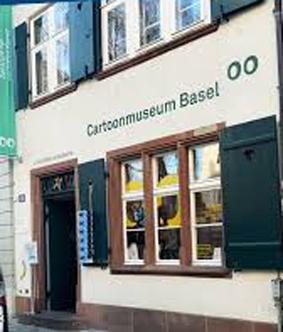
Para finalizar la lista de países que empiezan por S, viajamos a Suiza para visitar uno de los museos de humor gráfico más importantes del mundo: el Sammlung Karikaturen Cartoons Museum de Basilea. En su sitio web, el museo aclara su historia: «El fundador y benefactor del Museo de la Caricatura de Basilea fue el mecenas de Basilea, Dieter Burckhardt (1914-1991), quien deseaba que su colección privada de caricaturas y cartoons fuera accesible al público en general. En 1979, fundó la Fundación Colección de Caricaturas y Cartoons, que aún hoy gestiona la Fundación Christoph Merian. Desde sus inicios, la colección y el museo funcionaron sin subvenciones gubernamentales. La primera exposición se inauguró en St. Alban-Vorstadt 9 en 1980.
En 1991, la Colección de Caricaturas y Cartoons logró adquirir un inmueble en el centro histórico de St. Alban-Vorstadt 28, que posteriormente fue renovado y ampliado con un nuevo edificio diseñado por los renombrados arquitectos de Basilea Herzog & de Meuron. Esto supuso un aumento significativo del espacio de exposición, así como la ampliación de la biblioteca y la tienda.. El nuevo Museo de la Caricatura y el Cartoon de Basilea abrió sus puertas en mayo de 1996.
En 2009, el Museo de Caricatura y Cartoons pasó a llamarse Museo de Cartoons de Basilea. Se posiciona como el único museo en Suiza dedicado exclusivamente al arte narrativo. Desde diciembre de 2023, el «Centro de Arte Narrativo» ha incorporado una imagen corporativa actualizada al nombre y aclara la misión y las aspiraciones del Museo de Cartoons de Basilea.»
Lamentablemente, como suele ocurrir, no recibí respuesta de la actual dirección, sin embargo, en 1991 conocí a Jürg Sphär, quien era su director, y le ayudé a adquirir obras de artistas portugueses para el museo. Durante esa visita a Portugal, le realicé una entrevista que reproduzco aquí.
«/…/ La Colección de Dibujos Animados y Caricaturas de Basilea es una de las mayores colecciones de dibujos humorísticos del mundo, no solo por su cantidad (en aquel entonces contaba con 2200 originales de 600 artistas de 35 países), sino sobre todo por la calidad de los artistas representados, como Bosc, Bretecher, Al Capp, Dubout, Feiffer, Fellini, Folon, André François, Grosz, Gulbransson, Heine, Hoffnung, J. Carlos, Levine, McCay, Mingote, Searle, Steadman, Steinberg, Tetsu, Ungerer, Ziraldo…»
OMS – ¿Cómo y cuándo se fundó el Museo?
Jürg Sphär – Fue en 1978, pero ya era un viejo sueño del Sr. Burckhardt.
El Sr. Burckhardt era un empresario que trabajaba en el sector químico y, al jubilarse, comenzó a coleccionar caricaturas y cartoons originales. Siempre me había gustado el humor: compraba discos y leía periódicos, pero mi colección no empezó hasta 1976. Me complace contarles que el primer original que compró el Sr. Burckhardt, en una exposición de nueve humoristas en Basilea, fue mío.
Ya lo conocía de vista, de encuentros sociales, en casa de amigos en común. Nos conocimos mejor en la exposición.
Dos años después (1978), lo conocí en la "Feira da Ladra" (mercado de pulgas) y me invitó a su casa para hablar de un proyecto que tenía en mente. Fui, y entre copas de whisky empezamos a desarrollar su idea de ampliar la colección, de crear un Museo de Caricatura y Cartoons del siglo XX, abierto al público, para recordar a los visitantes que la risa es inherente al ser humano, para demostrar que la caricatura es una verdadera obra de arte. Me preguntó si la idea era buena y si aceptaría ser el "curador" de la colección. Como caricaturista, me pareció maravilloso y acepté de inmediato.
Las primeras obras que se seleccionaron fueron, naturalmente, las suizas. Desde entonces, hemos viajado país por país seleccionando obras de los mejores artistas nacionales. Yo ejercía de asesor artístico y él elegía. Ahora que ha fallecido (en febrero), realizo el trabajo solo, aunque me acompaña su viuda, Madame Sophie Burckardt.
Desde el principio, la selección se rigió por el principio del humor universal y apolítico, y, de ser posible, sin palabras. Solo incluimos obras del siglo XX porque buscábamos exclusivamente originales, algo casi imposible de encontrar en comparación con los grandes maestros del siglo XIX. Descartamos el humor político, ya que la gente olvida con facilidad figuras, personajes y acontecimientos, lo que nos obligaría, para la exposición de estas viñetas, a incluir extensos textos explicativos sobre los personajes y el contexto histórico. Por la misma razón, la del humor, preferimos las viñetas sin texto, para que fueran más universales.
OMS – ¿Qué valora al realizar la selección?
Jürg Sphär – En primer lugar, me preocupa la calidad gráfico-estética; luego, el humor; y, en tercer lugar, la universalidad de la idea. Pero, por ejemplo, si la calidad artística es excepcional y el tema es muy nacional, ¿por qué no adquirirlo? El encanto de nuestra colección reside en que el público comprende un dibujo japonés tan bien como uno portugués, estadounidense o ruso.
OMS – ¿Es esta cualidad estética que usted valora lo que ha consolidado la caricatura como una de las vanguardias artísticas contemporáneas?
Jürg Sphär – Así es. Para mí, el arte contemporáneo se encuentra más en la caricatura que en los salones de Bellas Artes. Los pintores pueden llegar a ser más avanzados, proyectados hacia el futuro, mientras que el espíritu irreverente de la sociedad contemporánea se encuentra más en la caricatura. Por ejemplo, Steinberg es un genio del arte contemporáneo, de la estética vanguardista, el Papa de la caricatura del siglo XX.
OMS – ¿Es el humor la caligrafía del arte contemporáneo?
Jürg Sphär – Así es, pero no me gusta filosofar mucho sobre mi profesión (Jürg es el dibujante Jusp). El caricaturista practica un oficio innovador, creativo y comunicativo que tiene repercusiones en el público, y el público se ve reflejado en esa obra. Muchos de nuestros caricaturistas son técnica y estéticamente superiores a la mayoría de los maestros de las llamadas artes mayores.
OMS – Volviendo al Museo. Al especializarse en los maestros de la caricatura de este siglo, ¿es este espacio ideal para la investigación?
Jürg Sphär – En realidad, tenemos una biblioteca complementaria, dirigida por Madame Sophie Burckhart, donde se pueden encontrar libros de todo el mundo sobre caricatura y humor de todas las épocas, no solo de este siglo. Las intenciones de la Sra. Burckhart no se limitaban a la colección y la biblioteca, sino que también pretendían crear un centro para el estudio del fenómeno del humor. Siempre he sido escéptico respecto a este objetivo, porque conozco a mis colegas; la idea sigue siendo viable, hay estudiantes y personas interesadas que consultan los libros, pero sin profundizar.
OMS – Por ejemplo, ¿existe alguna historia publicada sobre el humor suizo?
Jürg Sphär – No.
OMS – Quienes deberían investigar no son solo los caricaturistas, sino sobre todo los historiadores, sociólogos, conservadores de museos…
Jürg Sphär – Tiene razón, pero, por ejemplo, ¿ha notado que quienes se forman como conservadores de museo, críticos de arte o historiadores prácticamente no aprenden nada sobre caricatura? ¿Cómo pueden entonces comprender la importancia de la cultura caricaturesca, sociológica y estética?
OMS – ¿Cuál es la frecuencia de visitantes del museo?
Jürg Sphär – Varía, con un promedio de 100 personas al día. Desde excursiones escolares y turistas hasta residentes de Basilea o estudiosos del humor. Muchos entran con su habitual expresión triste y se van sonriendo.
OMS – ¿El público es consciente de la excelencia de los nombres de la colección?
Jürg Sphär – Por supuesto, lo que nos interesa son los grandes nombres; sin embargo, creo que la mayoría del público prefiere el humor, a veces sin fijarse en la firma. Otros buscan la colección para observar a los maestros, la calidad estética.
OMS – ¿Están todas las obras expuestas?
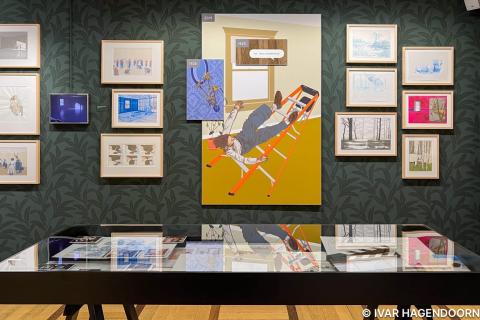
Jürg Sphär – No, porque tenemos un espacio pequeño, una casa del siglo XVI, en el centro histórico de Basilea (desde entonces se ha trasladado a un espacio más grande en la misma calle). Organizamos exposiciones temáticas cada ocho meses (ya que el público, en promedio, no visita el museo más de una vez al año), rotando las obras y presentándolas en sus diferentes interpretaciones: nacionales, temáticas, estilísticas…
Aunque han pasado más de treinta años desde esta entrevista y este artista/director ya falleció, con la nueva dirección, como se puede leer en su página web, la filosofía y la dinámica siguen siendo las mismas, lo que lo convierte en un espacio que merece la pena visitar por su calidad y la universalidad de sus artistas.
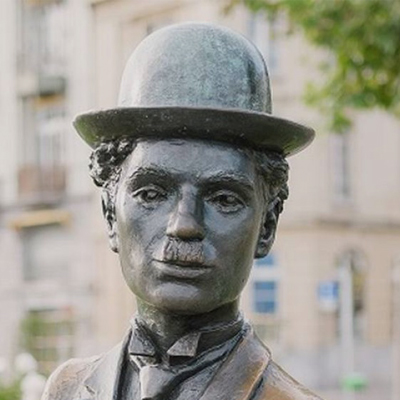
Como amantes del humor, independientemente del estilo con el que se difunda, no podemos irnos de Suiza sin mencionar el Museo Chaplin en Vevey. El brillante Charlie Chaplin (1889-1977) pasó sus últimos años en el exilio en Vevey (1953-1977), y en 2016 su residencia se transformó en museo. Aquí, no solo se honra su vida personal y profesional, sino que, en la recreación de un estudio, uno puede adentrarse en sus personajes cinematográficos, sumergiéndose en los escenarios y en su humor universal e inmortal.
Basel
Mcguire Cartoonmuseum Basel
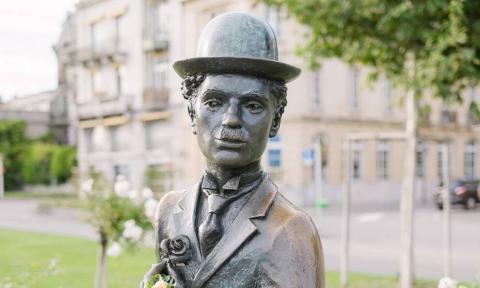
Travel Times Switzerland - Charles Chaplin
Museums of Humor in the World – Serbia / Singapore / Sweden / Switzerland
By: Osvaldo Macedo de Sousa
As far as I know, there has never been a caricature museum in Serbia or Yugoslavia. However, for many years, Branko Nyhold (1947-2016), founder of the Zemun International Caricature Salon, collected works with the intention of creating one. He eventually passed away, and his dream remained packed in boxes, stored in an old school in that town near Belgrade.
Branko Nyhold was passionate about humor, a friend of cartoonists, a collector of African art, and a historian of the city of Zemun. He published the encyclopedia Zemunska Skola Karikature, was editor of the magazine Kart, and organized the Zemun International Caricature Salon for two decades (1996/2016), always facing many difficulties in surviving. With the physical disappearance of the assistant who helped him (Julijana Živković), the execution of the Salon and the future of the Museum weakened until she died with the author.
The collection grew over the years, with works from the salons, as well as donations from artists (about 18,000 original cartoons by authors from about 90 countries on all continents, in addition to a rich library of the specialty).
According to information on the internet, the collection is now preserved at the "Svetozar Miletic" primary school in Zemun, thanks to the support of its director Ljuba Musurović, but it is inaccessible to the public.
Moving east, we find The World of Studio Ghibli in Singapore, connected to the ArtScience Museum. Of course, it is a space more dedicated to animation and comics, but there are always humors in the air. Specifically, at the annual Night at the Museum event, this space, as well as the Peranakan Museum, has caricaturists/cartoonists as entertainers.
Returning to Europe, we go to Sweden in search of museum spaces with humor. Way up north, in the city of Norrköping, we find the Centrum för Politisk Illustrationskonst, inaugurated in 2009, integrated into the Arbetets Museum where satire and political illustration have their own space for dissemination and animation. Encompassing works from the pioneers to the contemporary, with a special space for the artist Ewert Karlsson (EWK, 1918–2004) with more than 2,000 originals donated by his family. In this way, it is the most dynamic space for graphic humor in Sweden.
To finish the countries starting with S, we go to Switzerland to meet one of the most important museums of graphic humor in the world – the Sammlung Karikaturen Cartoons Museum in Basel. On its website, it clarifies its history: "The founder and donor of the Cartoon Museum Basel was the patron of Basel, Dieter Burckhardt (1914-1991), who wanted to make his private collection of caricatures and cartoons accessible to the general public. In 1979, he founded the Caricatures & Cartoons Collection Foundation, which is still managed today by the Christoph Merian Foundation. From the beginning, the collection and the museum operated without government subsidies. The first exhibition opened at St. Alban-Vorstadt 9 in 1980.
In 1991, the Caricatures & Cartoons Collection managed to acquire a property in the historic center of St. Alban-Vorstadt 28, which was subsequently renovated and expanded to include a new building by the renowned Basel architects Herzog & de Meuron. This meant that the exhibition space increased significantly, and the library and shop were also expanded." The new Caricature & Cartoon Museum Basel opened in May 1996.
In 2009, the Karikatur & Cartoon Museum was renamed Cartoonmuseum Basel. It positions itself as the only museum in Switzerland dedicated exclusively to narrative art. Since December 2023, the “Center for Narrative Art” has added an updated corporate design to the name and clarifies the mission and aspirations of Cartoonmuseum Basel.»
Unfortunately, as has become the norm, I did not receive any response from the current management; however, in 1991, I met Jürg Sphär, who was its director, and helped him acquire works by Portuguese artists for the Museum. During that visit to Portugal, I conducted an interview with him, which I am reusing here.
«/…/ The Basel Collection of Cartoons & Caricatures is one of the world's largest collections of humorous drawings, not only for its quantity (at the time with 2,200 originals by 600 artists from 35 countries), but above all for the quality of the artists represented, such as Bosc, Bretecher, Al Capp, Dubout, Feiffer, Fellini, Folon, André François, Grosz, Gulbransson, Heine, Hoffnung, J.Carlos, Levine, McCay, Mingote, Searle, Steadman, Steinberg, Tetsu, Ungerer, Ziraldo…»
OMS – How and when was the Museum founded?
Jürg Sphär – It was in 1978, but it was already an old dream of Mr. Burckhardt.
Mr. Burckhardt was a businessman who worked in the field of chemistry and when he retired, he began collecting original caricatures and cartoons. I had always been a lover of humor, buying albums, reading newspapers, but my collection only began in 1976. And I am pleased to tell you that the first original bought by Mr. Burckhardt, at an exhibition of nine humorists in Basel, was mine.
I already knew him by sight, in a social setting, at the homes of mutual friends. We got to know each other better at the exhibition.
Two years later (1978), I met him at the "Feira da Ladra" (flea market) and he invited me to his house to talk about a project he had in mind. I went, and over a glass of whiskey we began to develop his idea of expanding the collection, of creating a Museum of Caricature and Cartoon of the 20th century, open to the public, in order to remind visitors that laughter is inherent to Man, to show that caricature is a true work of art. He asked me if the idea was good and if I would accept being the "curator" of the collection. As a caricaturist, this was wonderful and I immediately accepted.
The first works to be selected were, naturally, the Swiss ones. Since then we have traveled country by country choosing works by the best national artists. I served as artistic advisor, and he chose. Now that he has died (in February), I do the work alone, although accompanied by his widow, Madame Sophie Burckardt.
From the outset, the selection was governed by the rule of non-political, universal humor, and if possible, wordless. We only included the 20th century because we wanted nothing but originals, which is almost impossible to find in relation to the great masters of the 19th century. We didn't want political humor because people forget figures, characters, events very quickly… which required us, for the exhibition of these cartoons, to have lengthy explanatory texts about who the characters were, what was happening historically… For the same immediate reason of humor, we preferred cartoons without text, to be more universal.
OMS – When making the selection, what do you value?
Jürg Sphär – First, I worry about the graphic-aesthetic quality, then the humor, and thirdly the universality of the idea. But, for example, if the artistic quality is exceptional and the theme is very national, why not acquire it? The charm of our collection is that the public understands a Japanese drawing as well as a Portuguese, American, or Russian one.
OMS – Is this aesthetic quality that you value what has established caricature as one of the contemporary avant-gardes of art?
Jürg Sphär – That's right. For me, contemporary art is found more in caricature than in the Fine Arts salons. Painters may eventually be more advanced, launched into the future, while the irreverent spirit of contemporary society is found more in caricature. For example, Steinberg is a genius of contemporary art, of avant-garde aesthetics, the Pope of 20th-century caricature.
OMS – Is humor the calligraphy of contemporary art?
Jürg Sphär – That's right, but I don't like to philosophize much about my profession (Jürg is the cartoonist Jusp). The caricaturist practices an innovative, creative, and communicative craft that sees repercussions of their work in the public, and the public sees itself in that work. Many of our caricaturists are technically and aesthetically superior to most masters of the so-called major arts.
OMS – Returning to the Museum. By specializing in the masters of caricature of this century, is this space ideal for research?
Jürg Sphär – In reality, we have a complementary library, directed by Madame Sophie Burckhart, where you can find books from all over the world on caricature and humor from all times, not just this century. Mr. Burckhart's intentions were not only the collection and the library, but also to create a center for the study of the humorous phenomenon. I have always been skeptical of this objective, because I know my colleagues, the idea remains viable, there are students and interested people who consult the books, but without depth.
OMS – For example, is there a published history on Swiss humor?
Jürg Sphär – No.
OMS – Those who should be doing research are not just the caricaturists, but above all historians, sociologists, museum curators…
Jürg Sphär – You're right, but for example, have you noticed that those who learn the profession of museum curator, art critic, or historian learn practically nothing about caricature, so how can they know the importance of caricatural, sociological, and aesthetic culture?
OMS – What is the museum's visitor frequency like?
Jürg Sphär – Varied, with an average of 100 people per day. From school excursions and tourists to Basel residents or humor scholars. Many enter with their usual sad expression and leave all smiles.
OMS – Is the public aware of the excellence of the names in the collection?
Jürg Sphär – Of course, what interests us are the big names, however, I believe that most of the public prefers the humorous quality, sometimes without noticing the signature. Others seek the collection to observe the masters, the aesthetic quality.
OMS – Are all the works on display?
Jürg Sphär – No, because we have a small space, a 16th-century house, in the historic center of Basel (it has since moved to a larger space on the same street). We hold thematic exhibitions every eight months (since the public, on average, doesn't visit the museum more than once a year), rotating the works and presenting them in their different interpretations: national, thematic, stylistic…
Although more than thirty years have passed since this interview and this artist/director has already passed away, with the new management, as can be read on their website, the philosophy and dynamics remain the same, making it a space worth visiting for its quality and universality of artists.
As lovers of humor, regardless of the style used to distribute it throughout society, we cannot leave Switzerland without mentioning the Chaplin Museum in Vevey. The brilliant Charlie Chaplin (1889-1977) spent his last years in "exile" in Switzerland - Vevey (1953-1977) - and in 2016, his residence was transformed into a museum. Here, not only is his personal and professional life honored, but in the recreation of a studio, one can journey through his cinematic characters, integrating oneself into the sets and his universal and immortal humor.