En la caricatura portuguesa, una figura clave en su historia se sitúa en el siglo XIX, como Raphael Bordallo Pinheiro, y aunque existen muchos otros artistas importantes, la obra de João Abel Manta, a pesar de no ser extensa, marca eternamente el siglo XX por su calidad estilística, la profundidad de su intervención irónica y su revalorización del arte de la caricatura. Es esta gran figura de la caricatura, recientemente fallecida, la que me impulsa a rendirle este sencillo homenaje internacional, con la publicación de este texto que escribí (colaboré en la producción de cuatro importantes exposiciones y álbumes) para un libro publicado en 2018, con motivo de su 90 cumpleaños.
Dado que el artista visual JAM, a través de su obra práctica, intervino, ironizó y satirizó la sociedad portuguesa con trazos amplios, en una inconfundible y memorable línea conceptual al estilo de joãoabelmantán, como iconografía de toda una época y del arte gráfico periodístico, su vida y obra ya se han construido con múltiples rasgos y líneas estéticas en una opción humanista de diversidad imaginativa, ya sea en el material, la función o el destinatario. Ante todo, es un creador con un profundo sentido cívico y ético en el que la intervención artística no es un simple diletante productivo, sino un medio de comunicación e introspección personal y social, imbuido de estética.
Dado que JAM es, simple y llanamente, un artista visual…
a) a pesar de su formación académica como arquitecto, con una obra terminada en un estilo “funcionalista”, reconocido pero poco estudiado (“Sigo siendo de la época en que me sentaba frente a un tablero de dibujo y hacía un proyecto completo con detalles de armarios, cocinas y todo. Ya no. Y la arquitectura sufre por eso. /…/ No hay detalle, todo es frío, desagradable”).
b) Diseñador y decorador de interiores y exteriores por vocación y por encargo en el ámbito del urbanismo y la arquitectura, donde destacan los diversos paneles de azulejos en Luanda (Hotel Presidente), Coimbra (Associação Académica), Lisboa (Av. Caloustre Gulbenkian)… Calçada da Praça dos Restauradores en Lisboa, diseños de tapices, publicidad…
c) El epíteto de «cartoonista» (una denominación que detesta a pesar de ser responsable de introducir este anglicismo en el léxico de la prensa portuguesa), que ejercía como un deber cívico para una sociedad adormecida por las nuevas inquisiciones, que por ello necesitaba voces disidentes y alertas…
d) La denominación de ilustrador – artista gráfico (donde supo conectar con el alma de otros autores o con su obra/destino como pocos).
e) Pintor por pasión y elección estética.
Este texto se centrará en sus facetas más populares, precisamente aquellas que se niega a admirar y reconocer como su genialidad, con una timidez que impregna toda su vida.
Comenzamos el recorrido con su obra gráfica más hermética e inspirada, donde la arquitectura se hace evidente, no solo por la fuerza del dibujo y el detalle llevado al mundo de la miniatura, sino también por la fuerza escenográfica creada en una dramaturgia casi trágica para resaltar los puntos cruciales de la idea/mensaje. Ya sea en el cartel del ICA o en las series «Misionero», «Un caso para el Santo Oficio» o «Shakespeareano», la monumentalidad del dibujo arquitectónico se impone, casi aplastante, resaltando el miniaturismo de los elementos clave de la obra, como una reivindicación del triunfo del dibujo en la obra plástica. Se trata de obras no concebidas para ser impresas, lo que permite al artista mayor libertad en las técnicas y los detalles, impregnadas de ironía, magia y erotismo.
Si lo “shakesperiano” es una interpretación dramatúrgica de momentos precisos de las obras de ese autor (no podemos olvidar que JAM también fue escenógrafo), no deja de tener, o precisamente por ello, sutilmente transmite mensajes críticos, portando el sentimiento de revuelta y resistencia al poder y a la tragedia. Este clamor constante contra la opresión, contra la falta de libertad en la sociedad portuguesa, es mucho más evidente en la serie “Un caso para el Santo Oficio” (no podemos olvidar que JAM sufrió persecución por parte de los nuevos inquisidores e incluso fue encarcelado) y “Misioneros”. Para mí, este conjunto de obras, que pueden calificarse de goyescas, dantescas, pireodella-francesquinianas, boccacian… son su meditación estética más profunda sobre la función de las artes figurativas en el Portugal del siglo XX, en la que, junto a la maestría técnica, explora múltiples caminos estéticos de ismos entrelazados con un alto poder de mensaje intrínseco a la comunicación que puede tener una obra de arte. JAM bebió de, regurgitó y recreó muchos estilos. Como él mismo argumenta, para que un artista se construya, debe elegir buenos maestros, imitarlos exhaustivamente y luego "ponerse los cuernos" y crear su propio arte/estilo. Si él lo dijo, así lo hizo.
Al pasar a “Desabafos” y otras obras gráficas, redescubriremos algo del ilustrador de prensa que ha ido creciendo desde los años cincuenta, en el que la línea clara (la llamada escuela franco- belga), vinculada al trazo caligráfico de Steinberg, fue una opción para distanciarse del trazo de Bordallo que siempre dominó a los ilustradores de la prensa nacional, a pesar de algunas excepciones modernistas. Es en este período de finales de los sesenta y principios de los setenta cuando se consolidará el estilo de Joãomantiano de líneas gruesas, barroco en su dibujo irónico, satírico en su filosofía humorística, y donde el experimentalismo, a veces surrealista, de las composiciones y fotomontajes crea un espacio único en la historia del dibujo de intervención en la prensa. Nunca antes la estética había tenido tanta importancia, o incluso más, que el mensaje, sin perder el equilibrio ni obstaculizar la comunicación.
Si bien podemos hablar de su trabajo para el «Almanaque», el «Diário de Lisboa», el «Diário de Notícias» y el «Jornal de Letras» (donde creó algunas de las portadas más brillantes, además de sus históricos retratos a carboncillo), las obras para el suplemento humorístico «A Mosca» (del «Diário de Lisboa») constituyen un grito de rebeldía contra una dictadura obsoleta, una mueca de esperanza por tiempos nuevos, el estallido de un artista visual que desea crear su obra pero se ve impedido por la sociedad, lo que lo obliga a permanecer como intervencionista, un artista gráfico más ideológico que artístico. Con la Revolución de Abril, a pesar de la euforia y la complicidad con los nuevos vientos, esta postura como artista intervencionista no cambió, manteniéndose atento a todos los movimientos y tropiezos. Se trata de una fase de exploración de la diversidad conceptual en el dibujo, adaptando cada estilo a cada momento, a cada idea y a cada soporte para el que fue concebido. En este estilo barroco estructural, el pensamiento adapta el arte del dibujo al objetivo final. ¿Menos contundente y más humorístico? ¿Más irónico y menos filosófico? ¿Más caricaturesco y menos arquitecto/pintor? Si bien JAM consideraba que el humor gráfico puede ayudar a destruir regímenes nefastos, pero poco contribuye a construir otros nuevos, nunca renunció, como muchos otros que vivieron de este trabajo, a ser un artista gráfico de vanguardia, experimentando no solo con estructuras, sino también con técnicas y opciones gráficas, manteniendo siempre un lenguaje comprensible para el público general. Humorista, en el sentido filosófico de que la sonrisa nace, no del chiste, de la anécdota, sino de la obligación de detenerse, de observar bien lo que se dibuja, de pensar que no se dice y luego comprender y ser alertado con una sonrisa, JAM, le guste o no, es uno de los mayores maestros del llamado humor gráfico, o como tradicionalmente se le conoce, de la caricatura, o como JAM lo rebautizó, del cartoon.
Sin embargo, el concepto fundamental de la caricatura es el momento oportuno. Como escribió el estadounidense Marlette, «el caricaturista es como un surfista: debe entrar en la ola en el momento preciso (para que el público entienda a qué se refiere) y, al mismo tiempo, salir en el momento justo para no desmoronarse en la playa» (para que el tema no quede obsoleto). Ahora bien, la fuerza de toda esta obra del artista visual, cuidadoso con el diseño arquitectónico de la construcción, con la paleta de colores fundamentales para resaltar los detalles pictóricos, con los trazos irónicos de la caricatura para enfatizar mejor el mensaje, reside en la espontaneidad del momento de la concepción, combinada con un subconsciente de recuerdos que no quiere olvidar.
Estas obras no dejan de envejecer y permanecen siempre como obras de gran belleza plástica, obras de profunda meditación social e histórica. Es cierto que el álbum «Caricaturas portuguesas de los años de Salazar» se creó en una especie de retiro londinense, con la distancia necesaria para plasmar estas memorias de un pueblo que sufre, pero con algunos individuos irreverentes siempre dispuestos a la confrontación. La fuerza especial de estas obras, más allá de la arquitectura del dibujo, los colores empleados y la temática, reside en la extraordinaria exploración de elementos iconográficos regionales, populares, nacionalistas, fascistas y opresivos, todos orquestados en síntesis de ironía e irreverencia que nos ofrecen un retrato extraordinario de esta extensa nación
costera.
JAM puede tener 90 o 100 años, 40 o 50, pero estas obras maestras del arte portugués son eternas como la creación plástica de un pintor, arquitecto, ilustrador y caricaturista; un recuerdo y una advertencia sobre una vida cotidiana que puede repetirse si no estamos atentos y conscientes del pasado.
Al contemplar la obra de JAM, siento cuán eterna es la belleza de la creatividad humana, cómo no debemos olvidar la importancia de la cultura y las artes en la educación de la sociedad (como testimonio, memoria y afirmación), y cuán afortunado soy de haber conocido a un creador, artista y ser humano como él.
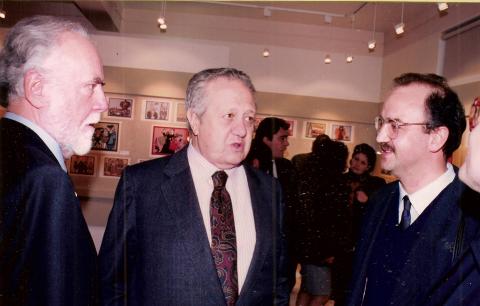
João Abel Manta, Presidente Mario Soares y Osvaldo Macedo de Sousa.


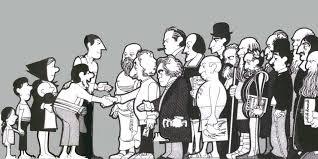


JOÃO ABEL MANTA (Lisbon 29/1/1928 – 15/5/2026)
By Osvaldo Macedo de Sousa
este texto que escribí (colaboré en la producción de cuatro importantes exposiciones y álbumes) para un libro publicado en 2018, con motivo de su 90 cumpleaños.
Dado que el artista visual JAM, a través de su obra práctica, intervino, ironizó y satirizó la sociedad portuguesa con trazos amplios, en una inconfundible y memorable línea conceptual al estilo de joãoabelmantán, como iconografía de toda una época y del arte gráfico periodístico, su vida y obra ya se han construido con múltiples rasgos y líneas estéticas en una opción humanista de diversidad imaginativa, ya sea en el material, la función o el destinatario. Ante todo, es un creador con un profundo sentido cívico y ético en el que la intervención artística no es un simple diletante productivo, sino un medio de comunicación e introspección personal y social, imbuido de estética.
Dado que JAM es, simple y llanamente, un artista visual…
a) a pesar de su formación académica como arquitecto, con una obra terminada en un estilo “funcionalista”, reconocido pero poco estudiado (“Sigo siendo de la época en que me sentaba frente a un tablero de dibujo y hacía un proyecto completo con detalles de armarios, cocinas y todo. Ya no. Y la arquitectura sufre por eso. /…/ No hay detalle, todo es frío, desagradable”).
b) Diseñador y decorador de interiores y exteriores por vocación y por encargo en el ámbito del urbanismo y la arquitectura, donde destacan los diversos paneles de azulejos en Luanda (Hotel Presidente), Coimbra (Associação Académica), Lisboa (Av. Caloustre Gulbenkian)… Calçada da Praça dos Restauradores en Lisboa, diseños de tapices, publicidad…
c) El epíteto de «cartoonista» (una denominación que detesta a pesar de ser responsable de introducir este anglicismo en el léxico de la prensa portuguesa), que ejercía como un deber cívico para una sociedad adormecida por las nuevas inquisiciones, que por ello necesitaba voces disidentes y alertas…
d) La denominación de ilustrador – artista gráfico (donde supo conectar con el alma de otros autores o con su obra/destino como pocos).
e) Pintor por pasión y elección estética.
Este texto se centrará en sus facetas más populares, precisamente aquellas que se niega a admirar y reconocer como su genialidad, con una timidez que impregna toda su vida.
Comenzamos el recorrido con su obra gráfica más hermética e inspirada, donde la arquitectura se hace evidente, no solo por la fuerza del dibujo y el detalle llevado al mundo de la miniatura, sino también por la fuerza escenográfica creada en una dramaturgia casi trágica para resaltar los puntos cruciales de la idea/mensaje. Ya sea en el cartel del ICA o en las series «Misionero», «Un caso para el Santo Oficio» o «Shakespeareano», la monumentalidad del dibujo arquitectónico se impone, casi aplastante, resaltando el miniaturismo de los elementos clave de la obra, como una reivindicación del triunfo del dibujo en la obra plástica. Se trata de obras no concebidas para ser impresas, lo que permite al artista mayor libertad en las técnicas y los detalles, impregnadas de ironía, magia y erotismo.
Si lo “shakesperiano” es una interpretación dramatúrgica de momentos precisos de las obras de ese autor (no podemos olvidar que JAM también fue escenógrafo), no deja de tener, o precisamente por ello, sutilmente transmite mensajes críticos, portando el sentimiento de revuelta y resistencia al poder y a la tragedia. Este clamor constante contra la opresión, contra la falta de libertad en la sociedad portuguesa, es mucho más evidente en la serie “Un caso para el Santo Oficio” (no podemos olvidar que JAM sufrió persecución por parte de los nuevos inquisidores e incluso fue encarcelado) y “Misioneros”. Para mí, este conjunto de obras, que pueden calificarse de goyescas, dantescas, pireodella-francesquinianas, boccacian… son su meditación estética más profunda sobre la función de las artes figurativas en el Portugal del siglo XX, en la que, junto a la maestría técnica, explora múltiples caminos estéticos de ismos entrelazados con un alto poder de mensaje intrínseco a la comunicación que puede tener una obra de arte. JAM bebió de, regurgitó y recreó muchos estilos. Como él mismo argumenta, para que un artista se construya, debe elegir buenos maestros, imitarlos exhaustivamente y luego "ponerse los cuernos" y crear su propio arte/estilo. Si él lo dijo, así lo hizo.
Al pasar a “Desabafos” y otras obras gráficas, redescubriremos algo del ilustrador de prensa que ha ido creciendo desde los años cincuenta, en el que la línea clara (la llamada escuela franco- belga), vinculada al trazo caligráfico de Steinberg, fue una opción para distanciarse del trazo de Bordallo que siempre dominó a los ilustradores de la prensa nacional, a pesar de algunas excepciones modernistas. Es en este período de finales de los sesenta y principios de los setenta cuando se consolidará el estilo de Joãomantiano de líneas gruesas, barroco en su dibujo irónico, satírico en su filosofía humorística, y donde el experimentalismo, a veces surrealista, de las composiciones y fotomontajes crea un espacio único en la historia del dibujo de intervención en la prensa. Nunca antes la estética había tenido tanta importancia, o incluso más, que el mensaje, sin perder el equilibrio ni obstaculizar la comunicación.
Si bien podemos hablar de su trabajo para el «Almanaque», el «Diário de Lisboa», el «Diário de Notícias» y el «Jornal de Letras» (donde creó algunas de las portadas más brillantes, además de sus históricos retratos a carboncillo), las obras para el suplemento humorístico «A Mosca» (del «Diário de Lisboa») constituyen un grito de rebeldía contra una dictadura obsoleta, una mueca de esperanza por tiempos nuevos, el estallido de un artista visual que desea crear su obra pero se ve impedido por la sociedad, lo que lo obliga a permanecer como intervencionista, un artista gráfico más ideológico que artístico. Con la Revolución de Abril, a pesar de la euforia y la complicidad con los nuevos vientos, esta postura como artista intervencionista no cambió, manteniéndose atento a todos los movimientos y tropiezos. Se trata de una fase de exploración de la diversidad conceptual en el dibujo, adaptando cada estilo a cada momento, a cada idea y a cada soporte para el que fue concebido. En este estilo barroco estructural, el pensamiento adapta el arte del dibujo al objetivo final. ¿Menos contundente y más humorístico? ¿Más irónico y menos filosófico? ¿Más caricaturesco y menos arquitecto/pintor? Si bien JAM consideraba que el humor gráfico puede ayudar a destruir regímenes nefastos, pero poco contribuye a construir otros nuevos, nunca renunció, como muchos otros que vivieron de este trabajo, a ser un artista gráfico de vanguardia, experimentando no solo con estructuras, sino también con técnicas y opciones gráficas, manteniendo siempre un lenguaje comprensible para el público general. Humorista, en el sentido filosófico de que la sonrisa nace, no del chiste, de la anécdota, sino de la obligación de detenerse, de observar bien lo que se dibuja, de pensar que no se dice y luego comprender y ser alertado con una sonrisa, JAM, le guste o no, es uno de los mayores maestros del llamado humor gráfico, o como tradicionalmente se le conoce, de la caricatura, o como JAM lo rebautizó, del cartoon.
Sin embargo, el concepto fundamental de la caricatura es el momento oportuno. Como escribió el estadounidense Marlette, «el caricaturista es como un surfista: debe entrar en la ola en el momento preciso (para que el público entienda a qué se refiere) y, al mismo tiempo, salir en el momento justo para no desmoronarse en la playa» (para que el tema no quede obsoleto). Ahora bien, la fuerza de toda esta obra del artista visual, cuidadoso con el diseño arquitectónico de la construcción, con la paleta de colores fundamentales para resaltar los detalles pictóricos, con los trazos irónicos de la caricatura para enfatizar mejor el mensaje, reside en la espontaneidad del momento de la concepción, combinada con un subconsciente de recuerdos que no quiere olvidar.
Estas obras no dejan de envejecer y permanecen siempre como obras de gran belleza plástica, obras de profunda meditación social e histórica. Es cierto que el álbum «Caricaturas portuguesas de los años de Salazar» se creó en una especie de retiro londinense, con la distancia necesaria para plasmar estas memorias de un pueblo que sufre, pero con algunos individuos irreverentes siempre dispuestos a la confrontación. La fuerza especial de estas obras, más allá de la arquitectura del dibujo, los colores empleados y la temática, reside en la extraordinaria exploración de elementos iconográficos regionales, populares, nacionalistas, fascistas y opresivos, todos orquestados en síntesis de ironía e irreverencia que nos ofrecen un retrato extraordinario de esta extensa nación
costera.
JAM puede tener 90 o 100 años, 40 o 50, pero estas obras maestras del arte portugués son eternas como la creación plástica de un pintor, arquitecto, ilustrador y caricaturista; un recuerdo y una advertencia sobre una vida cotidiana que puede repetirse si no estamos atentos y conscientes del pasado.
Al contemplar la obra de JAM, siento cuán eterna es la belleza de la creatividad humana, cómo no debemos olvidar la importancia de la cultura y las artes en la educación de la sociedad (como testimonio, memoria y afirmación), y cuán afortunado soy de haber conocido a un creador, artista y ser humano como él.
João Abel Manta, Presidente Mario Soares y Osvaldo Macedo de Sousa.
JOÃO ABEL MANTA (Lisbon 29/1/1928 – 15/5/2026)
By: Osvaldo Macedo de Sousa
In Portuguese caricature, a key name in its history exists in the 19th century, such as Raphael Bordallo Pinheiro, and although there are many other important artists, the work of João Abel Manta, despite not being vast, eternally marks the 20th century for its stylistic quality, the depth of its ironic intervention, and its requalification of the art of cartooning. It is this great figure of cartooning who has just passed away, which leads me to make this simple international tribute, with the publication of this text that I wrote (I collaborated in the production of four major exhibitions and albums) for a book published in 2018, when his 90th birthday was commemorated.
Given that the visual artist JAM, through his practical work, intervened in, ironized, and satirized Portuguese society in broad strokes, in an unmistakable and memorable Joãomantánesque conceptual line, as an iconography of an entire era and of journalistic graphic art, his life and work have already been constructed with multiple aesthetic traits and lines in a humanistic option of imaginative diversity, whether in the material, function, or recipient. Above all, he is a creator with a profound civic and ethical sense in which artistic intervention is not a simple productive dilettante, but a means of communication and personal and social introspection, imbued with aesthetics.
Since JAM is, simply and always, a visual artist…
a) despite his academic training as an architect, with completed work in a “functionalist” style, recognized and little studied (“I’m still from the time when I sat at a drawing board and made an entire project with details of cabinets, kitchens and everything. Not anymore. And architecture suffers from that. /…/ There’s no detail, it’s all cold, unpleasant”)
b) Interior/exterior designer and decorator by choice and commissions in the field of urban planning and architecture, where the various tile panels in Luanda (Hotel Presidente), Coimbra (Associação Académica), Lisbon (Av. Caloustre Gulbenkian)… Calçada da Praça dos Restauradores in Lisbon, tapestry designs, advertising… stand out.
c) The epithet of “cartoonist” (a designation he hates despite being responsible for introducing this anglicism into the lexicon of the Portuguese press) which he carried out as a civic duty for a society lulled to sleep by the new inquisitions, needing for that reason dissenting and alert voices…
d) The designation of illustrator – graphic artist (where he knew how to commune his hand with the soul of other authors or with his work/destiny like few others)
e) Painter by passion and aesthetic choice.
… this text will focus on his most popular facets, precisely those that he refuses to admire and admit his genius for, in a shyness that is a characteristic that overflows throughout his life.
We begin the journey with his most hermetic and inspired graphic work, where architecture is evident, not only through the strength of the drawing, the detail taken to the world of miniature, but also through the scenographic force created in an almost tragic dramaturgy to highlight the crucial points of the idea/message.
Whether in the ICA poster or in the series "Missionary," "A Case for the Holy Office," or "Shakespearean," the monumentality of the architectural drawing imposes itself, almost crushing, highlighting the miniaturism of the crucial elements of the work, as a claim to the triumph of drawing in the plastic work. These are works that are not intended to be printed in the media, and therefore the artist can be freer in techniques and details, laced with irony, magic, and eroticism. If the “Shakespearean” is a dramaturgical interpretation of precise moments from that author's plays (we cannot forget that JAM was also a set designer), it does not fail to have, or precisely because of this, subtly carries critical messages, bearing the sentiment of revolt and resistance to power and tragedy. This constant cry against oppression, against the lack of freedom in Portuguese society, is much more evident in the series “A Case for the Holy Office” (we cannot forget that JAM suffered persecution from new inquisitors and was even imprisoned) and “Missionaries”. For me, this set of works, which can be called Goyesque, Dantean, Pireodella-Francesquinian, Boccacian… are his most profound aesthetic meditation on the function of figurative arts in 20th-century Portugal, in which, alongside technical mastery, he explores multiple aesthetic paths of interwoven isms with a high power of message intrinsic to the communication that a work of art can have. JAM drank from, regurgitated, and recreated many styles. As he argues, for an artist to build himself, he must choose good masters, imitate them exhaustively, and then "put on the horns" and create his own art/style. If he said so, so he did.
When we move on to the "Outbursts" and other graphic works, we will rediscover a bit of the press illustrator who has been growing since the fifties, in which the clear line (so-called Franco-Belgian school), linked to the Steinbergian calligraphic stroke, was an option to distance himself from the Bordallian stroke that always dominated the illustrators of the national press, despite some modernist exceptions. It is in this period of the late sixties / early seventies that the Joãomantánesque style of thick lines will be consolidated, baroque in its ironic drawing, satirical in its humorous philosophy, and where the experimentalism, sometimes surrealizing, of the compositions and photomontages creates a unique space in the history of intervention drawing in the press. Never before has aesthetics carried as much, or even more, weight than the message, without losing balance and stifling communication.
Although we can discuss the work done for the “Almanaque”, “Diário de Lisboa”, “Diário de Notícias”, and “Jornal de Letras” (where he created some of the most brilliant newspaper covers, in addition to his historic charcoal portraits), the works for the humorous supplement “A Mosca” (of the “Diário de Lisboa”) are a great cry of revolt against an outdated dictatorship, a grimace of hope for new times, the outburst of a visual artist who wants to create his work but is prevented by society, forcing him to remain an interventionist, a graphic artist more ideological than artistic. With the April Revolution, despite all the happiness and complicity with the new winds, this stance as an interventionist artist did not change, remaining attentive to all movements and missteps. It is a phase of exploring conceptual diversity in drawing, adapting each style to each moment, each idea, and each medium for which it was intended. In this structural Baroque style, thought adapts the art of drawing to the objective final.
Less forceful and more humorous? More ironic and less philosophical? More caricatural and less architect/painter? Although JAM considered that graphic humor can help destroy bad regimes but does little to build new ones, he never dispensed, like many others who lived from this work, with being an avant-garde graphic artist, not only experimenting with structures, but also techniques and graphic options, while always maintaining a language perceptible to the general public. A humorist, in the philosophical concept where the smile is born, not from the gag, the anecdote, but from the obligation to stop, to see well what is drawn, to think that it is not said and then to understand and be alerted with a smile, JAM, whether he likes it or not, is one of the greatest masters of the so-called graphic humor, or as traditionally - of caricature, or as JAM renamed it - of cartoon.
However, the main concept of cartooning is timing. As the American Marlette wrote, «the cartoonist is like a surfer, he has to enter the wave at the right moment (so that the public understands what the cartoonist is referring to) just as he must leave at the right moment so as not to crumble on the beach» (so that the subject is not already outdated). Now, the strength of all this work by a visual artist, careful with the architectural design of the construction, with the palette of fundamental colors to highlight the pictorial details, the ironic caricatural strokes to better emphasize the message, lies in the immediate thought of the moment of conception, combined with a subconscious of memories that he does not want to be forgotten, these works do not cease to age and always remain works of great plastic beauty, works of profound social and historical meditation. It is true that the album "Portuguese Caricatures from the Salazar Years" was created in a kind of London retreat, with the necessary distance to write these memories of a suffering people, but with some irreverent individuals always ready for the fight.
The special strength of these works, beyond the architecture of the drawing, the colors used, and the theme, lies in the extraordinary exploration of regional, popular, nationalist, fascist, and oppressive iconographic elements, all orchestrated in syntheses of irony and irreverence that give us an extraordinary portrait of this sprawling nation by the sea.
JAM may be 90 or 100 years old, 40 or 50 years old, these masterpieces of Portuguese art are eternal as the plastic creation of a painter/architect/illustrator/cartoonist, a memory and a warning about a daily life that can repeat itself if we are not attentive and knowledgeable about the past.
When I look at JAM's work, I feel how eternal the beauty of human creativity is, how we must not forget the importance of culture/arts in the education of society (as testimony, memory and affirmation), how fortunate I am to have known such a creator, artist, human being.