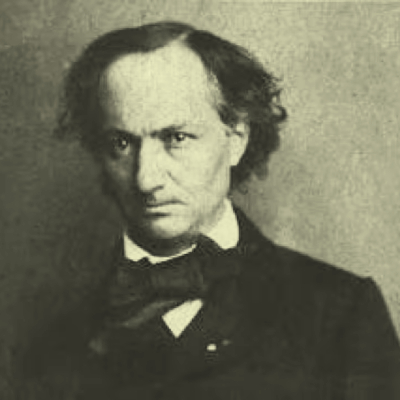
Más conocido por sus poemas, Charles Baudelaire (1821-1867) extrapoló en su novela “La Fanfarlo” la experiencia inserta en “Las flores del mal”, donde el poeta va a contracorriente de los valores de una sociedad burguesa. Regularmente esto va por la senda de la tragedia, pero el buen Carlitos resulta un tragicómico más cercano al divertimento; especialmente visto en retrospectiva, con las condiciones actuales. Casi como le hacen en EUA para vetar textos hoy que en otros tiempos ellos mismos consideraban relevantes y dignos de presunción. La locura censora actual llega a considerar que los maltratos infantiles o de género de obras universales, parte de los libros de texto por siglos en casi todos los idiomas, ahora son mal ejemplo para las actuales generaciones que parecen carecer de filtros o cacumen propicio para diferenciar lo que hacían los griegos hace más de 20 siglos o los gringos sureños con los esclavos, con lo que se hace hoy, cuando los derechos humanos deberían ser la bandera de todas las leyes. Pero los nuevos censores sacan de contexto la fecha y sociedad donde se escribían esas obras, precisamente porque así era la vida cotidiana entonces, como si los romanos o aztecas hubieran ignorado los derechos de la diversidad, verbigracia, al hacer sus sacrificios, torturas y guerras. Y eso son los libros, a ver dónde esconden todos los filmes y series relacionadas con esas obras censuradas, que tanto prestigio dieron a Hollywood. Y decía yo “casi” porque me pasa al revés: disfruto hoy las salvajadas de hace años o siglos como si viviera en aquellas épocas, sin preocuparme de la hipersensibilidad juvenil o de las ideas extremas de los integrantes de la “orden de la vela perpetua”, parientes de los “rezadores de rodilla sangrante”, y derivados de “me duele el pecho de tanto puñetazo autoinfligido”.
En la obra de Baudelaire el joven poeta Cramer reencuentra por azar un amor de juventud, quien le participa sus desavenencias maritales debido a que el consorte está empeñado en pasar por la piedra (me puse bíblico, qué se le va a hacer) a la hermosa bailarina, la Fanfarlo; por ello, el poeta dedica sus esfuerzos para separarla del marido y obtener los favores de la palomita que no pudo exprimir lo suficiente durante sus años mozos (regularmente los más hormonales, aunque hay representantes de la cuarta edad que parecen ser descendientes directos de los faunos mitológicos). Logra quedarse con la bailarina, pero no obtiene lo esperado.
Cualquiera que haya leído al poeta maldito se extrañará de esta trama que parece una comedia de enredos en donde el hecho de ser burlado, para evidenciar que quien se cree muy inteligente en realidad no lo es, llama al humor. Si en el gracejo cinematográfico nos divertimos a costa del ostentoso adinerado que viste con sombrero de copa alta o con capa elegante, precisamente cuando recibe un golpe o un pastelazo en el rostro, de igual manera quien se siente por encima de los demás al creerse muy inteligente y termina por evidenciar su estulticia, es perfecto para reírse. Es una proyección de cuando suponemos tener la respuesta correcta y cometemos el error de decirlo abiertamente; bastará la demostración de lo contrario para hacernos quedar como un pelele. Si el anterior es un chiste socioeconómico, dónde nos reímos de quién tiene la riqueza por ser una manera en que podemos sentirnos superiores, al menos por no haber recibido el pastelazo en el bigote, dentro de la sociología de la risa el humor es un mecanismo para liberar la presión que existe en la diferencia de posibilidades económico-culturales de los distintos estratos sociales. Chaplin y Keaton tenían muy clara esa diversión de las clases bajas que ahorraban para ir a ver los cortos mudos donde el pelado norteamericano se burlaba del adinerado norteamericano; lo mismo que hacía Cantinflas con su verborrea magnífica para engatusar a las otras clases sociales.
La novela destaca por aspectos de fondo y de forma. Dentro del prosista está el poeta Baudelaire en el uso de oraciones sintéticas: decir mucho con lo menos. Hacer al lector parte de lo narrado, más con una mirada empática que como dialogante o como intérprete de lo sucedido. Cierra la novela en tres personajes a desarrollar a partir del engaño: el poeta es engañado por la casada, pues supone que obtendrá sus favores si separa al marido de la bailarina; la casada es engañada por el marido; y, la bailarina es engañada por el poeta, al suponerlo su enamorado, cuando no lo es. La confusión de identidades también es un aspecto utilizado en la comedia del arte. Es enorme la cantidad de obras donde las máscaras, el vestuario o el arreglo logran la suplantación voluntaria de personajes intercambiados, pero aquí todos los engañados lo son sin su consentimiento. Y esto también llama a la risa. Quienes divagamos sobre las veredas del destino tenemos claro que por mucho que una persona se afane en dirigir esfuerzos durante toda su vida para obtener cierto resultado, generalmente no depende de él que lo consiga. Suponer que el hombre es capaz de regir por completo su destino exterior o conductual es risorio en tanto hay miles de factores incontrolables para esa persona. Solo interiormente hay posibilidad de ser el propio forjador de las emociones y la mente; y eso cuando se realiza un profundo trabajo íntimo, ya apoyados en la religión, ya apoyados en el autoanálisis, ya apoyados en el humor como herramienta de autorevisión y medio para obtener los fines deseados. Miles de dichos en todas las lenguas reiteran la torpeza del hombre que supone ser el dueño absoluto de su futuro.
La trama se divide entre lo moral (bueno, la moral de Baudelaire: famoso por carecer de ella fuera de su literatura) y lo chusco. Debajo de los diálogos hay un efecto humorístico, especialmente al final del texto, pero también en la construcción de la novela, pues la bailarina apenas aparece en la trama a pesar de ser la manzana de la discordia: tarde nos enteramos de cómo es interiormente y de la manera en que habrá de cobrarse el timo sentimental. A contracorriente de las novelas de la época, donde se anunciaba al personaje central en el título (“Madame Bovary” de Flaubert, “Manon Lescaut” de Prévost, etc.), Baudelaire engaña al lector. Podría identificarse al autor con el personaje que escribe poesía, como sucede en otros textos suyos: es diletante y busca los placeres terrenales, sin aparente dificultad moral para vencer cualquier obstáculo. Pero se enfrenta con la Fanfarlo, una bailarina que encarna al teatro y su enmascaramiento de la realidad, más por extenderlo fuera de los escenarios para tornar su casa en una extensión de la escenografía y representar otra obra: la del poeta timador, con la vuelta de tuerca de que el embaucador será embaucado: puesto que el poeta es esencialmente el usuario-creador de la máscara verbal que en su visión distorsiona la realidad para renombrarla con la palabra virtuosa y hacer así de lo escrito o de lo dicho una peculiar careta que oculta la esencia de lo nombrado, aunque sea la “realidad objetiva” para el lector o el escucha de sus versos. Así, es sencilla su empatía con la otra encarnación de lo ficticio que es la literatura, especialmente la poesía por sus formas sugerentes, a veces sin precisión, para hacer que una idea o una frase modifique la percepción del receptor sobre lo asible. Y en el caso del poeta que engaña dolosamente es peor porque se complementa con la mujer: él es la palabra que disfraza y ella es el disfraz de las formas, especialmente las sociales: en la unión de ambos, la vida imita al arte. Pero al final del texto, el arte se pierde y la vida también, en el castigo de una existencia superficial y un escarmiento impuesto con el dolo del rencor derivado del engaño profundo: para la Fanfarlo, la sanción recibida deriva de evidenciarla como mujer enmascarada, con la autoconvicción de la futilidad en sus gustos e ilusiones. Y no hay peor venganza que la pérdida conjunta de lo único que daba sentido a sus vidas: el arte como máscara del vacío existencial. Sin la única barrera entre los excesos y el tedio en el abismo, apenas quedan las emociones. Si todas brotan del mismo saco, la precariedad emocional de la persona, es sencillo pasar del odio a la risa tenue, del aburrimiento a la carcajada que tensa los músculos del rostro sólo como antídoto al gesto ausente y a los ojos dando vueltas como si fueran una nube más que el viento mueve con capricho, del enojo rabioso a la hilaridad de barbaján, cargada de esa turbulencia interna mediante sonidos que a veces se parecen más a las llamadas en celo de ciertos mamíferos o aves, que a un sonido humano. Aunque por ello puedan darse tantas risas extrañas, unas provocadas por la ronquera que se gesta en el cuello contraído, otras por los hipos pulmonares que evocan más a las danzas macabras medievales que a la risotada de quien grita al reír, como si reclamara la atención del todopoderoso para librar al expectorante de una vibración sonora que lo hace ridículo por extraño ante los demás.
El final se anuncia desde el inicio, en la descripción del poeta: “Entre todos los hombres semibrillantes que he conocido en esta terrible vida parisina, Samuel fue, más que ningún otro, el hombre de las grandes obras fallidas”… “se me ha aparecido siempre como el dios de la impotencia”. Vaya buen apodo: siempre es incapaz de hacer lo que se propone. Es tan inútil que se le atribuye la calidad divina, como extrapolación de lo humano. Ningún humano puede fallar siempre, a menos que sea algo más, por encima de todas las personas: solo puede ser el dios de las pifias. Para muchos será un insulto, para otros una descripción.
Su yerro deriva de apropiarse mentalmente de aquello con lo que se identifica: termina por creer que los resultados obtenidos se deben a sus deseos y acciones. De ahí que espere la recompensa de la esposa: “sólo los poetas son lo suficientemente cándidos para inventar semejantes monstruosidades”. Al final, tras saber que el amor era una mentira, la Fanfarlo castiga al poeta: pierde su belleza, lo hace padre, lo hace autor de libros de ciencia, lo inserta en la academia y el poeta decadente funda un diario socialista y decide entrar a la política: “¡Qué inteligencia deshonesta!”.
Baudelaire pone al poeta en el peor infierno concebido por el autor como diletante permanente, profesional, dirían otros. Es tan proclive al gozo superficial que sólo puede explicar el que hubiera perdido la chispa creativa para insertarse en lo científico, lo académico o lo político por el hecho de recibir dinero a cambio. Ha perdido la propia luz y se esconde en la obscuridad de aquello donde basta la repetición para tener éxito. La liberación que se expresa en la poesía, hermana siamesa de la liberación que la risa da en cualquier escenario, termina por ser un detonante del cambio interior; en el dolor del duelo por el ser amado, familiar cercano o amigo leal, poco ayuda más que un chiste de mal gusto que obliga al allegado a soltar la carcajada como si tuviera por estomago una bocina de camión rural antiguo a punto de caer por la vereda de la montaña sobre los peregrinos que no se pueden hacer a un lado. La broma es perfecta. Quien supone que sólo la poesía es sublime y propia de quienes se asumen como los grandes autores, probablemente vea con desprecio al periodismo, la academia y ni se diga a la política. Le parecen torpes por carecer de la libertad creativa. Y ahí es donde acaba el personaje: precisamente donde no quería. Esta broma suele suceder en la vida cotidiana. No sólo tomar el autobús equivocado para bajarse del lado contrario de la ciudad respecto del punto al que iba originalmente, también dejar lo supuestamente más libertario para acabar con lo que representa el sometimiento a la rutina y a la voluntad de otros. Si el poeta se asume como individuo único e irrepetible, el socialista parte de ser uno más en el maremágnum humano. Lo cierto es que la mirada externa es doblemente fársica: ni somos únicos socialmente, ni podemos ser copiados en la creatividad.
El humor también se daba al escritor maldito, especialmente con una broma hecha a su propia costa, pero sin perder el impacto anímico por la lectura de un poeta mayor.

Baudelaire, the Prose Writer
By Ricardo Guzmán Wolffer
Better known for his poems, Charles Baudelaire (1821–1867) extrapolated in his novel La Fanfarlo the experience embedded in Les Fleurs du mal (The Flowers of Evil), where the poet goes against the grain of bourgeois society's values. Regularly, this follows the path of tragedy, yet good old Carlitos turns out to be a tragicomic figure closer to amusement; especially viewed in hindsight, under current conditions. Much like they do in the U.S. today to ban texts that in earlier times they themselves considered relevant and worthy of boasting about. Today's censorious madness goes so far as to consider that depictions of child or gender abuse in universal works—part of textbooks for centuries in almost every language—are now a bad example for current generations, who seem to lack filters or the proper wit to distinguish what the Greeks did more than twenty centuries ago, or what Southern gringos did with enslaved people, from what is done today, when human rights ought to be the banner of all laws. Yet the new censors take out of context the era and society in which those works were written, precisely because that was everyday life back then, as if the Romans or Aztecs had ignored the rights of diversity—verbi gratia—when carrying out their sacrifices, tortures, and wars. And that is just books; let's see where they hide all the films and series tied to those censored works that brought so much prestige to Hollywood. And I said "almost" because the reverse happens to me: I enjoy today the wild antics from years or centuries ago as if I were living in those eras, without worrying about youth hypersensitivity or the extreme ideas of members of the "order of the perpetual candle," relatives of the "bleeding-knee prayer-goers," and offshoots of "my chest hurts from so much self-inflicted fist-pounding."
In Baudelaire's work, the young poet Cramer coincidentally runs into a youthful love, who shares with him her marital troubles because her husband is bent on stoning (I got biblical there—what can you do?) the lovely dancer, La Fanfarlo; because of this, the poet devotes his efforts to separating her from her husband and winning the favors of the little dove whom he could not squeeze enough during his youthful years (usually the most hormonal ones, though there are representatives of old age who seem like direct descendants of mythological fauns). He succeeds in keeping the dancer, yet does not get what he expected.
Anyone who has read the poète maudit will be surprised by this plot that looks like a comedy of errors where being mocked—in order to show that someone who thinks themselves very smart actually isn't—calls for humor. If in cinematic slapstick we amuse ourselves at the expense of the ostentatious rich person wearing a top hat or an elegant cape, right when they get hit or take a pie to the face, in the same way someone who looks down on others by thinking themselves very bright and ends up revealing their foolishness is ripe for laughter. It is a projection of when we assume we have the right answer and make the mistake of stating it openly; proof to the contrary will be enough to make us look like a fool. If the previous example is a socioeconomic joke, where laughing at who holds the wealth is a way we can feel superior—at least for not having taken the pie to the mustache—within the sociology of laughter, humor is a mechanism for releasing the pressure that exists in the difference of economic and cultural possibilities across social strata. Chaplin and Keaton had a very clear understanding of that amusement among the lower classes who saved up to go see the silent shorts where the pelado (down-and-out gringo) mocked the wealthy American; much like what Cantinflas did with his magnificent verbosity to charm the other social classes
The novel stands out for aspects of both substance and form. Inside the prose writer is Baudelaire the poet in his use of synthetic sentences: saying much with as little as possible. Making the reader part of what is narrated, more with an empathetic gaze than as an interlocutor or interpreter of what happened. He closes the novel around three characters to be developed through deception: the poet is deceived by the married woman, since he assumes he will win her favors if he separates the dancer from her husband; the married woman is deceived by the husband; and the dancer is deceived by the poet, by assuming he is her lover, when he is not. The confusion of identities is also an element used in commedia dell'arte. There is a huge number of works where masks, costumes, or attire achieve the voluntary substitution of swapped characters, yet here all those deceived are so without their consent. And this also calls for laughter. Those of us who wander along the paths of destiny are clear that no matter how hard a person strives to direct their efforts throughout their life to obtain a certain outcome, whether they achieve it generally does not depend on them. Assuming that human beings are capable of completely governing their external or behavioral destiny is laughable insofar as there are thousands of uncontrollable factors for that person. Only inwardly is there a possibility of being the forge of one's own emotions and mind; and that only when deep inner work is carried out, whether supported by religion, supported by self-analysis, or supported by humor as a tool for self-examination and a means to obtain desired ends. Thousands of sayings in every language reiterate the clumsiness of the person who assumes they are the absolute master of their future
The plot is divided between the moral (well, Baudelaire's morality: famous for lacking it outside his literature) and the risqué. Beneath the dialogue there is a humorous effect, especially at the end of the text, but also in the construction of the novel, since the dancer barely appears in the plot despite being the apple of discord: we find out late what she is like on the inside and how the romantic scam will have to be settled. Going against the grain of novels of the era, where the central character was announced in the title (Madame Bovary by Flaubert, Manon Lescaut by Prévost, etc.), Baudelaire deceives the reader. One could identify the author with the character who writes poetry, as happens in other texts of his: he is a dilettante and seeks earthly pleasures, with no apparent moral difficulty in overcoming any obstacle. Yet he comes up against La Fanfarlo, a dancer who embodies theater and its masking of reality, even more so by extending it outside the stage to turn her home into an extension of the set design and stage another play: that of the con-artist poet, with the twist that the swindler will be swindled—since the poet is essentially the user-creator of the verbal mask who, in his vision, distorts reality to rename it with the virtuous word and thus make of what is written or spoken a peculiar mask that hides the essence of what is named, even if it is "objective reality" for the reader or listener of his verses. Thus, his empathy with that other incarnation of the fictional that is literature comes easily, especially poetry through its suggestive forms, sometimes without precision, so that an idea or a phrase modifies the receiver's perception of what is graspable. And in the case of the poet who deceives with malice, it is worse because it complements the woman: he is the word that disguises and she is the disguise of forms, especially social ones: in the union of both, life imitates art. Yet at the end of the text, art is lost and life is too, in the punishment of a superficial existence and a chastisement imposed with the pain of resentment stemming from deep deception: for La Fanfarlo, the punishment received stems from exposing her as a masked woman, with the self-conviction of the futility in her tastes and illusions. And there is no worse vengeance than the joint loss of the only thing that gave meaning to their lives: art as a mask for existential emptiness. Without the sole barrier between excesses and boredom in the abyss, barely emotions remain. If all of them spring from the same sack, a person's emotional precarity makes it easy to shift from hatred to a faint laugh, from boredom to a burst of laughter that tenses the facial muscles solely as an antidote to a vacant expression and eyes rolling as if they were just another cloud moved capriciously by the wind, from furious anger to the hilarity of a buffoon—charged with that inner turbulence through sounds that sometimes resemble the mating calls of certain mammals or birds more than a human sound. Although because of this so many strange laughs can occur—some triggered by the hoarseness brewing in a contracted throat, others by pulmonary hiccups that evoke medieval danses macabres more than the guffaw of someone shouting as they laugh, as if demanding the attention of the Almighty to free the one coughing up phlegm from a sonorous vibration that makes them look ridiculous for being strange before others
The ending is announced from the very beginning, in the description of the poet: "Among all the semi-brilliant men I have known in this terrible Parisian life, Samuel was, more than any other, the man of great failed works"... "he has always appeared to me as the god of impotence." What a fitting nickname: he is always incapable of doing what he sets out to do. He is so useless that divine quality is attributed to him, as an extrapolation of the human. No human can fail always, unless they are something more, above all other people: they can only be the god of blunders. For many it will be an insult; for others, a description
His blunder stems from mentally appropriating what he identifies with: he ends up believing that the results obtained are due to his desires and actions. Hence he expects the reward of the wife: "only poets are naive enough to invent such monstrosities." In the end, after learning that love was a lie, La Fanfarlo punishes the poet: she loses her beauty, makes him a father, turns him into an author of science books, inserts him into academia, and the decadent poet founds a socialist newspaper and decides to enter politics: "What dishonest intelligence!"
Baudelaire places the poet in the worst hell conceived by the author as a permanent dilettante—professional, others would say. He is so prone to superficial enjoyment that the only explanation is having lost the creative spark to enter the scientific, academic, or political sphere for the sake of receiving money in return. He has lost his own light and hides in the obscurity of what is easily achieved through mere repetition. The liberation expressed in poetry—siamese twin of the liberation that laughter provides in any setting—ends up being a trigger for inner change; in the grief of mourning a loved one, a close relative, or a loyal friend, little helps more than a tasteless joke that forces the mourner to burst out laughing as if they had in their stomach the horn of an old country truck about to roll down the mountain path onto pilgrims who cannot step aside. The joke is perfect. Whoever assumes that only poetry is sublime and belongs to those who consider themselves great authors will probably look down with contempt on journalism, academia, and even more so on politics. They seem clumsy to them for lacking creative freedom. And that is where the character ends up: right where he didn't want to be. This joke tends to happen in everyday life. Not only taking the wrong bus to get off on the opposite side of town from where one originally intended, but also leaving what is supposedly most libertarian to end up with what represents submission to routine and to the will of others. If the poet sees himself as a unique and unrepeatable individual, the socialist starts from being just one more in the human maremágnum (maelstrom). The truth is that the outside gaze is doubly farcical: we are neither unique socially, nor can we be copied in creativity
Humor also came to the poète maudit, especially through a joke at his own expense, yet without losing the emotional impact of reading a major poet
Nota editorial: Las opiniones y criterios expresados en los textos publicados en Humor Sapiens son responsabilidad de sus respectivos autores y no representan necesariamente el pensamiento ni la posición de Humor Sapiens.
Editorial Note: The opinions and views expressed in the texts published by Humor Sapiens are the responsibility of their respective authors and do not necessarily reflect the views or position of Humor Sapiens.
(This text has been translated into English by ChatGPT)