Los juegos de palabras arrastran desde siempre una cierta mala prensa. Son muchos los que insisten en calificarlos como “un recurso fácil, simplón”, y no faltan los que se refieren a ellos como “la forma más baja” del humor o de la literatura. Porque los juegos de palabras pueden ser, ciertamente, humor y/o literatura. Pueden ser, recalco. Evidentemente, a veces no constituyen más que un ejercicio (bueno o malo) de habilidad verbal.
Yo (y lo digo ya, para que no queden dudas) soy un enamorado de los juegos de palabras. Del lenguaje en general y, en particular, de sus posibilidades lúdicas. Porque el lenguaje es una de las cosas más lúdicas que tenemos. Si los niños y los adolescentes (y en primer lugar, los profesores) fuesen conscientes de ello, verían con otros ojos la asignatura de Lengua en la escuela. Como es sabido, la lengua y la literatura suelen impartirse juntas en el colegio, dentro de la misma materia. Pues bien, la inmensa mayoría de los alumnos disfrutan solo (si llegan a hacerlo) de la literatura. Comprenden (más o menos) que esta representa un campo abonado para desarrollar la creatividad, pero no ven lo mismo en la lengua. Craso error. Insisto en que esta puede ser también muy lúdica y creativa. A las seis funciones clásicas del lenguaje que nuestros niños y jóvenes aprenden en la escuela (referencial, expresiva, apelativa, fática, poética y metalingüística) deberíamos añadir una séptima: lúdica.
Por supuesto que habrá humoristas malos que usen los juegos de palabras predeciblemente, sin gracia, pero también existen otros que hacen de ellos humor de primerísima categoría, de muchos quilates. Y lo mismo pasa en la literatura. Habrá escritores que los usen torpemente, pero en manos de otros son recursos estéticos de altísimo nivel. Los juegos de palabras pueden suponer, en definitiva, una muestra extraordinaria de inteligencia, ingenio, creatividad y eso que se llama “pensar fuera de la caja”, por las asociaciones y relaciones terminológicas y conceptuales que implican, inéditas, insólitas, ilógicas o absurdas a veces y siempre sorprendentes. Quien no consigue verlo así e insiste en lo del “recurso simplón” probablemente es que ni tiene mucha inteligencia ni ingenio ni es capaz de reconocer estas cualidades en los demás.
El calambur de Quevedo
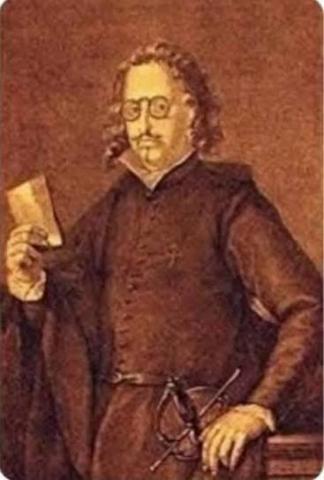
Veamos algunos ejemplos de buenos juegos de palabras, empezando por la literatura. Y comenzamos por un clásico de las letras españolas, Francisco de Quevedo, el poeta conceptista maestro de la anfibología. Dejó muchas muestras de su ingenio lingüístico en sus escritos, pero quizás lo primero que nos viene a la cabeza a todos cuando hablamos de él en este contexto es el calambur oral que, según la tradición, le dedicó en cierta ocasión a la reina Isabel de Borbón, esposa de Felipe IV. Quevedo se había apostado con unos amigos que tenía valentía suficiente como para llamar “coja” a la reina, que arrastraba una cojera evidente y no le gustaban en absoluto las bromas al respecto. Así, en una muestra de ingenio, frescura y osadía, el escritor se acercó a Doña Isabel con un clavel blanco en una mano y una rosa roja en la otra, y le dio a elegir entre las dos flores con el siguiente calambur: “Entre el clavel blanco y la rosa roja, su majestad escoja”. De esta manera, el escritor ganó la apuesta y, con un inteligente juego de palabras, llamó a la reina “coja” sin que se ofendiera.
El calambur consiste en reagrupar las sílabas de dos o más palabras de manera distinta para alterar por completo su significado. Es muy usado en adivinanzas infantiles y chistes para crear dobles sentidos, de esos que suelen ser denostados por algunos por “simplones”, como el clásico “oro parece, plata no es”. Pero los hay excelentes, como el famoso “si el rey no muere, el reino muere” o ese otro que llevó a alguien a convertir el hermoso verso de Garcilaso de la Vega “el dulce lamentar de dos pastores” en el sorprendente “el dulce lamen tarde dos pastores”.
Saltando al siglo XX, y sin ánimo de profundizar, me vienen a la mente tres nombres imprescindibles de escritores aficionados a jugar con el lenguaje: el argentino Julio Cortázar y los franceses Georges Perec y Raymond Queneau.
El secuestro de la “”e”
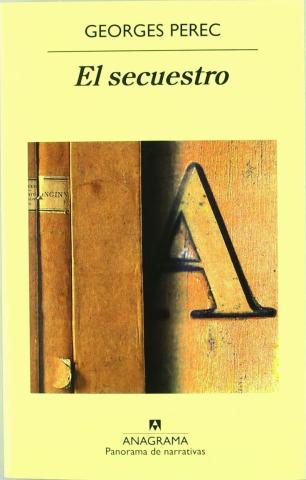
Los dos últimos entran de lleno en la llamada literatura experimental. De Queneau, cofundador de OuLiPoy y miembro del Colegio de Patafísica, tenemos que mencionar sus Exercices de style (Ejercicios de estilo, 1947). De Perec, debemos destacar La disparition (El secuestro, 1969) esa asombrosa novela lipogramática en la que se omite la letra “e”, la más frecuente en el idioma francés. En su tradución española se optó por evitar la “a”, la segunda más común del castellano. Por cierto que, en español, Enrique Jardiel Poncela, uno de los mejores escritores humorísticos, elaboró cinco relatos lipogramáticos en cada uno de los cuales prescindió de una vocal distinta.
Con respecto a Cortázar, baste con recordar lo que dijo en una ocasión durante una entrevista en TVE:
–¿De qué forma quedaría amputada, mutilada su obra si pudiésemos eliminar de golpe estos aspectos de su escritura que podrían pertenecer a ese apartado titulado “la escritura entendida como un juego”?
–Quedaría más que mutilada. Yo diría que directamente no quedaría, porque desde que comencé a escribir la noción de juego ha estado profundamente identificada en todo lo que he hecho, entendiendo por juego lo mismo que entienden los niños, es decir, una ocupación muy seria –en el fondo, no tiene nada de frívolo–. Sabemos muy bien que cuando los niños juegan, le dan a su juego un valor mucho más importante que al hecho de que su madre pretenda que se bañen o que coman. Eso sí les parece bastante frívolo a los niños. En cambio, el juego es una cosa muy seria. Si trato de verme a mí mismo como escritor, siento que esa constante infantil que ha quedado en mí, y no lo lamento –muy al contrario–, ha determinado siempre la manera en que se me dan las cosas y la manera en que luego ensayo transmitirlas. Hacer de las palabras un hecho estético es, quizás, uno de los juegos más altos que puede hacer el ser humano.
Lo que les decía antes: el lenguaje tiene también, y muy especialmente, una función lúdica.
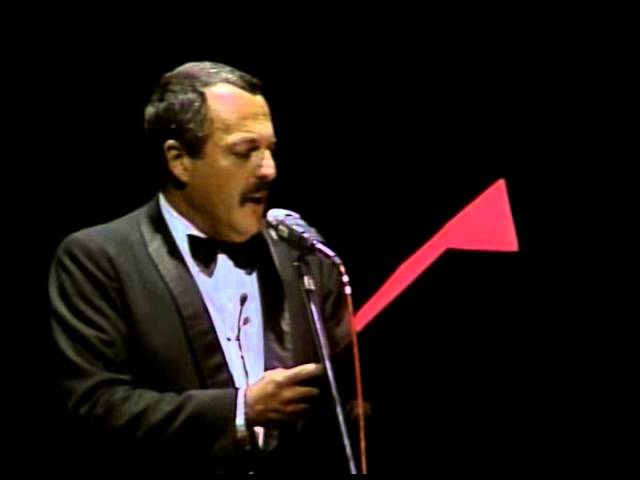
Pasemos ya directamente al humor. ¿Qué sería de Les Luthiers sin los juegos de palabras? Probablemente, el desaparecido grupo argentino musical y humorístico (les recuerdo que dejó definitivamente de actuar en 2023) constituye la cima del uso de los juegos de palabras en el humor en lengua española. El humor de Les Luthiers no se entendería sin la música, pero tampoco sin el ludolingüismo. Además de ver sus vídeos en YouTube (y de escuchar sus viejos discos de vinilo), los interesados en el tema cuentan con una contribución impagable: el libro Los juegos de Mastropiero (2007), en el que uno de los integrantes del grupo, Carlos Núñez Cortés, recopila y analiza los principales juegos de palabras usados por la banda a lo largo de toda su existencia.
El “Monólogo mal puntuado” de Les Luthiers
De Les Luthiers podríamos citar cientos de juegos de palabras (recordemos que fueron 56 años de trayectoria artística), pero valga como ejemplo su famoso “Monólogo mal puntuado” (o “mal leído”, como se llama a veces). Es uno de los números hablados más hilarantes del grupo. En él, el narrador (magistralmente interpretado originalmente por Daniel Rabinovich) lee un texto caótico donde faltan comas o puntos, provocando divertidos equívocos, confusiones de palabras y dobles sentidos a base de calambures, paranomasias o lapsus. El genial efecto cómico de esta rutina radica en cómo una simple pausa o un signo de puntuación mal ubicado cambia por completo el sentido de la frase. El narrador se traba y confunde términos constantemente, lo que resulta en párrafos absurdos y desternillantes.
He aquí su transcripción completa:
La siguiente obra del presente recital ilustra un periodo poco conocido de la juventud de Johann Sebastian Mastropiero. Todo empezó cuando un conocido crítico se resfrió… se refirió… se refirió a Mastropiero. Con esto termino… con estos términos, con es… con estos términos, claro, le falta el… términos, no le han puesto el… arriba de la “t”…no tiene el… ¡la diéresis!, no le han puesto la diéresis. Es un error de lipotimia. Mastropiero se ha creado fama de artista espiritual pero come todo… pero come de todo… pero con métodos. Con métodos pocos, claro… claros, con métodos poco claros. Podríamos llegar a admirarlo siempre. ¿Y cuándo tomaremos?... siempre y cuando tomáramos en cuenta su tenaza… su tenaz ambición, son dos palabras: “tenaza / mbición”.
En los más prestrigriosos foros internacio… en los más prestigriosos fo… prestrigiosos foros inter…. En los pestri… en los más prestigri… pestigri… prestigri… en los más famosos foros internacionales en que estuve excitado… en que estuve, he citado muchas veces, ¿eh? Muchas veces he citado el fracaso de su operación… el fracaso de su ópera “Sión y el judío era antes”… “Sión y el judío errante”, que se basaba en una vieja leyendo ebria… una vieja leyenda hebrea… ¡me di cuenta enseguida, no podía ser! Siempre dije: ¡Qué dicha!... que dicha ópera no describe con acierto los sexos, dos… los dos sexos… los éxodos de dicho pueblo, y por eso Mastropiero soportó ¿ha batido un huevo?... Soportó abatido un nuevo fracaso.
Por esos días Mastropiero enfrentó grandes problemas: chocó con la bici… con las vicisitudes más adversas ¿que le tocaron?… ji, ji, ji… que le tocaron en suerte. Vivía acostado por las dudas… vivía acosado por las deudas. Por esos tiempos conoció a los condes de Freistadt, y cuando ya no podía más sacudió a la condesa… acudió a la condesa que era la persona “¿y-doña?”… que era la persona idónea. La condesa se apiadó de él y le acostó un viejo… y le costeó un viaje a Nueva York. Allí Mastropiero compuso la pieza que escucharemos a continuación: Su célebre “Lazy Daisy”.
Aquí termina la anécdota, pero él te mató. Davía, da. Pará. Más… pero el tema todavía da para más. Esto es… todo… ¿todo? Esto es; todo… todo esto… Esto es, todo es… todo esto es… esto todo esto… ¿Qué es esto? Este seto… este s…esto es toso, toso… ese soto es eso… ese seso es soto… to… todo soso… este… ese te es de Totó o se destetó todo Teté…totó… totó… esé… ¡Ah! ¡Esto es todo!
Un idioma loable, lo hable quien lo hable
Otro interesante ejemplo de buenas prácticas ludolingüísticas en el humor lo constituye el monologuista (y escritor, guionista, mago, director de cine y muchas cosas más) español Luis Piedrahita. Su humor se caracteriza por el juego verbal y por poner el foco en lo cotidiano, en los asuntos pequeños. Del primero ya dan fe los títulos de algunos de sus libros y espectáculos: Cambiando muy poco algo pasa de estar bien escrito a mal escroto, Las amígdalas de mis amígdalas son mis amígdalas, Apocalípticamente correcto, Un cacahuete flotando en una piscina, ¿sigue siendo un fruto seco?, y, sobre todo, El castellano es un idioma loable, lo hable quien lo hable.
Termino este artículo recordando que la obra de referencia fundamental en castellano sobre los juegos de palabras es Verbalia. Juegos de palabras y esfuerzos del ingenio literario, de Márius Serra, publicada en Península en 2000. Considerada una biblia de la ludolingüística, divide los juegos de palabras en 50 tipos, clasificados, a su vez, en seis grandes grupos: de adición, de sustracción, de multiplicación, de combinación y de sustitución. Un volumen de casi 600 páginas que contiene, documentados, textos ludolingüísticos en cinco lenguas de poetas y artistas, pedagogos y publicistas, místicos, enigmistas, novelistas, etc.
Quevedo
Wordplay and Its Unfair Bad Press
By Félix Caballero
Wordplay has always suffered from a certain bad press. Many insist on calling it an "easy, simplistic resource," and there is no shortage of those who refer to it as "the lowest form" of humor or literature. Because wordplay can certainly be humor and/or literature. It can be, I stress. Obviously, sometimes it is nothing more than a (good or bad) exercise in verbal dexterity.
I (and I say this right now, so there is no doubt) am in love with wordplay. With language in general, and in particular, with its playful possibilities. Because language is one of the most playful things we have. If children and teenagers (and first and foremost, teachers) were aware of this, they would look at the Language subject at school through different eyes. As is well known, language and literature are usually taught together in school, within the same subject. Well then, the vast majority of students enjoy only literature (if they manage to enjoy it at all). They understand (more or less) that it represents fertile ground for developing creativity, but they do not see the same in language. A grave mistake. I insist that language can also be very playful and creative. To the six classic functions of language that our children and youth learn in school (referential, expressive, appellative, phatic, poetic, and metalinguistic), we should add a seventh: playful.
Of course, there will be bad comedians who use wordplay predictably, without humor, but there are also others who turn it into top-notch, high-carat humor. And the same thing happens in literature. There will be writers who use it clumsily, but in the hands of others, it becomes an aesthetic resource of the highest order. Wordplay can represent, ultimately, an extraordinary display of intelligence, wit, creativity, and what is called "thinking outside the box," due to the associations and terminological and conceptual relationships it involves—unprecedented, unusual, illogical or absurd at times, and always surprising. Whoever fails to see it this way and insists on calling it a "simplistic resource" probably lacks much intelligence or wit, or is incapable of recognizing these qualities in others.
Quevedo's Calambur
Let us look at some examples of good wordplay, starting with literature. And we begin with a classic of Spanish literature, Francisco de Quevedo, the Conceptist poet and master of amphibology. He left many examples of his linguistic wit in his writings, but perhaps the first thing that comes to mind for all of us when we talk about him in this context is the oral calambur (pun) that, according to tradition, he once dedicated to Queen Elisabeth of Bourbon, wife of Philip IV. Quevedo had bet some friends that he was brave enough to call the queen "lame" (coja), as she suffered from an obvious limp and did not like jokes about it at all. Thus, in a display of wit, cheekiness, and boldness, the writer approached Doña Isabel with a white carnation in one hand and a red rose in the other, and offered her a choice between the two flowers with the following calambur: "Entre el clavel blanco y la rosa roja, su majestad escoja" ("Between the white carnation and the red rose, Your Majesty choose" — where "escoja" sounds identical to "es coja", "is lame"). In this way, the writer won the bet and, with a clever pun, called the queen "lame" without offending her.
The calambur consists of regrouping the syllables of two or more words in a different way to completely alter their meaning. It is widely used in children's riddles and jokes to create double meanings—the kind that some tend to dismiss as "simplistic," such as the classic "oro parece, plata no es" (plátano, banana). But there are excellent ones, such as the famous "si el rey no muere, el reino muere" ("if the king does not die, the kingdom dies" — where "el reino muere" sounds like "el rey no muere") or that other one that led someone to turn Garcilaso de la Vega's beautiful line "el dulce lamentar de dos pastores" ("the sweet lament of two shepherds") into the surprising "el dulce lamen tarde dos pastores" ("two shepherds lick the sweet late").
Jumping to the 20th century, and without intending to go into too much depth, three essential names of writers fond of playing with language come to mind: the Argentine Julio Cortázar and the French writers Georges Perec and Raymond Queneau.
The Kidnapping of the "e"
The latter two belong squarely to what is known as experimental literature. From Queneau, co-founder of Oulipo and member of the College of 'Pataphysics, we must mention his Exercices de style (Exercises in Style, 1947). From Perec, we must highlight La disparition (A Void / The Disappearance, 1969), that astonishing lipogrammatic novel in which the letter "e"—the most frequent in the French language—is omitted. In its Spanish translation, they chose to avoid the letter "a", the second most common in Spanish.
With respect to Cortázar, it is enough to recall what he once said during an interview on TVE:
—"In what way would your work be amputated or mutilated if we could suddenly eliminate those aspects of your writing that might belong to that section titled 'writing understood as a game'?"
—"It would be more than mutilated. I would say it simply wouldn't exist, because since I started writing, the notion of play has been deeply identified with everything I have done—understanding play to mean the same thing children understand by it: that is, a very serious occupation (at heart, it has nothing frivolous about it). We know very well that when children play, they give their play a value far more important than the fact that their mother expects them to take a bath or eat. That, to children, does seem quite frivolous. Play, on the other hand, is a very serious thing. If I try to view myself as a writer, I feel that this childhood constant remaining within me—and I don't regret it, quite the contrary—has always determined the way things come to me and the way I subsequently try to transmit them. Making words an aesthetic event is, perhaps, one of the highest games human beings can play."
What I was telling you earlier: language also has, and very especially, a playful function.
Let us move on directly to humor. What would Les Luthiers be without wordplay? Probably, the now-defunct Argentine musical comedy group (reminding you that they permanently stopped performing in 2023) constitutes the pinnacle of the use of wordplay in Spanish-language humor. The humor of Les Luthiers would not be understood without music, but neither without recreational linguistics (ludolingüismo). In addition to watching their videos on YouTube (and listening to their old vinyl records), those interested in the subject can count on an invaluable contribution: the book Los juegos de Mastropiero (2007), in which one of the group's members, Carlos Núñez Cortés, compiles and analyzes the main wordplays used by the band throughout its entire existence.
Les Luthiers' "Badly Punctuated Monologue"
From Les Luthiers, we could cite hundreds of wordplays (let us remember that their artistic career spanned 56 years), but let their famous "Badly Punctuated Monologue" (or "badly read," as it is sometimes called) serve as an example. It is one of the group's most hilarious spoken sketches. In it, the narrator (masterfully played originally by Daniel Rabinovich) reads a chaotic text where commas or periods are missing, giving rise to amusing misunderstandings, word confusions, and ouble meanings based on puns, paronomasias, or slips of the tongue. The brilliant comic effect of this routine lies in how a simple pause or a misplaced punctuation mark completely changes the meaning of the sentence. The narrator stumbles and constantly confuses terms, resulting in absurd and side-splitting paragraphs.
Here is its full transcript:
"The next work in tonight's recital illustrates a little-known period in the youth of Johann Sebastian Mastropiero. It all started when a well-known critic caught a cold... referred to... referred to Mastropiero. With this I end... with these terms, with th... with these terms, of course, it's missing the... terms, they haven't put the... above the 't'... it doesn't have the... the diaeresis! They haven't put the diaeresis. It's a fainting error. Mastropiero has built a reputation as a spiritual artist but eats everything... but eats a bit of everything... but with methods. With few methods, of course... clear, with not-so-clear methods. We could come to admire him always. And when shall we have a drink?... provided that we took into account his pincers... his tenacious ambition—they are two words: 'tenacious / ambition'.
In the most prestri-glorious international forums... in the most prestri-glorious fo... prestri-glorious international forums... In the pestri... in the most prestri... pestrigri... pestrigri... in the most famous international forums where I was excited... where I was, I have cited many times, huh? Many times I have cited the failure of his operation... the failure of his opera 'Zion and the Jew Was Before'... 'Zion and the Wandering Jew', which was based on an old drunk legend... an old Hebrew legend... I realized right away, it couldn't be! I always said: What joy!... that said opera does not accurately describe the sexes, two... the two sexes... the exoduses of said people, and that is why Mastropiero endured—has he beaten an egg?... He endured, crestfallen, a new failure.
Around those days, Mastropiero faced great problems: he crashed into the bike... with the most adverse vicissitudes that touched him?... hee, hee, hee... that fell to his lot. He lived lying down by doubts... he lived harassed by debts. Around that time, he met the Count and Countess of Freistadt, and when he couldn't take it anymore, he shook the countess... he turned to the countess, who was the 'and-doña?' person... who was the right person. The countess took pity on him and put an old man to bed... and funded a trip for him to New York. There, Mastropiero composed the piece we will hear next: his famous 'Lazy Daisy'."
...Here ends the anecdote, but he killed tea (él te mató)... Still, ill (davía, da)... Stop (pará)... More (más)... but there is still more to the story. This is... all... all? This is; all... all this... This is, all is... all this is... this all this... What is this? This set... this s...this is cough, I cough (toso, toso)... that grove is that (soto es eso)... that brain is grove (seso es soto)... to... all bland (todo soso)... this... that tea belongs to Totó or all Teté was weaned (se destetó todo Teté)... totó... totó... that... Ah! That's all!
A Praiseworthy Language, Whoever Speaks It
Another interesting example of good recreational linguistic practices in humor is provided by the Spanish stand-up comedian (and writer, screenwriter, magician, film director, and many other things) Luis Piedrahita. His humor is characterized by wordplay and by placing the focus on the everyday, on small matters. Evidence of the former can be seen in the titles of some of his books and shows: Cambiando muy poco algo pasa de estar bien escrito a mal escroto (Changing very little, something goes from well-written to bad scrotum), Las amígdalas de mis amígdalas son mis amígdalas (The tonsils of my tonsils are my tonsils), Apocalípticamente correcto (Apocalyptically Correct), Un cacahuete flotando en una piscina, ¿sigue siendo un fruto seco? (A peanut floating in a pool, is it still a dried fruit?), and, above all, El castellano es un idioma loable, lo hable quien lo hable (Spanish is a praiseworthy language, whoever speaks it).
I conclude this article by recalling that the essential reference work in Spanish on wordplay is Verbalia. Juegos de palabras y esfuerzos del ingenio literario (Verbalia: Wordplay and Efforts of Literary Wit) by Màrius Serra, published by Península in 2000. Considered a bible of recreational linguistics, it divides wordplay into 50 types, classified, in turn, into six major groups: addition, subtraction, multiplication, combination, and substitution. It is a volume of nearly 600 pages containing documented ludolingual texts in five languages from poets and artists, educators and advertisers, mystics, puzzle creators, novelists, etc.
(This text has been translated into English by Chat GPT)