A Pepe Pelayo (1952) lo conozco desde que yo era un jovencito que seguía La Seña del Humor de Matanzas, a la que pude admirar no solo en los escenarios matanceros, sino también en otros lugares como el Teatro Karl Marx, a donde me llevó mi prima Nereida Febles.
Como siempre, el teatro estaba repleto de público que hacía colas larguísimas.
En esa ocasión, también nos encontramos a varios matanceros que venían a ver un espectáculo, en el que además de otros humoristas ilustres, estaban los queridos artistas de La Seña.
La Seña tuvo y mantiene sus fans a pesar del tiempo, que recuerdan esos momentos memorables.
Pero este texto trata de Pelayo.
Pelayo es un todoterreno del humor, un orgullo matancero y cubano en una provincia en la que destacan muchos en diferentes épocas y manifestaciones: caricaturistas, guionistas, actores y actrices, escritores...
Pelayo es de una manera u otra, todas estas cosas; pero se le agrega que es además investigador, webmaster y un teórico del humor.
Pelayo hace mucho tiempo está en Chile, pero sigue espiritualmente en Matanzas y en Cuba.
Su labor es la de un artista excepcional, que se dimensiona por todas las Américas, por parte de Europa y algunos países de África. En medio mundo ha expuesto su obra, ha sido publicado, reconocido con premios, dictado conferencias o ha sido ponente en congresos. También ha sido jurado de numerosos concursos internacionales. Es miembro de la Asociación de Directores de Concursos Internacionales; mientras sus obras son citadas en diferentes textos de maestrías y doctorados. En su currículo, también se encuentran las entrevistas a más de cien humoristas del mundo: una verdadera enciclopedia del humor contemporáneo.
Es incansable, un estudioso que hay que respetar y referenciar.
Es lo que pienso sobre Pelayo, el que estudió Ingeniero Civil en la Cujae, y es un tipo querido, admirado y respetado en el país que lo acogió y que afincado en el Sur, es auténticamente cubano.
Visceralmente cubano en cada rasgo de su obra, en su manera de pensar, hablar y sentir.
Pelayo es un tipo completo, repito; un tipo lúcido e iluminado: fundó con otros La Seña, pero después de esa trayectoria que constituye un hito del humor cubano, ha desarrollado una intensa labor como humorista gráfico, escénico, literario, como guionista, profesor, investigador, teórico y promotor. Lo mismo trabaja para niños, una zona poca explorada del humor, que para el público adulto.
Su relación con las escuelas es envidiable. Su relación con sus lectores es hermosa y sugestiva. Son innumerables las cartas que recibe sobre sus historias y personajes.
Sus diálogos teóricos históricos sobre el humor se reflejan en sus "Charlas Chaplin", que abordan variadas temáticas; pero en todos los espacios en los que dialoga, está esa mixtura de especialidades y una sabia reflexión que conjuga teoría, historia y práctica. Nunca está solo en la esquina del que observa, investiga y difunde; sino en esa simbiosis, con la creación incesante.
Pelayo tiene el honor de contar en su país de adopción con un Museo temático "El Chupacabras de Pirque", que rinde homenaje a unos de sus libros más populares.
Eso es algo excepcional para un autor vivo. Y para nosotros los matanceros es un orgullo patrio.
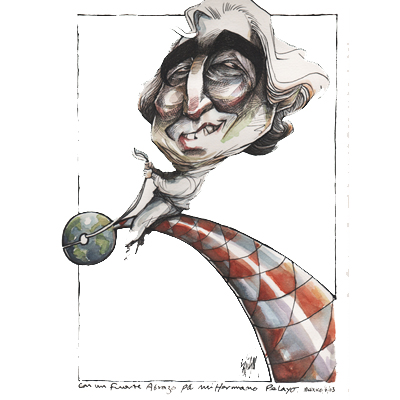
Desde allá, mantiene una columna semanal de humor gráfico La esquina de Pelayo en El melaíto villaclareño, cuya creación y sentido de recrear desde lo cómico la realidad, se la regalo como muestra en este post para que puedan admirar la obra de Pelayo, su trabajo con las líneas, los colores, la manera de crear sucesos y atmósferas, la relación entre texto y dibujo.
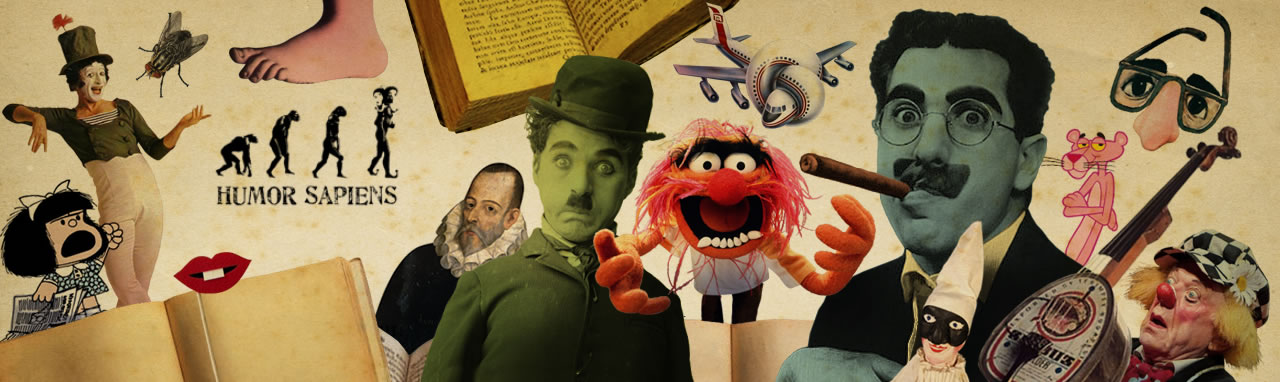
Pepe es el creador con su hijo Alex Pelayo del sitio Web Humorsapiens, que constituye un viaje creativo a la reflexión crítica, a enaltecer el humor inteligente, el legado histórico de los que nos antecedieron en un diálogo contemporáneo; pero que también entrega dos premios anuales con el mismo nombre,c a personas o instituciones, que contribuyan a la promoción del humor a nivel mundial.
Hay más aspectos que apuntar del trabajo de Pelayo, pero quiero detenerme en dos de sus últimos libros que he tenido el placer de leer. Y esos dos libros, entre muchos otros que rebasan los ochenta, son dos joyas que merecen reconocimiento por su importancia, y constituyen parte de sus aportes teóricos.
El primero que llegó a mis manos fue "Memoria biográfica del humor", un texto esencial e imprescindible para la cultura cubana, y para ubicarnos como nación en el panorama internacional. Un libro que rescata y difunde figuras esenciales a través de síntesis biográficas, entrevistas y otros materiales, que propician a interesados en el tema, estudiar y comprender el fenómeno humorístico en la nación cubana, así como su significación cultural.
El segundo, que en realidad había leído antes de convertirse en libro es "La Seña del Humor de Matanzas. Mi intento de entenderla", el homenaje más auténtico a la agrupación que revolucionó el humor en la década del ochenta, analizado desde la perspectiva de su fundador, convertido en un estudioso del humor, pero que interroga su génesis y evolución. Este libro es en realidad, aunque Pelayo afirme que es un intento, una aguda interrogante a la historia del grupo, un estudio sociológico, teoría y diálogo desde la madurez intelectual de un hombre, que pregunta con agudeza crítica a su propia creación, y que realiza un aporte singular a la historia del humor cubano. Es significativo que es un libro sobre el humor escrito con rigor investigativo; pero desde el desenfado, lo irónico, el juego propio de un escritor que apela al humor, y nos hace sonreír.
Este libro es también un homenaje a Matanzas su ciudad natal, y la de ese espectador que sigue de muchas maneras a Pelayo, pero también a ese recuerdo de identidad que constituye La Seña del Humor en la ciudad que la vio nacer, y que ha soñado el hecho imposible de volver a verlos de nuevo juntos, sobre el escenario del Teatro Sauto.
Hay más cosas que relatar, reflexionar, sobre Pepe Pelayo. Quizás sobre sus innumerables sueños, su capacidad de trabajo y de promoción, su libertad creativa; pero sirva este texto para escribir sobre sus indudables aportes al humor cubano. Al humor del mundo, ese que lo ha acompañado siempre como bitácora, y que le ha permitido "construir" su gran creación: una obra humorística de indudables valores universales.

By Ulises Rodríguez Febles
I have known Pepe Pelayo (1952) since I was a young man following La Seña del Humor de Matanzas, which I had the chance to admire not only on Matanzas stages, but also in other venues such as the Teatro Karl Marx, where my cousin Nereida Febles took me.
As always, the theater was packed with audiences forming very long lines.
On that occasion, we also ran into several people from Matanzas who had come to see a show featuring, among other distinguished comedians, the beloved artists of La Seña.
La Seña had and still has its fans despite the passage of time — fans who fondly remember those memorable moments.
But this text is about Pelayo.
Pelayo is an all-terrain figure of humor, a source of pride for Matanzas and Cuba alike, in a province that has seen many stand out across different eras and fields: caricaturists, scriptwriters, actors and actresses, writers...
Pelayo is, in one way or another, all of these things; but he is also a researcher, webmaster, and theorist of humor.
Pelayo has been in Chile for a long time, yet he remains spiritually in Matanzas and in Cuba.
His work is that of an exceptional artist, whose reach extends across the Americas, parts of Europe, and several African countries. Across half the world he has exhibited his work, been published, received awards, delivered lectures, and served as a speaker at conferences. He has also served as a judge in numerous international competitions. He is a member of the Association of Directors of International Competitions, while his works are cited in various master's and doctoral theses. His résumé also includes interviews with more than a hundred humorists from around the world — a true encyclopedia of contemporary humor.
He is tireless, a scholar who deserves respect and recognition.
That is what I think of Pelayo — a man who studied Civil Engineering at CUJAE, someone beloved, admired, and respected in the country that welcomed him, and who, rooted in the South, is authentically Cuban.
Viscerally Cuban in every aspect of his work, in his way of thinking, speaking, and feeling.
Pelayo is a complete person, I say again — a lucid and enlightened individual: he co-founded La Seña, but beyond that milestone in Cuban humor, he has gone on to develop an intense body of work as a graphic, stage, and literary humorist, as well as a scriptwriter, teacher, researcher, theorist, and promoter. He works equally for children — a largely unexplored area of humor — and for adult audiences.
His relationship with schools is enviable. His relationship with his readers is beautiful and enriching. The letters he receives about his stories and characters are countless.
His theoretical and historical dialogues on humor are reflected in his "Charlas Chaplin" series, which covers a wide range of topics; but in every space where he engages in dialogue, one finds that blend of specialties and a wise reflection that unites theory, history, and practice. He never stands alone in the corner of the observer, the researcher, and the disseminator — but rather in that symbiosis with ceaseless creation.
Pelayo has the distinction of having, in his adopted country, a thematic museum called "El Chupacabras de Pirque," which pays tribute to one of his most popular books.
That is something exceptional for a living author. And for us from Matanzas, it is a source of regional pride.
From there, he maintains a weekly graphic humor column, La esquina de Pelayo, in the Villaclaran publication El melaíto, whose creative spirit and sense of reimagining reality through comedy I share here as a sample, so that readers may admire Pelayo's work — his handling of lines and colors, his way of creating scenes and atmospheres, the relationship between text and image.
Pepe is the creator, together with his son Alex Pelayo, of the website Humorsapiens, which is a creative journey into critical reflection, celebrating intelligent humor and the historical legacy of those who came before us in a contemporary dialogue — and which also presents two annual awards of the same name to individuals or institutions that contribute to the promotion of humor worldwide.
There are more aspects of Pelayo's work worth noting, but I want to focus on two of his most recent books that I have had the pleasure of reading. These two books, among the more than eighty he has authored, are gems that deserve recognition for their importance and form part of his theoretical contributions.
The first to reach my hands was Memoria biográfica del humor — an essential and indispensable text for Cuban culture, and for situating ourselves as a nation within the international landscape. A book that rescues and brings to light key figures through biographical summaries, interviews, and other materials that allow those interested in the subject to study and understand the phenomenon of humor in Cuba, as well as its cultural significance.
The second, which I had actually read before it became a book, is La Seña del Humor de Matanzas. Mi intento de entenderla — the most authentic tribute to the group that revolutionized humor in the 1980s, analyzed from the perspective of one of its founders, now a scholar of humor, yet one who questions its genesis and evolution. This book is, in truth — despite Pelayo's claim that it is merely an attempt — a sharp interrogation of the group's history, a sociological study, a work of theory and dialogue born from the intellectual maturity of a man who poses incisive critical questions about his own creation, making a singular contribution to the history of Cuban humor. It is significant that this is a book about humor written with scholarly rigor, yet with the ease, irony, and playfulness of a writer who draws on humor itself and makes us smile.
This book is also a tribute to Matanzas, his birthplace, and to that spectator who continues to follow Pelayo in many ways — as well as to that sense of identity that La Seña del Humor represents in the city where it was born, a city that has dreamed the impossible dream of seeing them together again on the stage of the Teatro Sauto.
There is more to recount and reflect upon about Pepe Pelayo — perhaps about his countless dreams, his capacity for work and promotion, his creative freedom. But may this text stand as a tribute to his undeniable contributions to Cuban humor. To the humor of the world — that which has always accompanied him as a compass, and which has allowed him to "construct" his great creation: a body of humorous work of unquestionable universal value.
(This text has been translated into English by ChatGPT)