Turquía es un país donde el arte del dibujo humorístico está muy desarrollado; cuenta con numerosos concursos internacionales y artistas magníficos con los que mantengo contacto frecuente para su participación en mis eventos. Sin embargo, pocos pueden ayudarme a investigar los museos y casas-museo del humor que puedan existir en el país. Por consiguiente, gran parte de lo que escribo aquí se basa en información encontrada en internet: material que podría ser incorrecto o estar desactualizado...
Visité Estambul por primera vez en 1992 para una reunión de editores de *WittyWorld* (organizada por los fallecidos John Lent y Joe Szabo). Intenté que me mostraran el Museo del Humor de Estambul, pero sus respuestas fueron siempre vagas y no logré visitar nada más que la sede de la Asociación de Caricaturistas (escondida entre las tiendas de la famosa y antigua Cisterna de la Mezquita).
En 2010, regresé a Estambul como invitado a la celebración del 30.º aniversario del Concurso de Caricaturas Nasreddin Hodja y finalmente visité el *Karikatür ve Mizah Müzesi* (Museo de la Caricatura y el Humor), ubicado en un edificio recién inaugurado. Resultó que las fotos que había encontrado en internet —que mostraban un edificio antiguo como sede del *Karikatür ve Mizah Müzesi*— correspondían en realidad a un intento anterior de establecer el museo. Aquel esfuerzo inicial tuvo lugar en 1975 (en el distrito de Tepebaşı) como una iniciativa conjunta entre el Ayuntamiento de Estambul y la Asociación de Caricaturistas. Debido a problemas estructurales del edificio, cerró en 1980. Volvió a abrir en 1989 en un nuevo edificio dentro del Complejo Gazanferağa (en Saraçhanebaşı). Cuando la agencia de la Capital Europea de la Cultura se instaló en el Complejo Gazanferağa en 2009, el museo fue cerrado y trasladado al distrito de Tepebaşı-Beyoğlu en 2010. ¿Fue ese el que visité?
En cualquier caso, actualmente existe un museo en activo en Estambul, aunque su director y otros artistas consultados al respecto prefieren no hablar de él. Su sitio web afirma: «El Museo de la Caricatura y el Humor conserva una colección cultural que constituye un testimonio claro de nuestra historia social. Es un museo vivo que evoluciona constantemente en consonancia con las prácticas museísticas contemporáneas. Sus variadas e interesantes salas de exposición, junto con su biblioteca y archivo del humor —en continua expansión—, bien merecen una visita. Además, los visitantes pueden participar en un original taller de grabado bajo la dirección de un especialista. El museo también organiza eventos como conferencias, mesas redondas, conciertos íntimos y proyecciones de vídeo.
El museo cuenta con dos tipos de exposiciones complementarias. Exposición permanente: esta sección recorre la historia de la caricatura turca desde sus orígenes hasta la actualidad. Exposiciones temporales: esta sección exhibe obras de artistas tanto locales como internacionales, con la inauguración de al menos una nueva exposición cada mes».
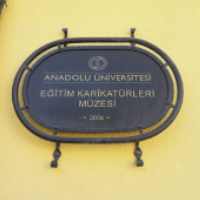
Lejos del cosmopolita centro turístico de Estambul —concretamente en la ciudad de Eskişehir, en el centro de Turquía— se encuentra otro museo dedicado al arte de la caricatura. Se trata de un caso interesante (que recuerda a ejemplos existentes en la India), ya que el museo está vinculado a la Universidad de Anadolu, en Eskişehir, lo que sitúa el arte de la caricatura en el centro de la investigación universitaria. Aquí, la prioridad no es simplemente formar caricaturistas, sino cultivar mentes abiertas al humor y a la democracia, capaces de un pensamiento irreverente y consciente.
Según lo que encontré en línea: "En el 40.º aniversario de la fundación de la universidad, Turhan Selçuk —un reconocido caricaturista turco galardonado con un doctorado honoris causa por sus contribuciones al campo— declaró que 'las caricaturas son la forma de arte más eficaz'. Dado que también consideramos la caricatura como una forma de arte y creemos que este género tiene cabida en el ámbito académico, fundamos el Centro de Investigación del Arte de la Caricatura en 2002. El museo se creó mediante la restauración y renovación de un edificio de madera —antiguamente una residencia privada— que, según se cree, fue construido a principios del siglo XX. Cuenta con dos plantas y una superficie total de 265 metros cuadrados. La estructura es típica de las casas del distrito de Odunpazarı, en Eskişehir".
Afortunadamente, en esta ocasión logramos obtener una respuesta de los responsables.
O. M. Sousa: ¿Cuándo se creó su museo?
Atila Özer: El Museo de Arte de la Caricatura de la Universidad de Anadolu se fundó el 17 de diciembre de 2004.
O. M. Sousa: ¿Quién lo hizo? ¿Alguna organización, un coleccionista de arte o algún artista?
Atila Özer: Fue creado por el rector de la Universidad de Anadolu, el profesor doctor Engin Ataç.
O. M. Sousa: ¿Quién fue el primer director? ¿Un artista, un especialista en la historia del humor? ¿Sigue siendo el mismo director actualmente?
Atila Özer: El primer director del museo fue el profesor Atila Özer. Él es caricaturista y sigue ocupando el cargo de director.
O. M. Sousa: ¿El museo surgió a partir de una colección preexistente, o esta se formó posteriormente mediante donaciones o a través de un festival?
Atila Özer: El museo se fundó con los siguientes objetivos: exhibir caricaturas turcas y de todo el mundo, dar a conocer a los caricaturistas turcos que mantuvieron viva la edad de oro de este arte en Turquía, y poner a disposición de los investigadores un archivo y una biblioteca especializados en caricaturas. La colección del museo se ha ido reuniendo a partir de exposiciones nacionales e internacionales.
O. M. Sousa - ¿Es un museo temático? ¿Cómo creció su colección? ¿Cuántas piezas tienen y a qué períodos pertenecen? ¿Es una colección nacional o internacional?
Atila Özer - Nuestro museo es un museo temático. En el museo hay 959 caricaturas, 1236 libros y 700 revistas de artistas extranjeros y turcos.
O. M. Sousa - ¿Hay algún otro museo de humor gráfico en su ciudad? ¿En su país?
Atila Özer - En Turquía, hay otro museo de humor y caricatura en Estambul.
O. M. Sousa - ¿Conoce algún otro museo de caricatura y humor gráfico en el mundo? ¿Qué tipo de relación tiene con ellos?
Atila Özer - Estimamos que hay entre 30 y 40 museos de caricatura y humor en el mundo. Queremos establecer contacto con algunos de ellos.
O. M. Sousa - ¿Quién financia su museo?
Atila Özer - El museo está financiado por la Universidad de Anadolu.
O. M. Sousa - ¿Cuentan con personal especializado en el tratamiento de papel? ¿Tienen algún investigador trabajando para el museo?
Atila Özer - No hay personal con formación específica en esa área.
O. M. Sousa - ¿Tienen exposiciones permanentes y temporales? ¿Cuántas al año?
Atila Özer - En el museo organizamos exposiciones permanentes y temporales. Realizamos una media de 8 a 10 exposiciones temporales al año.
O. M. Sousa - ¿Cambia su exposición permanente según el material del archivo o no?
Atila Özer - No hemos realizado cambios en nuestras exposiciones permanentes, aunque lo estamos considerando.
O. M. Sousa - ¿Suelen publicar un catálogo para la exposición? ¿O editar libros teóricos sobre caricatura? ¿O algún tipo de *merchandising*? ¿Qué hacen?
Atila Özer - Publicamos un catálogo para algunas de las exposiciones.
O. M. Sousa - ¿Existe algún festival o concurso vinculado a su museo? ¿Qué importancia tiene el festival para el museo?
Atila Özer - Nuestro museo no organiza festivales, pero a veces sí organizamos concursos.
O. M. Sousa - ¿Participan los artistas en la vida del museo? ¿De qué manera?
Atila Özer - Los caricaturistas participan en las exposiciones de nuestro museo.
O. M. Sousa - ¿Cómo reacciona el público? ¿Cuántos visitantes reciben al año? ¿Tienen un público específico? ¿Nacional o también extranjero?
Atila Özer - Nuestro museo tiene apenas cinco años de antigüedad. Por eso, la gente aún no nos conoce lo suficiente. Recibimos unos 1000 visitantes al mes y 12 000 al año. El número total de visitantes hasta la fecha es de 50 000, de los cuales el 10 % son extranjeros.
O. M. Sousa - ¿Qué tipo de relación mantiene el museo con las autoridades? ¿Valoran los políticos este tipo de museos?
Atila Özer - No hemos sondeado la opinión de los políticos sobre nuestro museo. Los políticos locales asisten a las inauguraciones de las exposiciones y nos expresan su aprecio.
O. M. Sousa - ¿Cómo perciben su museo los demás museos nacionales? ¿Forma parte del circuito de museos nacionales o es independiente? ¿Se le considera un museo de arte? ¿Un museo etnográfico, de arte popular o político...?
Atila Özer - Los otros museos (de arqueología, etnografía, etc.) perciben el nuestro como un museo de arte.
O. M. Sousa - ¿Cómo abordan el arte del humor? ¿Percibe diferencias de humor dentro de su colección? ¿Refleja la evolución artística del país? ¿Ofrece una imagen general de la historia del país? ¿O es simplemente un espacio pedagógico y divertido?
Atila Özer - El arte del humor es muy común en nuestro país; es un arte muy apreciado por la gente. No busca solo hacer reír, sino también invitar a la reflexión mientras se ríe.
O. M. Sousa – Pero, ¿qué debe ser un Museo del Humor? ¿Un depósito de obras basado en una concepción estética de la evolución de este arte? ¿O debe ser un museo con un carácter social y psicológico —como un museo histórico de un país o de un continente—, pero abordado de manera irreverente e innovadora? ¿Debe ser un espacio para exposiciones o actividades pedagógicas, para la introspección política y social? ¿Debe ser una escuela de democracia? ¿Debe abarcar la interdisciplinariedad (¿cómo?) o limitarse a un campo específico, como el del dibujo humorístico?
Atila Özer – Un museo del humor debe reflejar el humor del país que alberga las obras estéticas y artísticas.
O. M. Sousa – ¿Por qué hay tan pocos museos del humor en el mundo?
Atila Özer – Hay muy pocos museos del humor en el mundo. Esto se debe a que la historia de este arte no es muy antigua. El arte de la caricatura surgió en Italia en el siglo XVII. En Turquía comenzó más tarde, en 1867.

Abadolu

Estambul

Estambul
Humor Museums Around the World: Turkey
By: Osvaldo Macedo de Sousa
Turkey is a country where the art of humorous drawing is highly developed, boasting numerous international contests and magnificent artists with whom I am in frequent contact regarding participation in my events. However, few are available to assist me in researching the humor museums and house-museums that may exist in the country. Consequently, most of what I am writing here is based on information found online—material that might be incorrect or outdated...
I first visited Istanbul in 1992 for a meeting of *WittyWorld* editors (organized by the late John Lent and Joe Szabo). I tried to get them to show me the Istanbul Humor Museum, but their answers were always vague, and I was unable to visit anything other than the Cartoonists' Association headquarters (tucked away among the shops at the famous, ancient Mosque Cistern).
In 2010, I returned to Istanbul as a guest for the 30th-anniversary celebration of the Nasreddin Hodja Cartoon Contest and finally visited the *Karikatür ve Mizah Müzesi* (Cartoon and Humor Museum) in a newly opened building. It turned out that the photos I had found online—showing an ancient building as the home of the *Karikatür ve Mizah Müzesi*—actually depicted an earlier attempt to establish the museum. That initial effort took place in 1975 (in the Tepebaşı district) as a joint initiative between the Istanbul Municipality and the Cartoonists' Association. Due to structural issues with the building, it closed in 1980. It re-emerged in 1989 in a new building within the Gazanferağa Complex (in Saraçhanebaşı). When the European Capital of Culture agency moved into the Gazanferağa Complex in 2009, the museum was closed and relocated to the Tepebaşı–Beyoğlu district in 2010. Was that the one I visited?
In any case, there is currently an active museum in Istanbul, even though its director and other artists contacted about it prefer not to discuss it. Its website states: "The Museum of Caricature and Humor preserves a cultural collection that serves as a clear record of our social history. It is a living museum that constantly evolves in line with contemporary museological practices. Its varied and interesting exhibition halls, along with its ever-expanding Humor Library and Archive, are well worth a visit. Furthermore, visitors can participate in an original printmaking workshop under the guidance of a specialist. The museum also hosts events such as lectures, panel discussions, intimate concerts, and video screenings.
The museum features two complementary types of exhibitions. Permanent exhibition: This section chronicles the history of Turkish caricature from its origins to the present day. Temporary exhibitions: This section showcases works by both local and international artists, with at least one new exhibition opening each month."
Far from Istanbul’s cosmopolitan tourist hub—specifically in the city of Eskişehir in central Turkey—lies another museum dedicated to the art of the cartoon. This is an interesting case (reminiscent of examples found in India) because the museum is affiliated with Anadolu University in Eskişehir, placing the art of the cartoon at the heart of university research. Here, the priority is not merely training cartoonists, but rather cultivating minds that are open to humor and democracy, and capable of irreverent, conscious thought.
According to what I found online, "On the 40th anniversary of the university's founding, Turhan Selçuk—a renowned Turkish cartoonist awarded an honorary doctorate for his contributions to the field—stated that 'caricatures are the most effective art form.' As we also regard caricatures as an art form and believe that the art of cartooning belongs in academia, we established the Caricature Art Research Center in 2002. The museum was created through the restoration and renovation of a wooden building—formerly a private residence—believed to have been built in the early 1900s. It spans two floors and has a total area of 265 square meters. The structure is a typical house from the Odunpazarı district of Eskişehir."
Fortunately, in this instance, we managed to get a response from those in charge.
O. M.Sousa - When was created your Museum?
Atila Özer - Anadolu University Museum of Cartoon Art was established on 17 December 2004.
O. M.Sousa - Who did it? Any organization, any art collector, or any artist?
Atila Özer - The establishment is performed by Rector of the Anadolu University Prof. Dr. Engin ATAÇ.
O. M.Sousa - Who is the first Director? One artist, one history of humour’s specialist? In this moment is the same director?
Atila Özer - First director of Museum is Prof. Atila ÖZER. He is an cartoonist and he is still the director.
O. M.Sousa - The Museum is born because one collection or this collection is born after with offers, with one Festival?
Atila Özer - The Museum is established for: to exhibit Turkish and world cartoons, to introduce the Turkish cartoonists who kept alive the golden age of Turkish cartoon art, to present researchers with creating a cartoon archive and cartoon library. The Museum’s collection is collected from national and international exhibitions.
O. M.Sousa - Is it a thematic Museum? How did your collection grow? How many pieces do you have and which periods are they from? Is it a national or an international collection?
Atila Özer - Our Museum is a thematic museum. In museum, there are 959 cartoons, 1236 books and 700 magazines from foreign and Turkish artists.
O. M.Sousa - Are there any other graphic humor museum in your city? In your Country?
Atila Özer - In Turkey, there are one more humour and cartoon museum in İstanbul.
O. M.Sousa - Do you know any other cartoon and Graphic humor Museum around the world? What kind of connection do you have with them?
Atila Özer - We guess there are about 30-40 cartoon and humour museums in the world. We want to communicate some of them.
O. M.Sousa - Who is financing your Museum?
Atila Özer - The Museum is financed by Anadolu University.
O. M.Sousa - Do you have any personnel specialized in paper treatment? Do you have any investigator working for the Museum?
Atila Özer - There are no any staff that specially educated.
O. M.Sousa - Do you have permanent and temporary exhibition ? How many each year?
Atila Özer - In museum we open permanent and temporary exhibitions. Temporary exhibitions each year on average 8-10.
O. M.Sousa - Is your permanent exhibition changing according to the material on file, or not?
Atila Özer - We didn’t do any changes in our permanent exhibitions. But we think.
O. M.Sousa - Do you usually publish a catalogue for the exhibition? Or edit theorical books about cartoon/caricature? Or any kind of merchandising? What?
Atila Özer - We publish a catalogue for some of the exhibitions.
O. M.Sousa - Is there any Festival or Contest connected with your Museum? How important is the Festival to your Museum?
Atila Özer - There are no festivals that our museum’s organized, but we sometimes arrange contests.
O. M.Sousa - Do the artists participate in Museum’s life? How?
Atila Özer - Cartoonist participate exhibitions in our museum.
O. M.Sousa - How does the public react? How many visitors each year? Do you have a specific public? National or also foreignness?
Atila Özer - Our museum is still 5 years old. Because of this, people didn’t know us adequately. We entertained about 1000 visitors for a month and 12000 visitors for a year. Total number of visitors to this day is 50.000. But 10 percent of these are foreign nationality visitors.
O. M.Sousa - What kind of relationship does your Museum have with the power? Do the politicians appreciate this kind of Museums?
Atila Özer - We didn’t investigate politicians opinion about our museum. Local politicians are attends the openings of exhibitions, and say their appreciate to us.
O. M.Sousa - How is your Museum see by others National Museums? Is it among the national museums circuit or is it independent? Is it considered an art Museum? An Ethnographic, Popular or Political Museum…?
Atila Özer - Other museums (archeology, ethnography, etc..), are perceived as an art museum to our museum.
O. M.Sousa - How do you face the art of humor? Do you fell any humor differences among your collection? Is it a reposition of your country’s art evolution? Does it give an general image of your country’s history? Or is it just a funny pedagogical space?
Atila Özer - Turkish art of humor is very common art in our country, it is an art loved by the people. Not only to give laugh to people, it intends to think when you laugh.
O. M.Sousa - But what must be an Humor Museum? A deposit of pieces in an aesthetic conception of the evolution of thus art; or must be a Museum with a social an psychological mark, as a historical museum of a country, of a continent in an irreverent and innovating way? Must it be a house of exhibitions or pedagogical activities, of political and social introspection? Must be a school of democracy? Must it embrace the interdisciplinarity (how?), restrain itself to a specific field, like the graphic???
Atila Özer - Humor Museum; aesthetic and artistic works have also hosted their own country must reflect the humor.
O. M.Sousa - Why are there so few Humor Museums around the world?
Atila Özer - There are very few humour museums in the world. It’s so because, the history of this art don’t go back much. Cartoon art; began in Italy on 17th century. Turkey began more after in 1867.