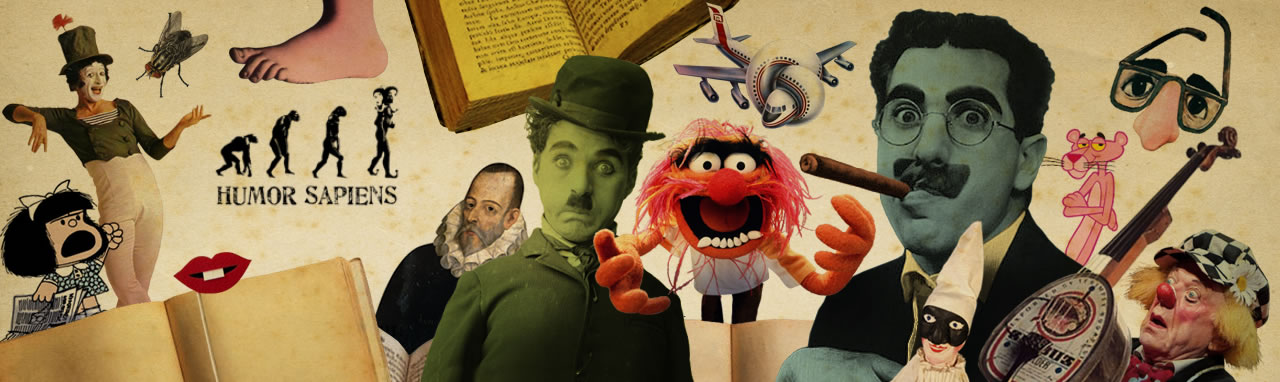
Llevo muchos años estudiando, practicando y reflexionando sobre el humor. He publicado sobre el tema, he presentado mis ideas en congresos internacionales y he impartido charlas en distintos espacios. A esa propuesta teórica la llamé Teoría Humor Sapiens. No pretendo que todos estén de acuerdo con ella, pero sí que se entienda lo que sostengo y por qué lo sostengo.
Y hay una cuestión que me sigue llamando la atención: cada cierto tiempo encuentro opiniones que me hacen preguntarme si estamos hablando de lo mismo cuando hablamos de humor.
Por ejemplo, hay quienes sostienen que una obra puede ser humor gráfico aunque no tenga humor. También me encuentro con quienes consideran que el humor blanco es una especie de entretenimiento menor, prescindible, porque lo verdaderamente valioso sería el humor profundo, intelectual, crítico o de mayor elaboración. Y, por otra parte, abundan las definiciones del humor que parecen depender exclusivamente del tipo de humor que hace quien las formula.
No pretendo resolver aquí todos los desacuerdos teóricos que existen en este campo. Pero sí quiero explicar por qué, desde mi punto de vista, algunas de esas afirmaciones no se sostienen.
Primero, pongámonos de acuerdo
Uno de los problemas es que utilizamos la palabra humor para referirnos a fenómenos diferentes. Decimos que alguien tiene sentido del humor, que está de buen o mal humor, que hace humor o que una obra pertenece al género humorístico. También se estudia el humor a partir de la risa, como si fueran fenómenos equivalentes.
Pero no lo son necesariamente.
Nos reímos por cosquillas, nervios, vergüenza, alivio y muchas otras razones. Por tanto, la risa no demuestra por sí sola que haya habido humor. Y tampoco hace falta una carcajada para que exista: a veces basta una sonrisa, incluso esa sonrisa interior que no llega a manifestarse en el rostro.
En mi propuesta teórica distingo entre lo cómico y el humor. Lo cómico es el proceso mediante el cual percibimos una incongruencia, la interpretamos de manera lúdica y experimentamos un placer específico. El humor, en cambio, es la expresión de lo cómico: la comunicación intencional de aquello que se ha concebido para provocar esa experiencia en otra persona.
Esta distinción puede parecer demasiado sutil, pero veamos un ejemplo que utilizó Henri Bergson.
Un hombre camina por la calle, tropieza, pierde el equilibrio, hace unas figuras extrañas en el aire y, finalmente, consigue enderezarse y continúa su camino. Alguien lo observa desde una ventana y se ríe. El hombre no se ha hecho daño, pero su manera de recuperar el equilibrio resulta inesperada y graciosa.
¿Hubo humor? Según mi planteamiento, no. Hubo un hecho cómico que desencadenó el proceso cómico en el observador. El hombre no había tropezado para hacer reír a nadie.
Ahora imaginemos que ese mismo tropiezo lo representa un actor en un escenario, lo ejecuta un personaje en una película o lo describe un escritor con intención humorística. Si el espectador o lector experimenta el placer cómico que se buscaba provocar, entonces se ha concretado la comunicación del humor.
Algo parecido ocurre cuando alguien conversa con nosotros en la cola de un banco y pronuncia mal una palabra sin querer. Podemos reírnos, pero esa equivocación accidental no se convierte automáticamente en humor. La incongruencia nos ha provocado comicidad; el hablante no estaba intentando comunicarnos humor.
La intención, por supuesto, tampoco garantiza el resultado. A los humoristas nos sucede constantemente: creemos haber creado algo gracioso, lo presentamos al público y no se ríe nadie. La intención estaba, pero la comunicación humorística no se concretó.
Esta distinción es uno de los fundamentos de mi teoría. Sé que no es la única manera de definir el humor, pero es la que propongo y la que utilizo para examinar estas cuestiones.
Entonces, ¿qué es el humor gráfico?
El propio nombre del género nos plantea una exigencia doble: humor gráfico. Para que una obra pertenezca a él, debe cumplir con ambas condiciones. Puede haber humor que no sea gráfico —un chiste contado oralmente, una escena teatral o una situación cómica representada en vivo— y puede haber obras gráficas que no tengan humor alguno: una ilustración dramática, un afiche publicitario, una serigrafía artística o un anuncio comercial. Son gráficos, sí, pero no necesariamente humorísticos.
Parece una obviedad, pero vale la pena detenerse en ella. Si aceptamos que una obra puede ser gráfica sin ser humorística, ¿por qué habríamos de llamarla humor gráfico cuando no contiene comicidad? La cuestión, por supuesto, es determinar qué entendemos por humor. Y ahí es donde empieza el verdadero debate.
Si aceptamos que el humor es la expresión de lo cómico, me cuesta entender que se considere humor gráfico una obra que no contiene ningún componente cómico.
No estoy diciendo que una obra de humor gráfico tenga que provocar carcajadas. Tampoco que deba ser superficial, ingenua o carente de contenido. Puede ser crítica, amarga, dramática, reflexiva, emotiva e incluso triste. Puede denunciar una injusticia, cuestionar una costumbre o hacernos pensar en un asunto complejo.
La comicidad no tiene por qué ser el elemento dominante. Puede ser mínima, estar mezclada con la emoción o funcionar como una puerta de entrada a una reflexión más profunda. Pero, desde mi concepción, algún componente cómico debe existir. Si no lo hay, ¿por qué llamarlo humor?
Aquí aparece la cuestión de la llamada sonrisa interior. Una obra puede provocarnos una satisfacción intelectual, una emoción estética, ternura o tristeza sin que experimentemos placer cómico alguno. No toda sonrisa es humor, del mismo modo que no toda risa lo es.
Lo que importa no es la intensidad de la respuesta ni que esta sea visible. Lo importante es su naturaleza: que exista una incongruencia concebida para ser comunicada humorísticamente y que el receptor la procese de manera cómica.
Si una obra no provoca esa experiencia en nadie, hasta donde podemos saberlo, podremos reconocer su valor artístico, su fuerza crítica o su capacidad para conmover. Pero, de acuerdo con mi definición, no se habrá concretado en ella la comunicación del humor.
No confundamos el medio con lo que contiene
En este universo también encuentro confusiones más prácticas.
He visto convocatorias de concursos internacionales que se anuncian como concursos de humor gráfico, pero que no aceptan (o premian) caricaturas personales, fotografías, collages y otras modalidades. No tengo nada contra que un concurso establezca esas restricciones. Cada organizador puede decidir qué obras admite. El problema es llamar humor gráfico a una categoría de participación que, en realidad, se limita a una de sus modalidades.
Si solo se admiten caricaturas, ¿no sería más preciso convocar un concurso de caricaturas?
La confusión aparece también cuando se identifica el humor gráfico exclusivamente con el dibujo. Una obra dibujada no es necesariamente humorística. Y un fotomontaje puede serlo perfectamente. La técnica utilizada no determina por sí misma la naturaleza humorística de la obra.
No es un asunto menor de nomenclatura. Las categorías sirven para entendernos y para delimitar aquello de lo que estamos hablando. Si confundimos una modalidad particular con todo un género, terminamos reduciendo innecesariamente su alcance.
Y ya que hablo de caricaturas, quiero detenerme un momento en lo que entiendo por caricatura y por parodia.
Para mí, la parodia es una imitación artística que exagera o distorsiona una obra, un personaje, un género o un suceso con intención humorística. Puede incluir crítica, denuncia o reflexión, pero esos propósitos no eliminan su componente cómico. Si no hay ni un mínimo de comicidad, no la considero parodia en el sentido que estoy defendiendo.
La caricatura es, para mí, una forma extrema de esa operación paródica aplicada a la representación. Se exageran o distorsionan rasgos físicos, psicológicos o de conducta y se crea una incongruencia con potencial cómico. Por eso considero que la caricatura lleva implícita una intención humorística, aunque su autor declare que persigue otros objetivos.
Sé que esta posición puede chocar con la de colegas que consideran que existen caricaturas no humorísticas. Por ejemplo, caricaturas realizadas para homenajear a una persona conocida, sin intención de reírse de ella ni de provocar la risa. Entiendo el propósito del homenaje, pero no comparto que eso resuelva la cuestión.
Si se quiere homenajear a alguien mediante una representación fiel, puede hacerse un retrato. Si se elige la caricatura, se recurre a la exageración y a la distorsión (aunque sea mínima) y con ello se introduce una incongruencia que puede producir comicidad, se busque o no.
Ahora bien, aquí debo hacer una distinción importante. Imaginemos que el autor dibuja esa caricatura únicamente para homenajear al personaje, sin intención de comunicar humor. Un receptor puede percibir la incongruencia y experimentar placer cómico. En ese caso hay comicidad, pero no necesariamente humor, porque el autor no pretendió comunicarla. La obra pudo cumplir su propósito de homenaje y, a la vez, provocar un efecto cómico no buscado.
Distinto sería el caso de una caricatura concebida con intención humorística que no provoca placer cómico alguno en ningún receptor. Puede ser muy crítica, denunciar una injusticia y suscitar una profunda reflexión, pero, desde mi teoría, habría fracasado como humor. Es como el chiste que cuento ante un público y no consigue provocar risa ni sonrisa interior. El chiste sigue existiendo, pero la comunicación humorística no se concretó.
Por supuesto, no podemos saber lo que experimenta toda la humanidad ante una obra. Por eso, cuando digo que una caricatura no provocó placer cómico, me refiero a que no lo provocó en ningún receptor del que tengamos conocimiento. Si una sola persona experimenta auténtico placer cómico a partir de la incongruencia de la obra, el resultado ya es diferente.
No afirmo que toda caricatura tenga que hacer reír a todo el mundo. Afirmo que la intención humorística no garantiza el resultado y que, para hablar de humor concretado, tiene que producirse esa experiencia cómica en alguien.
Algo parecido sucede con la historieta. La palabra inglesa comic se utiliza para designar ese medio narrativo, aunque muchas de sus historias no tengan nada de cómico. Las aventuras de superhéroes, por ejemplo, pueden ser dramáticas, épicas o trágicas. Pertenecen al mundo de la historieta o del cómic, pero no por eso pertenecen al humor gráfico.
A veces he pensado que sería conveniente hablar de historieta cómica cuando queremos referirnos específicamente a la historieta humorística, del mismo modo que hablamos de tira cómica. No es indispensable cambiar una denominación tan extendida como historieta, que ya es un término general, pero sí conviene distinguir el medio narrativo de su contenido humorístico.
En definitiva, una cosa es el procedimiento artístico, otra el género al que adscribimos una obra y otra, muy distinta, que esa obra contenga y comunique humor. Confundir esos planos contribuye al desorden conceptual que observo con frecuencia.
¿Y qué pasa con el humor blanco?
Otra opinión que me cuesta compartir es la de quienes consideran que el humor blanco es prescindible porque carece de la profundidad, la inteligencia o la capacidad crítica que atribuyen a otras formas de humor.
En mi concepción, la comicidad, la inteligencia y la emoción pueden combinarse en proporciones muy diferentes. Hay humoristas que privilegian la comicidad inmediata; otros utilizan menos comicidad y conceden mayor espacio a la reflexión o a la emoción. Unos buscan la carcajada; otros, una sonrisa que venga acompañada de una idea, un descubrimiento o un sentimiento y otros combinan ambas cosas. O la parte del humor blanco “para pensar”, se dirige más a defectos humanos como prepotencia, ignorancia, tacañería, envidia, celos, avaricia, torpeza, falta de tacto, etc., que a temas graves, como guerra, destrucción, dictaduras, represión, libertad, democracia, religión, derechos humanos, etc.
No tengo ningún problema con esa diversidad. Al contrario, me parece enriquecedora. Yo las practico todas.
Lo que cuestiono es que se confunda la preferencia personal por una modalidad de humor con una definición general del fenómeno. Que una obra me haga reír y nada más no significa que sea inferior por definición a otra que me haga pensar. Y que una obra me haga pensar mucho tampoco significa que sea humorística si no hay en ella ningún componente cómico.
El humor blanco no tiene que pedir disculpas por ser blanco. El humor intelectual no tiene que renunciar a su complejidad. El humor crítico no necesita ser menos gracioso para demostrar que tiene algo importante que decir. Son posibilidades distintas, y cada una puede alcanzar sus objetivos con mayor o menor fortuna.
Hay, además, razones prácticas para no renunciar tan fácilmente a la comicidad. Diversas investigaciones sobre comunicación han encontrado que el humor puede captar la atención y favorecer el recuerdo de los mensajes, aunque sus efectos dependen de cómo se utilice y de su relación con aquello que se quiere comunicar. Esto no significa que debamos convertir cualquier denuncia en un chiste, ni que toda obra profunda tenga que provocar una carcajada. Significa que, cuando queremos hacer pensar, emocionar o denunciar mediante el humor gráfico, vale la pena preguntarnos si la comicidad puede ayudarnos a conseguirlo, en lugar de descartarla por prejuicio, como si le quitara profundidad o seriedad a nuestra obra. ¿Por qué renunciar a una herramienta expresiva antes de explorar lo que podemos conseguir con ella?
¿Quién soy yo para cuestionar lo establecido?
Soy consciente de que mis planteamientos se apartan de definiciones defendidas por pensadores de gran prestigio y utilizadas por investigadores y académicos. También sé que una propuesta teórica no se impone simplemente porque su autor esté convencido de ella. Debe argumentarse, someterse a discusión y afrontar las objeciones que se le formulen.
No espero que todos acepten mi Teoría Humor Sapiens. Tampoco creo que el hecho de que una idea sea contraria a lo establecido la convierta automáticamente en acertada. Pero me parece que ninguna teoría debería quedar exenta de examen por la autoridad de quienes la formularon, ni descartarse porque quien la propone sea un humorista y no un académico.
Mi intención no es derrumbar por derrumbar, ni proclamar que tengo la última palabra. Es exponer un razonamiento y defenderlo cuando encuentro afirmaciones que, desde ese razonamiento, me parecen contradictorias.
Por eso vuelvo a la pregunta del título: ¿puede haber humor gráfico sin humor?
Desde mi concepción, no. Puede haber una obra gráfica valiosa, inteligente, crítica, conmovedora o provocadora sin que contenga humor. Puede incluso que su autor haya querido hacer humor y no lo haya conseguido. Pero la intención, la técnica o la etiqueta que le pongamos no bastan para convertirla en humor gráfico si falta aquello que considero esencial: la comicidad que se intenta comunicar, aunque sea mínima.
Otros podrán defender una definición más amplia, basada en la intención del autor, en las convenciones del género o en la tradición artística. De acuerdo. Pero entonces discutamos las diferencias y los argumentos, en lugar de dar por sentado que estamos hablando de lo mismo.
Yo seguiré planteando estas cuestiones. Si mis ideas no coinciden con las de muchos, lo siento por mí. Pero no por eso voy a dejar de exponerlas.
Algo tengo que hacer.

In Rigor Mortis | Can there be graphic humor without humor?
by Pepe Pelayo
I have spent many years studying, practicing, and reflecting on humor. I have published on the subject, presented my ideas at international conferences, and given talks in various venues. I named this theoretical proposal the Humor Sapiens Theory. I do not expect everyone to agree with it, though I do want people to understand what I argue and why I argue it.
And there is one issue that continues to catch my attention: from time to time, I come across opinions that make me wonder if we are even talking about the same thing when we talk about humor.
For instance, some people maintain that a piece can be graphic humor even if it has no humor in it. I also encounter those who consider clean, lighthearted humor (humor blanco) to be a lesser, expendable form of entertainment, on the grounds that what is truly valuable is deep, intellectual, critical, or more elaborately crafted humor. Furthermore, there is an abundance of definitions of humor that seem to depend exclusively on the specific type of humor practiced by whoever formulates them.
I do not claim to resolve all the theoretical disagreements that exist in this field here. However, I do want to explain why, from my point of view, some of these assertions do not hold up.
First, Let’s Agree on Our Terms
One of the problems is that we use the word "humor" to refer to different phenomena. We say that someone has a sense of humor, that they are in a good or bad mood (humor), that they make humor, or that a work belongs to the humorous genre. Humor is also studied through laughter, as if they were equivalent phenomena.
Yet they are not necessarily so.
We laugh from being tickled, from nerves, embarrassment, relief, and many other reasons. Therefore, laughter alone does not prove that humor took place. Nor is a loud burst of laughter required for humor to exist: sometimes a smile is enough, even that inner smile that never reaches the face.
In my theoretical proposal, I distinguish between the comical (lo cómico) and humor (el humor). The comical is the process through which we perceive an incongruity, interpret it playfully, and experience a specific pleasure. Humor, on the other hand, is the expression of the comical: the intentional communication of something conceived to provoke that experience in another person.
This distinction may seem overly subtle, so let’s look at an example used by Henri Bergson.
A man is walking down the street, trips, loses his balance, makes some strange shapes in the air, and finally manages to straighten himself up and continue on his way. Someone watches him from a window and laughs. The man has not hurt himself, yet his way of regaining his balance is unexpected and funny.
Was there humor? According to my framework, no. There was a comical event that triggered the comical process in the observer. The man had not tripped to make anyone laugh.
Now let’s imagine that this very same stumble is performed by an actor on stage, executed by a character in a movie, or described by a writer with humorous intent. If the viewer or reader experiences the comical pleasure that was intended, then the communication of humor has been realized.
Something similar happens when someone is chatting with us in a bank line and accidentally mispronounces a word. We might laugh, but that accidental slip does not automatically become humor. The incongruity provoked a comical reaction in us; the speaker was not trying to communicate humor to us.
Intention, of course, does not guarantee the outcome either. It happens to us humorists constantly: we think we have created something funny, we present it to an audience, and nobody laughs. The intention was there, yet humorous communication failed to materialize.
This distinction is one of the cornerstones of my theory. I know it is not the only way to define humor, but it is the one I propose and the one I use to examine these issues.
So, What Is Graphic Humor?
The very name of the genre poses a dual requirement: graphic and humor. For a work to belong to it, it must meet both conditions. There can be humor that is not graphic—a joke told orally, a theatrical scene, or a comical situation acted out live—and there can be graphic works that contain no humor whatsoever: a dramatic illustration, an advertising poster, an artistic screenprint, or a commercial ad. They are graphic, yes, but not necessarily humorous.
It seems obvious, yet it is worth dwelling on. If we accept that a work can be graphic without being humorous, why should we call it graphic humor when it contains no comical element? The question, of course, is determining what we understand by humor. And that is where the real debate begins.
If we accept that humor is the expression of the comical, I find it hard to understand why a work containing no comical component at all would be considered graphic humor.
I am not saying that a piece of graphic humor has to provoke belly laughs. Nor that it must be superficial, naive, or devoid of substance. It can be critical, bitter, dramatic, reflective, emotional, and even sad. It can denounce an injustice, question a custom, or make us think about a complex issue.
The comical element does not have to be the dominant one. It can be minimal, blended with emotion, or serve as a gateway to deeper reflection. Yet, from my perspective, some comical component must exist. If there isn't one, why call it humor?
This is where the issue of the so-called inner smile comes in. A work can provoke intellectual satisfaction, aesthetic emotion, tenderness, or sadness without us experiencing any comical pleasure whatsoever. Not every smile is humor, just as not every laugh is.
What matters is not the intensity of the response or whether it is visible. What matters is its nature: that there is an incongruity conceived to be communicated humorously, and that the receiver processes it in a comical way.
If a work does not provoke that experience in anyone, as far as we can tell, we can certainly recognize its artistic value, its critical force, or its capacity to move us. However, according to my definition, the communication of humor has not been realized within it.
Let’s Not Confuse the Medium with What It Contains
In this universe, I also encounter more practical confusions.
I have seen calls for entries to international contests billed as graphic humor competitions that do not accept (or award) personal caricatures, photographs, collages, and other formats. I have nothing against a contest setting such restrictions; every organizer can decide which works to admit. The problem lies in calling a participation category "graphic humor" when, in reality, it is limited to just one of its formats.
If only cartoons are accepted, wouldn't it be more accurate to announce a cartoon contest?
Confusion also arises when graphic humor is equated exclusively with drawing. A drawn work is not necessarily humorous. And a photomontage can easily be so. The technique used does not, in itself, determine the humorous nature of the work.
This is no minor matter of nomenclature. Categories serve to help us understand one another and to delimit what we are talking about. If we confuse a particular format with an entire genre, we end up unnecessarily narrowing its scope.
And since I am speaking of caricatures, I want to pause for a moment on what I understand by caricature and by parody.
To me, parody is an artistic imitation that exaggerates or distorts a work, a character, a genre, or an event with humorous intent. It may include criticism, denunciation, or reflection, yet those purposes do not eliminate its comical component. If there is not even a trace of the comical, I do not consider it parody in the sense I am defending.
Caricature is, for me, an extreme form of that parodic operation applied to representation. Physical, psychological, or behavioral traits are exaggerated or distorted, creating an incongruity with comical potential. That is why I believe caricature carries an implicit humorous intent, even if its author claims to be pursuing other goals.
I know this position may clash with that of colleagues who believe non-humorous caricatures exist—for example, caricatures drawn to pay tribute to a well-known person, with no intention of mocking them or provoking laughter. I understand the purpose of the tribute, but I do not agree that this settles the matter.
If one wishes to pay tribute to someone through a faithful representation, one can make a portrait. If one chooses caricature, one resorts to exaggeration and distortion (however minimal), thereby introducing an incongruity that can produce a comical effect, whether intended or not.
Now, here I must make an important distinction. Let’s imagine that the artist draws that caricature solely to honor the subject, with no intention of communicating humor. A viewer might perceive the incongruity and experience comical pleasure. In that case, there is a comical effect, though not necessarily humor, because the author did not intend to communicate it. The work may have fulfilled its purpose as a tribute while simultaneously provoking an unintended comical effect.
Quite different would be the case of a caricature conceived with humorous intent that fails to provoke any comical pleasure in any viewer. It may be deeply critical, denounce an injustice, and spark profound reflection, yet according to my theory, it would have failed as humor. It is like the joke I tell to an audience that fails to elicit a laugh or an inner smile. The joke still exists, but humorous communication was not achieved.
Of course, we cannot know what all of humanity experiences when viewing a work. Therefore, when I say that a caricature provoked no comical pleasure, I mean that it did not provoke it in any viewer we are aware of. If even a single person experiences genuine comical pleasure from the work's incongruity, the outcome is already different.
I am not claiming that every caricature has to make everyone laugh. I am claiming that humorous intent does not guarantee the result, and that in order to speak of realized humor, that comical experience must take place in someone.
Something similar happens with comics (la historieta). The English word "comic" is used to designate that narrative medium, even though many of its stories have nothing comical about them. Superhero adventures, for instance, can be dramatic, epic, or tragic. They belong to the world of comics, yet that does not mean they belong to graphic humor.
I have sometimes thought it would be helpful to speak of "comical comics" (historieta cómica) when we want to refer specifically to humorous comics, just as we speak of comic strips (tira cómica). It is not essential to change such a widespread term as historieta or comic, which is already a general label, but it is useful to distinguish the narrative medium from its humorous content.
Ultimately, the artistic procedure is one thing, the genre to which we assign a work is another, and whether that work contains and communicates humor is something else entirely. Confusing these levels contributes to the conceptual disorder I so frequently observe.
And What About Clean, Lighthearted Humor?
Another opinion I find hard to share is that of those who consider clean, lighthearted humor (humor blanco) to be expendable because it lacks the depth, intelligence, or critical capacity they attribute to other forms of humor.
In my view, the comical, the intellectual, and the emotional can be combined in vastly different proportions. Some humorists prioritize immediate comical effect; others use less of it and give greater space to reflection or emotion. Some aim for a belly laugh; others aim for a smile accompanied by an idea, a realization, or a feeling; and still others combine both. Or, in the branch of clean humor meant "for thinking," the focus is directed more toward human flaws—such as arrogance, ignorance, stinginess, envy, jealousy, greed, clumsiness, tactlessness, and so on—rather than grave subjects like war, destruction, dictatorships, repression, freedom, democracy, religion, or human rights.
I have no issue whatsoever with that diversity. On the contrary, I find it enriching. I practice all of them.
What I question is confusing a personal preference for one mode of humor with a general definition of the phenomenon. Just because a work makes me laugh and nothing more does not mean it is by definition inferior to another that makes me think. And just because a work makes me think deeply does not mean it is humorous if it contains no comical component.
Clean humor does not need to apologize for being clean. Intellectual humor does not have to give up its complexity. Critical humor does not need to be less funny to prove it has something important to say. They are different possibilities, and each can achieve its goals with greater or lesser success.
There are, moreover, practical reasons not to give up on the comical so easily. Various communication studies have found that humor can capture attention and improve message recall, although its effects depend on how it is used and its relationship to what one wants to communicate. This does not mean we should turn every denunciation into a joke, nor that every profound work must provoke a roar of laughter. It means that when we want to make people think, feel, or take notice of an injustice through graphic humor, it is worth asking ourselves whether the comical can help us achieve that, rather than dismissing it out of prejudice as if it stripped our work of depth or seriousness. Why give up an expressive tool before exploring what we can accomplish with it?
Who Am I to Question the Status Quo?
I am aware that my ideas depart from definitions championed by highly prestigious thinkers and used by researchers and academics. I also know that a theoretical proposal does not prevail simply because its author is convinced of it. It must be argued, subjected to debate, and made to face the objections raised against it.
I do not expect everyone to accept my Humor Sapiens Theory. Nor do I believe that the mere fact that an idea goes against established thought automatically makes it right. Yet it seems to me that no theory should be exempt from scrutiny simply because of the authority of those who formulated it, nor dismissed because the person proposing it is a humorist rather than an academic.
My intention is not to tear things down for the sake of tearing them down, nor to proclaim that I have the final word. It is to lay out a line of reasoning and defend it when I encounter claims that, from that reasoning, seem contradictory to me.
That is why I return to the question in the title: can there be graphic humor without humor?
From my perspective, no. There can be a valuable, intelligent, critical, moving, or provocative graphic work that contains no humor. It may even be that its author wanted to create humor and failed to do so. Yet intention, technique, or whatever label we attach to it are not enough to turn it into graphic humor if what I consider essential is missing: the comical element that one attempts to communicate, however minimal it may be.
Others may defend a broader definition based on authorial intent, genre conventions, or artistic tradition. Fair enough. But then let us debate the differences and the arguments, rather than taking it for granted that we are talking about the same thing.
I will keep raising these questions. If my ideas do not align with those of many others, too bad for me. Still, I am not going to stop putting them forward.
I have to do something.
(This text has been translated into English by Chat GPT)