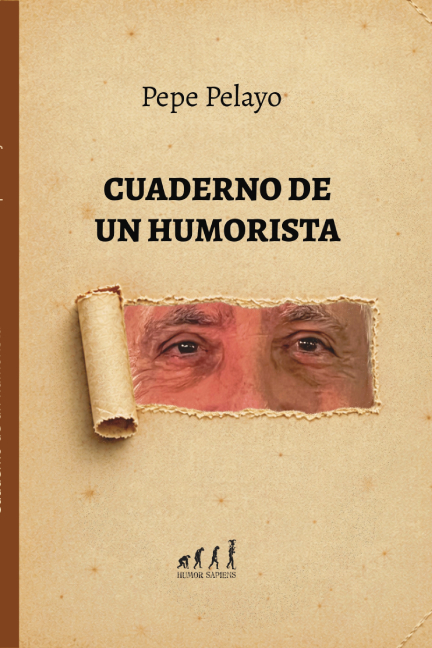
Cuaderno de un humorista
Llevo más de cincuenta años haciendo humor. En ese tiempo he aprendido algunas cosas, me he equivocado en muchas otras y sigo haciéndome preguntas. Este no es un curso de humor ni unas memorias. Es, simplemente, el cuaderno donde anoto recuerdos, dudas, descubrimientos y pequeñas historias que, de algún modo, explican cómo el humor terminó enseñándome mucho sobre los demás... y también sobre mí mismo.
La línea del horizonte
Nunca imaginé que algún día me preocuparía el tamaño del escenario.
Cuando debuté con La Seña del Humor en la Sala White de Matanzas, bastante tenía con controlar los nervios. Ver a más de cien personas esperando que las hiciéramos reír ya me parecía una locura.
Yo era ingeniero civil. No había estudiado teatro. Ni actuación. Ni dramaturgia. Ni nada parecido.
¿Qué hacía allí? Esa era mi única preocupación.
Duda legítima de si era un farsante. Porque para estar sobre un escenario había que estudiar, prepararse. Y yo no lo había hecho. Me preocupaba que se me viera como un descarado.
Por otro lado, yo me conocía como el que llegó de La Habana después de estudiar ingeniería. Y trabajaba como cualquier hijo de vecino. Me conocía como el tipo que le gustaba el cine, como el tipo medio centro de mesa, payasito, que jugaba dominó. Me conocía como el que recogía a sus hijos de la escuela, que caminaba por las calles de Matanzas. ¿Pero de actor? Era muy extraño.
En aquella época ni siquiera me pasaba por la cabeza hacerme conocido.
Es más, creo que nunca me hice humorista para eso. Lo hacía porque me divertía.
Porque escribir guiones, inventar personajes o sorprender a mis compañeros era un juego extraordinario. Y, como ocurre con todos los juegos, uno quiere seguir jugando.
Hasta ahí todo era muy inocente. Pero un día descubrí algo.
Mientras más personas disfrutaban con nuestro humor...más ganas tenía de que nos vieran otras.
Ahí apareció un personaje nuevo dentro de mí: el ambicioso. No el vanidoso. No el ególatra. Solo alguien que quería llegar un poco más lejos…
Primero pensé: Si la Sala White se llena... ¿por qué no probar un teatro más grande? Y llegamos al Teatro Sauto.
Después pensé: Si funcionamos en Matanzas... ¿por qué no en La Habana? Y llegó La Habana.
Después la televisión. Después las giras por toda Cuba.
Sin darme cuenta había dejado de ser un humorista conocido solamente en mi ciudad, en mi provincia. Ahora me conocían en todo el país.
Y, sin embargo... el bichito seguía ahí.
Nunca me había considerado una persona ambiciosa. Sin embargo, empecé a descubrir que, cada vez que alcanzaba una meta, enseguida aparecía otra. Y eso comenzó a inquietarme.
Después de llegar a ser un humorista conocido en Cuba, empecé a hacerme preguntas nuevas.
¿Sentía más responsabilidad? Sí. Mucha más.
Aquello ya no era un grupo de jóvenes jugando a hacer humor. Era nuestro trabajo. Vivíamos para eso.
Pero había otra pregunta que me inquietaba más: ¿Era suficiente?
Y, para mi sorpresa, descubrí que la respuesta empezaba a ser "no".
Me sonó la alarma. Me asusté. Pensé que me estaba convirtiendo en un codicioso, porque de ahí a transformarme en un intrigante y calculador había un paso.
Sin embargo, por el otro oído me hablaba un supuesto ángel: “ser ambicioso no necesariamente tiene que ser malo” -me susurró-. “Si no te pones metas exigentes puedes convertirte en un conformista. En un mediocre”.
No lo pensé dos veces. Lo pensé muchas veces. Y terminé aceptando que quería seguir llegando más lejos.
¿Tuve razón? Todavía es una noticia en desarrollo.
Pero en ese momento había un problema. En Cuba ese "más lejos" tenía un límite muy claro.
Habíamos recorrido el país. La televisión nos había abierto muchas puertas. La crítica nos respetaba. El público también.
Y, sin embargo, sentíamos que habíamos llegado al borde del mapa.
Acabábamos de estrenar nuestros espectáculos más elaborados y, por primera vez, tuve una sensación extraña.
No era falta de trabajo. Al contrario. Era la impresión de que ya sabíamos cuál sería el resto del camino: preparar un nuevo espectáculo, estrenarlo, hacer giras, esperar el siguiente... y volver a empezar.
Con la rutina empezaron a aparecer pequeñas señales. Alguna impuntualidad. Cierta desgana en un ensayo. Y hasta momentos en que parecía que nos estábamos divirtiendo menos. Con lo dañino que es esto último en un oficio como el nuestro.
Por suerte, todavía nos quedaba el mejor antídoto que conocíamos. El humor.
Decíamos que habíamos sido víctimas de la ley de las probabilidades.
De tantas épocas posibles, nos había tocado esa.
De tantos países posibles, nos había tocado una isla.
También hablábamos, entre risas, de un supuesto "determinismo geográfico".
Nos reíamos mucho con esos chistes. Quizá porque eran la única manera elegante de hablar de una frustración.
Claro que eran bromas.
Pero, como ocurre con muchos chistes, escondían una pequeña verdad.
Nunca sabríamos hasta dónde habríamos podido llegar si hubiéramos nacido en otro lugar o en otro momento.
Y esa incertidumbre dolía.
No porque creyéramos que ya éramos grandes humoristas.
Sino porque nunca tendríamos la oportunidad de averiguarlo.
Con el tiempo, algunos compañeros fueron aceptando que ese era nuestro techo.
Yo no.
Y tardé años en entender que no era por inconformidad. Ni porque me creyera mejor que nadie. Era simple curiosidad.
Quería saber si mi humor podía hacer reír a personas que no me conocían de absolutamente nada.
No buscaba comprobar que era bueno. Buscaba comprobar si el humor sobrevivía al viaje.
La vida terminó respondiendo esa pregunta de una manera inesperada.
Me fui a vivir a Chile. Y, de pronto, volvía a empezar. Otra cultura. Otras referencias. Otro ritmo. Otro público.
Ya no bastaba con que un chiste hubiera funcionado durante años en Cuba.
Ahora tenía que aprender de nuevo. Y eso, lejos de desanimarme, volvió a entusiasmarme.
Recuerdo que una directora de televisión eliminó un chiste que yo hacía desde Cuba: "A Napoleón los ingleses le cortaron el agua y la lú. Lo que se conoce mundialmente como Waterlú". Según ella, Napoleón no era un personaje suficientemente conocido para buena parte del público chileno. Nunca supe si tenía razón, pero entendí que cambiar de país también significaba volver a aprender el mapa cultural del humor.
Choqué con una realidad. Ni los escenarios son iguales, ni los tiempos, ni las intenciones.
En otra ocasión entregué un guion para un programa de televisión. Durante el ensayo, el actor aseguró delante de todo el equipo que aquello no hacía reír porque estaba lleno de cubanismos. Le pedí que mencionara uno. Respondió, muy seguro: "incorpóreo". Entonces me subí al escenario, interpreté yo mismo el texto y hasta el último asistente de camarógrafo terminó riéndose. Después entendí lo que había pasado: nadie sabía que, además de escribir el guion, yo llevaba años haciendo comedia sobre un escenario.
Sí, no todos los escenarios eran iguales. Pero la risa sí.
Podían cambiar las palabras. Los códigos. Las costumbres. Sin embargo, cuando el humor encontraba el camino, la reacción del público era exactamente la misma.
Y esa fue una de las alegrías más grandes de mi vida profesional.
Después llegaron los libros. Ellos me llevaron mucho más lejos de lo que alguna vez imaginé.
Y, casi sin proponérmelo, descubrí otra forma de viajar. Ya no era yo quien iba a visitar a los lectores. Eran mis historias las que empezaban a hacerlo.
Niños de distintos países se reían con personajes nacidos muchos años antes en mi escritorio.
Aquella fue otra manera de seguir ampliando el viaje.
Chile terminó siendo mucho más que un nuevo lugar para vivir. Fue el punto desde el cual mi carrera empezó a cruzar otras fronteras. Primero con espectáculos para públicos latinos en distintos países. Después con los libros infantiles, que comenzaron a viajar mucho más que yo. Más tarde llegaron los congresos, las investigaciones.
Recuerdo la primera vez que alguien me escribió desde otro continente para decirme que Humor Sapiens le había cambiado la manera de mirar un chiste. Yo lo había escrito solo, de madrugada, sin saber si alguien más que yo lo leería.
Y sin olvidar, por supuesto, el humor gráfico y otras formas de dedicarme al humor.
En mi recorrido comprendí que el horizonte tiene una extraña costumbre. Cada vez que uno cree haber llegado, descubre otro un poco más lejos.
A veces pensaba que aquello era una condena. Hoy creo que fue un regalo.
Gracias a ese horizonte que nunca dejaba de alejarse, seguí estudiando, escribiendo, actuando, investigando y aprendiendo.
Quizá nunca llegué tan lejos como imaginé de joven. Pero tampoco me quedé donde había empezado.
Y eso, visto desde aquí, no está nada mal.
Notebook of a Humorist No. 7 | The Horizon Line
By Pepe Pelayo
Notebook of a Humorist
I've been doing comedy for more than fifty years. In that time I've learned a few things, gotten plenty of others wrong, and I'm still asking myself questions. This isn't a comedy course or a memoir. It's simply the notebook where I jot down memories, doubts, discoveries, and small stories that, somehow, explain how comedy ended up teaching me so much about other people... and about myself.
The Line of the Horizon
I never imagined that one day I'd worry about the size of the stage.
When I made my debut with La Seña del Humor at the Sala White in Matanzas, I had my hands full just controlling my nerves. Seeing more than a hundred people waiting for us to make them laugh already felt like madness to me.
I was a civil engineer. I hadn't studied theater. Or acting. Or playwriting. Or anything like that.
What was I doing there? That was my only concern.
A legitimate doubt about whether I was a fraud. Because to be on a stage, you had to study, to prepare. And I hadn't done that. I worried I'd be seen as shameless.
On the other hand, I knew myself as the guy who'd come from Havana after studying engineering. Who worked like any other neighbor. I knew myself as the guy who liked movies, the middling life-of-the-party type who played dominoes. I knew myself as the one who picked his kids up from school, who walked the streets of Matanzas. But as an actor? That was very strange.
Back then it didn't even cross my mind to become famous.
In fact, I don't think I ever became a comedian for that reason. I did it because it was fun.
Because writing scripts, inventing characters, or surprising my colleagues was an extraordinary game. And, as happens with every game, you want to keep playing.
Up to that point, it was all very innocent. But one day I discovered something.
The more people who enjoyed our comedy... the more I wanted others to see it too.
That's when a new character appeared inside me: the ambitious one. Not the vain one. Not the egotist. Just someone who wanted to go a little further...
First I thought: if the Sala White fills up... why not try a bigger theater? And we got to the Teatro Sauto.
Then I thought: if we work in Matanzas... why not in Havana? And Havana came.
Then television. Then tours all over Cuba.
Without realizing it, I'd stopped being a comedian known only in my city, in my province. Now people knew me across the whole country.
And yet... the itch was still there.
I'd never thought of myself as an ambitious person. And yet I started noticing that every time I reached a goal, another one appeared right away. And that began to unsettle me.
After becoming a comedian known throughout Cuba, I started asking myself new questions.
Did I feel more responsibility? Yes. Much more.
That was no longer a group of young guys playing at making people laugh. It was our job. We lived for it.
But there was another question that troubled me more: was it enough?
And, to my surprise, I found that the answer was starting to be "no."
The alarm went off. It scared me. I thought I was turning into a greedy person, because from there to becoming scheming and calculating was just one step.
And yet, in my other ear, a supposed angel whispered: "being ambitious doesn't necessarily have to be a bad thing. If you don't set yourself demanding goals, you can become complacent. Mediocre."
I didn't think it over twice. I thought it over many times. And I ended up accepting that I wanted to keep going further.
Was I right? That's still a developing story.
But at that moment there was a problem. In Cuba, that "further" had a very clear limit.
We'd toured the whole country. Television had opened many doors for us. The critics respected us. So did the public.
And yet, we felt we'd reached the edge of the map.
We'd just premiered our most elaborate shows, and for the first time I had a strange feeling.
It wasn't a lack of work. Quite the opposite. It was the sense that we already knew what the rest of the road looked like: prepare a new show, premiere it, go on tour, wait for the next one... and start all over again.
With the routine came small warning signs. Some lateness. A certain listlessness in rehearsal. Even moments when it felt like we were having less fun. Which is a dangerous thing in a trade like ours.
Luckily, we still had the best antidote we knew. Comedy itself.
We used to say we'd been victims of the law of probability.
Of all the possible eras, we'd been dealt that one.
Of all the possible countries, we'd been dealt an island.
We also joked, laughing, about a supposed "geographic determinism."
We laughed a lot at those jokes. Maybe because they were the only elegant way to talk about a frustration.
Of course they were just jokes.
But, as happens with many jokes, they hid a small truth.
We would never know how far we might have gone if we'd been born somewhere else, or at some other time.
And that uncertainty hurt.
Not because we thought we were already great comedians.
But because we'd never get the chance to find out.
Over time, some of my colleagues came to accept that this was our ceiling.
Not me.
And it took me years to understand that it wasn't out of restlessness, or because I thought I was better than anyone. It was simple curiosity.
I wanted to know if my comedy could make people laugh who didn't know me from anywhere at all.
I wasn't trying to prove I was good. I was trying to find out whether the comedy would survive the journey.
Life ended up answering that question in an unexpected way.
I moved to Chile. And, suddenly, I was starting all over again. A different culture. Different references. A different rhythm. A different audience.
It was no longer enough for a joke to have worked for years in Cuba.
Now I had to learn all over again. And that, far from discouraging me, excited me again.
I remember a television director cutting a joke I'd been doing since Cuba — a pun built on Napoleon's name and a well-known historical defeat. According to her, Napoleon wasn't a well-known enough figure for much of the Chilean audience. I never found out whether she was right, but I understood that changing countries also meant relearning the cultural map of comedy.
I ran into a reality: neither the stages were the same, nor the timing, nor the intentions.
On another occasion I handed in a script for a television program. During rehearsal, the actor claimed, in front of the whole team, that it wasn't funny because it was full of Cuban expressions. I asked him to name one. He answered, quite confidently, with a single word — one that turned out not to be particularly Cuban at all. So I got up on stage, performed the piece myself, and even the last camera assistant ended up laughing. Afterward I understood what had happened: nobody knew that, besides writing the script, I'd spent years doing stand-up comedy on stage.
Yes, not every stage was the same. But laughter was.
The words could change. The codes. The customs. And yet, when the comedy found its way, the audience's reaction was exactly the same.
And that was one of the greatest joys of my professional life.
Later came the books. They took me much further than I ever imagined.
And, almost without meaning to, I discovered another way of traveling. It was no longer me visiting the readers. Now it was my stories doing the visiting.
Children in different countries were laughing at characters born years earlier at my desk.
That was another way of continuing to widen the journey.
Chile ended up being much more than just a new place to live. It became the point from which my career began to cross other borders. First with shows for Latino audiences in different countries. Then with children's books, which began to travel much more than I did. Later came conferences, research.
I remember the first time someone wrote to me from another continent to tell me that a book of mine had changed the way they looked at a joke. I had written it alone, in the small hours, without knowing if anyone besides me would ever read it.
And, of course, without forgetting graphic humor and other ways of devoting myself to comedy.
Along the way, I came to understand that the horizon has a strange habit. Every time you think you've arrived, you discover another one a little further off.
Sometimes I thought that was a curse. Today I believe it was a gift.
Thanks to that horizon that never stopped receding, I kept studying, writing, performing, researching, and learning.
Maybe I never got as far as I imagined when I was young. But I didn't stay where I started, either.
And that, seen from here, isn't bad at all.
(This text has been translated into English by AI)