Quizás muchas personas que me vieron en teatro, televisión o cine no me reconocerían ahora. Tengo el pelo completamente blanco, ya no camino erguido, en mi piel hay más lunares y mis movimientos son más lentos. En otras palabras: estoy viejo. Tengo 74 años.
¿Cómo llegué hasta aquí? Creo que empecé a envejecer el día que un niño, en plena calle, me dijo:
—¿Me puede alcanzar esa pelota, señor?
¿Señor yo? ¿Con veintitantos años?
Así es la vida.
Nunca me imaginé viejo. Por supuesto, sabía que algún día llegaría el momento, pero nunca tuve una imagen de mí envejecido. Ni siquiera me imaginaba parecido a mi padre cuando falleció a los 84 años.
Quizás porque uno se mira y se compara siempre por dentro. El espejo verdadero, en cambio, es bastante más incómodo.
Durante los años de La Seña del Humor tampoco tuve tiempo para pensar en eso. Entre ensayos, funciones, entrevistas, invitaciones, compromisos sociales y mis responsabilidades como director general y codirector artístico, estaba permanentemente en movimiento.
Tenía una energía física y creativa que parecía inagotable.
¿Envejecer yo? Imposible.
Después vine a vivir a Chile y pasó algo parecido. Tuve que aprender a ser inmigrante, moverme más para levantar cabeza en los primeros tiempos, volver a casarme, armar un hogar, hacer patria, como diría un amigo. Ya había pasado los cuarenta, pero tenía demasiadas cosas que resolver como para detenerme a pensar en la edad.
Hasta que dejé la televisión, hice mucho menos teatro y comencé a dedicarme a escribir libros para niños.
Y entonces apareció algo que antes no había tenido: tiempo para estar sentado. Mucho tiempo. Frente a una pantalla.
Es que de repente me dolía la rodilla. Y comencé a hablar cotidianamente más bajito. Seguía proyectando en escena como siempre, pero era evidente que estaba perdiendo algo la voz.
Al principio pensé que aquel tiempo libre era una bendición. Por fin podía quedarme en casa, sentado cómodamente, creando, sin terminar agotado después de una función, un ensayo o una gira.
Pero también apareció una duda.
¿Realmente había elegido ese camino porque quería dedicarme a escribir? ¿O estaba aprovechando la oportunidad para evitar volver a una televisión donde había sufrido, a un teatro poco remunerado o a la necesidad de irme a otro país para encontrar mejores condiciones? ¿O, peor todavía, estaba evitando al bichito de la escena, que seguía vivo?
Por suerte encontré una manera de resolverlo. Inventé los Conciertos Lectores.
En ellos podía volver a estar frente a un público infantil, pero de otra manera. Utilizaba personajes y situaciones de mis libros, hacía monólogos, contaba chistes, realizaba lecturas teatralizadas, cantaba, dirigía juegos y conseguía que los niños participaran conmigo.
Cuarenta y cinco minutos, más o menos, de risas, juego y placer.
Y otra vez volví a moverme.
A pesar de haber pasado ya los cincuenta, fue una época de muchísimo trabajo. Llegaba a hacer dos funciones diarias y, durante el Mes del Libro, hasta tres.
Así que la vejez volvió a desaparecer de mi cabeza.
Y, como mejoraron mis posibilidades económicas, pude cumplir además uno de mis grandes sueños: viajar.
Mucho.
Llegué a conocer más de treinta países. Caminé por ciudades, museos, castillos, catedrales y barrios históricos, con calor, con frío y con ese cansancio que uno descubre que existe después de caminar varias horas.
Todo eso mientras seguía estudiando el humor, escribiendo libros y artículos, creando fotomontajes, participando en congresos y actuando de vez en cuando para adultos.
Yo seguía haciendo cosas. El cuerpo, en cambio, llevaba otra contabilidad.
En algún momento después de los sesenta comencé a aceptar menos invitaciones para los Conciertos Lectores y a viajar menos.
No sé exactamente cuándo ocurrió. Simplemente empezó a gustarme más estar en casa.
Y eso era agradable.
Hasta que apareció otra angustia: ¿me estaba retirando también de la creación?
Me imaginaba sin crear, solo ocupado yendo al supermercado, engrasando una bisagra o jugando un rato con un nieto.
Entonces me venía a la mente mi padre, que usaba cada noche, religiosamente, para jugar dominó con otros viejos. Y peor, mi abuelo en un rincón, encogido en su sillón, observando el dominó con su sonrisa tierna en los labios, ganara quien ganara.
Me angustiaba de solo pensar que esa sería mi vida. No podía aceptarlo.
Porque si detenía la producción, me imaginaba en un buen butacón leyendo o viendo series durante todo el día.
Y después otro día.
Y otro.
Hasta irme marchitando.
Moriría de tristeza.
Así que hice algo bastante sensato para alguien que está envejeciendo: trabajé más.
Me armé una rutina y aumenté las horas frente al computador hasta doce o catorce diarias.
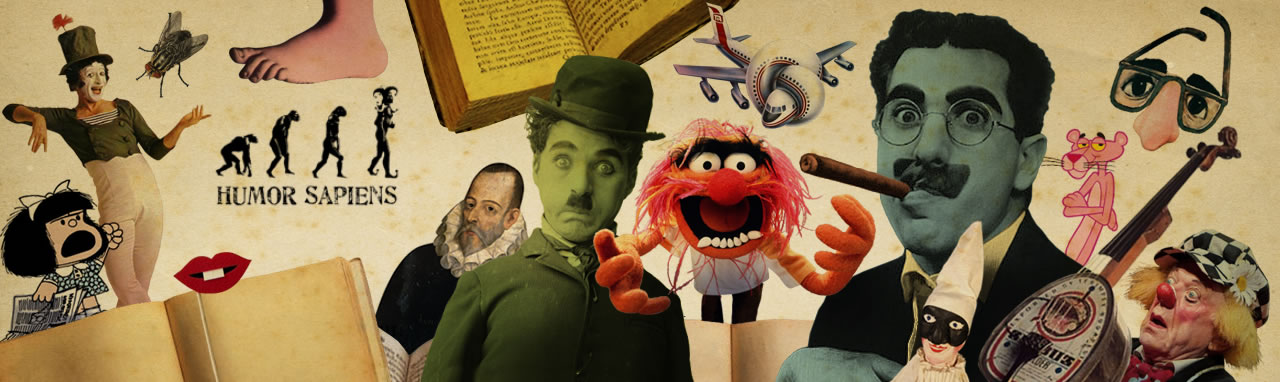
Me sumergí todavía más en el estudio del humor, escribí libros para adultos, hice fotomontajes humorísticos, participé en congresos y encuentros, preparé conferencias y ponencias, hice videos, mantuve el sitio Humor Sapiens y su Boletín mensual.
También aparecieron proyectos que nunca había imaginado que haría.
Y eso fue importante.
Porque descubrí que el envejecimiento del cuerpo no necesariamente viene acompañado por el envejecimiento de la curiosidad.
Al contrario.
Sin esperarlo, de sorpresa, aparecieron cosas que no había imaginado. Se entregó el primer "Premio Humor Sapiens 2025", para la persona o entidad destacada en el estudio y la promoción del humor en el mundo. Se inauguró el Museo del Chupacabras de Pirque, basado en uno de mis libros. Dirigí el Concurso Internacional de Humor Gráfico "Humor Sapiens 2024". Se grabó en Alemania un disco con canciones que escribí para preadolescentes. Publiqué libros que me importan de verdad: la Historia del Humor, el Diccionario del Humor, Memoria biográfica del humor cubano, Vis a vis con la vis cómica, La Seña del Humor. Mi intento por entenderla, y varios escritos a "dos manos" con humoristas de talla mundial. Y en 2022 me hicieron homenajes en Chile, Cuba y España, por mis cuarenta años como humorista — un alimento para el ego que, lo confieso, me dejó volando.
Todo eso, en mi tiempo de "retirado".
Así comprendí algo que quizás había tardado demasiado en descubrir: yo no estaba buscando mantenerme ocupado. Estaba intentando aprovechar el tiempo.
Porque hay una diferencia. Cuando uno es joven, siente que el tiempo es una cosa que sobra.
Uno puede dejar un proyecto para después. Puede equivocarse y volver a empezar.
Puede decir "algún día haré esto".
A los 74 años, ese "algún día" empieza a sonar diferente. Ya queda menos tiempo. No es pesimismo. Es una ley de la vida. Y me llevo bastante bien con esa idea.
De hecho, me ha dado más fuerza.
Me di cuenta de que tenía una cantidad de cosas que quería hacer y que no podía esperar eternamente para hacerlas. Unas las he hecho, como señalé, pero aún quedan otras en el tintero.
Y ahí apareció una especie de urgencia que antes no tenía. No una angustia. Una urgencia.
¿Conseguiré hacerlo todo? ¿Es necesario hacerlo todo?
No sé. No creo que yo mismo, mirando hacia atrás, me vaya a juzgar y a decirme "pudiste hacer tal cosa y no la hiciste", o "pudiste hacer eso y no tenías que hacer aquello". Tampoco creo que mi obra sea fundamental para la historia del humor nacional, y menos internacional. Si no la hago, nadie se entera y quizás si la hago, tampoco.
¿Entonces por qué la presión que siento? Por mí, solo por mí. Quizás la comparo con la sensación de antes de morir, de darle a un ser querido un objeto mío que siempre quiso tener. Es como irse en paz. Por ahí creo que va la cosa.
También me pasa algo curioso cuando alguien me dice "Maestro".
Me incomoda. ¿Cómo voy a ser Maestro si todavía estudio? ¿Cómo voy a ser Maestro si todavía estoy aprendiendo?
Además, si soy sincero, no considero que haya sido un excelente comediante, ni un excelente guionista, ni un excelente director de escena. Tampoco creo haber sido un excelente humorista gráfico, musical o literato. Ni siquiera un excelente estudioso del humor.
Me considero, más o menos, bueno en varias de esas cosas.
Y eso me parece suficiente.
Quizás mi verdadero mérito sea precisamente ese: haberme metido en muchas áreas y haber conseguido defenderme razonablemente bien en casi todas. Un amigo colega me llama "todoterreno". Ese calificativo sí me gusta.
"Maestro", en cambio, me queda grande.
Aunque, por supuesto, no voy a ser tan hipócrita como para decir que no disfruto el halago.
Lo disfruto. Por dentro. Muchísimo.
Pero también me da cierto pudor que me cuelguen una medalla que siento que todavía no me corresponde.
Quizás porque a esta altura de mi vida me dolería mucho hacer el ridículo.
No quiero volver a un escenario y que alguien piense que mi humor huele a polvo. No quiero escribir simplemente para demostrar que sigo activo. No quiero crear por obligación. Quiero seguir creando con dignidad…
Aquí aparece una pregunta bastante incómoda:
¿En qué momento debe retirarse un humorista? No tengo respuesta.
Quizás el día en que deje de encontrar gracia en mis propias ocurrencias. O el día en que deje de conseguir que otros se rían con ellas. O quizás haya otra señal que todavía no conozco.
Por ahora, siguen apareciendo ideas. Y eso me hace sentir joven.
Es más: a veces me parece que ahora aparecen más que cuando era joven.
Claro que tampoco es una comparación justa. Hoy tengo más tiempo y disposición para atender a la musa. Cuando era joven tenía que hacer muchas otras cosas: casarme, tener hijos, criarlos, trabajar, estudiar, divertirme, sobrevivir...
Pero las ideas siguen llegando. Y mientras sigan llegando, yo sigo.
El cuerpo envejeció.
La cabeza, por suerte, todavía no recibió el aviso.
Así que no pienso sentarme a esperar a la Parca en un butacón.
Va a tener que arrastrarme para sacarme del computador.
The devil laughs more because he is old than because he is the devil.
by Pepe Pelayo
Maybe a lot of people who saw me in theater, television, or film wouldn't recognize me now. My hair has gone completely white, I no longer walk upright, my skin has more spots on it, and my movements are slower. In other words: I'm old. I'm 74.
How did I get here? I think I started aging the day a child, right there on the street, said to me:
—Could you get that ball for me, sir?
Me, sir? At twenty-something?
That's life.
I never imagined myself old. Of course I knew the moment would come someday, but I never had a picture of myself aged. I didn't even picture myself looking like my father when he passed away at 84.
Maybe because you always look at yourself and measure yourself from the inside. The real mirror, on the other hand, is a good deal more uncomfortable.
During the years of La Seña del Humor, I didn't have time to think about that either. Between rehearsals, shows, interviews, invitations, social commitments, and my responsibilities as general director and artistic co-director, I was constantly in motion.
I had a physical and creative energy that seemed inexhaustible.
Me, getting old? Impossible.
Then I came to live in Chile, and something similar happened. I had to learn to be an immigrant, to hustle harder to get on my feet in the early years, to remarry, to build a home, to put down roots, as a friend of mine would put it. I'd already turned forty, but I had too many things to sort out to stop and think about age.
Until I left television, did much less theater, and started devoting myself to writing children's books.
And then something appeared that I hadn't had before: time to sit down. A lot of time. In front of a screen.
Because suddenly my knee started to hurt. And I began speaking more softly in everyday conversation. I still projected on stage the way I always had, but it was clear my voice was losing something.
At first I thought that free time was a blessing. At last I could stay home, sit comfortably, create, without ending up exhausted after a show, a rehearsal, or a tour.
But a doubt appeared too.
Had I really chosen that path because I wanted to devote myself to writing? Or was I using the opportunity to avoid going back to a television world where I had suffered, to a poorly paid theater scene, or to the need to move to another country to find better conditions? Or, worse still, was I avoiding the stage bug, which was still very much alive?
Luckily I found a way to work it out. I invented the Conciertos Lectores — Reader Concerts.
In them I could be in front of a young audience again, but in a different way. I used characters and situations from my books, did monologues, told jokes, gave theatrical readings, sang, led games, and got the kids to participate with me.
About forty-five minutes of laughter, play, and pleasure.
And once again I was on the move.
Even though I was already past fifty, it was a period of enormous amounts of work. I would do two shows a day, and during Book Month, even three.
So old age disappeared from my mind again.
And, since my financial situation improved, I was also able to fulfill one of my great dreams: traveling.
A lot.
I got to know more than thirty countries. I walked through cities, museums, castles, cathedrals, and historic neighborhoods, in heat, in cold, and with that particular kind of tiredness you discover exists only after walking for several hours.
All of that while I kept studying humor, writing books and articles, creating photomontages, taking part in conferences, and performing for adults now and then.
I kept doing things. My body, meanwhile, was keeping a different set of books.
At some point after I turned sixty, I began accepting fewer invitations for the Reader Concerts and traveling less.
I don't know exactly when it happened. I simply started enjoying being home more.
And that was pleasant.
Until another anxiety showed up: was I retiring from creating, too?
I pictured myself with nothing to create, just going to the supermarket, oiling a hinge, or playing for a while with a grandchild.
Then my father would come to mind, who used every evening, religiously, to play dominoes with other old men. And worse, my grandfather in a corner, hunched in his armchair, watching the dominoes with a tender little smile on his lips, no matter who won.
It distressed me just to think that would be my life. I couldn't accept it.
Because if I stopped producing, I pictured myself in a comfortable armchair reading or watching shows all day long.
And then another day.
And another.
Until I withered away.
I would die of sadness.
So I did something fairly sensible for someone who's growing old: I worked more.
I built myself a routine and increased my hours in front of the computer to twelve or fourteen a day.
I dove even deeper into the study of humor, wrote books for adults, made humorous photomontages, took part in conferences and gatherings, prepared lectures and papers, made videos, and kept up the Humor Sapiens site and its monthly Bulletin.
Projects also showed up that I never imagined I'd take on.
And that was important.
Because I discovered that the aging of the body doesn't necessarily come paired with the aging of curiosity.
Quite the opposite.
Without expecting it, out of nowhere, things appeared that I hadn't imagined. The first "Humor Sapiens 2025 Award" was given out, for the person or institution most outstanding in the study and promotion of humor around the world. The Chupacabra Museum of Pirque opened, based on one of my books. I directed the "Humor Sapiens 2024" International Graphic Humor Contest. An album was recorded in Germany with songs I wrote for preteens. I published books that truly matter to me: a History of Humor, a Dictionary of Humor, a biographical account of Cuban humor, Vis a vis with the comic vis, La Seña del Humor. My Attempt to Understand It, and several works co-written with world-class humorists. And in 2022 I was honored in Chile, Cuba, and Spain for my forty years as a comedian — food for the ego that, I confess, left me floating on air.
All of that, during my "retirement."
That's how I came to understand something I'd perhaps taken too long to discover: I wasn't trying to keep myself busy. I was trying to make the most of my time.
Because there's a difference. When you're young, you feel like time is something you have to spare.
You can put a project off for later. You can get it wrong and start over.
You can say "someday I'll do this."
At 74, that "someday" starts to sound different. There's less time left now. It's not pessimism. It's a law of life. And I get along fairly well with that idea.
In fact, it's given me more strength.
I realized I had a number of things I wanted to do, and that I couldn't wait forever to do them. I've done some of them, as I mentioned, but others are still on the drawing board.
And that's when a kind of urgency showed up that I hadn't had before. Not anguish. Urgency.
Will I manage to do it all? Is it even necessary to do it all?
I don't know. I don't think that, looking back, I'll judge myself and say "you could have done such a thing and you didn't," or "you could have done that and you didn't need to do this instead." Nor do I think my body of work is essential to the history of humor nationally, much less internationally. If I don't do it, no one will know, and maybe even if I do it, no one will either.
So why do I feel this pressure? For myself, only for myself. Maybe I'd compare it to the feeling you get before dying, of giving a loved one something of yours that they always wanted to have. It's like leaving in peace. I think that's roughly where it comes from.
Something curious also happens to me when someone calls me "Maestro" — Master.
It makes me uncomfortable. How can I be a Master if I'm still studying? How can I be a Master if I'm still learning?
Besides, if I'm honest, I don't think I was an excellent comedian, or an excellent scriptwriter, or an excellent stage director. Nor do I think I was an excellent graphic, musical, or literary humorist. Not even an excellent scholar of humor.
I consider myself, more or less, good at several of those things.
And that feels like enough to me.
Maybe my real merit is precisely that: having gotten myself into many different fields and having managed to hold my own reasonably well in almost all of them. A friend and colleague calls me an "all-terrain vehicle." I do like that description.
"Maestro," on the other hand, is too big a title for me.
Although, of course, I'm not going to be hypocritical enough to say I don't enjoy the flattery.
I enjoy it. Inside. Enormously.
But it also makes me a bit self-conscious to have a medal hung on me that I feel I don't yet deserve.
Maybe because at this stage of my life, making a fool of myself would hurt a great deal.
I don't want to go back on stage and have someone think my comedy smells like dust. I don't want to write simply to prove I'm still active. I don't want to create out of obligation. I want to keep creating with dignity...
And here comes a rather uncomfortable question:
At what point should a comedian retire? I have no answer.
Maybe the day I stop finding my own ideas funny. Or the day I stop getting others to laugh at them. Or maybe there's some other sign I don't know about yet.
For now, ideas keep coming. And that makes me feel young.
What's more: sometimes it seems to me that more of them show up now than when I was young.
Of course, that's not really a fair comparison either. Today I have more time and more willingness to attend to the muse. When I was young I had a lot of other things to do: get married, have children, raise them, work, study, have fun, survive...
But the ideas keep coming. And as long as they keep coming, I keep going.
The body has grown old.
The mind, luckily, hasn't gotten the memo yet.
So I don't plan on sitting down in an armchair to wait for the Grim Reaper.
She's going to have to drag me away from the computer.
(This text has been translated into English by AI)