Algunas personalidades de campos ajenos al dibujo de humor realizaron ocasionalmente o de manera aficionada caricaturas y viñetas. Unos han pasado a la historia por su hacer en campos relacionados con las artes y la creatividad, como la literatura, el cine o la música, pero a otros los asociamos con esferas bien alejadas de estos, como la política. En próximos artículos tengo me gustaría a conocer algunas de estas figuras. Comienzo hoy recordando los nombres de algunos políticos que se significaron en este sentido.
No es habitual que los políticos dibujen caricaturas o viñetas de humor. Lo normal es lo contrario: que las protagonicen. Pero, particularmente en los EEUU, encontramos algunos casos que merece la pena apuntar. Entre ellos tenemos a un padre de la patria y dos presidentes del país.
La primera caricatura política estadounidense
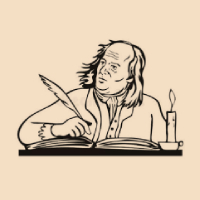
El padre de la patria es Benjamin Franklin (1706-1790), una personalidad fecunda y multifacética. El lector europeo, y particularmente el español (escribo estas líneas desde España), lo conocerá fundamentalmente como científico e inventor. A él se deben los inventos del pararrayos y las gafas bifocales, entre otros. Pero los estadounidenses lo identifican, sobre todo, como político y no uno cualquiera: uno de los padres fundadores de la nación. Fue uno de los redactores y firmantes de la Declaración de Independencia, contribuyó a la redacción de la Constitución del país y ejerció de embajador de los EEUU en Francia, además de ser el primer director general del Servicio Postal estadounidense.
Franklin fue también, y en buena medida, impresor y periodista. Se hizo rico publicando la “Gaceta de Pensilvania”, donde el 9 de mayo de 1754 publicó la primera caricatura política estadounidense que se conoce: “Join or Die” (“Uníos o morid”), de la que se le tiene también por autor. Muestra una serpiente cortada en ocho partes con las iniciales de las colonias americanas para pedir su unión. La imagen se convirtió en un símbolo de la libertad colonial durante la Guerra de Independencia de los EEUU y volvió a usarse, con las adaptaciones correspondientes, por ambos bandos durante la guerra civil estadounidense.
Los presidentes “caricaturistas” a los que me refería son Ulysses S. Grant (1822-1885), el 18º del país, y Theodore Roosevelt (1858-1919), el 26º.
Respecto a Grant, durante su etapa como cadete en la Academia Militar de West Point, la asignatura de dibujo era obligatoria. Existen algunos bocetos y pinturas de aquella época y de su vida posterior que incluyen paisajes rurales, estudios de caballos comiendo en un abrevadero o escenas con nativos americanos. Sus trabajos conocidos eran realistas, topográficos u observacionales, enfocados en capturar detalles fieles de la naturaleza o animales. Pero en internet también se dice que durante su etapa de juventud en West Point, el futuro presidente destacaba por su habilidad para el dibujo satírico y la caricatura de sus instructores y compañeros.
Por lo que respecta a Roosevelt (no confundirlo con su primo lejano Franklin D. Roosevelt [1882-1945], que también sería presidente de los EEUU, el 32º), ilustraba con frecuencia sus cartas personales y familiares con divertidos bocetos, mostrando un lado creativo, familiar y autocrítico sobre sus habilidades artísticas. Dibujaba escenas cotidianas de la vida familiar, peleas de almohadas o animales para sus hijos. A menudo añadía notas bromeando sobre su propio estilo rústico al dibujar. Muchos de estos manuscritos con ilustraciones se conservan en colecciones digitales como el Theodore Roosevelt Cent.
Otro notable político estadounidense que dibujaba ocasionalmente caricaturas fue Earle C. Clements (1896-1985), gobernador de Kentucky entre 1947 y 1950 y miembro de la Cámara de Representantes y del Senado de los Estados Unidos durante las décadas de 1940 y 1950. Clements era conocido en círculos internos por dibujar caricaturas de sus colegas en el Congreso durante las sesiones legislativas aburridas.
Churchill y su ensayo sobre el “cartoon”
Sin abandonar el mundo anglosajón, hay que citar también a Winston Churchill (1874-1965), primer ministro del Reino Unido de 1940 a 1945, durante la Segunda Guerra Mundial, y nuevamente de 1951 a 1955.
Aunque no me consta que practicase la caricatura y el dibujo de humor (no así la pintura al óleo, que cultivaba para relajarse y combatir la melancolía), tuvo una relación muy estrecha con estas artes. Primero, porque es el político más caricaturizado de la historia. Segundo, porque fue, además, un ávido coleccionista de caricaturas originales que lo representaban. Y tercero, porque llegó a escribir un ensayo sobre el tema, titulado “Cartoons and Cartoonists” (“Caricaturas y caricaturistas”) y publicado en “The Strand Magazine” en junio de 1931. En él reflexionaba sobre el humor político y describía las caricaturas como el alimento habitual de los adultos.
Por cierto que Churchill escribió también un ensayo sobre la pintura titulado “Painting as a Pastime” (“La pintura como pasatiempo”), que publicó originariamente en dos entregas en “The Strand Magazine” entre diciembre de 1921 y enero de 1922, y después como libro independiente en 1948. Recordemos que el expremier recibió en 1953, no sin cierta polémica, el Premio Nobel de Literatura “por su dominio de las descripciones biográficas e históricas, así como por su brillante oratoria en defensa de los valores humanos exaltados”. Sus trabajos más destacados combinan la crónica histórica con su participación directa en los acontecimientos: “The Second World War” (“La Segunda Guerra Mundial”), obra monumental en seis volúmenes donde relata el conflicto bélico desde su rol como primer ministro; “The World Crisis” (“La crisis mundial”), un detallado análisis en seis volúmenes enfocado en los sucesos de la Primera Guerra Mundial; y “A History of the English-Speaking Peoples” (“Historia de los pueblos de habla inglesa”), una ambiciosa revisión en cuatro volúmenes sobre la historia de Gran Bretaña y sus antiguas colonias.
Un padre de la patria humorista
Cien años después de la muerte de Benjamin Franklin nacerá en España otro personaje fascinante considerado el padre de la patria gallega, por la región de Galicia, en el noroeste del país: Alfonso Daniel Rodríguez Castelao (1886-1950). Médico, artista plástico y escritor, fue también, y sobre todo, político, caricaturista y humorista gráfico. Como político, llegó a ser diputado en las Cortes de la II República Española y presidente del Consejo de Galicia en el exilio tras la Guerra Civil. Como humorista gráfico, fue uno de los mejores de la Europa de su tiempo y el más importante de todos los gallegos que han existido. Entre sus obras en este campo destacan el álbum “Nós” y la serie “Cousas da vida”, publicada en la prensa diaria.
El también escritor gallego Manuel Rivas ha destacado en alguno de sus escritos la enorme singularidad gallega de tener como padre de la patria a un humorista (no solo gráfico; Castelao también lo era literario), cuando lo normal en otros países es que sea un militar, un jurista o un hacendado.
El ministro caricaturista
En España, en fechas recientes, hemos tenido un ministro que también era caricaturista y dibujante de humor. Hablo del canario Juan Fernando López Aguilar (1961), titular de Justicia entre 2004 y 2007, durante el Gobierno del socialista José Luis Rodríguez Zapatero. Actualmente es diputado en el Parlamento Europeo desde 2009.
Aficionado al dibujo y a la pintura, comenzó publicando caricaturas en el diario canario “La Provincia” desde 1977. Fue autor de una serie de cómic llamada “Gaudeamus”, con guion de Andrés Sopeña Monsalve (ensayista y profesor de Derecho de la Universidad de Granada). Durante sus años de estudio en esta universidad, sus caricaturas y viñetas aparecieron regularmente publicadas en los periódicos “Sur de Málaga” y el “Ideal” de Granada. En 1981 se editó una recopilación de estas tiras (Editorial Grijalbo), basadas en las andanzas y desventuras de un PNN (“Profesor No Numerario”). Durante años compaginó sus estudios con el trabajo de dibujante de historietas, publicados en distintas revistas.
Como decía al principio de este artículo, me gustaría ahondar en esta temática en futuros escritos, haciéndome eco de algunas personalidades de otros campos, como la literatura, el cine o la música, que también cultivaron como aficionados o esporádicamente la caricatura y/o el dibujo de humor. Por lo tanto, termino con un “continuará”.

Ulysses S. Grant

Theodore Roosevelt

Earle C. Clements

Winston Churchill

Alfonso Daniel Rodríguez Castelao

Juan Fernando López Aguilar
Politicians who drew caricatures
By Félix Caballero Wangüemert
Some public figures from fields unrelated to cartooning have, on occasion or as amateurs, drawn caricatures and cartoons. Some have gone down in history for their work in fields related to the arts and creativity, such as literature, film, or music, while others we associate with spheres quite far removed from these, such as politics. In upcoming articles, I'd like to introduce some of these figures. I'll begin today by recalling the names of a few politicians who made a mark in this area.
It isn't common for politicians to draw caricatures or humorous cartoons. Usually it's the opposite: they're the ones being drawn. But particularly in the United States, we find a few cases worth noting. Among them are a founding father and two American presidents.
The first American political cartoon
The founding father in question is Benjamin Franklin (1706–1790), a prolific, multifaceted figure. European readers, and Spanish readers in particular (I'm writing this from Spain), will mainly know him as a scientist and inventor. He's credited with, among other things, the lightning rod and bifocal glasses. But Americans identify him above all as a politician — and not just any politician: one of the nation's founding fathers. He was one of the drafters and signers of the Declaration of Independence, contributed to the drafting of the country's Constitution, served as U.S. ambassador to France, and was the first Postmaster General of the United States.
Franklin was also, to a considerable degree, a printer and journalist. He made his fortune publishing the Pennsylvania Gazette, where on May 9, 1754, he published what is considered the first known American political cartoon, "Join, or Die," which he is also credited with drawing. It shows a snake cut into eight pieces, each labeled with the initials of the American colonies, calling for their union. The image became a symbol of colonial liberty during the American Revolutionary War and was reused, with corresponding adaptations, by both sides during the American Civil War.
The "cartoonist" presidents I mentioned are Ulysses S. Grant (1822–1885), the country's 18th president, and Theodore Roosevelt (1858–1919), the 26th.
As for Grant, drawing was a required subject during his time as a cadet at the West Point Military Academy. Some sketches and paintings survive from that period and from later in his life, including rural landscapes, studies of horses drinking at a trough, or scenes with Native Americans. His known works were realistic, topographical, or observational, focused on capturing faithful details of nature or animals. Online sources also claim that during his youth at West Point, the future president stood out for his skill at satirical drawing and caricatures of his instructors and classmates.
As for Roosevelt (not to be confused with his distant cousin Franklin D. Roosevelt [1882–1945], who would also become U.S. president, the 32nd), he frequently illustrated his personal and family letters with playful sketches, revealing a creative, family-oriented, and self-deprecating side when it came to his own artistic skill. He drew everyday scenes of family life, pillow fights, or animals for his children, often adding notes joking about his own crude drawing style. Many of these illustrated manuscripts are preserved in digital collections such as the Theodore Roosevelt Center.
Another notable American politician who occasionally drew cartoons was Earle C. Clements (1896–1985), governor of Kentucky from 1947 to 1950 and a member of the U.S. House of Representatives and Senate during the 1940s and 1950s. Clements was known in inner circles for sketching caricatures of his fellow members of Congress during dull legislative sessions.
Churchill and his essay on the "cartoon"
Staying in the English-speaking world, we should also mention Winston Churchill (1874–1965), Prime Minister of the United Kingdom from 1940 to 1945, during the Second World War, and again from 1951 to 1955.
Although I have no evidence that he practiced caricature or humorous drawing himself (unlike oil painting, which he took up to relax and fight off his bouts of melancholy), he had a very close relationship with these art forms. First, because he is the most caricatured politician in history. Second, because he was also an avid collector of original cartoons depicting him. And third, because he went so far as to write an essay on the subject, titled "Cartoons and Cartoonists," published in The Strand Magazine in June 1931. In it, he reflected on political humor and described cartoons as adults' everyday diet.
Incidentally, Churchill also wrote an essay on painting titled "Painting as a Pastime," originally published in two installments in The Strand Magazine between December 1921 and January 1922, and later as a standalone book in 1948. It's worth recalling that the former Prime Minister received, not without some controversy, the 1953 Nobel Prize in Literature, recognized for his mastery of historical and biographical narrative as well as his brilliant oratory in defense of exalted human values. His most notable works combine historical chronicle with his own direct involvement in the events described: The Second World War, a monumental six-volume work recounting the conflict from his position as prime minister; The World Crisis, a detailed six-volume analysis focused on the events of the First World War; and A History of the English-Speaking Peoples, an ambitious four-volume survey of the history of Britain and its former colonies.
A humorist founding father
A hundred years after Benjamin Franklin's death, another fascinating figure would be born in Spain, considered the founding father of Galicia, the region in the northwest of the country: Alfonso Daniel Rodríguez Castelao (1886–1950). A physician, visual artist, and writer, he was also — and above all — a politician, caricaturist, and graphic humorist. As a politician, he served as a deputy in the Parliament of the Second Spanish Republic and president of the Council of Galicia in exile after the Civil War. As a graphic humorist, he was one of the finest in the Europe of his time, and the most important in the entire history of Galicia. Notable works in this field include the album Nós and the series Cousas da vida, published in the daily press.
The Galician writer Manuel Rivas has noted, in some of his own writings, the remarkable singularity of Galicia having a humorist as its founding father (not only a graphic one — Castelao was a literary humorist as well), when in most other countries it's normally a soldier, a jurist, or a landowner who holds that role.
The cartoonist minister
More recently in Spain, we've had a government minister who was also a cartoonist and humor illustrator. I'm referring to Juan Fernando López Aguilar (born 1961), from the Canary Islands, who held the Justice portfolio from 2004 to 2007, under the government of Socialist Prime Minister José Luis Rodríguez Zapatero. He has served as a member of the European Parliament since 2009.
An enthusiast of drawing and painting, he began publishing cartoons in the Canary Islands newspaper La Provincia in 1977. He created a comic strip series called Gaudeamus, written by Andrés Sopeña Monsalve (an essayist and law professor at the University of Granada). During his student years at that university, his cartoons and comic strips appeared regularly in the newspapers Sur of Málaga and Ideal of Granada. In 1981, a collection of these strips was published (by Editorial Grijalbo), based on the exploits and misadventures of a "PNN" (a Spanish acronym for a non-tenured university lecturer). For years he balanced his studies with work as a comic-strip artist, publishing in various magazines.
As I mentioned at the start of this article, I'd like to explore this subject further in future pieces, looking at other public figures from fields such as literature, film, or music who also took up caricature and/or humorous drawing as amateurs or on occasion. So I'll close, for now, with a "to be continued."
(This text has been translated into English by Chat GPT)