Fue el mejor guionista del cine español y tal vez del europeo. Y seguro que también uno de los mejores del hispanoamericano. Para Fernando Trueba, director de la oscarizada película Belle epoque –escrita por él–, “el único genio del cine español”. Pero él, humilde, apuntaba:
“Uno de los más persistentes”. Y en eso llevaba razón, porque llegó a escribir noventa y siete guiones. La casi totalidad de las grandes comedias del cine español de los últimos cincuenta años tiene su firma.
Hablo de Rafael Azcona, de cuyo nacimiento se cumplieron cien años el pasado 24 de octubre. Por eso este es el año de su centenario. Nació en 1926, el mismo año que el torero Luis Miguel Dominguín, el cantante de rock & roll Chuck Berry, el músico de jazz Miles Davis, el actor cómico Jerry Lewis, el poeta Allan Ginsberg o el dirigente cubano Fidel Castro.
Artículos, viñetas y novelas
Azcona no solo fue un guionista genial asociado a la comedia cinematográfica. Fe un humorista total. En la década de 1950, antes de dedicarse preferentemente al cine, escribió artículos, cuentos y chistes, tanto literarios como gráficos, en La Codorniz –la histórica revista de humor gráfico y literario fundada por Miguel Mihura en 1941 y que tantas veces burló la censura del franquismo– y también en Pueblo, el diario vespertino del Sindicato Vertical del régimen que alcanzó una enorme popularidad y que fue una fenomenal escuela de periodismo para muchos. También en esa época, nuestro protagonista escribió cinco novelas de humor en las que demostraba ya las condiciones que marcaría como guionista: el tratamiento coral, la soledad y el aparente caos dentro de la meticulosa planificación de la obra. Una actividad la suya en aquella época que él mismo explicó así: “Me encuentro estupendamente haciendo esas cosas: tirarle de la barba a la severidad, a la tristeza, a la melancolía y a la estupidez es una delicia”.
El cine: Ferreri, Berlanga y muchos otros
Se inició en el cine en 1958 con El pisito, de la mano de Marco Ferreri, el italiano que se estrenó también como director con esta película y con el que haría otra en España, El cochecito (1960), Premio de la Crítica en el Festival de Cine de Venecia. Son, sin duda, dos las mejores películas de la historia del cine español, pero lo mismo se puede decir de algunas de las que hizo después con Luis Berlanga, como Plácido (1961), El verdugo (1963) y la trilogía Nacional –La escopeta nacional (1978), Patrimonio Nacional (1981) y Nacional III (1982)–. Ferreri y Berlanga fueron sus primeros y más relevantes colaboradores, pero, como se ha dicho, trabajó con todos los grandes directores del cine español, entre los que podemos destacar a José Luis Cuerda –con el que hizo El bosque animado (1987) y La lengua de las mariposas (1999)–, Fernando Trueba –para el que escribió El año de las luces (1986) y Belle
Époque (1992), Óscar a la mejor película en lengua no inglesa–, Carlos Saura –que dirigió su guión de Ay, Carmela (1990)– y José Luis García Sánchez –La corte del faraón (1985), Suspiros de España (y Portugal) (1994)–. Su trabajo fue recompensado con siete premios Goyas –uno de ellos, de honor–, los más importantes del cine español, otorgados anualmente por la Academia de las Artes y las Ciencias Cinematográficas de España.
Realismo vs. absurdo
Los abanderados del realismo –esa estética en la que muchas veces se refugia la mediocridad para disimular sus limitaciones– le reprocharon alejarse de ellos para introducirse en la fabulación. Sin embargo, el hecho de no ser un realista puro le daba la oportunidad de profundizar en situaciones colectivas a través del humor y el absurdo. Su humor nace de la observación aguda, irónica y compasiva. Escepticismo, misoginia, insolidaridad son algunos de los sustantivos que se desprenden de sus películas. También adjetivos como feroz y, sobre todo, sarcástico.
El hombre como ser social es una constante en la obra de Azcona. Sus personajes no son héroes y viven en un medio que los consume, pero del que, al mismo tiempo, son culpables.
Sin embargo, siempre deja espacio para la ternura, no la sensiblera, sino la que se refiere a la dignidad de las personas. Recogió una tremenda piedad por el hombre sometido por sus circunstancias.
Discreto hasta el final
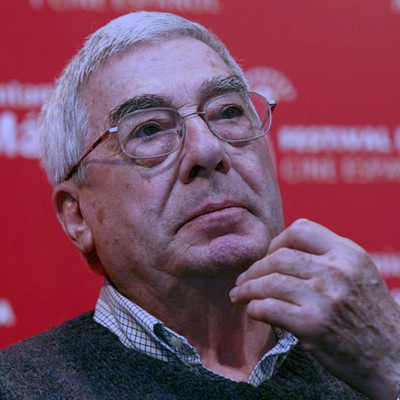
Azcona fue tan grande como discreto. Le gustaba pasar desapercibido. No era asiduo a los actos sociales ni a las alharacas. Cuando en 1998 recogió su Goya de honor, muchos aficionados al cine contemplaron por primera vez su rostro. Que no le gustaba demasiado salir en los papeles se notaba en sus razonamientos, exentos de todo protagonismo: “Lo primero que entendí al entrar en el cine es que no tenía que tener amor propio. Estoy al servicio del director”. “Las películas son de los directores, mientras que el guión es como el encofrado de un edificio, que tiene que estar pero no se puede notar”. “Una vez terminado el guión, se lo entrego al director y ya no quiero saber más de la película, porque un guionista en un rodaje es un alienígena que solo estorba”.
Esta discreción suya explica también que yo tardase en enterarme de que era paisano mío –nacido, como yo, en Logroño, una de las capitales de provincia más pequeñas de España–. Recuerdo que, cuando lo supe, me llené “de orgullo y satisfacción”, frase con la que en mi país siempre se ha asociado al rey, hoy emérito, Juan Carlos I, por existir la creencia popular de que empezaba así sus discursos. Esta célebre frase dio nombre una conocida revista digital de humor político elaborada entre 2014 y 2017 por un grupo de dibujantes que abandonaron El Jueves tras la retirada de una portada sobre la abdicación del monarca.
Azcona murió en Madrid el 24 de marzo de 2008 a los 81 años de edad, víctima de un cáncer de pulmón. Se fue con la misma discreción con la que vivió, dejando un sentimiento de orfandad en sus amigos. “La única putada que me hizo Azcona en su vida fue morirse”, diría José Luis García Sánchez. Una putada de la que dio noticia el propio director de una manera que parecía dictada por Rafael. Dos días después del fallecimiento, cuando ya estaban liquidados todos los trámites tristes de la muerte, su viuda dio vía libre a García Sánchez para que llamara a los amigos que su marido dejó. Y les dijo, a todos, uno por uno: “Tenías un amigo que se llamaba Rafael Azcona”.


One Hundred Years of Rafael Azcona
by Félix Caballero
He was the greatest screenwriter in Spanish cinema, and perhaps in all of Europe. And certainly one of the best in the Spanish-speaking world as well. To Fernando Trueba, director of the Oscar-winning film Belle Époque—which he wrote—he was “the only genius of Spanish cinema.” Yet he himself, ever humble, noted: “One of the most persistent.” And in that he was right, having written ninety-seven screenplays. Nearly all of the great comedies in Spanish cinema over the last fifty years bear his signature.
I am speaking of Rafael Azcona, whose one-hundredth birthday was celebrated on October 24. That is why this is his centenary year. He was born in 1926, the same year as bullfighter Luis Miguel Dominguín, rock & roll singer Chuck Berry, jazz musician Miles Davis, comedic actor Jerry Lewis, poet Allen Ginsberg, and Cuban leader Fidel Castro.
Articles, Cartoons, and Novels
Azcona was not only a brilliant screenwriter associated with film comedy; he was an all-around humorist. In the 1950s, before dedicating himself primarily to cinema, he wrote articles, short stories, and jokes—both literary and illustrated—for La Codorniz (the historic graphic and literary humor magazine founded by Miguel Mihura in 1941 that so often outwitted Francoist censorship) as well as for Pueblo, the regime’s Vertical Syndicate evening newspaper that achieved enormous popularity and served as a phenomenal school of journalism for many. During that same period, our protagonist also wrote five comedic novels in which he already demonstrated the traits that would define him as a screenwriter: ensemble storytelling, solitude, and apparent chaos within a meticulously planned work. He explained his work from that era in these words: “I feel wonderful doing these things: tugging at the beard of severity, sadness, melancholy, and stupidity is a delight.”
Cinema: Ferreri, Berlanga, and Many Others
He broke into cinema in 1958 with El pisito (The Little Apartment), alongside Marco Ferreri, the Italian filmmaker who also made his directorial debut with that film and with whom he would make another in Spain, El cochecito (The Wheelchair, 1960), winner of the Critics’ Prize at the Venice Film Festival. They are undoubtedly two of the best films in the history of Spanish cinema, though the same can be said of several he later made with Luis Berlanga, such as Plácido (1961), El verdugo (The Executioner, 1963), and the Nacional trilogy—La escopeta nacional (The National Shotgun, 1978), Patrimonio Nacional (National Heritage, 1981), and Nacional III (1982).
Ferreri and Berlanga were his earliest and most significant collaborators, but, as mentioned, he worked with all the great directors of Spanish cinema, among whom we can highlight José Luis Cuerda—with whom he made El bosque animado (The Enchanted Forest, 1987) and La lengua de las mariposas (Butterfly's Tongue, 1999)—Fernando Trueba—for whom he wrote El año de las luces (Year of Enlightment, 1986) and Belle Époque (1992), winner of the Academy Award for Best Foreign Language Film—Carlos Saura—who directed his screenplay for ¡Ay, Carmela! (1990)—and José Luis García Sánchez—La corte del faraón (The Court of the Pharaoh, 1985) and Suspiros de España (y Portugal) (1994). His work was rewarded with seven Goya Awards—one of them honorary—the most prestigious honors in Spanish cinema, presented annually by the Academy of Cinematographic Arts and Sciences of Spain.
Realism vs. the Absurd
The standard-bearers of realism—that aesthetic in which mediocrity so often takes refuge to disguise its limitations—reproached him for distancing himself from them to venture into fabulation. However, not being a pure realist gave him the opportunity to delve deeply into collective situations through humor and the absurd. His humor stems from sharp, ironic, and compassionate observation. Skepticism, misogyny, and a lack of solidarity are some of the nouns that emerge from his films, along with adjectives like fierce and, above all, sarcastic.
Man as a social being is a constant in Azcona’s work. His characters are not heroes; they live in an environment that consumes them, yet for which they are simultaneously to blame. Nevertheless, he always leaves room for tenderness—not the maudlin kind, but the kind rooted in human dignity. He captured a tremendous pity for individuals crushed by their circumstances.
Discreet to the Very End
Azcona was as great as he was discreet. He liked to go unnoticed. He was not one for social events or fanfare. When he accepted his Honorary Goya in 1998, many film buffs saw his face for the very first time. His dislike of being in the press was evident in his reflections, entirely devoid of ego: “The first thing I understood when I got into cinema is that I couldn't have any pride. I am at the director's service.” “Films belong to the directors, while the screenplay is like the formwork of a building—it has to be there, but it can't show.” “Once the script is finished, I hand it over to the director and I don't want to hear anything more about the movie, because a screenwriter on a film set is an alien who only gets in the way.”
This discretion of his also explains why it took me so long to find out he was a fellow townsman—born, like me, in Logroño, one of Spain’s smallest provincial capitals. I remember that when I found out, I was filled “with pride and satisfaction,” a phrase in my country forever associated with King—now Emeritus—Juan Carlos I, due to the popular belief that he always began his speeches that way. This famous phrase lent its name to a well-known digital political satire magazine produced between 2014 and 2017 by a group of cartoonists who left El Jueves after a cover about the monarch's abdication was pulled.
Azcona died in Madrid on March 24, 2008, at the age of 81, from lung cancer. He departed with the same discretion with which he lived, leaving a sense of orphanhood among his friends. “The only dirty trick Azcona ever played on me in his life was dying,” José Luis García Sánchez would say—a trick the director himself announced in a way that seemed dictated by Rafael. Two days after his passing, once all the grim formalities of death had been settled, his widow gave García Sánchez the go-ahead to call the friends her husband had left behind. And to all of them, one by one, he said: “You had a friend named Rafael Azcona.”
(This text has been translated into English by Chat GPT)