Introducción
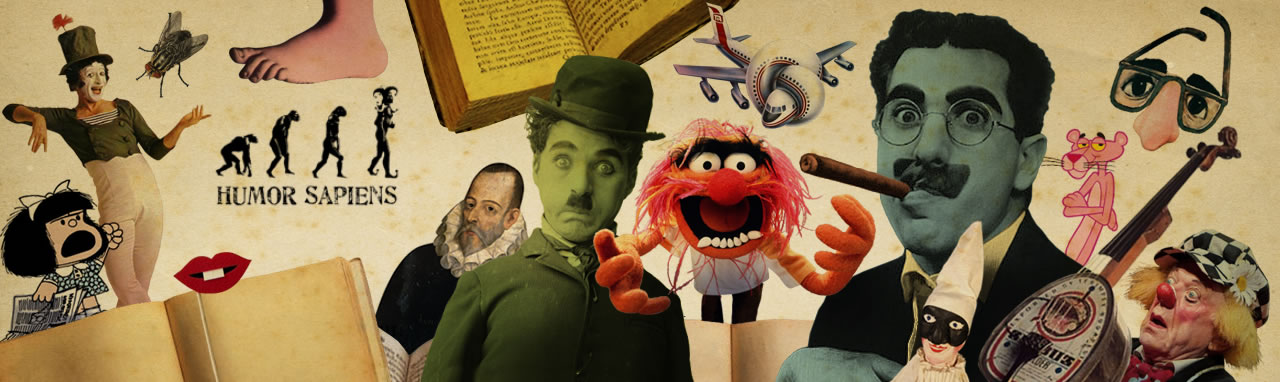
Los autores han pretendido modestamente... no, no es cierto. Los autores no son modestos en absoluto, sino dos humoristas de pro que llevan mucho años haciendo reír a sus lectores y que ahora generosamente comparten su experiencia comiquizadora con quien quiera leer estos artículos en cada Boletín Humor Sapiens, o compilados todos en un libro.
CONSEJO 8. Habla regional
Los defectos de habla regionales son motivo de ridículo, aunque les pese a los que los cometen.
Esto ya lo mencionaron Aristóteles y Platón, cuando hablaron del sentimiento de superioridad y de que nos reíamos de lo que considerábamos imperfecto. El habla no normalizada puede ser muy respetable, pero si induce a risa al personal, induce a risa y eso no se puede evitar. Un ejemplo claro que conecta con la polisemia del ejemplo anterior:
Van dos andaluces por una selva y uno le dice al otro:
—¡Mira Pepe Luí! ¡Una boa!
A lo que el otro responde, sin mirar:
—¡Vivan los novios!
Otro ejemplo similar en otro contexto:
Entra un hombre en una farmacia y le pide al dependiente:
—Un tubo de “Cuélgate”.
—Será “Colgate” —responde el farmacéutico.
—¡Ah! ¿Vos también sos argentino?
Los cometedores de tales errores pueden sentirse ridiculizados (con razón; están siendo ridiculizados). Lo que queda por debatir es si esta burla es lícita. El teórico del humor Ben Jonson (comediógrafo inglés contemporáneo de Shakespeare) escribió sobre el humor y nos dijo (en su comedia Every Man In His Humour) que este funcionaba como un corrector social, que nos reíamos de las cosas que los hombres hacían mal, para que estos se corrigieran. Es la aplicación del precepto latino “Castigat ridendo mores” [Riendo, corrijo las costumbres].
Estamos de acuerdo con el bueno de Ben, porque, bien mirado, una cremallera abierta no tiene ninguna gracia. Así es que cuando nos reímos de quien lleva la bragueta abierta lo que estamos haciendo es decirle que se la cierre, porque así no se va por la vida. Lo mismo sucede cuando nos reímos de quien lleva la cara tiznada.
Y esto, aplicado a la lengua, resulta en la burla del que habla mal, porque no se ha tomado el trabajo (nimio) de dejar de decir ‘cocretas’ en lugar de ‘croquetas’, habida cuenta de que a la glotis y a la lengua les cuesta exactamente el mismo trabajo decir una palabra o la otra.
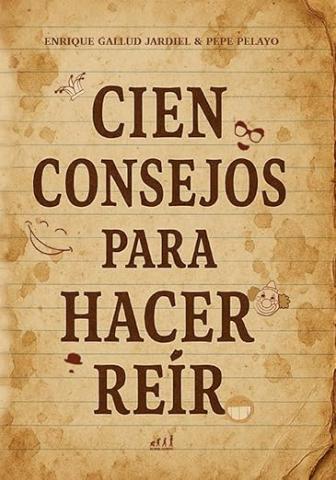
100 Tips to Make People Laugh | Tip 8: Regional Speech
By Enrique Gallud Jardiel & Pepe Pelayo
Introduction
The authors have modestly attempted... no, that's not true. The authors aren't modest at all—they're two professional humorists who have spent many years making their readers laugh, and who now generously share their comedy-crafting experience with anyone who wants to read these articles in each issue of the Humor Sapiens Bulletin, or compiled together in a book.
TIP 8. Regional Speech
Regional speech defects are a source of ridicule, however much it may pain those who commit them.
Aristotle and Plato already mentioned this when they spoke of the feeling of superiority, and of how we laugh at what we consider imperfect. Non-standard speech can be perfectly respectable, but if it makes people laugh, it makes them laugh, and there's no avoiding that. A clear example that connects with the wordplay of the previous entry:
Two Andalusians are walking through a jungle and one says to the other:
"Look, Pepe Luí! A boa!"
To which the other replies, without looking:
"Long live the happy couple!"
Translator's note: Andalusians tend to "swallow" many letters when they speak. In this example, they don't pronounce "boda" (wedding) properly; it comes out sounding like "boa." And a boa, of course, is a snake.
Another similar example in a different context:
A man walks into a pharmacy and asks the clerk:
"A tube of 'Hangate.'"
"You mean 'Colgate,'" the pharmacist replies.
"Ah! You're Argentine too?"
Translator's note: The toothpaste brand "Colgate" is pronounced "Col-gate" in English. But in certain Latin American countries, such as Argentina and Cuba, it's pronounced "Colgáte," which sounds like the Spanish command "cuélgate" (hang yourself, or informally "hang up/hang out"). In this joke, the process works in reverse.
Those who make such mistakes may feel mocked (rightly so; they are being mocked). What remains open to debate is whether this mockery is legitimate. The humor theorist Ben Jonson (an English playwright and contemporary of Shakespeare) wrote about humor and told us, in his comedy Every Man In His Humour, that it functioned as a social corrective—that we laugh at the things people do wrong so that they might correct them. It's the application of the Latin precept "Castigat ridendo mores" [Laughing, I correct customs].
We agree with good old Ben, because, honestly, an open zipper isn't funny in itself. So when we laugh at someone whose fly is open, what we're really doing is telling them to zip it up, because they can't go through life like that. The same thing happens when we laugh at someone with a smudged face.
And applied to language, this results in mockery of those who speak poorly, because they haven't taken the trivial trouble to stop saying "cocretas" instead of "croquetas" [a common Spanish mispronunciation of "croquettes"], given that it takes the glottis and tongue exactly the same effort to say one word as the other.
Translator's note: for English-speaking readers, this is comparable in spirit—though not in origin—to how some English speakers say "nucular" instead of "nuclear." The comparison is offered only to help convey the mechanism of the joke, not because Spanish speakers actually mispronounce words this way; as the chapter argues, these are regional speech patterns, not random distortions.
(This text has been translated into English by IA)