“El político se convierte en estadista cuando comienza a pensar en las próximas generaciones y no en las próximas elecciones”.
Winston Churchill (1874-1963)
Los periódicos comicios pueden ser excelentes oportunidades para ejercer la inteligencia muy necesaria y, también, para el desarrollo del humor.
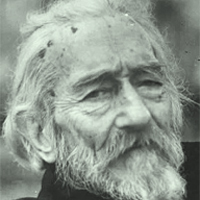
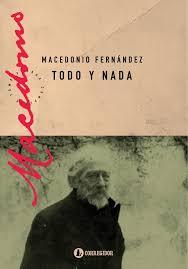
Macedonio Fernández (1874-1952), de corta carrera como magistrado federal de Argentina de la que huyó espantado, fue un extraordinario escritor vanguardista y originalísimo que, curiosamente, en la. actualidad, muchos se lo pierden por no nutrirse con sus páginas, inclusive los que se ufanan de ser conocedores de la literatura latinoamericana y otras elogiosas auto referencias que, quizá, se llevan mal con la humildad de este genio.
Su humor profundizó las contradicciones humanas proyectándoles así la luz necesaria para la reflexión; proponemos leer, por ejemplo, la historia de un personaje que, los días de lluvia, alertaba a los transeúntes que tengan cuidado pues se les están mojando los paraguas abiertos.
Su obra y su vida en general estuvieron estrechamente relacionadas con la política como en la reflexión conceptual, dejando muy atrás a muchos de sus contemporáneos y a los actuales que viven del dinero aportado por los contribuyentes, aferrados a las cómodas poltronas mediante promesas electorales poco creíbles y evitando eficientemente la alternancia en las responsabilidades de ejercicio de los cargos y privilegios.
En vista de las elecciones generales de 1922, en las que triunfó el radical Marcelo Torcuato de Alvear (1868-1942), en un país con intensas convulsiones sociales y un grave deterioro de los partidos políticos, que se seguirán profundizando hasta la actualidad con altibajos, el célebre articulista, con dos años de anticipación, en muy inferioridad de condiciones más allá del acompañamiento de célebres intelectuales y sectores socialistas, inicia una larga y divertida campaña presidencial como un anti candidato, estableciendo una extendida humorada en contra de la corrupción, la falta de transparencia, la despolitización generalizada de la población, la inoperancia de los poderes públicos para solucionar los problemas cotidianos de la gente, la falta de representatividad de las agrupaciones partidarias, los avances totalitarios marxistas, fascistas y nazistas, etcétera.
Todo era en serio y en broma ya que sostenía que, dado que eran numerosas las personas dispuestas a abrir pequeñas cigarrerías pero muy pocas estaban dispuestas a postularse para Presidente de Argentina, en definitiva, era más fácil llegar a la Primera Magistratura que triunfar con un pequeño comercio minorista.
El foco lo ubicó en proponer los más diversos disparates y dislates para provocar pánico en la población, superando con creces a sus contendientes, mediante promesas electorales, generando así la convicción general de que sería el único con capacidad de solucionar los problemas que él habría creado; hay unos cuantos célebres ejemplos en el siglo XXI.
Plantea una estrategia relámpago, horizontal, al margen de los partidos políticos existentes, participativa, sin recursos económicos pues será mediante la difusión boca a boca y la militancia sin especulaciones personales de los que se fueron sumando; se reunían todos los días en conocidas confiterías de Buenos Aires, del barrio de Once y Congreso, buscando así atraer al electorado descreído férreamente del accionar de las tres agrupaciones partidarias con mayor capacidad institucional de ese entonces.
Todo era hilarante pero, al mismo tiempo, señalando muy seriamente el desmembramiento social, los contubernios, las necesidades básicas insatisfechas, el desempleo y el trabajo precario de una población diversa en un país inmensamente rico plagado de enormes desigualdades, derroches fastuosos y disputas personalistas, como casi un siglo después con algunas variantes.
La esperanza por las mejoras en democracia cualificada y el humor siguen vigentes; ya es mucho.
MÁS DATOS
El primer trabajo publicado por el entonces renuente en tal sentido fue el ensayo metafísico encuadrado en el realismo ingenuo; “No toda es vigilia la de los ojos abiertos” (1928).
“La palabra es instrumento de comunicación y no de pensamiento; se piensa con percepciones e imágenes, se comunica esto con palabras, es decir, se suscitan estas mismas imágenes en otro; en segundo término, en su único uso posible, la comunicación puede usarse con inadecuación para aludir y refutarlas, a otras inadecuaciones verbales que hay ya en la mente del lector o interlocutor. No hay ninguna imagen o percepción propia, exclusiva, como contenido de la palabra materia, y de las palabras tiempo, espacio, yo, substancia, noúmeno. Eso es lo que quiero decir cuando los niego; niego como contenido privativo de esas palabras ninguna imagen; pero no necesito negarlos en sí- sino sólo como contenido de tal o cual palabra -porque la existencia, el ser, no es negable, dado que de nada puedo hablar o pensar si no es existencia, estado, y no es existencia lo que nunca estuvo en mi sensibilidad como imagen o afección. (…)
Basta la igual vivacidad de las imágenes y emociones del ensueño frente a las de la realidad para que nuestra vida pudiera, sin ceder en importancia y seriedad, ser toda hecha de ensueño. (…)
Podría decirse que si los ensueños son tan angustiosos o regocijantes, no vale la pena de que sean irreales, y si estamos acostumbrados a la perdidumbre de muchos hechos calificados en el momento de reales, es porque la realidad tiene un valor apenas diferente o superior al de los ensueños, tan intensos, vivos, nítidos, como lo real. (…)
1. La palabra es signo para comunicación. Esta es sólo, más que comunicación, suscitación de imagen por signo. Y el orden de lo así comunicable es puramente el de las imágenes, aunque haciendo nacer en otra mente las imágenes que tenemos ahora en la nuestra, por signos asociados a ellas y llamados palabras; podemos, así como suscitar imágenes, suscitar las afecciones asociadas a esas imágenes; más lo primero suscitado ha de ser imágenes. 2. La palabra no es necesaria en el denominado pensamiento. Este o la Inteligencia nada añade al fenomenismo del ser, y por tanto nada es más que un registro de lo que llamamos el pasado. El Ser, el fenomenismo, no tiene ley. No existen ni leyes ni principios lógicos, de razón, etc.; nada fuerza al ser. Lo mismo que acabo de aseverar de que la palabra es signo suscitador, etc., puede cesar de ocurrir, aunque sea una comprobación invariable en el pasado, y puedo, por tanto, estar escribiendo en vano, para mí solamente. Como yo no puedo hablar sino del pasado, cuando digo que el ser no tiene leyes, es porque he visto muchas veces que llamadas leyes han caducado. 3. Si yo raciocino hablando no es porque tenga inteligencia, sino porque estoy en comunicación y no en pensamiento o investigación para mí, y esos aparentes raciocinios son agrupaciones verbales conducentes a suscitar ciertas imágenes. El raciocinio lógico y dialéctico que ocupa casi todas las páginas de Kant es una simulación de eficacia de la Inteligencia y está concorde con el creer en principios de razón, etc. Un raciocinio genuino no ha de figurar en mi exposición. 4. Por medio de palabras procuraré que se pueble vuestra mente de imágenes de lo que creo habéis visto, tocado, oído, lo mismo que yo en ciertas circunstancias, y de su ordenación, sucesión, posición. Si el mundo perceptivo vuestro es, como lo creo, el mismo mío, diré en qué ordenación, o sin ninguna, los he percibido. Os haré pensar, como lo he hecho en mi meditación, evocando imágenes, pues pensar es ver, oír, tocar y evocar lo visto, tocado, oído. (…)
Hay un tenor de comicidad, una tasa de ridículo en las reverencias de Kant a la Experiencia. Y llega a un decidido y molesto falsete sentimental cuando se da por enamorado del ‘orden inflexible’ o ‘universal regulación’ de esa venerada Experiencia. (…)
Las palabras son todas concretas y con ellas no se piensa, sino que, meros instrumentos de recordación para sí y de comunicación por recordación en otro, suscitan la misma escena de imágenes en las dos mentes: del dicente y el oyente, y entonces es posible hablar sobre relaciones entre las imágenes”. (Fernández, Macedonio. No toda es vigilia la de los ojos abiertos. Manuel Gleizer Editor. Páginas 48, 50, 63, 141, 142, 155 y 188. Buenos Aires, Argentina.)
También interesante su peculiar obra, publicada póstumamente “Museo de la Novela de la Eterna”, comenzada en 1925 y difundida por primera vez por el Centro Editor de América Latina, Buenos Aires, 1967.
Así mismo, “Conversaciones imposibles con Macedonio Fernández” de Mónica Bueno. Corregidor. Buenos Aires, 2001.


Macedonio Fernández: Humorist and anti‑candidate
By Alejandro Rojo Vivot
“The politician becomes a statesman when he begins to think about the next generations and not about the next elections.”
Winston Churchill (1874–1963)
Election campaigns can be excellent opportunities to exercise the very necessary intelligence and, also, to foster the development of humor.
Macedonio Fernández (1874–1952), whose brief career as a federal magistrate in Argentina he abandoned in fright, was an extraordinary avant‑garde and highly original writer who, curiously, many people today miss out on because they do not nourish themselves with his pages, including those who boast of knowing Latin American literature and indulge in other self‑congratulatory references that perhaps do not get along well with this genius’s humility.
His humor delved into human contradictions, thus casting on them the light needed for reflection; we might suggest reading, for example, the story of a character who, on rainy days, would warn passers‑by to be careful because their open umbrellas were getting wet.
His work and his life in general were closely linked to politics, both in conceptual reflection and in practice, leaving far behind many of his contemporaries and many of today’s politicians, who live off taxpayers’ money, clinging to their comfortable armchairs by means of barely credible electoral promises and efficiently avoiding alternation in the responsibilities involved in exercising offices and privileges.
In view of the general elections of 1922, in which the Radical Marcelo Torcuato de Alvear (1868–1942) won, in a country undergoing intense social upheaval and a serious deterioration of the political parties—a process that, with ups and downs, has continued to deepen up to the present—the famous columnist, two years in advance and at a great disadvantage despite the backing of well‑known intellectuals and socialist sectors, launched a long and entertaining presidential campaign as an anti‑candidate, setting in motion an extended humorous operation against corruption, lack of transparency, the generalized depoliticization of the population, the ineffectiveness of the public authorities in solving people’s everyday problems, the lack of representativeness of party groupings, and the totalitarian advances of Marxists, fascists and Nazis, etc.
Everything was serious and joking at the same time, since he maintained that, given that many people were willing to open small cigarette shops but very few were willing to run for President of Argentina, in the end it was easier to reach the highest office than to succeed with a small retail business.
He focused on proposing the most diverse absurdities and nonsense in order to sow panic among the population, clearly surpassing his opponents through his electoral promises, thereby generating the general conviction that he would be the only one capable of solving the problems he himself would have created; there are quite a few famous examples of that in the 21st century.
He laid out a lightning, horizontal strategy, outside the existing political parties, participatory, without financial resources, since it would be carried out through word‑of‑mouth and the activism—free of personal scheming—of those who gradually joined in; they met daily in well‑known cafés in Buenos Aires, in the neighborhoods of Once and Congreso, thus seeking to attract an electorate that had become strongly disenchanted with the performance of the three party groupings with the greatest institutional clout at the time.
Everything was hilarious and, at the same time, pointed very seriously to social disintegration, shady deals, unmet basic needs, unemployment and precarious work among a diverse population in an immensely rich country riddled with enormous inequalities, lavish waste and personalistic feuds—almost a century later, with some variations, much the same.
Hope for improvements in a more qualified democracy, and humor, are still alive; that is already a great deal.
MORE DATA
The first work published by this initially reluctant author in that regard was the metaphysical essay framed within naïve realism, No toda es vigilia la de los ojos abiertos (1928).
“‘The word is an instrument of communication and not of thought; one thinks with perceptions and images, and these are communicated with words, that is, the same images are brought forth in another person; secondly, in its only possible use, communication can be used inappropriately to allude to and refute other verbal inadequacies already present in the mind of the reader or interlocutor. There is no image or perception of its own, exclusive, as the content of the word matter, nor of the words time, space, self, substance, noumenon. That is what I mean when I deny them; I deny that there is any image as a private content of those words; but I do not need to deny them in themselves—only as the content of such and such a word—for existence, being, cannot be denied, given that I can speak or think of nothing that is not existence, a state, and nothing is existence that has never been in my sensibility as an image or affection. (…)
It is enough that the images and emotions of dreams are just as vivid as those of reality for our life, without losing any of its importance or seriousness, to be entirely made of dreams. (…)
One might say that if dreams are so distressing or joyful, it is hardly worth insisting that they are unreal, and if we are accustomed to the loss of many facts that at the time were labeled real, it is because reality has a value only slightly different from, or superior to, that of dreams, which are as intense, alive and clear as the real. (…)
The word is a sign for communication. This is nothing more than communication, the eliciting of an image by means of a sign. And the order of what is thus communicable is purely that of images, although by bringing to life in another mind the images we now have in our own, through signs associated with them and called words, we can, just as we elicit images, elicit the affections associated with those images; but what must first be elicited are images. 2. The word is not necessary in what is called thought. Thought, or Intelligence, adds nothing to the phenomenal nature of being and is therefore nothing more than a record of what we call the past. Being, phenomenal reality, has no law. There are no laws or logical principles, of reason, etc.; nothing compels being. What I have just asserted about the word as a sign that elicits, etc., may cease to occur, even though it has been an invariable observation in the past, and I may therefore be writing in vain, for myself alone. Since I can speak only of the past, when I say that being has no laws, it is because I have often seen so‑called laws become obsolete. 3. If I reason while speaking, it is not because I possess intelligence but because I am engaged in communication and not in thought or inquiry for myself, and those apparent reasonings are verbal groupings intended to elicit certain images. The logical and dialectical reasoning that fills almost all of Kant’s pages is a simulation of the effectiveness of Intelligence and is in keeping with the belief in principles of reason, etc. A genuine reasoning will not appear in my exposition. 4. Through words I shall try to people your mind with images of what I believe you have seen, touched and heard, just as I have in certain circumstances, and with their arrangement, succession and position. If your perceptual world is, as I believe, the same as mine, I shall say in what order, or in what lack of order, I have perceived them. I shall make you think, as I have done in my meditation, by evoking images, for to think is to see, to hear, to touch and to evoke what has been seen, touched and heard. (…)
There is a vein of comicality, a degree of the ridiculous, in Kant’s reverences to Experience. And he reaches a decidedly annoying sentimental falsetto when he claims to be in love with the “inflexible order” or “universal regulation” of that revered Experience. (…)
Words are all concrete and with them one does not think; rather, they are mere instruments of recollection for oneself and of communication by recollection in another, they bring forth the same scene of images in the two minds, that of the speaker and that of the listener, and only then is it possible to speak about relations between the images.’” (Fernández, Macedonio. No toda es vigilia la de los ojos abiertos. Manuel Gleizer Editor. pp. 48, 50, 63, 141, 142, 155 and 188. Buenos Aires, Argentina.)
Also noteworthy is his peculiar work Museo de la Novela de la Eterna, published posthumously, begun in 1925 and first released by the Centro Editor de América Latina, Buenos Aires, 1967.
Equally interesting is Conversaciones imposibles con Macedonio Fernández by Mónica Bueno. Corregidor. Buenos Aires, 2001.
(This text has been translated into English by ChatGPT)