
Hay países que, debido a su cultura e historia, resultan más enigmáticos para los occidentales. China es uno de ellos, no solo por su idioma, cuyo humor nos resulta difícil de entender y traducir, sino también por haber vivido largos periodos de aislamiento histórico. Incluso ahora, la comunicación no es fácil, y los directores de museos no están dispuestos a conceder entrevistas por miedo a futuros problemas políticos. Incluso intenté hablar con más de una docena de artistas, pero solo Fan Lintão me respondió:
«En China hay muchos museos de cómics, pero el único dedicado exclusivamente a las viñetas humorísticas es el Museo de Arte de Tao, ubicado en Hangzhou, provincia de Zhejiang. El director es el Sr. Tao Xiaoming. Organizó tres ediciones de la Exposición de Historietas Humorísticas Modernas de China, cuya tercera edición contó con la participación de numerosos caricaturistas de renombre internacional. Esta es la única exposición de cómics en China centrada exclusivamente en el tema del humor, y ha tenido un impacto significativo y de gran alcance». Comencemos a escribir sobre este museo, ubicado en Hangzhou, en la parte centro-este del país, basándonos en lo que encontramos en línea.
Tao Xiaoming, ciudadano chino nacido en 1952, es presidente de la Asociación de Caricaturistas de Zhejiang, donde actúa como curador y editor. En 1990, organizó la "Primera Exposición de Caricaturas de Humor Moderno de China" y editó la publicación de Obras Seleccionadas de la Exposición de Caricaturas de Humor Moderno de China. En 2019, coordinó una segunda edición, y en 2022, internacionalizó el evento con la "Primera Exposición Internacional de Caricaturas de Humor Deportivo", que recorrió más de diez ciudades del país. También editó "Diversión con Caricaturas en los Juegos Asiáticos: Colección de Obras de la Primera Exposición Internacional de Caricaturas de Humor Deportivo". En 2024, continuó con la "Tercera Exposición de Caricaturas de Humor Moderno de China" en el Museo de Caricaturas y Animación de China. Deduzco que este es el museo al que se refiere Fan Lintão, ubicado en Hangzhou, Zhejiang, e inaugurado en 2021.
Según informes, este es el primer museo nacional dedicado a la caricatura y la animación, y alberga más de 20.000 obras originales, guiones, materiales históricos, libros, revistas, maquetas y otros productos derivados. Su objetivo es presentar e interpretar la historia centenaria, el desarrollo industrial y las amplias perspectivas de la caricatura y la animación chinas.
El museo también cuenta con varias áreas complementarias, como un teatro, una sala de cine y televisión, una biblioteca, una sala audiovisual y una sala de deportes electrónicos. Se realizan regularmente actividades como exposiciones temáticas, teatro en vivo, representaciones teatrales con vestuario, juegos de deportes electrónicos y talleres de animación.
Afiliado al Departamento de Propaganda del Comité Municipal de Hangzhou del Partido Comunista Chino, es una institución financiada con fondos públicos. Aunque se describe como un Museo del Humor, termina centrándose más en la animación que en la caricatura pura.
Si este viaje por China comenzó en Hangzhou, ahora recorremos 1200 km al norte, hasta la capital, Pekín, donde, en principio, las referencias históricas están más concentradas y la cultura es más vibrante.
En la colección del Museo Nacional del Palacio (en la Ciudad Prohibida) de Pekín, hay una exposición que presenta diez obras de pintura y caligrafía chinas que ilustran cómo los artistas del pasado expresaron el sentido del humor en la cultura china; sin embargo, es solo una pequeña sección de un gran museo nacional. No es un Museo del Humor.
Luego fuimos al Museo Mundial de Arte de la Historieta de Pekín – Chaoyang. De nuevo, el uso del término "historieta" nos confunde, ya que este museo se dedica exclusivamente a la animación. En el mismo barrio, encontramos el Museo de Arte Yuan, que, si bien se dedica al arte contemporáneo, explora el humor y la sátira. Fundado en 2010, aunque no es un museo del humor, ha expuesto a artistas como Hu Qingtai, para quienes el humor es una parte fundamental de sus creaciones contemporáneas. Más concretamente, es un museo moderno cuyas colecciones se conservan esencialmente en almacenes y alberga grandes exposiciones temporales, explorando el ámbito interactivo, irreverente y, por consiguiente, humorístico. Su espacio alberga salas de exposiciones, salas audiovisuales, espacios para conferencias, una biblioteca y un laboratorio de artes visuales y neurociencia.
De regreso al centro, volamos 1000 km hasta la región dominada por Shanghái para hablar sobre Nanjing, Shanghái y Zhojiang.
Aunque no existe un solo museo, como vemos, dedicado exclusivamente a "dibujos humorísticos" en China, el humor es característico de las obras expuestas en varios museos de arte contemporáneo, como el Museo G de Nanjing, donde el artista Xu Zhen ha dominado con su perspectiva innovadora y provocadora que, según la crítica, incorpora estrategias conceptuales y pop para desafiar las normas culturales y sociales.
El Museo de Arte Ding Cong, también conocido como Sala de Exposiciones Dingcongmanhua, en Shanghái (en la antigua ciudad de Fengjing, en Jinshan), inaugurado en 2003, exhibe la vida y obra del caricaturista Ding Cong, tanto en el ámbito del dibujo satírico como en las ilustraciones para libros y retratos de personajes. Se trata, por tanto, de una Casa-Museo que preserva la memoria de este importante artista local, recreando espacios de su trayectoria vital, además de una biblioteca de humor.
En la misma ciudad se encuentra el Museo de Animación y Cómics de Shanghái de Pudong, otro espacio dedicado al cómic y la animación, donde el humor aparece ocasionalmente.
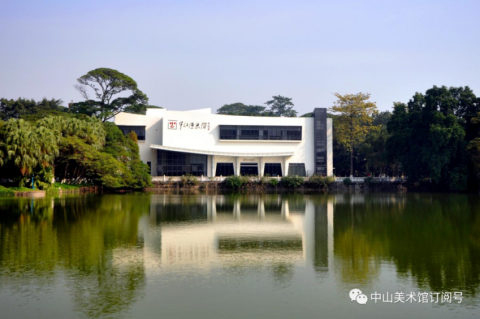
La caricatura, en su variante de tira cómica, se desarrolló en China a finales del siglo XIX, creando una tradición más arraigada que la de las caricaturas simples, debido al gusto cultural chino por la narrativa gráfica. En este estilo, los dibujos, no divididos en paneles como en la época moderna, narraban anécdotas, pequeñas historias dentro de una narrativa más amplia. Así, en Guangdong, encontramos otro espacio dedicado a este arte: el Museo de la Caricatura Zhongshan, ubicado en el Parque del Lago Yixian e inaugurado en 2013. Se dice que este lugar es la cuna de las tiras cómicas chinas y reúne obras de Jiang Yousheng, Te Wei, Fang Cheng, Chen Yifan, Fang Tang, Huang Miaozi, Han Yu... Aquí se presenta una breve historia de la caricatura china, así como espacios dedicados a algunos de los artistas más importantes, utilizando no solo obras originales, sino también nuevas tecnologías, como hologramas de 360 grados, juegos interactivos y multimedia, para ofrecer una experiencia inmersiva y atractiva a los visitantes.
Como pueden ver, existen múltiples espacios para la caricatura en el género de la tira cómica, y lo contrario ocurre con el humor gráfico, que resulta natural en un país donde la libertad de reír es muy limitada, a pesar de las decenas de artistas que participan en festivales internacionales y de la existencia de buenos concursos/muestras de humor gráfico.
Cambiemos de país, por uno que también empieza por R: la República de China. ¿Pero no es el mismo país? No. Esta vez cruzamos el Mar de China para encontrar una isla independiente (no sabemos desde hace cuánto tiempo) que solo se diferencia en la ausencia de "Pueblo", es decir, vamos a la República de China, también conocida como Taiwán.
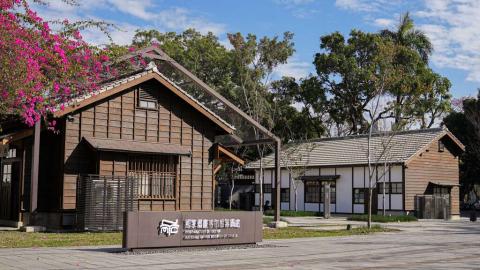
¿Por qué cruzamos este mar? ¿Encontraremos un panorama diferente en el ámbito de los Museos del Humor? No. La realidad es que, a pesar de haber escapado de la opresión del Partido Comunista Maoísta, pasó décadas bajo la opresión de una dictadura capitalista, que también detestaba el humor. Liberado de esta opresión, recuperando los valores culturales legados por la presencia japonesa en el pasado, en 2017 comenzó la construcción del Museo Nacional del Cómic de Taiwán (NTMC). Tras muchas aventuras y cambios de ubicación, finalmente abrió sus puertas a finales de 2023 en el antiguo complejo penitenciario de Taichung. Contará con 19 edificios históricos interconectados, además de un nuevo edificio principal en el ala norte, que integrará la colección del museo, un centro de investigación, espacios para exposiciones temporales, un centro educativo y de promoción del cómic, una biblioteca y un cine de animación. ¿Hay humor aquí? Sí, pero no mucho.
De igual manera, se puede considerar el Museo de Arte Contemporáneo de Taipéi (MOCA Taipéi), donde se organizan regularmente exposiciones temporales de artistas con humor e irreverencia.
Entre un pueblo con un gran sentido del humor, pero tan sutil que los occidentales no lo comprenden, nuestros asesores recomiendan mencionar también el Museo de Miniaturas de Taiwán (especializado en arte en miniatura, presenta un universo fantástico, imaginativo y, en ocasiones, humorístico); el Museo de Arte Yu-Hsiu (este museo exhibe con frecuencia artistas de la nueva vanguardia donde la parodia y el humor son características dominantes, como los del artista Wen-Red Tsao), o la Galería Double Square, que también se centra en el arte contemporáneo irreverente, a veces burlesco, apródico o incluso humorístico.
En resumen, no existen Museos del Humor en estos países que llevan el nombre de China.





Museums of Humor in the World – People's Republic of China / Republic of China – Taiwan
By: Osvaldo Macedo de Sousa
There are countries that, due to their culture and history, end up being more enigmatic to us Westerners. China is one of them, not only because of its language, where its humor is difficult to understand and translate for us, but also because it has had long historical periods of isolation. Even now, communication is not easy, and museum directors are not receptive to giving interviews, for fear of having political problems later on. I even tried to talk to more than a dozen artists, but it was only Fan Lintão who ended up answering me: "In China, there are many cartoon museums, but the only one dedicated exclusively to humorous cartoons is the Tao's Art Museum, located in Hangzhou, Zhejiang province. The director is Mr. Tao Xiaoming. He organized three editions of the Modern Humorous Cartoon Exhibition of China, the third edition of which featured the participation of many internationally renowned cartoonists. This is the only cartoon exhibition in China focused exclusively on the theme of humor, and it has had a significant and far-reaching impact."
Let's begin writing about this museum, located in Hangzhou in the east-central part of the country, based on what we found online.
Tao Xiaoming, a Chinese citizen born in 1952, is the president of the Zhejiang Cartoonists Association, acting as curator and editor. In 1990, he organized the "First China Modern Humor Cartoon Exhibition" and edited the publication of Selected Works from the China Modern Humor Cartoon Exhibition. In 2019, he coordinated a second edition, and in 2022, he internationalized the event with the "First International Sports Humor Cartoon Exhibition," which toured more than ten cities in the country. He also edited "Cartoon Fun at the Asian Games—Collection of Works from the First International Sports Humor Cartoon Exhibition." In 2024, he continued with the "Third China Modern Humor Cartoon Exhibition" at the China Cartoon and Animation Museum. I deduce that this is the museum Fan Lintão is referring to, located in Hangzhou – Zhejiang and inaugurated in 2021.
According to reports, this is the first national museum dedicated to the theme of cartooning and animation, housing over 20,000 original works, scripts, historical materials, books and magazines, models, and other derivative products, with the aim of presenting and interpreting the century-long history, industrial development, and broad perspectives of Chinese cartooning and animation.
The museum also has several support areas, such as a theater, a film and television area, a library, an audiovisual room, and an e-sports hall. Activities such as thematic exhibitions, live theater, theatrical performances with costumes, e-sports games, and animation workshops are held regularly.
Affiliated with the Propaganda Department of the Hangzhou Municipal Committee of the Chinese Communist Party, it is a publicly funded institution, and although it is described as a Museum of Humor, it ends up focusing more on animation than on pure cartooning.
If this journey through China began in Hangzhou, we now travel 1,200 km north to the capital – Beijing, where, in principle, historical references are more concentrated and the culture is more vibrant.
In the collection of the National Palace Museum (in the Forbidden City) in Beijing, there is an exhibition that presents ten works of Chinese painting and calligraphy that illustrate how artists of the past expressed a sense of humor in Chinese culture; however, it is only a small section of a large national museum. It is not a Museum of Humor.
Then we went to the Beijing Cartoon Art World Museum – Chaoyang. Again, the use of the term cartoon confuses us, since this museum is dedicated solely to animation. In the same neighborhood, we found the Yuan Art Museum, which, while dedicated to contemporary art, explores humor and satire. Founded in 2010, although not a humor museum, it has exhibited artists such as Hu Qingtai, where humor is a fundamental part of his contemporary creations. More specifically, it is a modern museum where the collections are essentially kept in storage and it hosts large temporary exhibitions, exploring the interactive, irreverent, and consequently humorous realm. Its space houses exhibition halls, audiovisual rooms, conference spaces, a library, and a visual arts and neuroscience laboratory.
Returning to the center, we flew 1000 km to the region dominated by Shanghai to talk about Nanjing, Shanghai, and Zhojiang,
Although there isn't a single museum, as we are seeing, dedicated exclusively to "humorous drawings" in China, humor is a characteristic of the works exhibited in several contemporary art museums, such as the G Museum in Nanjing, where the artist Xu Zhen has dominated with his innovative and provocative perspective that, according to critics, incorporates conceptual and pop strategies to challenge cultural and social norms.
The Ding Cong Art Museum, also known as the Dingcongmanhua Exhibition Hall, in Shanghai (in the former city of Fengjing, in Jinshan), opened in 2003, exhibits the life and work of cartoonist Ding Cong, both in the realm of satirical drawing and illustrations for books and character portraits. Thus, it is a House-Museum that preserves the memory of this important local artist, recreating spaces from his life trajectory, as well as a humor library.
In the same city we find The Shanghai Animation & Comics Museum Pudong, that is, another space dedicated to comics and animation, where humor appears occasionally.
Cartooning, in its comic strip variant, developed in China from the late 19th century, creating a stronger tradition than simple cartoons, due to the Chinese cultural taste for graphic narrative. In this style, the drawings, not divided into panels as in modern times, recounted anecdotes, small stories within the larger narrative. Thus, in Guangdong, we find another space dedicated to this art – the Zhongshan Cartoon Museum, located in Yixian Lake Park and inaugurated in 2013. This location is said to be the birthplace of Chinese comic strips, and this space brings together works by Jiang Yousheng, Te Wei, Fang Cheng, Chen Yifan, Fang Tang, Huang Miaozi, Han Yu... Here, a brief history of Chinese cartooning is presented, as well as spaces dedicated to some of the most important artists, using not only original works but also new technologies, such as 360-degree holograms, interactive games, and multimedia, to provide an immersive and engaging experience for visitors.
As you can see, there are multiple spaces for cartooning in the comic strip genre, and the opposite is true for graphic humor, which ends up being natural in a country where the freedom of laughter is very limited, despite the dozens of artists participating in international festivals and despite there being good graphic humor competitions/shows in that country.
So, let's change countries, to one that also starts with R, that is, the Republic of China. But isn't it the same country? No. This time we cross the China Sea to find an independent island (we don't know for how long) that differs only in the lack of the "People," that is, we go to the Republic of China, also known as Taiwan.
Why did we cross this sea? Will we find a different panorama in the realm of Humor Museums? No. The reality is that, despite having escaped the oppression of the Maoist Communist Party, it spent decades under the oppression of a capitalist dictatorship, which also disliked humor. Now freed from this oppression, recovering the cultural values left by the Japanese presence in the past, in 2017 the construction of The National Taiwan Museum of Comics (NTMC) began. After many adventures and changes of location, it finally opened its doors at the end of 2023 in the former Taichung prison complex. There will be 19 existing interconnected historical buildings, plus a new main building in the north wing, integrating a museum collection, research center, temporary exhibition spaces, educational and promotional center for comics, library and animation cinema. Is there humor here? Yes, but not much.
Similarly, one can consider The Museum of Contemporary Art Taipei (MOCA Taipei), where temporary exhibitions of artists with humor and irreverence are regularly organized.
Among a people with a great sense of humor, but so subtle that Westerners don't understand it, our advisors recommend that we also mention the Miniatures Museum of Taiwan (specializing in miniature art, it presents a fantastical, imaginative, and sometimes humorous universe); the Yu-Hsiu Museum of Art (this museum frequently exhibits artists of the new avant-garde where parody and humor are dominant characteristics, such as those of the artist Wen-Red Tsao), or the Double Square Gallery, which also focuses on contemporary irreverent art, sometimes burlesque, aprodic, or even humorous.
In short, there are no Museums of Humor in these countries that bear the name China.