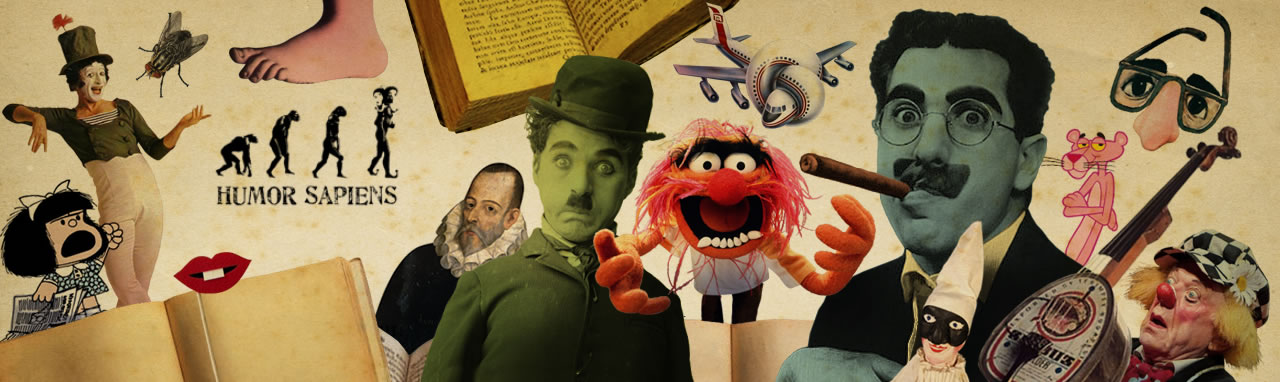
Mi madre, que aún está felizmente viva y tiene ya 96 años, nunca ha sido amiga de hacer bromas ni de contar chistes, pero siempre ha tenido sentido del humor, pues ha sabido y sabe reírse con las anécdotas divertidas. Con lo que no puede es con el humor grueso, de brocha gorda, de mal gusto: el humor grosero, chabacano, vulgar, basto, soez, zafio, ordinario, burdo… Pongámosle el adjetivo que queramos, al final todos son sinónimos. Por cierto, antes de seguir, un inciso lingüístico: siempre me sorprendió que hubiera una revista que se llamase Burda. Claro, lo que yo no sabía entonces es que el nombre viene del apellido de su creadora, Aenne Burda. Se trata de una revista alemana nacida en 1950 que democratizó la moda al incluir patrones de costura listos para usar, permitiendo a millones de mujeres acceder desde sus casas al mundo del diseño y vestir a sus familias sin depender de grandes marcas.
Pero vuelvo al humor grosero. En castellano hay otra palabra para designarlo: chocarrero. Una palabra que, por lo menos en España, ya no suele usarse, a diferencia de su equivalente en gallego (el idioma propio de Galicia, en el noroeste de la península ibérica, desde donde escribo este artículo): choqueiro, que aún tiene mucha vitalidad. Siempre que aparece en la televisión algún humorista de este tipo (y aparecen muchos), mi madre lo despacha con un contundente “¡pero cuánta majadería dice!”. Majadería –por cierto– es también una palabra en la que merece la pena reparar. No creo que en España se utilice demasiado hoy. Desde luego, no tanto como lo hace mi madre. El Diccionario de la lengua española la define como “dicho o hecho necio, imprudente o molesto”, y entre otros muchos, da como sinónimos bobada, estupidez, idiotez, imbecilidad y tontería.
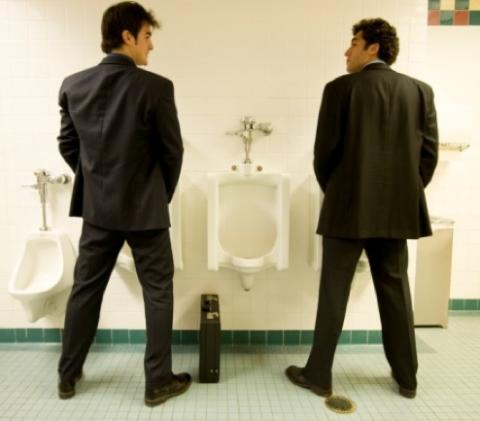
Antes de continuar con el hilo de mi discurso, quiero hacer un inciso que, en realidad, no lo es tanto: si a mi madre le desagrada profundamente el humor de brocha gorda (como también a mí, aunque no soy tan categórico como ella), yo no puedo con el humor escatológico: ya saben, eso de “caca, pedo, culo, pis”. Por cierto que este era el título y el estribillo de una canción de Enrique y Ana, dúo musical para niños muy famoso en España a finales de la década de 1970 y comienzos de la de 1980. El tema formó parte de la banda sonora de su película Las aventuras de Enrique y Ana (1981), aunque interpretado por otro grupo infantil llamado Los Punkitos. Pese a que la Inteligencia Artificial dice que el humor escatológico es “un recurso universal presente en casi todas las culturas”, a mí me produce un rechazo absoluto y no entiendo cómo hay personas ilustradas e incluso ilustres que disfrutan con él. Estoy pensando, por ejemplo, en un famosísimo periodista radiofónico español, al que he escuchado regocijarse en este asunto en más de una ocasión.
“La televisión mató a la estrella del humor”
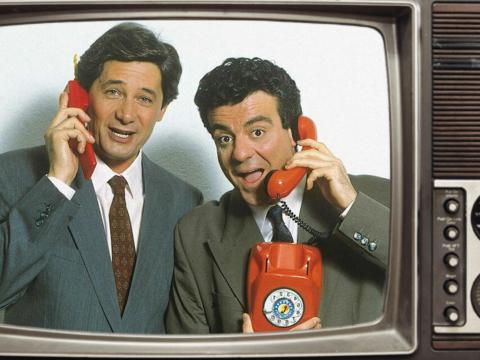
Regreso al humor burdo en general. Es un género que ha abundado siempre en la televisión, por lo menos en la española. No me refiero solo a la cadena pública estatal TVE, sino a todas las televisiones de España. Parece como si la televisión fuera un medio que, por sus características, demandase este tipo de humor o, dicho de otro modo, como si el humor grosero fuese especialmente adecuado para la televisión. Extrapolando el título de una conocida canción pop –“El vídeo mató a la estrella de la radio”–, podríamos decir que “la televisión mató a la estrella del humor”. Es decir, el humor en la televisión renunció a lo mejor para apostar por lo más zafio y soez, en la creencia, probablemente, de que eso le permitiría alcanzar mayores audiencias.
Por supuesto que desde que existe “la caja tonta”, en todo el mundo ha habido buenos programas de humor –algunos muy buenos–: tanto series de comedia como programas de sketches, de monólogos o de parodia, pero la figura del “humorista de televisión”, al menos en mi país, parece que ha sido monopolizada por los cómicos más vulgares. En eso le doy la razón a mi madre, que se reía mucho con Gila –bien conocido también en Argentina– o Tip y Coll, pero que nunca tragó a Martes y 13, Los Morancos o José Mota, por citar a algunos de los humoristas más famosos de la historia de la televisión en España. Lo curioso es que ni Gila ni Tip y Coll hacían parodia –bueno, Tip y Coll, a veces–, mientras que Martes y 13, Los Morancos y Mota se especializaron en ella. Y ahí quería yo llegar: pareciera que hubiese un hilo de unión entre la parodia y el humor más chabacano. ¿Es necesario ser soez para hacer parodia? ¿Se puede parodiar sin resultar vulgar?
Humor grosero en Aristófanes
Por supuesto que humor grueso y parodia no tienen por qué ir de la mano, aunque el hecho de que en las obras del padre de la comedia griega, Aristófanes, abunde el humor grosero pareciera indicar lo contrario. Eso no quita que el autor de Lisístrata o Las nubes fuese un excelente comediógrafo. Por cierto que el gesto obsceno de levantar el dedo corazón, que muchos creerían contemporáneo, aparece ya en Las nubes, escrita cuatrocientos años antes de Cristo. Un rústico al que le hablan de un verso dactílico yergue el dedo mayor de su mano derecha y pregunta: “¿Cuál…? ¿Este?”, con lo que seguramente despertó las risas del público. Pero las de Aristófanes no son las únicas grandes obras de la literatura universal en las que se cuela el humor grosero. Incluso El Quijote, aunque exponente de un humor inteligente e irónico, incluye elementos de humor físico y material que rozan lo escatológico.
Con todo, existen muchas y muy buenas parodias que no tienen nada de soeces, como El gran dictador (1940), de Chaplin, y La vida de Brian (1979), de los Monty Phyton, por citar solo dos ejemplos cinematográficos. Incluso la parodia puede no tener humor ninguno. Etimológicamente, su nombre viene de los términos griegos para (‘en contra de, al lado de’) y oide (‘oda, canto’). En el sentido de ‘en contra del canto’, la parodia se refiere a imitaciones burlonas en forma de canto o recital, pero en el sentido de ‘al lado del canto’ implica repetición con diferencia, no necesariamente con burla. Hay parodias serias que aluden a otra obra en forma de guiño o protesta.
Ya sabemos que la parodia no tiene por qué ser burda. Ahora bien, ¿y la parodia en televisión? Tampoco, aunque en la práctica abunde el humor grosero, como decía más arriba hablando de la situación en España.
La televisión, por sus características técnicas, que permiten unir voz, música, efectos sonoros, imagen fija e imagen en movimiento, probablemente es el medio que más y mejores posibilidades de desarrollo ofrece al humor y, por lo tanto, el más susceptible de vehicular un humor de calidad. Sin embargo, por su extremada dependencia de la tiranía de los rankings de audiencia, se presta también a lo contrario. Los programadores de televisión repiten que hay que dar al público lo que pide, y –no sé por qué– creen que lo que pide es basura. De ahí la telebasura, que también afecta al humor.
Claro que la televisión no es el único medio que puede ofrecer humor chabacano. También podemos encontrarlo en el teatro, en el cine, en la radio… En España, por ejemplo, hace mucho que se acuñó el término de “españoladas” para referirnos despectivamente a un tipo de películas que se hacían sobre todo en las décadas de 1960 y 1970 y en las que abundaba el humor de brocha gorda. Pero la realidad de todos los días nos lleva a pensar que eso de que “la televisión mató a la estrella del humor”, como parafraseo de “el vídeo mató a la estrella de la radio”, tiene su porqué.
Parody, Television, and Coarse Humor
By Félix Caballero Wangüemert
My mother, who is still happily alive at 96 years old, has never been one for making jokes or telling jokes, but she has always had a sense of humor, as she has known and still knows how to laugh at funny anecdotes. What she can't stand is coarse humor, the broad-brush kind, in bad taste: crude, vulgar, lowbrow, gross, coarse, boorish, ordinary, clumsy... Call it whatever adjective we want; in the end, they're all synonyms. By the way, before continuing, a linguistic aside: I was always surprised that there was a magazine called Burda. Of course, what I didn't know back then is that the name comes from the surname of its creator, Aenne Burda. It's a German magazine born in 1950 that democratized fashion by including ready-to-use sewing patterns, allowing millions of women to access the world of design from their homes and dress their families without depending on big brands.
But back to coarse humor. In Spanish, there's another word for it: chocarrero. A word that, at least in Spain, is no longer commonly used, unlike its equivalent in Galician (the language of Galicia, in the northwest of the Iberian Peninsula, from where I'm writing this article): choqueiro, which still has plenty of vitality. Whenever a comedian of this type appears on television (and many do), my mother dismisses them with a resounding “But what nonsense he says!” Majadería—by the way—is also a word worth noting. I don't think it's used much in Spain today. Certainly not as much as my mother does. The Dictionary of the Spanish Language defines it as “a foolish, imprudent, or annoying saying or act,” and among many others, it lists synonyms like silliness, stupidity, idiocy, imbecility, and nonsense.
Before continuing with the thread of my discourse, I want to make an aside that, in reality, isn't much of one: if my mother deeply dislikes broad-brush humor (as I do too, though I'm not as categorical as she is), I can't stand scatological humor: you know, the “poop, fart, butt, pee” stuff. By the way, that was the title and chorus of a song by Enrique and Ana, a very famous children's music duo in Spain at the end of the 1970s and beginning of the 1980s. The song was part of the soundtrack of their movie The Adventures of Enrique and Ana (1981), though performed by another children's group called Los Punkitos. Despite what Artificial Intelligence says—that scatological humor is “a universal resource present in almost all cultures”—it provokes absolute rejection in me, and I don't understand how educated and even illustrious people enjoy it. I'm thinking, for example, of a very famous Spanish radio journalist whom I've heard revel in this topic more than once.
“Television Killed the Humor Star”
Back to crude humor in general. It's a genre that has always abounded on television, at least on Spanish television. I'm not referring only to the state public channel TVE, but to all televisions in Spain. It seems as if television, by its characteristics, demands this type of humor or, put another way, as if coarse humor were especially suitable for television. Extrapolating the title of a well-known pop song—“Video Killed the Radio Star”—we could say that “television killed the humor star.” That is, humor on television gave up its best qualities to bet on the crudest and coarsest, probably believing that this would allow it to reach larger audiences.
Of course, since “the idiot box” existed, there have been good humor programs around the world—some very good ones: both comedy series and sketch shows, monologues, or parody programs. But the figure of the “television comedian,” at least in my country, seems to have been monopolized by the most vulgar comics. In that, I agree with my mother, who laughed a lot with Gila—well-known in Argentina too—or Tip and Coll, but never swallowed Martes y 13, Los Morancos, or José Mota, to name some of the most famous humorists in the history of Spanish television. The curious thing is that neither Gila nor Tip and Coll did parody—well, Tip and Coll sometimes—while Martes y 13, Los Morancos, and Mota specialized in it. And that's what I wanted to get to: it seems there's a connection between parody and the most lowbrow humor. Is it necessary to be crude to do parody? Can you parody without being vulgar?
Coarse Humor in Aristophanes
Of course, coarse humor and parody don't have to go hand in hand, although the fact that Aristophanes's works, the father of Greek comedy, abound in coarse humor might suggest otherwise. That doesn't detract from the author of Lysistrata or The Clouds being an excellent playwright. By the way, the obscene gesture of raising the middle finger, which many would think is modern, already appears in The Clouds, written four hundred years before Christ. A rustic, when told about a dactylic verse, raises the middle finger of his right hand and asks: “Which one...? This one?”, which surely drew laughs from the audience. But Aristophanes's works aren't the only great ones in universal literature where coarse humor sneaks in. Even Don Quixote, an exponent of intelligent and ironic humor, includes elements of physical and material humor that border on the scatological.
That said, there are many very good parodies that have nothing crude about them, like Chaplin's The Great Dictator (1940) and the Monty Python's Life of Brian (1979), to cite just two cinematic examples. Even parody can have no humor at all. Etymologically, its name comes from the Greek terms para (“against, beside”) and oide (“ode, song”). In the sense of “against the song,” parody refers to mocking imitations in the form of song or recital, but in the sense of “beside the song,” it implies repetition with difference, not necessarily mockery. There are serious parodies that allude to another work as a wink or protest.
We already know that parody doesn't have to be crude. But what about parody on television? No, either, although in practice coarse humor abounds, as I said earlier about the situation in Spain.
Television, due to its technical characteristics that allow combining voice, music, sound effects, still images, and moving images, is probably the medium that offers the most and best possibilities for humor development and, therefore, the most capable of carrying quality humor. However, due to its extreme dependence on the tyranny of audience ratings, it also lends itself to the opposite. Television programmers repeat that you have to give the public what it asks for, and—for some reason—they believe what it asks for is trash. Hence telebasura, which also affects humor.
Of course, television isn't the only medium that can offer lowbrow humor. We can also find it in theater, cinema, radio... In Spain, for example, the term “españoladas” has long been coined to derogatorily refer to a type of films made mostly in the 1960s and 1970s where broad-brush humor abounded. But everyday reality leads us to think that “television killed the humor star,” as a paraphrase of “video killed the radio star,” has its reason.
(This text has been translated into English by Chat GPT)