Todo país tiene un museo de Arte Contemporáneo. Si no, hay muchos más, al igual que existe al menos un Museo de Arte Antiguo. Pero cuando se trata de un Museo del Humor, incluso cuando el país cuenta con una gran riqueza de artistas gráficos, es mucho más difícil de encontrar. Este es el caso de Perú, un país con magníficos artistas, y cuando pregunté a dos maestros de este arte, estas fueron sus respuestas:
Karry (Julio Carrión Cueva) - «Aquí en la capital - Lima, no existe. Ni existió ni un museo del Humor en todo el Perú. Es Lamentable también que no exista ni un gremio de humoristas. Somos pocos y los pocos estamos divididos por situaciones absurdas y tontas de los malditos egos. Un peruano es el enemigo de otro peruano, no valoran mucho lo que uno hace por levantar la bandera del Humor gráfico Peruano en el mundo, pero, no me interesa, seguimos como los quijotes haciendo libros, valorando y rescatando el arte de los dibujantes peruanos algunos ya fallecidos, porque es mi tarea como artista y ser humano agradecer visibilizando a nuestros maestros que nos dejaron su legado».
Omar Zevallos - «Te comento que en Perú no hay una museo especializado en humor y caricatura, a pesar que tenemos una gran historia de caricaturistas políticos.
Nunca hubo un museo sobre eso; aquí en Arequipa, donde vivo, hay un museo pequeño done hay una sala dedicada a un artista que en algún momento hizo caricaturas y hay algunas de su etapa infantil. Caricaturas de personajes de la ciudad, cuando él tenía 15 años. Eso es todo lo que hay. El artista es Jorge Vinatea Reinoso y esos dibujos iniciales están en el Museo Municipal de Arequipa. Arequipa es la ciudad donde han nacido los mejores caricaturistas peruanos».
A pesar de que ambos afirman que no existe ningún museo, encontré una referencia en línea sobre la futura Casa Museo de la Caricatura Artística "Rey Charre" en Arequipa (Urb. Amauta M-5B, Arequipa, ARE 2338, Perú) que data de 2012. Según mis hallazgos:«El propósito del proyecto Casa Museo de La Caricatura Artística "Rey Charre" es estudiar, preservar, promover y divulgar la obra de arte contemporánea de los creadores plásticos, ilustradores y caricaturistas de la región sur del Perú» Acrescentam: «Con inmensa satisfacción y esperanza la familia peruana Charres Vargas, se complace en presentar a la población peruana e internacional, el presente proyecto artístico que permitirá poner en funcionamiento una pequeña y modesta Casa-Museo de Arte, con sede en la ciudad de Arequipa Perú, donde podrá apreciarse la totalidad de obras de arte del profesor y artista plástico Rey Charre, veterano profesional de las bellas artes, cuya vida entera estuvo dedicado a explorar todas las modalidades plásticas, y haber desempeñado una carrera ejemplar cumpliendo numerosas funciones públicas y privadas además de ser un incansable promotor cultural.
La idea és realizar programas educativos y artísticos en forma permanente para niños, jóvenes y adultos. Organizar eventos de investigación e información especializada que contribuyan al desarrollo de las artes plásticas nacionales. Crear una Red Internacional de apoyo al Arte y creatividad popular de los pobres del Perú. Organizar y poner en marcha el Programa de Autogeneracion de Recursos a nivel local e internacional».
Hermoso proyecto, pero ¿podría ser solo una utopía y no materializarse como muchos otros proyectos en todo el mundo? En realidad, no se trata de un museo del humor, sino de un artista que también creó humor y tiene en su colección caricaturas y dibujos humorísticos.
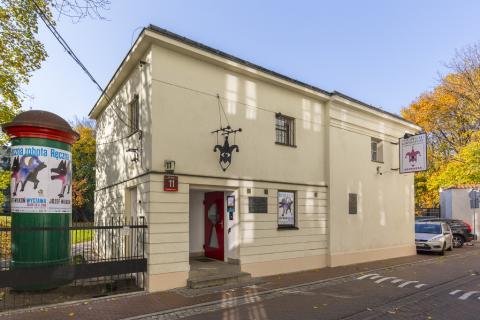
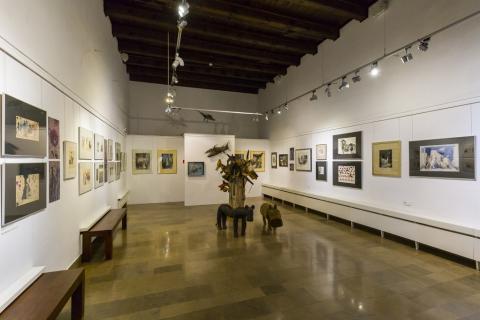
Sin más noticias, pasemos a Polonia, donde, en su capital, el humor gráfico brilla en un magnífico museo con una colección de más de 25.000 obras, albergado en un edificio que antiguamente fue una Orangerie, que data de la segunda mitad del siglo XVIII y probablemente diseñado por J. Ch. Kamsetzer, el arquitecto de los interiores del Castillo Real de Varsovia. Para conocer más sobre su historia, hablamos con su director, Paweł Płoski:
O.M.Sousa - ¿Cuándo nació su Museo/Casa-Museo/Casa del Humor?
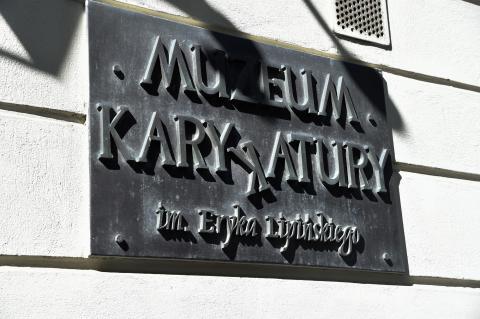
Paweł Płoski - El Muzeum Karykatury im. Eryka Lipińskiego en Varsovia (ul. Kozia 11, 00-070 Warszawa www.muzeumkarykatury.pl) se fundó en 1978 como resultado del Museo de Literatura. En 1983, el Museo de la Caricatura se convirtió en una institución independiente con su propio edificio (pequeño, pero propio).
O.M.Sousa - ¿Quién lo creó? ¿Fue una organización, un coleccionista, un artista?
Paweł Płoski - El Museo de la Caricatura de Varsovia fue fundado en 1978 por el excelente caricaturista y satírico Eryk Lipiński, quien posteriormente se convirtió en su director durante muchos años (hasta su fallecimiento en 1991).
Eryk Lipiński - Fundador del Museo de la Caricatura en 1983. Caricaturista, satírico, periodista, diseñador gráfico, cartelista, ilustrador, autor de textos satíricos y libros sobre la historia de la caricatura y el dibujo satírico.
En 1935, junto con Zbigniew Mitzner, fundó el semanario satírico "Szpilki", vinculado a los círculos de izquierda. "Szpilki" continuó publicándose después de la guerra hasta 1994.
Eryk Lipiński fue uno de los fundadores de la escuela polaca del cartelismo. También fue el iniciador, comisario y participante de la 1.ª Bienal Internacional del Cartel de Varsovia en 1966. Colaboró como caricaturista, ilustrador y diseñador gráfico con las revistas “Szpilki”, “Mucha”, “Przekrój”, “Karuzela”, “Literatura”, “Zwierciadło”, “Polska”, “Stolica”, “Świat”, “Świerszczyk” y otras.
Eryk Lipiński fue autor de numerosos carteles para exposiciones celebradas en el Museo de la Caricatura. Eryk Lipiński también ha ilustrado numerosos libros infantiles.
En 1978, junto con Hanna Górska, escribió el libro "Z dziejów karykatury polskiej" [De la historia de la caricatura polaca], un estudio científico sobre la historia de la caricatura polaca. También publicó muchos otros libros, principalmente humorísticos y de memorias, entre ellos "Erl-69 donosi" y "Pamiętniki" (Memorias).
Eryk Lipiński fue el principal impulsor y primer presidente de la Asociación de Caricaturistas Polacos (SPAK) en 1987. Actualmente, la SPAK otorga el premio anual "Eryk" por sus logros en el campo de la caricatura. En 1991, el Instituto Yad Veshem de Jerusalén le otorgó el título de "Justo entre las Naciones".
Desde 1983, el Museo de la Caricatura se encuentra en la calle Kozia, 11, y desde 2002 lleva el nombre de su creador, Eryk Lipiński.
O.M.Sousa - ¿Eres artista, historiador del arte?
Paweł Płoski - No, no soy ni artista ni historiador del arte. Soy un estudioso del teatro.
O.M.Sousa - ¿Nació de una colección ya existente o se creó gracias a donaciones, gracias a un festival?
Paweł Płoski - La idea de fundar el Museo de la Caricatura (¡uno de los primeros del mundo!) preocupó a Eryk Lipiński ya a principios de los años 60. Fue entonces cuando empezó a reunir una colección de dibujos de otros autores con vistas a un nuevo museo. Convenció a artistas y a sus familias para que hicieran donaciones, recaudó fondos para comprar piezas de archivo y obras contemporáneas, sin escatimar en sus propios fondos. Desafortunadamente, los intentos de crear un museo en la década de 1960 dentro de las estructuras del Museo Nacional de Varsovia y a mediados de la década de 1970 junto al Museo Histórico de Varsovia fracasaron. Sin embargo, Eryk fue tenaz e incansable en sus esfuerzos y acciones. Finalmente, encontró la comprensión adecuada de las autoridades competentes, así como apoyo organizativo directo en el Museo de Literatura de Varsovia. Gracias a la ayuda del director de esta institución, Janusz Odrowąż-Pieniążek, el Museo de la Caricatura comenzó su vida como una división del Museo de Literatura el 15 de septiembre de 1978.
O.M.Sousa - ¿Cuáles son las razones para crear un Museo del Humor? ¿Encerrarlo en los muros oficiales para que no moleste, o aceptar la irreverencia como un arte fundamental para la supervivencia de cualquier democracia? ¿Debería verse el humor museístico como una pulla o como una medicina homeopática?
Paweł Płoski - La creación del Museo de la Caricatura pretendía reconocer el chiste de la caricatura como parte de la historia del arte. Por otro lado, la caricatura es un documento valioso de la vida social polaca. El museo se fundó en la Polonia comunista, por lo que su actividad no tenía nada que ver con la democracia. Fue un gesto hacia la comunidad artística del país, considerada el cuartel más alegre del campo comunista. El programa del Museo de la Caricatura es una tensión constante entre la sátira tratada como arma y la sátira tratada como medicina. Recientemente, he visto que el dibujo satírico también es un espejo.
O.M.Sousa - ¿Quién financia su museo? ¿Cuentan con apoyo oficial o con mecenas privados? ¿Cómo se ve su supervivencia? ¿Puede un Museo del Humor mantener su irreverencia e independencia de la censura del poder?
Paweł Płoski - El Museo de la Caricatura de Varsovia es la institución municipal de cultura organizada y financiada por el Ayuntamiento de Varsovia (autogobierno municipal).
O.M.Sousa - ¿Su exposición permanente se mantiene con el material de archivo o no se renueva?
Paweł Płoski - No, no tenemos suficiente espacio para una exposición permanente. Solo organizamos exposiciones temporales.
O.M.Sousa - ¿Cómo ha evolucionado su colección? ¿Cuántas obras tiene y qué períodos abarcan? ¿La colección es solo nacional o internacional?
Paweł Płoski - Inicialmente, la modesta colección de dibujos, al 31 de diciembre de 1983, contaba con unos 2500 objetos. Durante sus más de 40 años de existencia, el museo ha crecido hasta alcanzar una colección de más de 25 000 piezas, incluyendo los depósitos. Hoy, incluyendo los depósitos permanentes, la colección cuenta con más de 25 000 dibujos. La colección del museo incluye numerosos cimeli de caricaturas polacas e internacionales, desde el siglo XVIII hasta las últimas ediciones.
La colección incluye obras de los caricaturistas más eminentes como: Daniel Chodowiecki, William Hogarth, Honore Daumier, Jan Piotr Norblin, Aleksander Orłowski, Franciszek Kostrzewski, Kazimierz Sichulski, Zdzisław Czermański, Jerzy Zaruba, Kazimierz Grus, Maja Berezowska. Por supuesto, la colección de caricaturas polacas contemporáneas (después de la Segunda Guerra Mundial) es la más rica, representada por las obras de sus principales representantes. La larga lista de autores incluye figuras tan eminentes como: Eryk Lipiński, Julian Bohdanowicz, Andrzej Czeczot, Jerzy Flisak, Zbigniew Jujka, Szymon Kobyliński, Zbigniew Lengren, Edmund Mańczak, Juliusz Puchalski, Andrzej Stopka, Zbigniew Ziomecki, así como los actualmente populares Edward Lutczyn, Andrzej Mleczko y Henryk Sawka.
O.M.Sousa - Además de la colección del museo, ¿ha participado este en otras iniciativas, como exposiciones temporales, retrospectivas de artistas nacionales o extranjeros o concursos de humor? ¿Cuántas exposiciones temporales se celebran al año? ¿Existe algún festival o concurso vinculado a su museo? ¿Qué importancia tiene el festival para el museo?
Paweł Płoski: Sí, seguimos colaborando con otras instituciones y festivales. El museo ofrece sus propios premios durante el Festival Satyrykon en Legnica. El museo coorganiza dos premios: el Premio Zbigniew Lengren de tira cómica y el Premio HaGa a la mejor dibujante, ilustradora y autora de cómic.
O.M.Sousa: De ser así, dentro del ámbito de las actividades paralelas, ¿cuál es la política que rige esta animación? ¿Solo artistas locales, nacionales o internacionales? ¿Solo retratos de caricatura o dibujos humorísticos? ¿Solo dibujo o también pintura, fotografía, escultura, cine, objetos de la escena teatral…?
Paweł Płoski: La Exposición Internacional SATYRYKON en Legnica es actualmente un concurso abierto a dibujantes, grabadores, escultores, cartelistas y fotógrafos.
O.M.Sousa: ¿Cómo ve el arte del humor? ¿Percibe diferencias de humor en su colección? ¿Es un repositorio de la evolución de las artes en su país? ¿Es una visión general de la historia del país? ¿Es un espacio para la diversión educativa sencilla?
Paweł Płoski - Sí, nuestro museo es un repositorio de la evolución de las artes en Polonia, un panorama de la historia del país. El verdadero reto es presentar esa colección como "diversión educativa sencilla".
O.M.Sousa - ¿Cómo debería ser un Museo del Humor? ¿Su política museológica es la misma que la de cualquier otro museo de arte o, por enmarcarse en un arte más social y político, una expresión filosófica más intervencionista merece una política museológica diferente?
Paweł Płoski - Creo que nuestra política se asemeja más a la de los museos de arte contemporáneo, donde todo se combina (arte, cuestiones sociales y políticas).
O.M.Sousa - ¿Es un depósito de obras, en una concepción de la evolución estética de este arte, o debería ser un museo de naturaleza sociológica y psicológica, como el Museo de Historia de un país, de un continente, con una visión irreverente e innovadora?
Paweł Płoski - Ambas.
O.M.Sousa - ¿Debería ser un lugar para exposiciones o actividades educativas, de introspección política y social?
Paweł Płoski - Tenemos exposiciones y un programa educativo (talleres, conferencias). O.M.Sousa - ¿Debe abarcar la interdisciplinariedad o restringirse a un campo específico, como el diseño gráfico?
Paweł Płoski - Nos centramos en la interdisciplinariedad. En primer lugar, tenemos en cuenta los diversos intereses del público. No se puede crear un museo relacionado con la cultura pop sin tener en cuenta la experiencia del público contemporáneo y los temas del pasado que podrían interesarle.
O.M.Sousa - El problema del caricaturismo es que se desactualiza rápidamente; es decir, necesita respaldo documental para su recalificación en el momento y una mejor comprensión de las obras. ¿Supone esto un problema para su difusión pública?
Paweł Płoski - Sí, es una cuestión fundamental. En resumen, nos planteamos la pregunta: ¿sigue siendo la colección divertida para el público moderno?
O.M.Sousa - ¿Un Museo del Humor, al querer ser pedagógico y ofrecer información completa, se vuelve menos atractivo para el público?
Paweł Płoski - No. Nuestra "regla" es: entretener para enseñar. Ser pedagógico depende de las necesidades de los espectadores. A veces, solo vienen para entretenerse. Pero para quienes necesiten más, preparamos descripciones más extensas, a veces acompañadas de conferencias o paneles.
O.M. Sousa: ¿Cuentan con personal especializado en el manejo de documentos? ¿Hay investigadores trabajando en el Museo?
Paweł Płoski: Sí, nuestro Departamento de Colección e Investigación también incluye personal interesado en la investigación.
O.M.Sousa - Las nuevas tecnologías son excelentes para las nuevas configuraciones expositivas; sin embargo, en el ámbito de la creación individual, ya no existen originales. ¿La desaparición de estos originales en papel, lienzo... perjudica el crecimiento de la colección del museo? ¿Exhiben obras digitales como originales?
Paweł Płoski - Sí, exhibimos obras digitales. Sí, esto es un problema para la colección. ¿Qué deberíamos comprar: una copia de la obra o una licencia?
O.M.Sousa - ¿Utilizan las nuevas tecnologías como elementos complementarios en las exposiciones?
Paweł Płoski - A veces.
O.M.Sousa - ¿Publican un catálogo (¿en papel o en formato electrónico?) para todas las exposiciones? ¿Publican libros teóricos sobre caricaturas? ¿Realizan otro tipo de merchandising?
Paweł Płoski - Sí, publicamos catálogos, pero no para todas las exposiciones (¡derechos!). Publicamos libros teóricos.
O.M.Sousa - ¿Participan los artistas en la vida del museo? ¿Cómo colaboran?
Paweł Płoski - Sí, participan. Realizan talleres y trabajan en el espacio de coworking del museo.
O.M.Sousa - ¿Cómo es el apoyo público?
Paweł Płoski - La subvención municipal anual cubre aproximadamente el 90% de los gastos operativos.
O.M.Sousa - ¿Cuántos visitantes al año?
Paweł Płoski - En los últimos años hemos mejorado el número de visitantes. Aproximadamente 30.000.
O.M.Sousa - ¿Tienen un público específico? ¿Solo nacionales o también extranjeros?
Paweł Płoski - Estamos trabajando en la comunidad de visitantes habituales. Tenemos visitantes extranjeros. Traducimos nuestras exposiciones al inglés y al ucraniano.
Los extranjeros están interesados en nuestro museo. Hace diez años, The Guardian lo incluyó en la lista de los "10 mejores museos de Europa... de los que probablemente nunca hayas oído hablar": Viajes culturales | The Guardian
O.M.Sousa - ¿Cómo es su relación con el poder?
Paweł Płoski: Mantenemos muy buenas relaciones con el poder. Algunos ejemplos: Este año, el Museo preparó la exposición «Grzegorz Rosiński en ilustraciones», bajo el patrocinio honorario del presidente de Varsovia y los embajadores de Suiza, Bélgica y Francia.
Hasta mayo de 2024, la presidenta de la junta directiva del Museo fue Hanna Wróblewska, una de las comisarias de arte más respetadas de Polonia y directora durante mucho tiempo de Zachęta, la Galería Nacional de Arte. En mayo de 2024, fue nombrada Ministra de Cultura y Patrimonio Nacional.
O.M. Sousa: ¿Apoyan los políticos este tipo de museos?
Paweł Płoski: Bromeamos diciendo que el éxito del Museo de la Caricatura se reduciría a la ausencia de visitantes, ya que todos se sentirían ofendidos por los dibujos que mostramos…
A veces, los políticos asisten a nuestras exposiciones, pero en privado. No tenemos enemigos entre ellos.
Durante el gobierno de derecha, algunas exposiciones no despertaron el interés de los medios de comunicación; los temas eran demasiado progresistas, de izquierda y feministas. No hubo ataques, solo silencio.
O.M. Sousa: ¿Cómo perciben este museo otros Museos Nacionales? ¿Está integrado en el circuito de otros Museos o es independiente?
Paweł Płoski - El Museo de la Caricatura es una institución autónoma, pero colabora constantemente con otros museos: consultas, préstamo de obras y actividades conjuntas. El museo es miembro del ICOM.
O.M.Sousa - ¿Cómo se percibe como museo de arte, etnográfico, de arte popular, político…?
Paweł Płoski - Creo que nuestro museo trabaja constantemente en su identidad. La temática del museo nos sitúa como un museo de cultura pop, y lo considero natural. Sobre todo porque el museo se interesa por la gráfica aplicada (dibujos de prensa, carteles, ilustraciones, cómics). Aunque el director anterior veía el museo más desde la perspectiva de un museo de historia del arte.
O.M.Sousa - ¿Por qué hay tan pocos Museos de Humor en el mundo?
Paweł Płoski - No lo sé. De hecho, no creo que haya tan pocos museos.
O.M.Sousa - ¿Hay otros Museos de Humor Gráfico en tu ciudad? ¿Cuáles? ¿En tu país? ¿Cuáles?
Paweł Płoski - No hay otro Museo de Caricatura en Polonia. Se celebran festivales y concursos de caricatura (Legnica, Zeilona Góra). Algunas instituciones crean colecciones de ilustración (BWA Zamość, galería municipal; Museo de Ilustración de Gdansk, fundación y ONG). El año pasado se fundaron dos instituciones dedicadas al cómic: el Centro de Cómics y Narración Interactiva en Lodz (institución municipal) y el Museo del Cómic de Cracovia (fundación y ONG).
O.M.Sousa – Excelente explicación de este maravilloso museo lleno de actividades. Este es un museo de humor gráfico, y los demás son de tiras cómicas, que en inglés también se llaman dibujos animados, especialmente cuando hay animación de estas historias gráficas, lo cual confunde nuestra investigación. Así, se podría hablar de... «El Museo de Dibujos Animados para Dormir (en Rzeszów) es la única institución de este tipo en Polonia, con una colección única relacionada con la historia de la animación infantil polaca y extranjera, comenzando con los dibujos animados más antiguos que se emitieron en TVP1. El museo fue creado para visitantes de todas las edades, gracias a la idea de Wojciech Jama y basándose en las exposiciones que presentó. Se fundó en 2008 y se inauguró oficialmente el 22 de marzo de 2009...». Pero esa es otra historia.
Humor Museums Around the World | Peru - Poland
By Osvaldo Macedo de Souza
Every country has a Museum of Contemporary Art. If not, there are many more, just as there is at least one Museum of Ancient Art. But when it comes to a Museum of Humor, even when the country boasts a wealth of graphic artists, it is much harder to find. This is the case in Peru, a country with magnificent artists, and when I asked two masters of this art, these were their answers:
Karry (Julio Carrión Cueva) - «Here in the capital – Lima, there isn’t one. There never was a single Museum of Humor in all of Peru. It’s also regrettable that there isn’t even a guild of humorists. We are few, and those few of us are divided by absurd and foolish situations caused by damned egos.” One Peruvian is the enemy of another Peruvian; they don't value much what one does to raise the flag of Peruvian graphic humor in the world, but I don't care, we continue like Don Quixote making books, valuing and rescuing the art of Peruvian cartoonists, some of whom have already passed away, because it is my task as an artist and human being to give thanks by making visible our masters who left us their legacy».
Omar Zevallos - «I should mention that in Peru there isn't a museum specializing in humor and caricature, despite our rich history of political cartoonists.
There's never been a museum dedicated to it; here in Arequipa, where I live, there's a small museum with a room dedicated to an artist who once drew caricatures, and there are some from his childhood. Caricatures of local figures from when he was 15. That's all there is. The artist is Jorge Vinatea Reinoso, and those early drawings are in the Arequipa Municipal Museum. Arequipa is the city where the best Peruvian cartoonists were born».
Despite both of their claims that no museum exists, I found an online reference to the future "Rey Charre" House Museum of Artistic Caricature in Arequipa (Urb. Amauta M-5B, Arequipa, ARE 2338, Peru) dating back to 2012. According to my findings: «The purpose of the 'Rey Charre' House Museum of Artistic Caricature project is to study, preserve, promote, and disseminate the contemporary artwork of visual artists, illustrators, and caricaturists from the southern region of Peru." Acrescentam: "With immense satisfaction and hope, the Peruvian Charres Vargas family is pleased to present to the Peruvian and international public this artistic project, which will allow for the establishment of a small and modest House-Museum of Art, located in the city of Arequipa, Peru, where the complete works of art by Professor and visual artist Rey Charre, a veteran professional of the fine arts, whose entire life was dedicated to exploring all forms of artistic expression, and who played a an exemplary career fulfilling numerous public and private functions, in addition to being a tireless cultural promoter.
The idea is to implement ongoing educational and artistic programs for children, youth, and adults; to organize research and specialized information events that contribute to the development of national visual arts; to create an International Network to support popular art and creativity among the poor of Peru; and to organize and implement a Resource Self-Generation Program at the local and international levels».
Beautiful project, but could it be just a utopia, and not materialize like many other projects around the world? In reality, it's not a museum of humor, but of an artist who also created humor and has in his collection caricatures and humorous drawings.
Without further news, let's move on to Poland where, in its capital, graphic humor shines in a magnificent museum with a collection of more than 25,000 works, housed in a building that was once an Orangerie, dating from the second half of the 18th century and probably designed by J. Ch. Kamsetzer, the architect of the interiors of the Royal Castle of Warsaw. To learn more about its history, we spoke with its director, Paweł Płoski:
O.M.Sousa - When was your Museum / House-Museum / House of Humor born?
Paweł Płoski - The Muzeum Karykatury im. Eryka Lipińskiego in Warsaw (ul. Kozia 11, 00-070 Warszawa www.muzeumkarykatury.pl) was established in 1978 as a parto of The Museum of Literature. In 1983 the Museum of Caricature became independent institution with own building (small but own).
O.M.Sousa - Who created it? Was it an organization, a collector, an artist?
Paweł Płoski - The Museum of Caricature in Warsaw was established in 1978 by the excellent cartoonist and satirist Eryk Lipiński, who later became its director for many years (till death in 1991).
Eryk Lipiński - Founder of the Museum of Caricature in 1983. Caricaturist, satirist, journalist, graphic designer, poster designer, illustrator, author of satirical texts and books about the history of caricature and satirical drawings.
In 1935, together with Zbigniew Mitzner, founded a satirical weekly “Szpilki” which was associated with the left-wing circles. “Szpilki” continued to be published after the war until 1994.
Eryk Lipiński was one of the founders of the Polish poster school. He was also the initiator, commissioner and participant of the 1st International Poster Biennale in Warsaw in 1966.
He collaborated as a cartoonist, illustrator and graphic designer with the magazines: “Szpilki” , “Mucha”, “Przekrój”, “Karuzela”, “Literatura”, “Zwierciadło”, “Polska”, “Stolica”, “Świat”, “Świerszczyk” and others
Eryk Lipiński was the author of many posters for exhibitions held at the Museum of Caricature.
Eryk Lipiński has also illustrated many books for children.
In 1978, together with Hanna Górska, he wrote the book Z dziejów karykatury polskiej [From the history of Polish caricature] – a scientific study on the history of Polish caricature. He also published many other books, mainly humorous and memoirs, among others Erl-69 donosi and Pamiętniki (Memoirs).
Eryk Lipiński was the main initiator and first president of the Association of Polish Caricature Artists SPAK in 1987. Today, SPAK awards the annual “Eryk” prize for achievements in the field of caricature.
In 1991, he was awarded the title “Righteous Among the Nations” by the Yad Veshem Institute in Jerusalem.
Since 1983, the Museum of Caricature has been located at 11 Kozia Street, and since 2002 it has borne the name of its creator, Eryk Lipiński.
O.M.Sousa - Are you an artist, an art historian? Do they stay the same?
Paweł Płoski - No, I’m not neither an artist nor art historian. I am an theatre scholar.
O.M.Sousa - Was it born from an existing collection, or was this collection created through donations, from a Festival?
Paweł Płoski - The idea of founding the Museum of Caricature (one of the first in the world!) troubled Eryk Lipiński already at the beginning of the 60's. It was then that he started to gather a collection of drawings of other authors with a view to a new museum. He persuaded artists and their families to make donations, raised money to buy archival and quite contemporary exhibits, not sparing his own funds. Unfortunately, attempts to create a museum in the 1960s within the structures of the National Museum in Warsaw and in the mid-1970s alongside the Historical Museum of Warsaw failed. However, Eryk was tenacious and tireless in his pursuits and actions. He finally found the "right understanding" from the "proper authorities" as well as direct organisational support in the form of the Museum of Literature in Warsaw. Thanks to the help of the director of this institution, Janusz Odrowąż-Pieniążek, the Museum of Caricature began its life as a Division of the Museum of Literature on the 15th of September 1978.
O.M.Sousa - What are the reasons for creating a Humor Museum? Close it in official walls so that it doesn't bother you, or accept irreverence as a fundamental art of survival for any democracy? Should museum humor be seen as a barb, or as homeopathic medicine?
Paweł Płoski - The creation of the Museum of Caricature was intended to recognize the cartoon joke as part of art history. On the other hand, the caricature is a valuable document of Polish social life. The museum was established in communist Poland, so its activity had nothing to do with democracy. It was a gesture towards the artistic community in the country, which was considered to be the most cheerful barrack of the communist countries’ camp. The program of the museum of caricature is a constant tension between satire treated as a weapon and satire treated as medicine. Recently, I have seen that satirical drawing is also a mirror.
O.M.Sousa - Who finances your Museum? Do you have official support, or do you have private patrons? What does survival look like? Can a Museum of Humor maintain its irreverence and independence from the censorious force of power?
Paweł Płoski - The Museum of Caricature in Warsaw is the municipal institution of culture organized and financed by City Hall of Warsaw (city self-government).
O.M.Sousa - Does your permanent exhibition run with the archived material, or does it never change?
Paweł Płoski - No, we don’t have enough space for permanent exhibition. We organize only temporarily exhibitions.
O.M.Sousa - How has your collection evolved? How many works do you have, and what periods do they cover? Is the collection only national, or international?
Paweł Płoski - Initially, the modest collection of drawings as of 31 December 1983 amounted to about 2,500 objects. During over 40 years of the museum's existence, it has grown to a collection of over 25 thousand items, including deposits. Today, including permanent deposits, the collection numbers over 25,000 drawings. The museum's own collection includes many cimeli of Polish and world caricature, from the eighteenth century to the latest ones.
The collection includes works of the most eminent caricaturists such as: Daniel Chodowiecki, William Hogarth, Honore Daumier, Jan Piotr Norblin, Aleksander Orłowski, Franciszek Kostrzewski, Kazimierz Sichulski, Zdzisław Czermański, Jerzy Zaruba, Kazimierz Grus, Maja Berezowska. Of course, the collection of contemporary Polish caricature (after II World War) is the richest, represented by the works of its leading representatives. The long list of authors includes such eminent figures as: Eryk Lipiński, Julian Bohdanowicz, Andrzej Czeczot, Jerzy Flisak, Zbigniew Jujka, Szymon Kobyliński, Zbigniew Lengren, Edmund Mańczak, Juliusz Puchalski, Andrzej Stopka, Zbigniew Ziomecki, as well as the currently popular Edward Lutczyn, Andrzej Mleczko and Henryk Sawka.
O.M.Sousa - In addition to the museum collection, has this museum been linked to other initiatives, such as temporary exhibitions, retrospectives of national or foreign artists, humor competitions? How many temps per year? Is there a Festival or competition linked to your Museum? How important is the Festival for the Museum?
Paweł Płoski - Yes, we still cooperated with other institutions or festivals. Museum gives own prices during Satyrykon Festival in Legnica. Museum co-organize two prices – Zbigniew Lengren Prize for comic strip and HaGa Prize for the best female cartoonist, illustrator and comic author.
O.M.Sousa - If so, within the scope of parallel activities, what is the guiding policy for this animation? Just local, national or international artists? Just cartoon portraits or humor drawings? Just drawing or also painting, photography, sculpture, cinema, objects from the theatrical stage…?
Paweł Płoski - The International Exhibition SATYRYKON in Legnica is nowadays a competition open to cartoonists, engravers, sculptors, poster-designers and photographers.
O.M.Sousa - How do you view the art of humor? Do you feel differences in mood throughout your collection? Is it a repository of the evolution of the arts in your country? Is it an overview of the country's history? Is it a space for simple educational fun?
Paweł Płoski - Yes, our is a repository of the evolution of the arts in Poland, is an overview of the country's history. Real challenge is to present that collection as “simple educational fun”.
O.M.Sousa - What should a Humor Museum be? Is your museological policy the same as any other art museum, or because it fits within a more social and political art, does a more interventionist philosophical expression deserve a different museology policy?
Paweł Płoski - I think that our policy is more similar to policy of mueseums of contemporary art, where everything is cobine (art, social and political issuses).
O.M.Sousa - Is it a deposit of works, in a conception of the aesthetic evolution of this art, or should it be a Museum of a sociological and psychological nature, like the History Museum of a country, of a continent with an irreverent and innovative vision?
Paweł Płoski – Both.
O.M.Sousa - Should it be a place for exhibitions or educational activities, political and social introspection?
Paweł Płoski - We have exhibitions and educational program (workshops, lectures).
O.M.Sousa - Should it encompass interdisciplinarity, or be restricted to a specific field, such as graphics?
Paweł Płoski - We focus on interdisciplinarity. First of all, we take into account the diverse interests of the audience. You can't create a museum related to pop culture without taking into account what contemporary audiences live in and what topics from the past might interest them.
O.M.Sousa - The problem with cartoonism is that it is quickly out of date, that is, it needs documentary support for its requalification at the time to better understand the works. Is this a problem for your public exposure?
Paweł Płoski - Yes, this is a fundamental issue. In short, we still face the question: is the collection still funny for the modern audience.
O.M.Sousa - Does a Humor Museum want to be pedagogical, giving full information, become less attractive to the public?
Paweł Płoski - No. Our “rule” is: Entertaining to teach. “Being pedagogical” depends on the needs of the viewers. Sometimes they come only for entertainment. But for those who need more, we prepare more extensive descriptions, sometimes accompanied by lectures or panels.
O.M.Sousa - Do you have staff specialized in paper handling? Are there researchers working for the Museum?
Paweł Płoski - Yes, our Department of Collection and Research includes also workers interested in research.
O.M.Sousa - New technologies are excellent for new exhibition setups, however, in the field of individual creation, there are no longer any originals. Does the disappearance of these originals on paper, canvas… harm the growth of the museum’s collection? Do you exhibit digital works as originals?
Paweł Płoski - Yes, we exhibit digital works. Yes, this is a problem for collection. What we should buy – copy of work or license?
O.M.Sousa - Do you use new technologies as complementary elements of the exhibitions?
Paweł Płoski - Sometimes.
O.M.Sousa - Do you publish a catalog (on paper or e.book?) for all exhibitions? Do you publish theoretical books on cartoons/caricature? Do you do another type of merchandising?
Paweł Płoski - Yes we publish catalogues, but not for all exhibitions (rights!). We publish theoretical books.
O.M.Sousa - Do artists participate in the life of the Museum? How do they collaborate?
Paweł Płoski - Yes, they participate. They do workshops, they cam work in museum’s coworking space.
O.M.Sousa - How is public support?
Paweł Płoski - The annual municipal subsidy covers about 90% of the operating costs.
O.M.Sousa - How many visitors per year?
Paweł Płoski - During last years we has improved the amount of the visistors. About 30.000 visistors.
O.M.Sousa - Do you have a specific audience? Only nationals or also foreigners?
Paweł Płoski - We are working on the community of regular viewers. We have foreign visistors. We translate our exhibitions into English and Ukrainian.
Foreigners are interested in our museum. Ten years ago “Th Guardian” put our museum on the list “10 of the best museums in Europe… that you’ve probably never heard of” 10 of the best museums in Europe… that you’ve probably never heard of | Cultural trips | The Guardian
O.M.Sousa - What is your relationship with power like?
Paweł Płoski - We have very good relations with power. Some examples: In this year The Museum prepared exhibition “Grzegorz Rosiński in illustrations” under the honorary patronage of the President of Warsaw and the ambassadors of Switzerland, Belgium and France.
Until May 2024, the chairman of the Museum board was Hanna Wróblewska, one of the most respected art curators in Poland, long-time director of Zachęta - National Gallery of Art. In May 2024, she was appointed as the Minister of Culture and National Heritage.
O.M.Sousa - Do politicians embrace this type of Museums?
Paweł Płoski - We joke that the success of the Museum of Caricature would be if we had no guests because everyone would be offended by the drawings we show…
Politicians sometimes come to our exhibitions, but in private. We have no enemies among them.
During the right-wing government, some exhibitions lacked interest from the public media - the topics were too progressive, left-wing and feminist. There were no attacks, only silence.
O.M.Sousa - How is this museum seen by other National Museums? Is it integrated into the circuit of other Museums, or is it independent?
Paweł Płoski - The Museum of Caricature is an autonomous institution, but we constantly cooperate with other museums - queries, lending works, joint activities. Museum is a member of ICOM.
O.M.Sousa - How is it seen as an art museum, an ethnographic museum, a popular art museum, a political museum…?
Paweł Płoski - I think, our museum is constantly working on its identity. The subject matter of the museum locates us as a museum of pop culture – and I consider it natural. Especially since the museum is interested in applied graphics (press drawings, poster, illustration, comic book).
Although the previous director saw the museum more from the perspective of an art history museum.
O.M.Sousa - Why are there so few Humor Museums in the world?
Paweł Płoski - I don’t know. Actually, I don’t think there are so few museums.
O.M.Sousa - Are there other Graphic Humor Museums in your city? Which? In your country? Which?
Paweł Płoski - There is no other Museum of Caricature in Poland. There are some festivals/competition of caricature (Legnica, Zeilona Góra). Some institution build collection of illustration (BWA Zamość – municipal gallery, Museum of Illustration in Gdańsk, foundation, NGO). In last year two institution dedicated to comic books were established Center for Comics and Interactive Narration in Lodz (municipal institution) an The Museum of Comics in Kraków (foundation, NGO).
OM. Sousa – Excellent explanation of this wonderful museum full of activities. This is a museum of graphic humor, and the others are of comic strips, which in English can also be called cartoons, especially when there is animation of these graphic stories, which confuses our research. In this way, one could speak of... «Bedtime Cartoons Museum ( at Rzeszów) is the only one institution of this type in Poland with unique collection related to the history of Polish and foreign animation for children, starting from the oldest evenings bedtime cartoons that have been aired on TVP1. Museum was created for visitors of all ages, thanks to the idea of Wojciech Jama and based on the exhibits he gave. It was established in 2008 and officially opened on March 22, 2009...» But that's another story.